
Last updated September 23, 2026
Whole-system duct and dryer vent check with before-and-after photos - you see exactly what came out of your vents
That "$99 whole-house special" is a bait ad - the real number appears once they are in your hallway, or the "clean" is a shop-vac at the register. We photograph the inside of your ducts before and after instead.
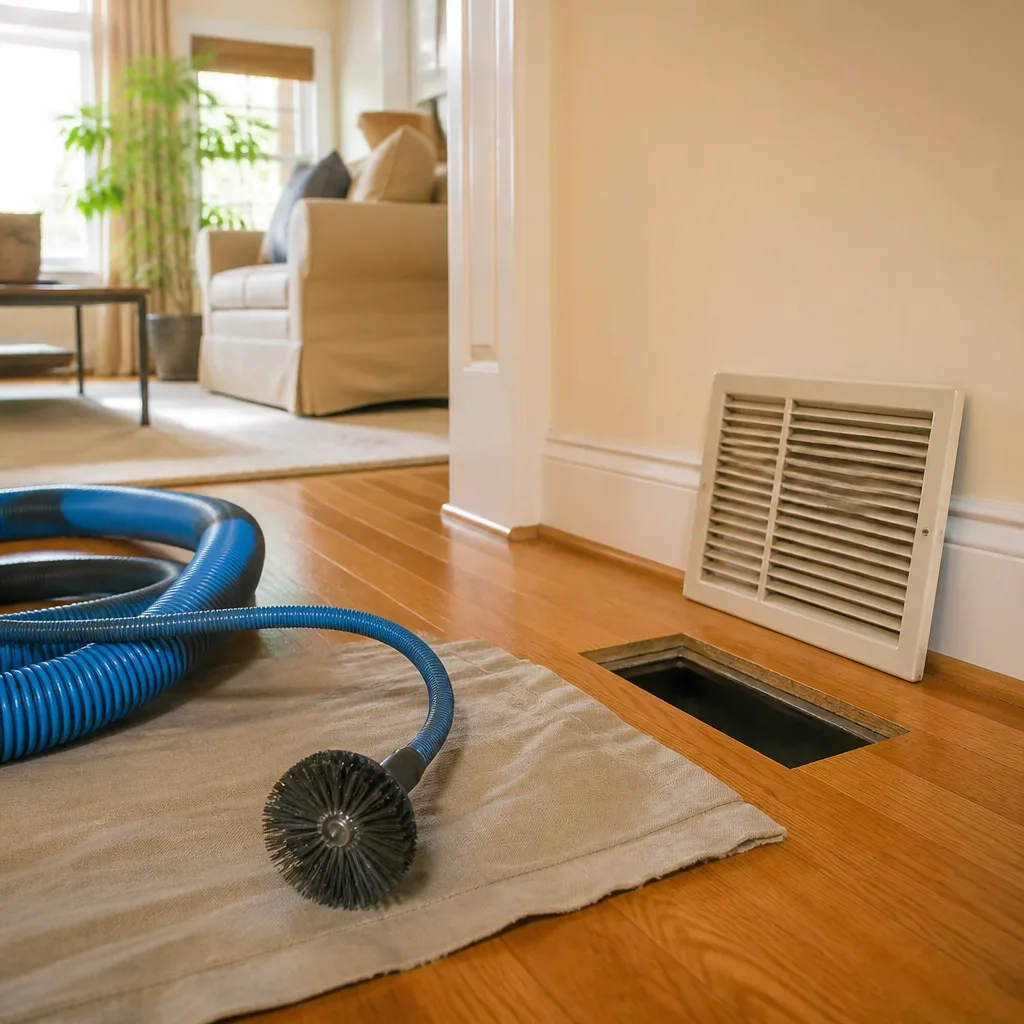
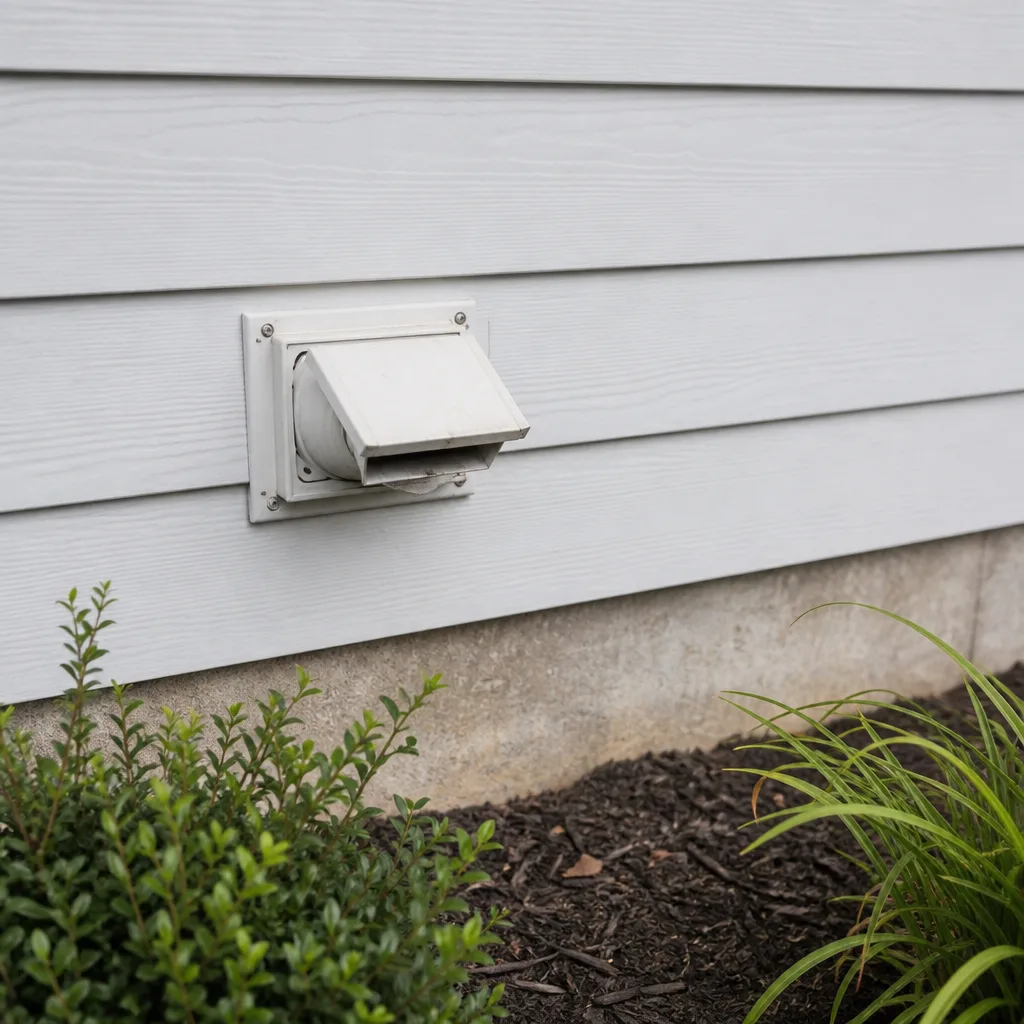
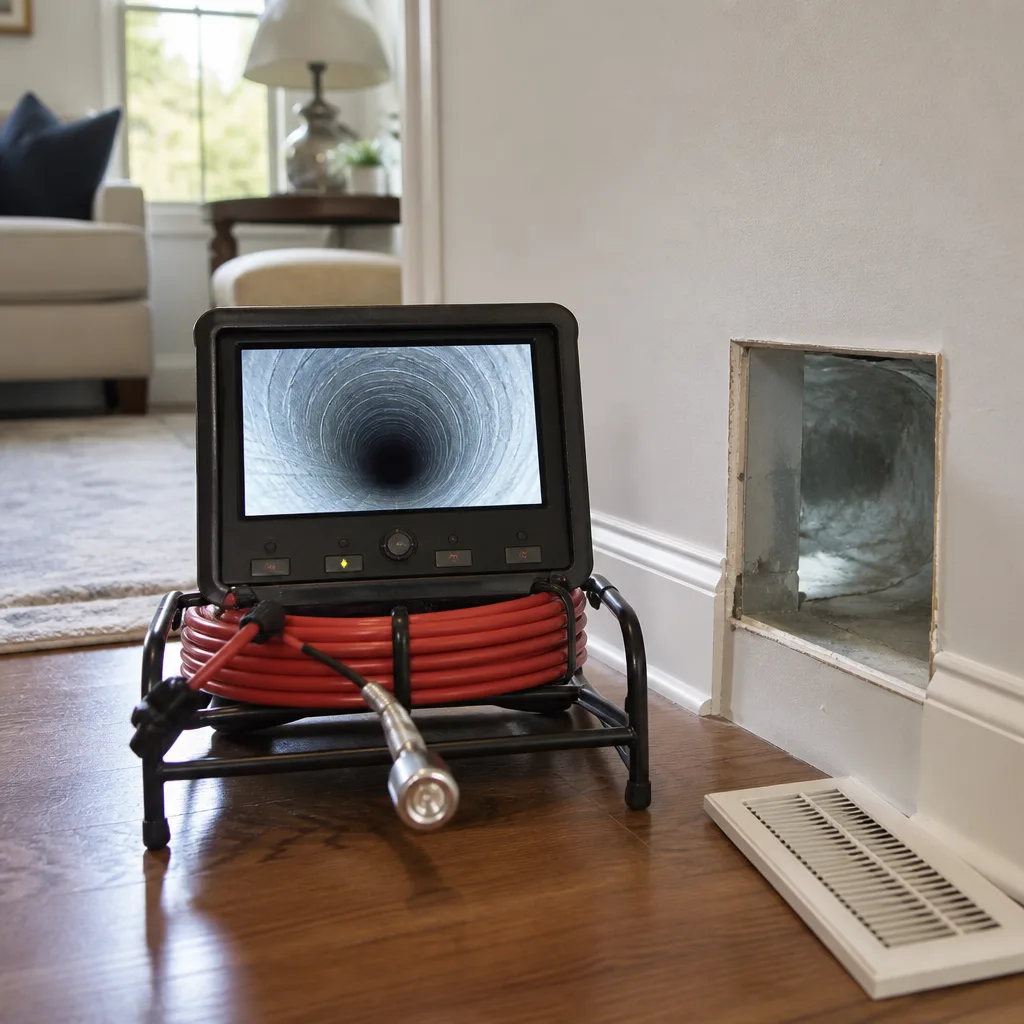
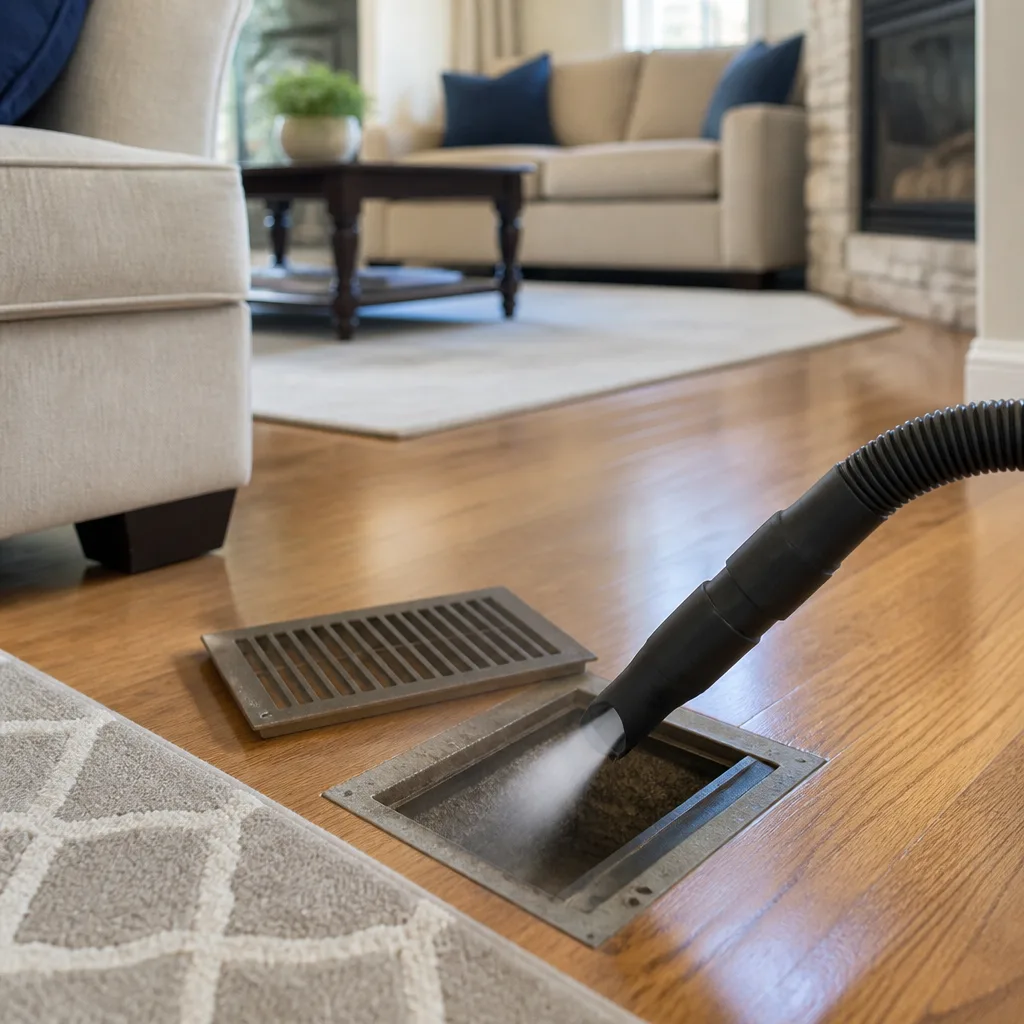
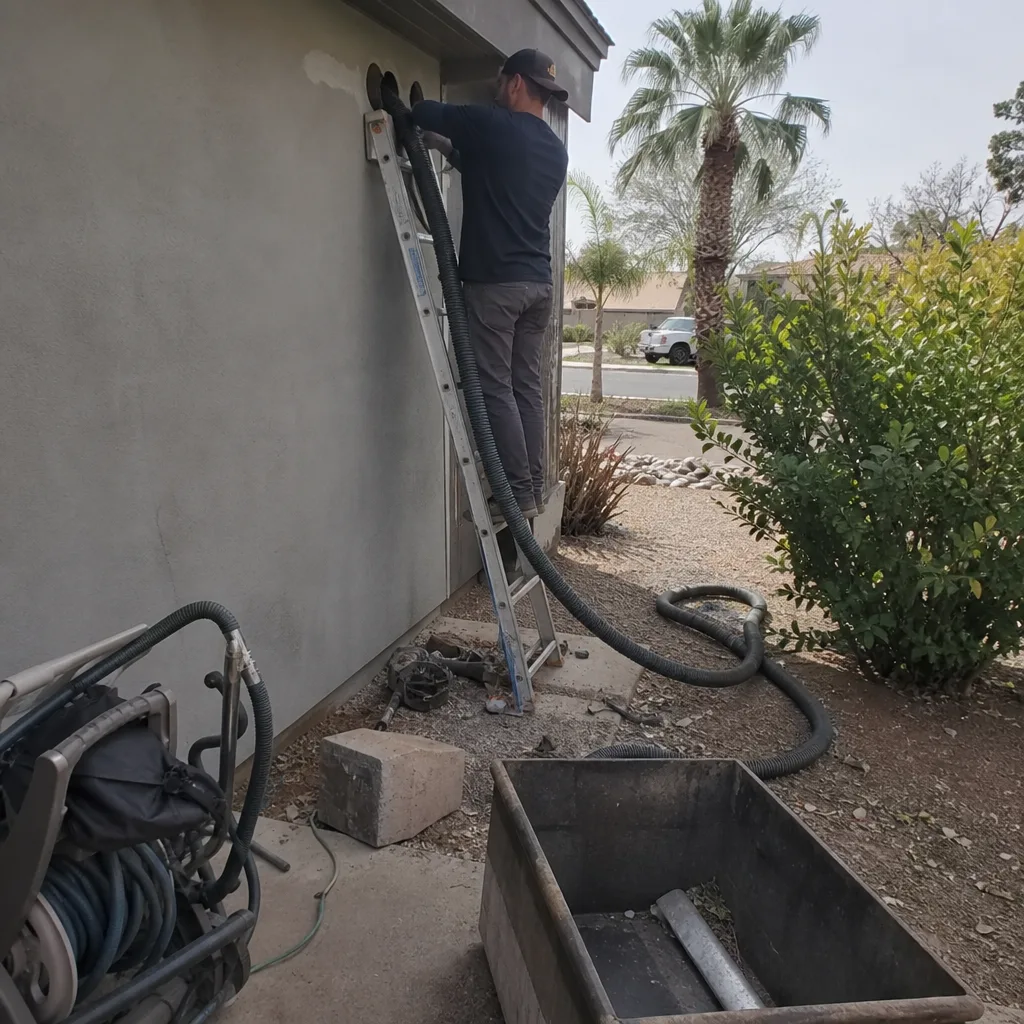 Before
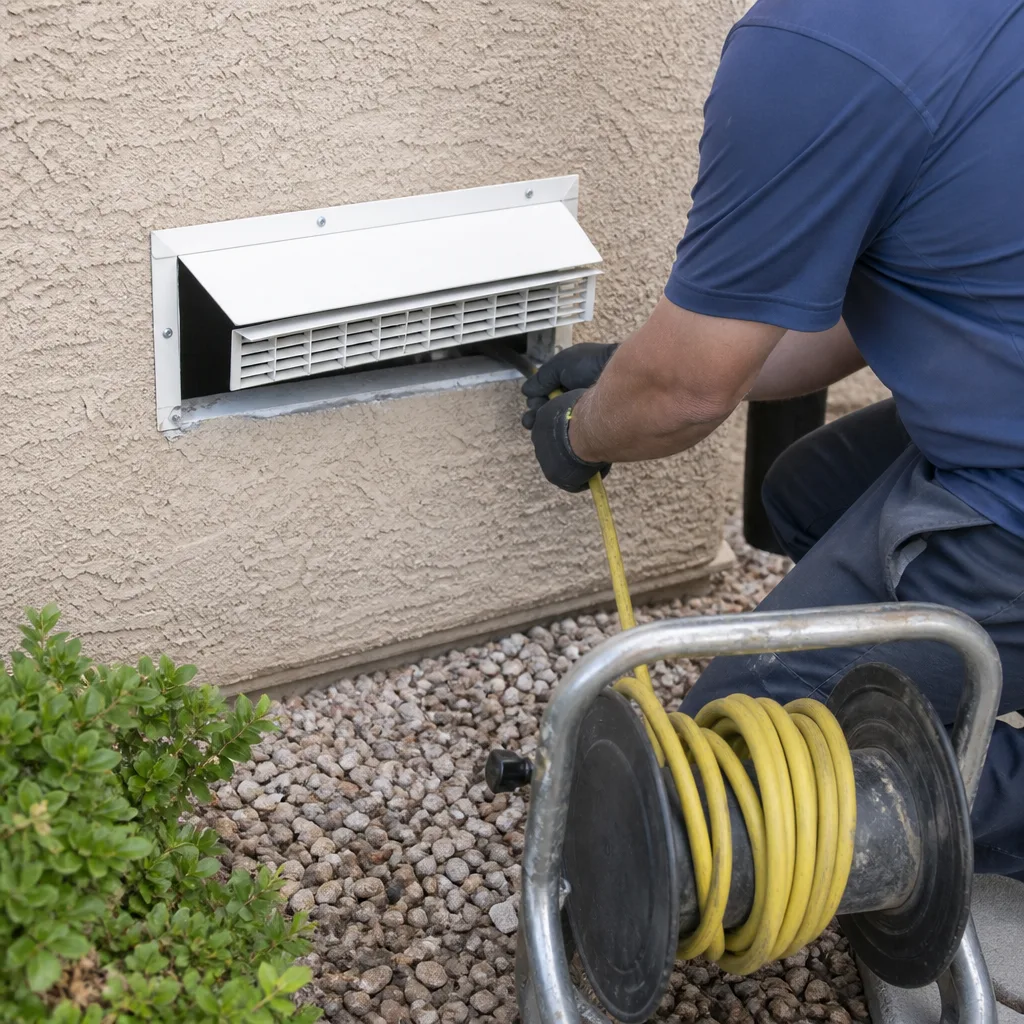 After
After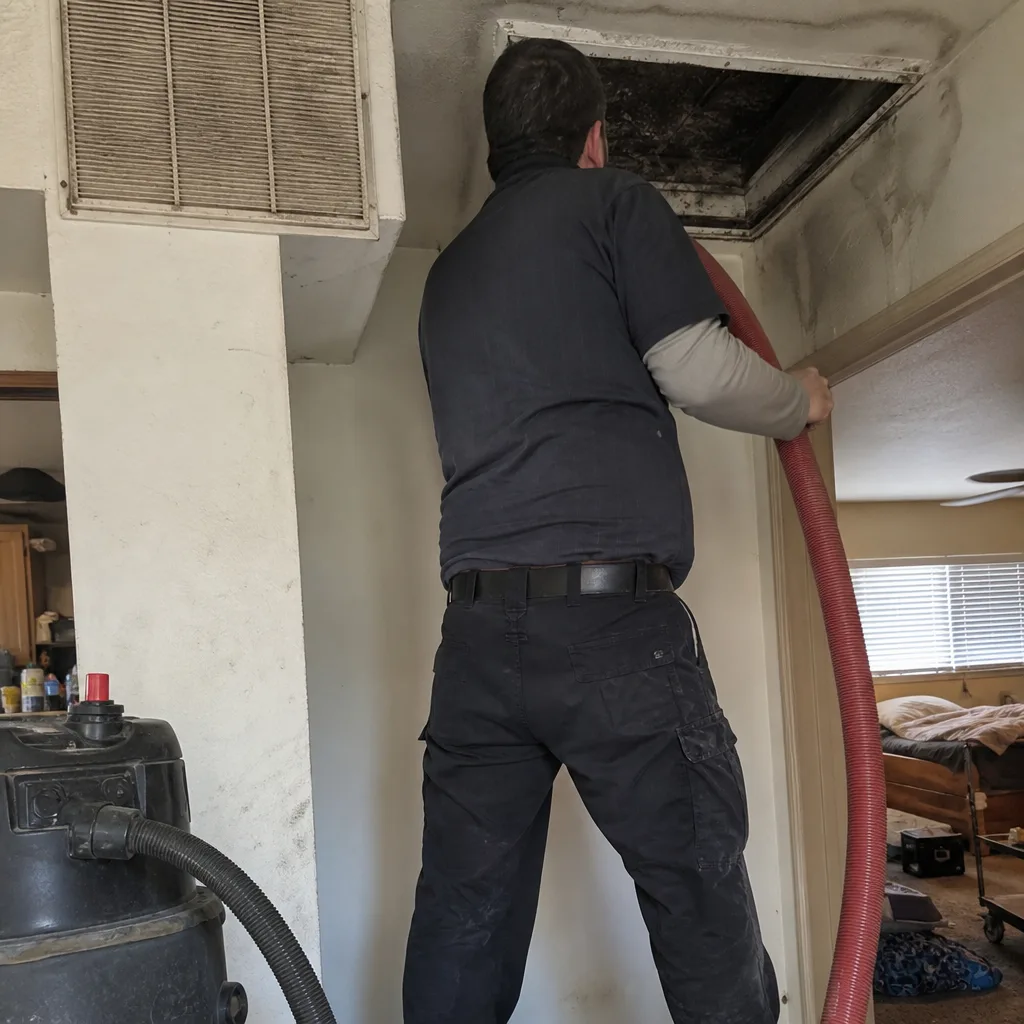 Before
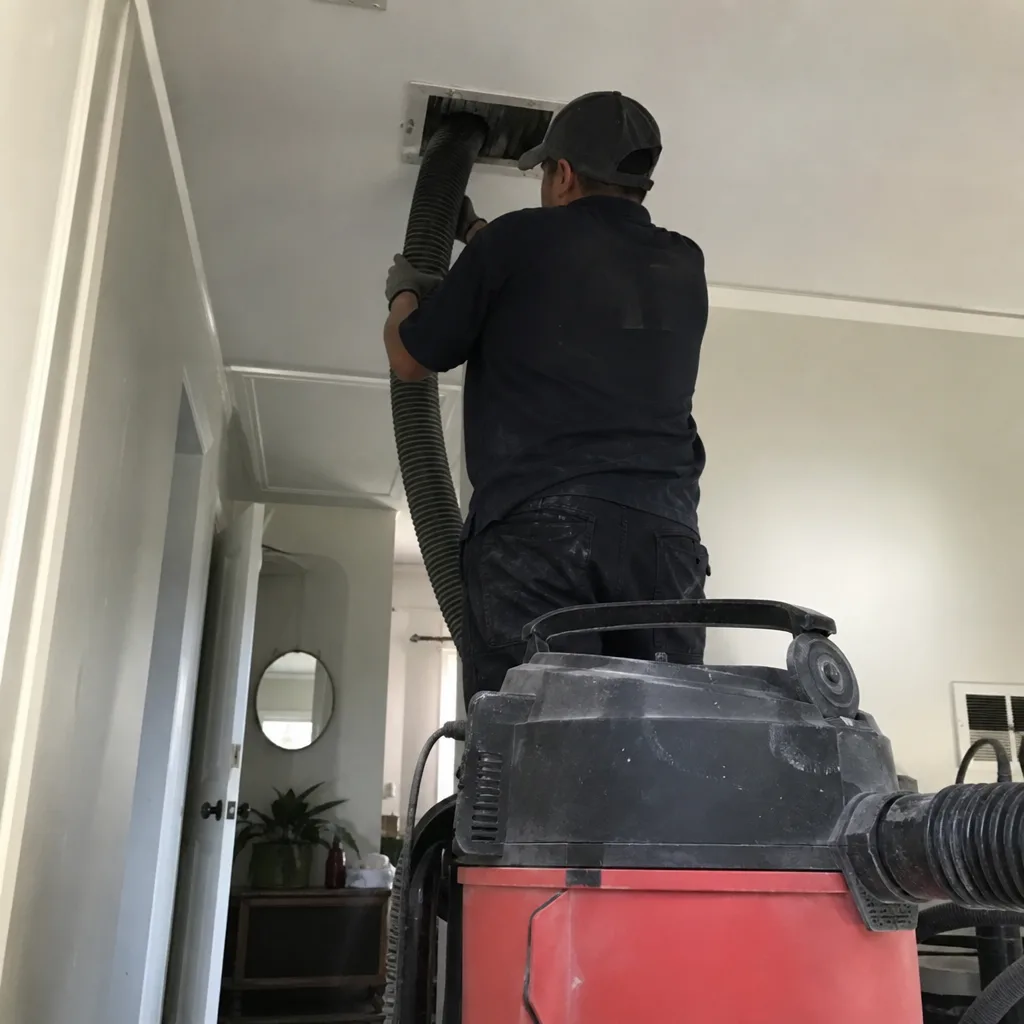 After
After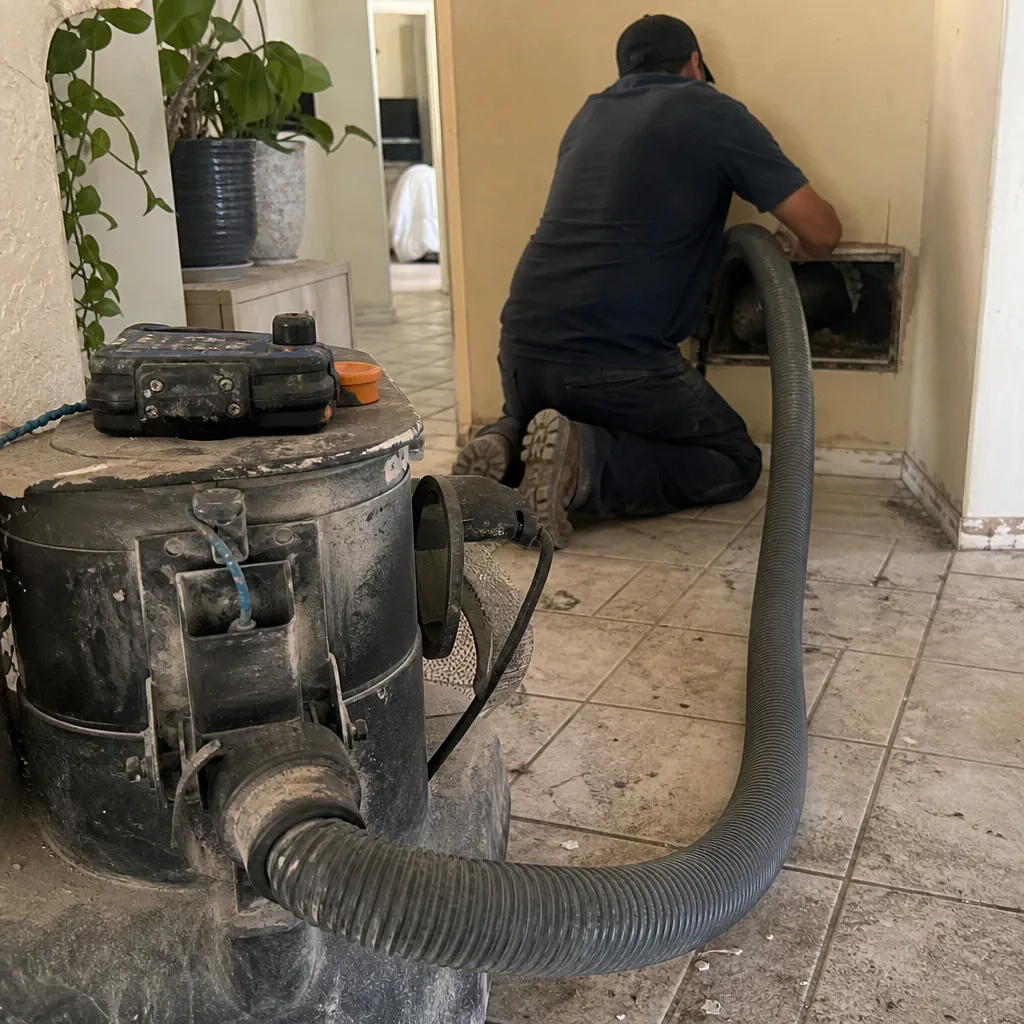 Before
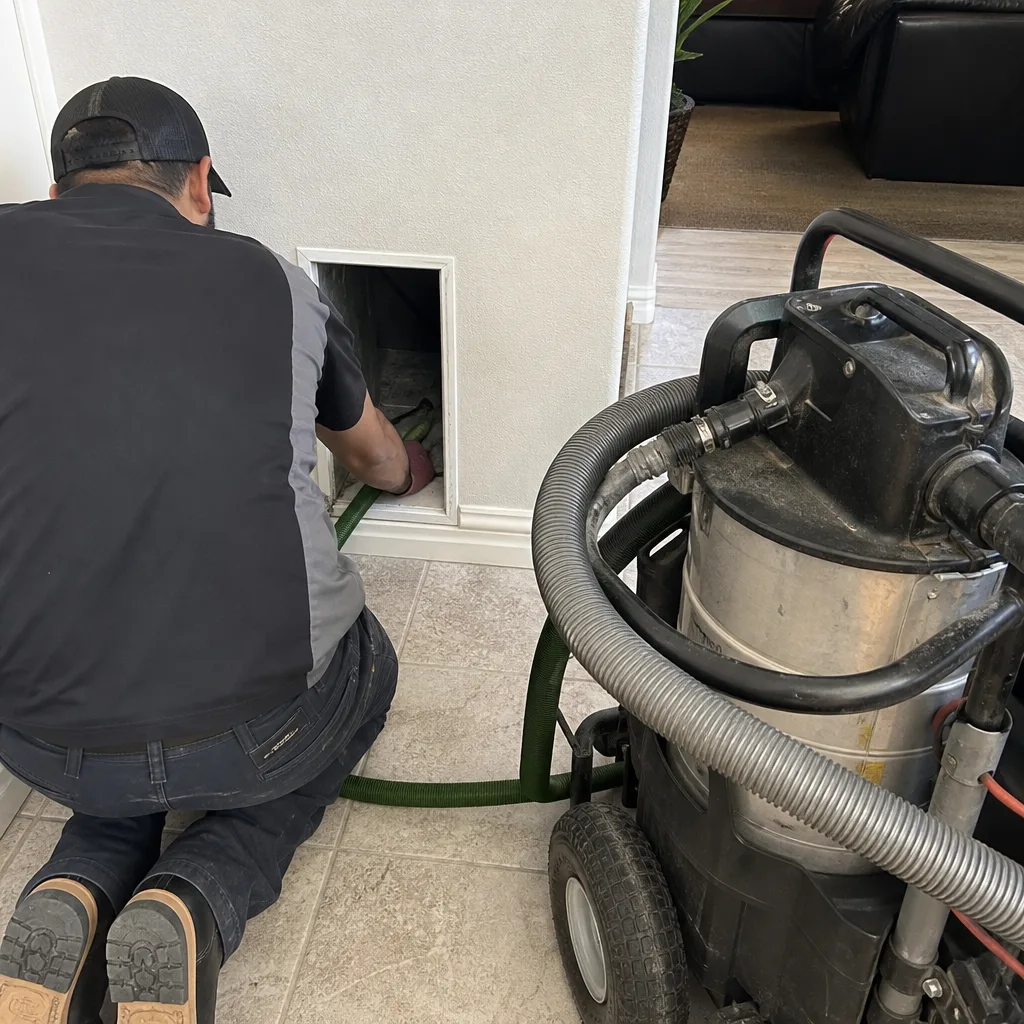 After
AfterAir Duct Cleaning Maintenance Checklist for Phoenix Homeowners
Changing your air filter every 30 days in Phoenix during June doesn’t prevent debris buildup in the duct trunk lines - it just moves where the problem accumulates. We’ve photographed enough Phoenix duct systems since 2013 to know that the cleanest filter in Arcadia can still sit upstream from a plenum packed with caliche dust and monsoon debris. This guide gives you a documented inspection protocol tied to Phoenix’s actual seasonal triggers, not a generic reminder list - and points you to Air Duct Cleaning Warning Signs: A Phoenix Homeowner’s Reference Guide for deeper diagnostics. You’ll learn how to perform a room-by-room register inspection, document your own baseline with a phone camera, and build a written record you can compare year over year rather than relying on any contractor’s word - including ours.
Quick Answer
Phoenix homeowners should inspect air ducts three times yearly: pre-cooling season (March), post-monsoon (October), and at heating startup (January). A complete maintenance checklist includes register discoloration checks, static pressure observation at your HVAC air handler, filter change logging, and photographic documentation of baseline conditions before any professional work begins.
Table of Contents
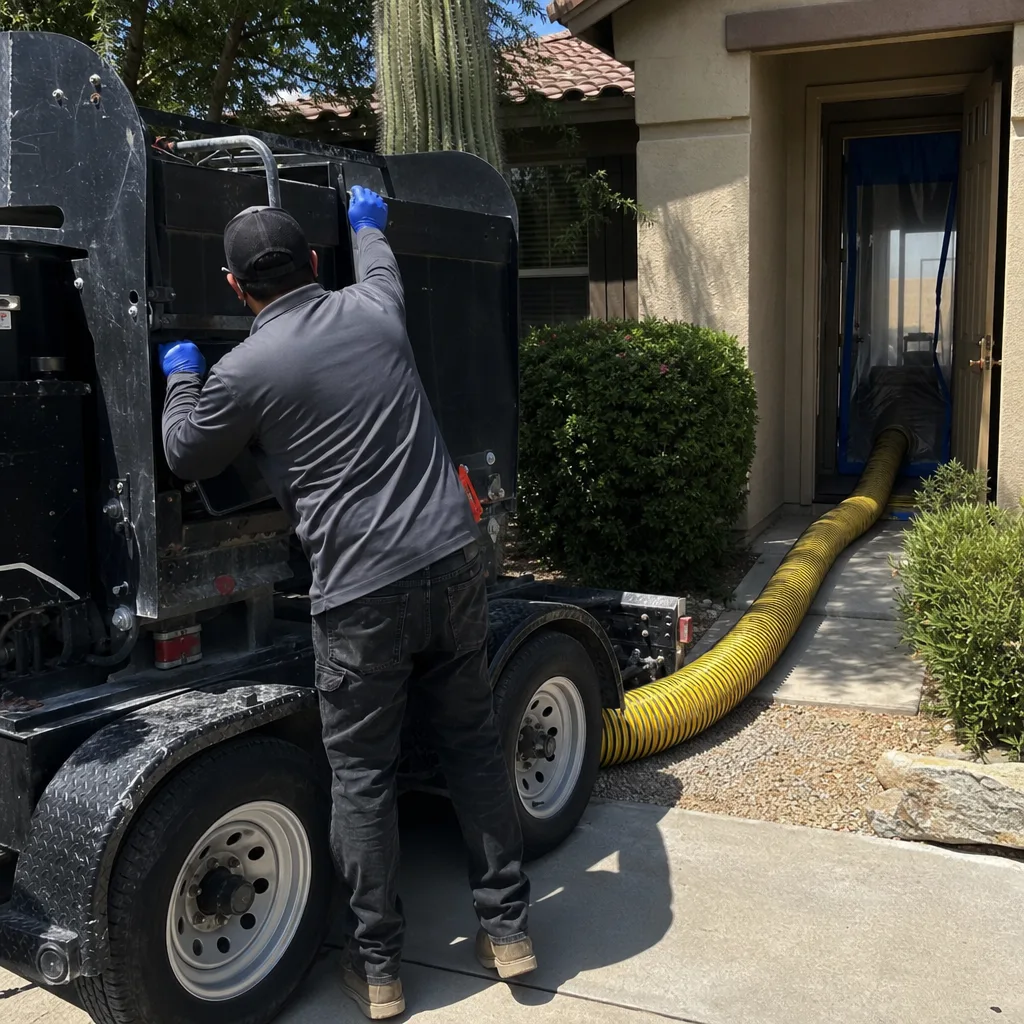
- Phoenix Seasonal Triggers: When to Inspect
- Room-by-Room Register Inspection Protocol
- How to Document Your Own Baseline
- Reading Static Pressure Without a Manometer
- Homeowner-Observed vs. Contractor-Verified Items
- Equipment and Filter Maintenance Log
- Monsoon-Specific Duct Concerns in Phoenix
- Common Mistakes to Avoid
- When to Call a Professional
- Frequently Asked Questions
- The Bottom Line
BeforeAfterPhoenix Seasonal Triggers: When to Inspect
Phoenix’s climate doesn’t follow the national HVAC calendar. Our cooling season starts in March, not May. Our monsoon season reshapes indoor air quality from July through September. And our heating season, though mild, creates its own patterns when systems sit idle for eight months.
We’ve built our inspection schedule around what actually happens inside Phoenix homes, not what a national checklist assumes.
March: Pre-Cooling Season Inspection
By mid-March, most Phoenix homeowners have already flipped to cooling mode at least once. This is your first checkpoint. The system has sat idle since November, and dust has settled in the ductwork during the winter heating cycle.
- Remove and photograph the return air grille before cleaning it
- Run the system for 30 minutes, then check all supply registers for uneven airflow
- Note any musty odor during first startup - this indicates moisture accumulation, common in Paradise Valley and Camelback Corridor homes with slab-on-grade construction
- Check the condensate drain line for flow; standing water breeds microbial growth that enters the airstream
- Log your filter condition and date changed
In our experience, March inspections in Ahwatukee and Desert Ridge often reveal pollen accumulation from February’s mesquite and palo verde bloom that standard filters don’t capture.
October: Post-Monsoon Assessment
The monsoon season is Phoenix’s most aggressive indoor air quality event. Dust storms carry particulate matter through every gap in the building envelope, and humidity spikes create conditions that don’t exist the rest of the year.
- Inspect the return plenum for debris loading - monsoon dust is heavier than typical household dust and settles in low-velocity zones
- Check for water staining around duct boots in attic systems; monsoon humidity can condense on cool duct surfaces in unconditioned spaces
- Photograph the evaporator coil access panel area for any biological growth
- Verify that all flex duct connections remain sealed after summer thermal expansion cycles
We’ve found that October is when Phoenix homeowners first notice persistent odors or reduced airflow that built up gradually through July and August. The HVAC Cleaning in Phoenix page details what a full system cleaning addresses after monsoon season.
January: Heating Startup Check
Phoenix heating systems see light duty, which creates its own problem: eight months of dust accumulation burns off when the heat exchanger first fires. That “first heat smell” is oxidized dust, and some of it distributes through the ducts before the burn-off completes.
- Run heating for one hour with windows open if possible
- After burn-off completes, inspect supply registers for soot or scorch marks - these indicate combustion problems, not just dust
- Check carbon monoxide detectors near sleeping areas
- Verify that no storage items have been placed against return grilles during the cooling season
Room-by-Room Register Inspection Protocol
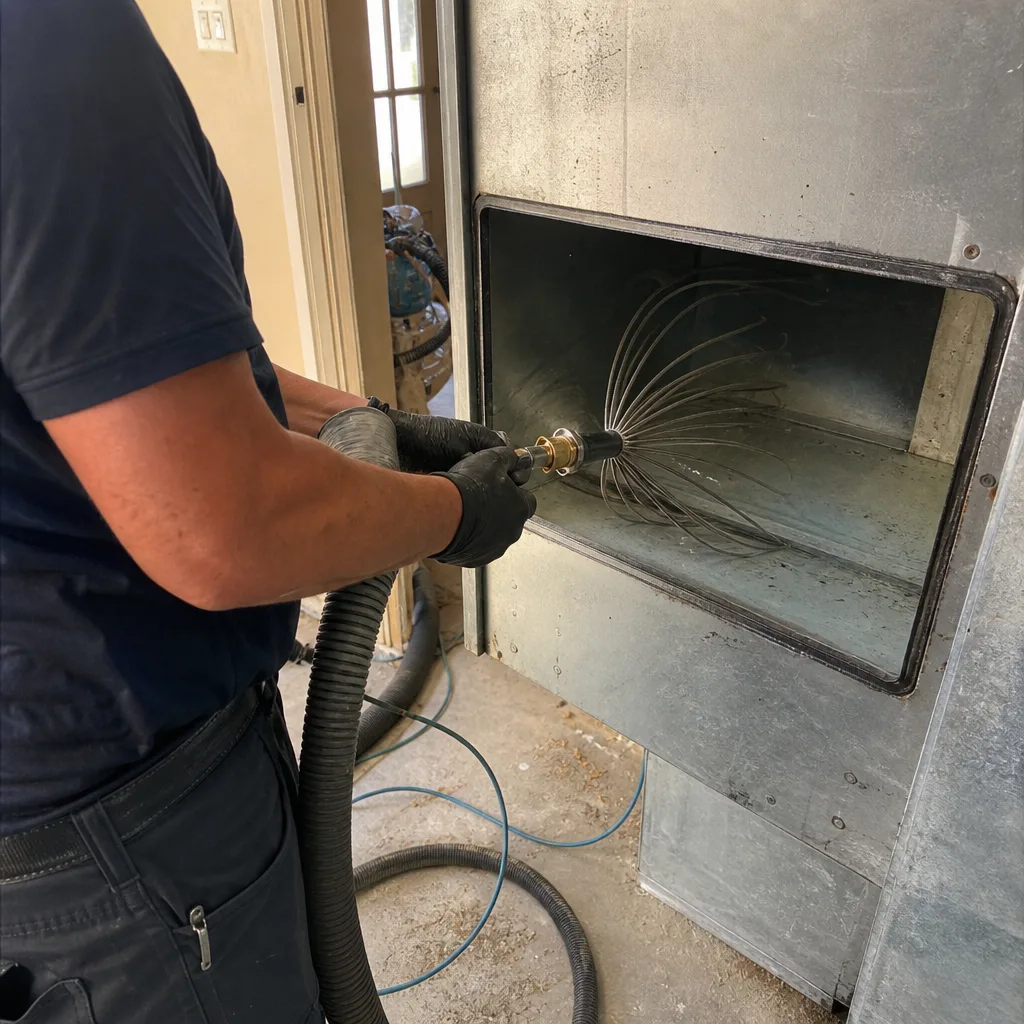
Most homeowners look at registers and see either “clean” or “dirty.” The pattern of discoloration tells a more specific story about where problems originate. This protocol takes 15 minutes and requires only a flashlight and your phone camera.
Supply-Side vs. Return-Side Discoloration Patterns
Supply registers (where conditioned air enters the room) show dark, greasy buildup when the problem is upstream in the ductwork or at the coil. The debris is wet-stuck, often with a slight oily sheen from cooking aerosols that passed through the filter. In Phoenix, we see this pattern frequently in kitchens and near garage entries where fine particulate from vehicle exhaust infiltrates.
Return registers (where air exits the room) show dry, fibrous accumulation when the problem is the room itself. Pet hair, carpet fiber, and skin cells collect here because they’re drawn in by airflow but too large to travel deep into the system.
The Inspection Steps
- Close all doors and run the system for 10 minutes to establish normal airflow patterns
- Starting with the room farthest from the air handler, remove each register and photograph the back side
- Note the color and texture of buildup using this framework:
- Black and greasy: likely coil or plenum contamination - professional cleaning indicated
- Grey and fibrous: normal room debris - clean and monitor
- White and powdery: caliche dust from exterior infiltration - common in Phoenix new construction near active development
- Green or black spotting: biological growth - requires immediate professional assessment
- Check for register deformation or damage that creates gaps; even 1/8-inch gaps around a register pull unfiltered air from the wall cavity
- Photograph each register with a date stamp and room label
In 2022, we documented a home in North Phoenix where the homeowner’s register photos from 2020 showed white powdery buildup that progressed to black greasy contamination by 2022. The photos revealed the problem moved from exterior infiltration to coil bypass, indicating a filter housing seal failure that a contractor had missed during a routine service.
How to Document Your Own Baseline
A contractor’s “before” photo serves their marketing. Your baseline photo serves your verification. The difference matters when you’re comparing quotes or evaluating whether work was actually performed.
What to Photograph
- Return air grille, back side: This is the first surface where debris accumulates and the easiest to access repeatedly
- Filter slot with filter removed: Shows bypass gaps and housing condition
- Supply register throat: The visible duct section behind the register, shot with flash
- Air handler cabinet: The filter slot area, coil access panel, and any visible duct connections
- Condensate drain pan: If accessible, shows standing water or biofilm
How to Make Photos Comparable Year Over Year
- Use the same camera or phone for consistency
- Include a dated index card in each frame
- Shoot from the same angle and distance - mark the spot with tape if needed
- Use flash for all interior duct shots; ambient light changes with time of day and season
- Store in a dedicated folder with naming convention: YYYY-MM-Room-Location
When you later hire a contractor, request that their “before” photos match your angles. If they can’t or won’t, that’s information. At CleanRun, our technicians photograph from the same positions the homeowner documents, and we include both sets in the job record under Haven Standard Clause 1: Written Scope and Price.
The CleanRun Air Duct Cleaning Phoenix home page shows examples of documented photo records from actual Phoenix jobs.
Reading Static Pressure Without a Manometer
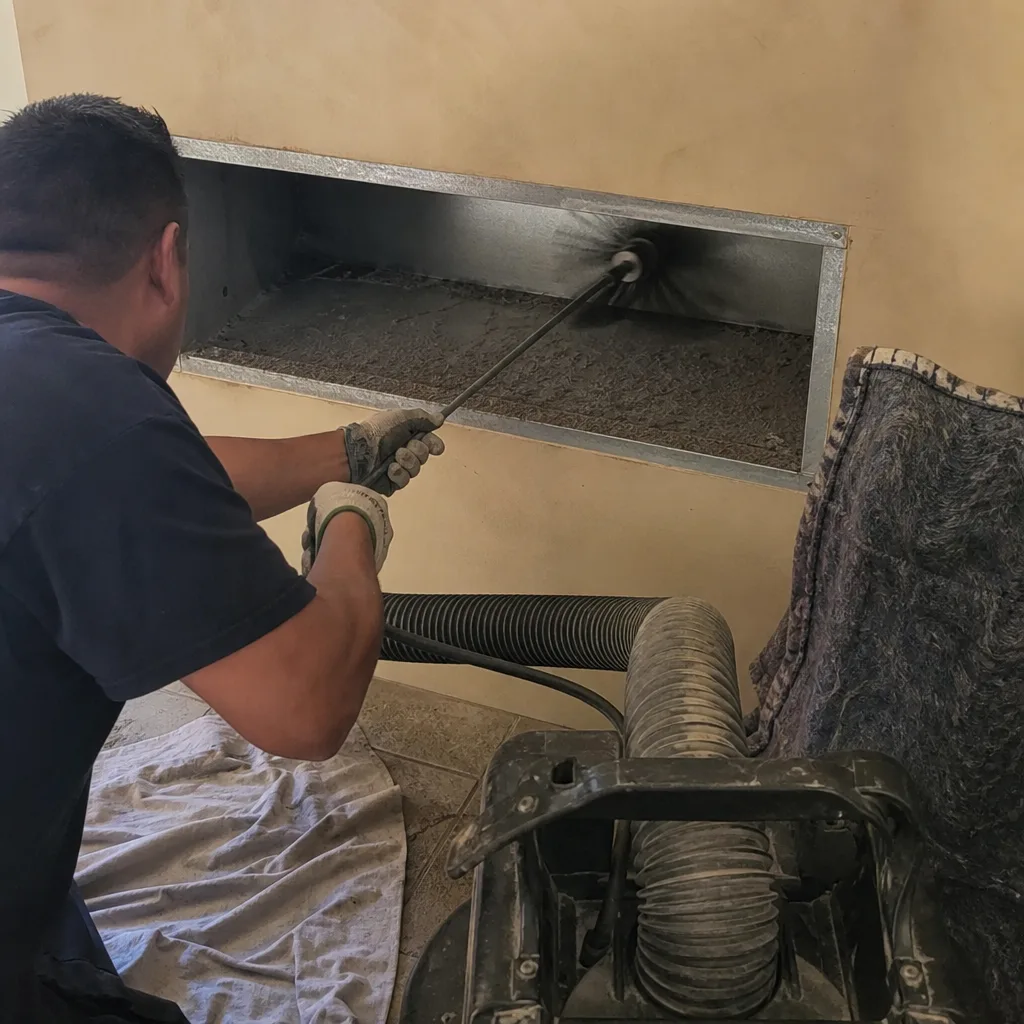
Static pressure is the resistance your HVAC system works against. High static pressure means restricted airflow, which means your blower motor works harder, your cooling capacity drops, and your ducts may be partially blocked. A professional uses a manometer, but you can observe meaningful indicators without one.
System-Level Observations
- Filter whistle or suction collapse: If your filter visibly pulls inward when the system starts, or if you hear a brief whistle at startup, the return side is restricted. This often precedes a filter collapse that dumps unfiltered air into the blower
- Supply register velocity variation: Hold a tissue at arm’s length from each supply register. Markedly weaker flow at distant registers suggests duct restriction or leakage
- Blower motor noise change: A motor that sounds labored or cycles on thermal overload is fighting excessive static pressure
- Evaporator freeze-up in summer: Low airflow across the coil causes ice formation; the root cause is often duct restriction, not just a dirty filter
Seasonal Baseline Comparison
Record these observations at each seasonal checkpoint. A gradual decline indicates progressive duct loading. A sudden change suggests a specific event - collapsed flex duct, blocked return, or failed damper.
In Phoenix’s 115°F peaks, systems already operate near design limits. Added static pressure from duct restriction pushes equipment into failure territory. We’ve responded to emergency calls in Gilbert and Chandler where the immediate problem was a failed capacitor, but the underlying cause was years of elevated static pressure the homeowner never knew to monitor.
Homeowner-Observed vs. Contractor-Verified Items
This dual-source log is the core of what separates documented maintenance from guesswork. One column records what you can see and verify. The other records what requires professional equipment and access. Never let a contractor conflate the two.
| Checkpoint | Homeowner-Observed | Contractor-Verified |
|---|---|---|
| Register condition and discoloration | Visual inspection, photo documentation | Video scope of duct interior |
| Filter condition and fit | Visual inspection, date logging | Filter rack integrity, bypass testing |
| Airflow at registers | Tissue test, subjective cooling assessment | Airflow measurement in CFM per room |
| Static pressure | System behavior indicators (noise, freeze-up) | Manometer reading at air handler |
| Duct leakage | Visible disconnected boots in attic or crawl | Duct blaster test or pressure pan diagnostics |
| Evaporator coil condition | Visible through access panel if present | Full inspection, cleaning if needed |
| Blower wheel cleanliness | Not accessible to homeowner | Visual inspection and cleaning |
| Sanitizing treatment | N/A | Application of EPA-registered products; documentation of product used |
When you receive a quote, ask which items are homeowner-observed and which are contractor-verified. A quote based entirely on “we looked in your vents and they seem dirty” is selling a visit, not a scope of work. At CleanRun, every quote itemizes which verification method applies, per Haven Standard Clause 1.
Equipment and Filter Maintenance Log
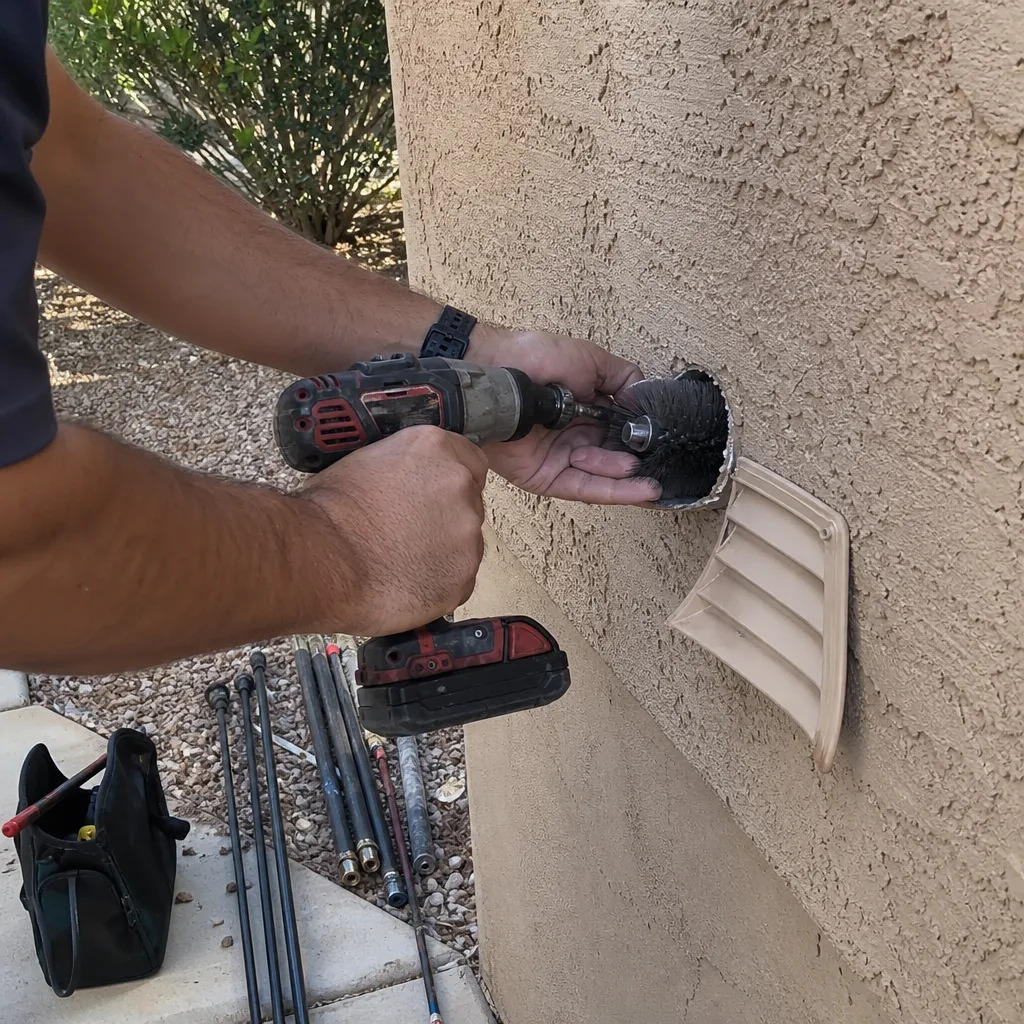
Filters are where most Phoenix homeowners start and stop their duct maintenance thinking. The filter is a component, not a system. This log tracks the full equipment chain that affects duct conditions.
Filter Specifications and Change Log
Record the actual filter dimensions, MERV rating, and manufacturer - not “16x25x1” from memory. We’ve found homes in Scottsdale using 16x25x1 filters in 16.5×25.5×1 housings, creating a 1/2-inch bypass gap that renders the filter nearly pointless.
| Date Changed | Filter Brand/Model | MERV Rating | Condition at Removal | Days in Service | Notes |
|---|---|---|---|---|---|
| Example: 2024-03-15 | Honeywell FC100A1037 | 11 | Heavy loading, grey | 90 | Pre-monsoon change |
For Phoenix’s dust load, we typically see 1-inch pleated filters require 60-90 day changes during active cooling season. Thicker media filters (4-5 inch) may extend to 6 months, but the log proves what your specific home requires.
Equipment Service Record
- Condenser coil cleaning date and method (chemical vs. water-only)
- Evaporator coil access and inspection dates
- Blower motor amp draw if recorded by HVAC technician
- Condensate drain treatment dates
- Duct cleaning or repair dates, with contractor name and scope
This record becomes valuable at home sale. Phoenix’s competitive market means buyers request maintenance documentation; a complete log differentiates your property and supports your asking price.
Monsoon-Specific Duct Concerns in Phoenix
No other climate event affects Phoenix duct systems like the North American Monsoon. From roughly July 1 through September 30, humidity spikes from 10% to 60%+, dust storms reduce visibility to near-zero, and temperature drops of 30°F in an hour create condensation conditions that don’t exist the rest of the year.
What Monsoon Moisture Does Inside Ducts
Cool duct surfaces in 95°F attics sweat when ambient humidity rises. This moisture activates dormant dust into a paste that adheres to duct walls. By October, what was loose particulate has become bonded buildup. We’ve photographed this progression in Phoenix homes where the homeowner changed filters religiously but never inspected the duct interior.
Monsoon Inspection Points
- Check attic duct insulation for moisture staining after major storms
- Run the system and smell at registers for mustiness that wasn’t present in June
- Inspect ceiling around supply registers for water spots - condensate can weep from poorly insulated boots
- Verify bathroom and kitchen exhaust fans are functional; monsoon humidity overwhelms homes with failed ventilation
- Photograph return grille buildup; monsoon dust is visibly darker and heavier than typical household dust
The Air Duct Cleaning in Phoenix service page details our post-monsoon cleaning protocol using Rotobrush and Abatement Technologies equipment for bonded debris removal.
Homes near active construction - common in Phoenix’s expanding edges like Laveen, South Mountain, and areas north of the 303 - see amplified monsoon dust loading as unsealed lots generate additional particulate.
Common Mistakes to Avoid
- Assuming a clean filter means clean ducts. The filter protects the equipment; it doesn’t clean the ductwork. We’ve found 2-inch debris accumulations in Phoenix ducts with filters changed every 30 days without fail.
- Using the highest MERV filter available. MERV 13+ filters restrict airflow in systems not designed for them. The restriction increases static pressure and can cause blower motor failure. Match the filter to your system’s specifications, not an arbitrary “better” number.
- Ignoring register gaps and bypass. A $30 filter with a 1/2-inch housing gap is approximately as effective as a screen door. Check the fit, not just the replacement schedule.
- Scheduling duct cleaning without a written scope. “Whole house duct cleaning” means nothing specific. The scope should state: number of supply runs, number of return runs, access points, equipment to be used, and deliverables including photo documentation.
- Accepting per-vent pricing. This structure incentivizes the contractor to find more vents, not to do thorough work. Flat pricing per system, agreed in writing before work starts, aligns interests properly.
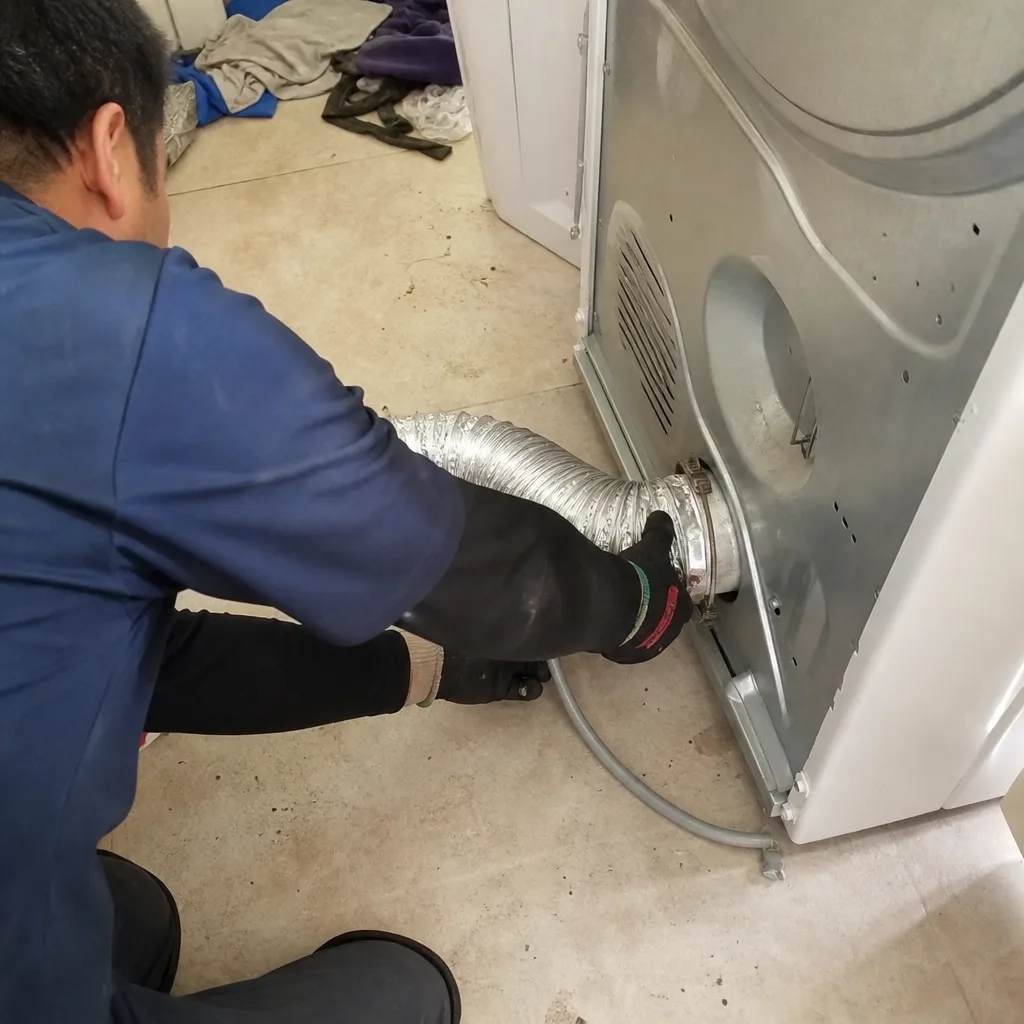
- Neglecting the dryer vent. Lint accumulation in dryer vents restricts airflow and creates fire risk. The Dryer Vent Cleaning in Phoenix page explains why this should be on the same maintenance schedule as duct cleaning.
- Discarding your documentation. Keep photos and logs for at least five years. They prove maintenance for warranty claims, support home sale value, and let you verify that “annual cleaning” you paid for was actually performed.
When to Call a Professional
Some conditions require equipment and training no homeowner should acquire for a single job, which is where Air Duct Cleaning services become necessary. Call a professional when you observe: visible mold or biological growth in any duct section; persistent odors after filter change and register cleaning; water staining or moisture in ductwork; airflow reduction that doesn’t correlate with filter condition; or debris falling from registers during normal operation.
When you call, request specific information: the number of duct runs to be cleaned, the cleaning method (negative-pressure extraction, rotary brush, or combination), the equipment brand, and what documentation you’ll receive. A contractor who cannot or will not specify these points is selling a visit, not a service.
CleanRun Air Duct Cleaning Phoenix offers free estimates in Phoenix - call (480) 500-6377. Every estimate includes a written price before any work starts, under Haven Standard Clause 1, and every job concludes with a Documented Photo Record of every duct run.
Frequently Asked Questions
Whole-system duct cleaning in Phoenix typically ranges from $450 to $850 for a standard single-system home, depending on duct count, accessibility, and whether sanitizing treatment is included. Per-vent pricing structures often lead to invoice inflation once work begins. CleanRun quotes one flat price per system, agreed in writing before any panel comes off - Haven Standard Clause 1. Call (480) 500-6377 for an exact quote; estimates are free.
Most Phoenix homes benefit from professional duct cleaning every 3 to 5 years, with annual inspections performed by the homeowner using the protocol in this guide; see our Air Duct Cleaning Permits, Codes & Inspections in AZ: What You Need to Know to understand regulatory requirements. Homes with pets, recent construction, or occupants with respiratory sensitivities may need more frequent service. The monsoon season accelerates buildup, so homes in dust-prone areas like Laveen or near desert preserves should inspect more carefully in October.
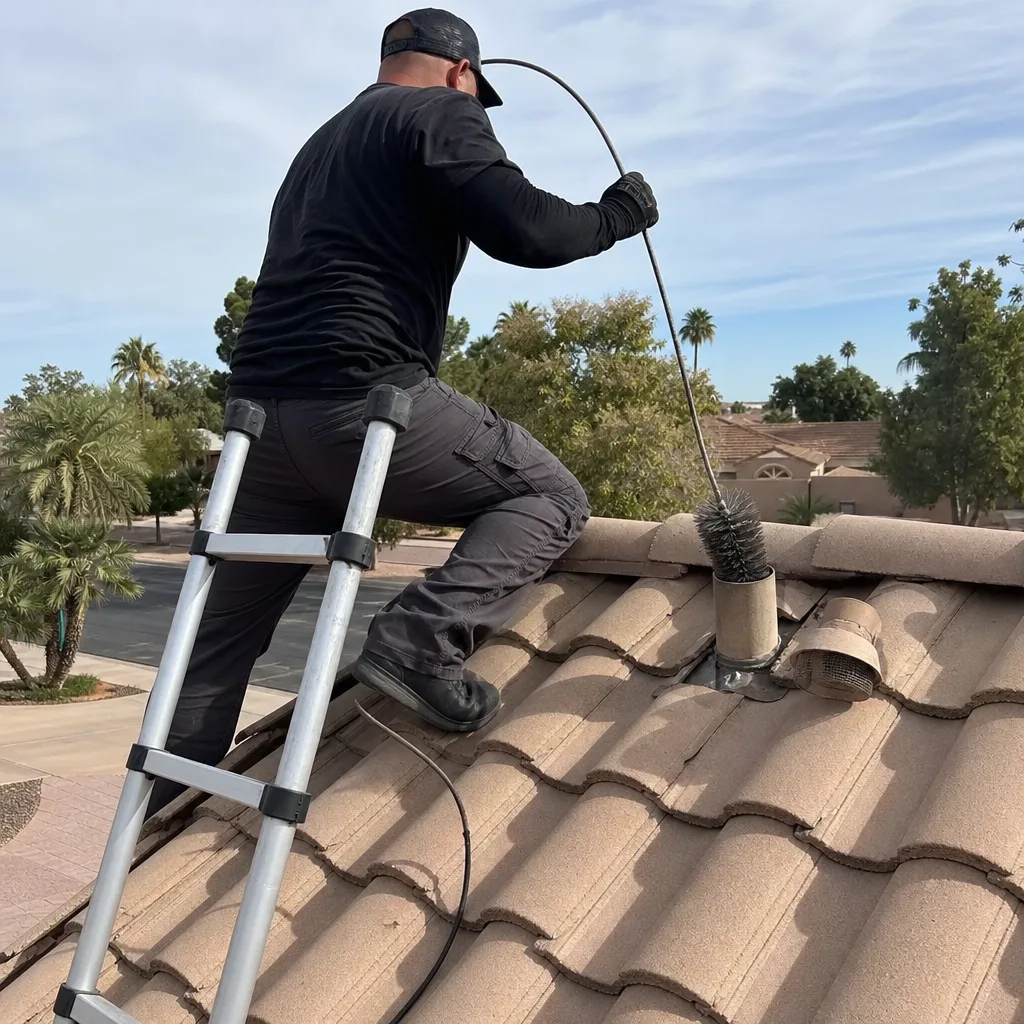
Low quotes typically reflect limited scope - perhaps only visible register cleaning, or a shop-vac inserted briefly into each duct without containment or agitation. True negative-pressure extraction with rotary brush agitation, using professional equipment from manufacturers like Rotobrush or Abatement Technologies, requires time and proper setup. A $199 “whole house special” cannot cover this work profitably; the balance is made up with upsells or corners cut. Request written scope details and equipment specifications before comparing prices.
Require before-and-after photography of every duct run, with dates and identifying marks visible in each frame. The photos should show the same duct section from the same angle, with measurable debris removal evident. CleanRun includes this Documented Photo Record as a standard deliverable on every job, a practice we’ve held since 2013. If a contractor offers only verbal assurance or generic stock photos, you have no verification.
Homeowners can and should perform register cleaning, filter changes, and visual inspections using the protocol in this guide. However, cleaning the full duct network requires negative-pressure containment equipment to prevent debris redistribution, and access to the plenum and trunk lines that are not safely reachable without training. Attempting deep duct cleaning with household vacuums risks damage to flex duct, disconnection of sealed joints, and personal injury from attic or crawl space hazards.
Hard water doesn’t directly affect ductwork, but it impacts the humidification and evaporative cooling components that connect to your air distribution system. Homes with whole-house humidifiers or evaporative coolers (swamp coolers) see mineral scale buildup in water lines and distribution pads. When these components are serviced, debris can enter the ductwork. If your home uses evaporative cooling, coordinate cooler pad replacement with duct inspection timing.
The Bottom Line
Effective duct maintenance in Phoenix requires a documented protocol, not a calendar reminder - explore our more guides & resources for year-round home maintenance support. Inspect three times yearly tied to actual seasonal triggers: March before cooling demand peaks, October after monsoon moisture has done its work, and January at heating startup. Perform the room-by-room register inspection yourself. Document baseline conditions with dated, comparable photographs. Distinguish what you can observe from what requires professional verification. And keep a written log that outlasts any single contractor’s visit. The homeowners who get the most value from duct cleaning are those who can show a technician exactly what changed, when, and where - because they’ve been paying attention all along.
Written by Tomas Reyes, Owner at CleanRun Air Duct Cleaning Phoenix, serving Phoenix since 2013.