
Last updated September 23, 2026
Whole-system duct and dryer vent check with before-and-after photos - you see exactly what came out of your vents
That "$99 whole-house special" is a bait ad - the real number appears once they are in your hallway, or the "clean" is a shop-vac at the register. We photograph the inside of your ducts before and after instead.
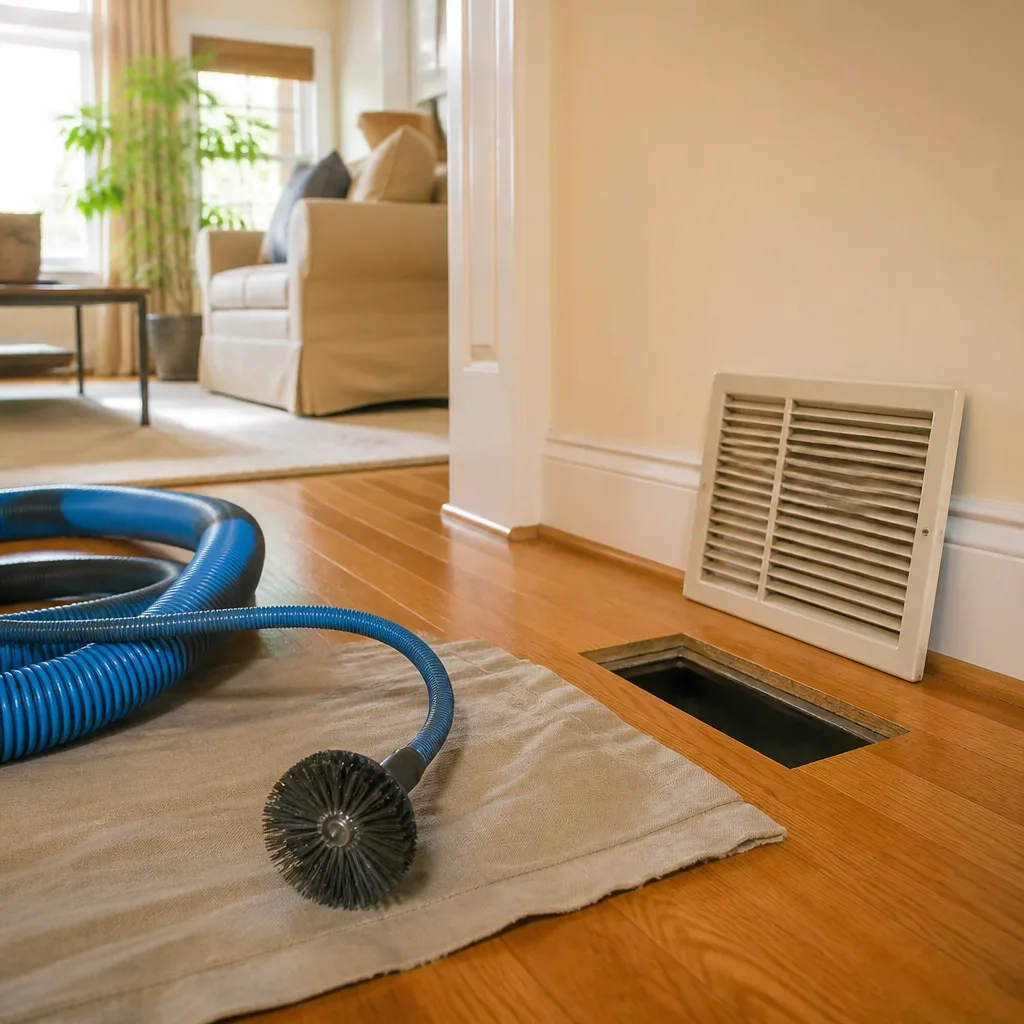
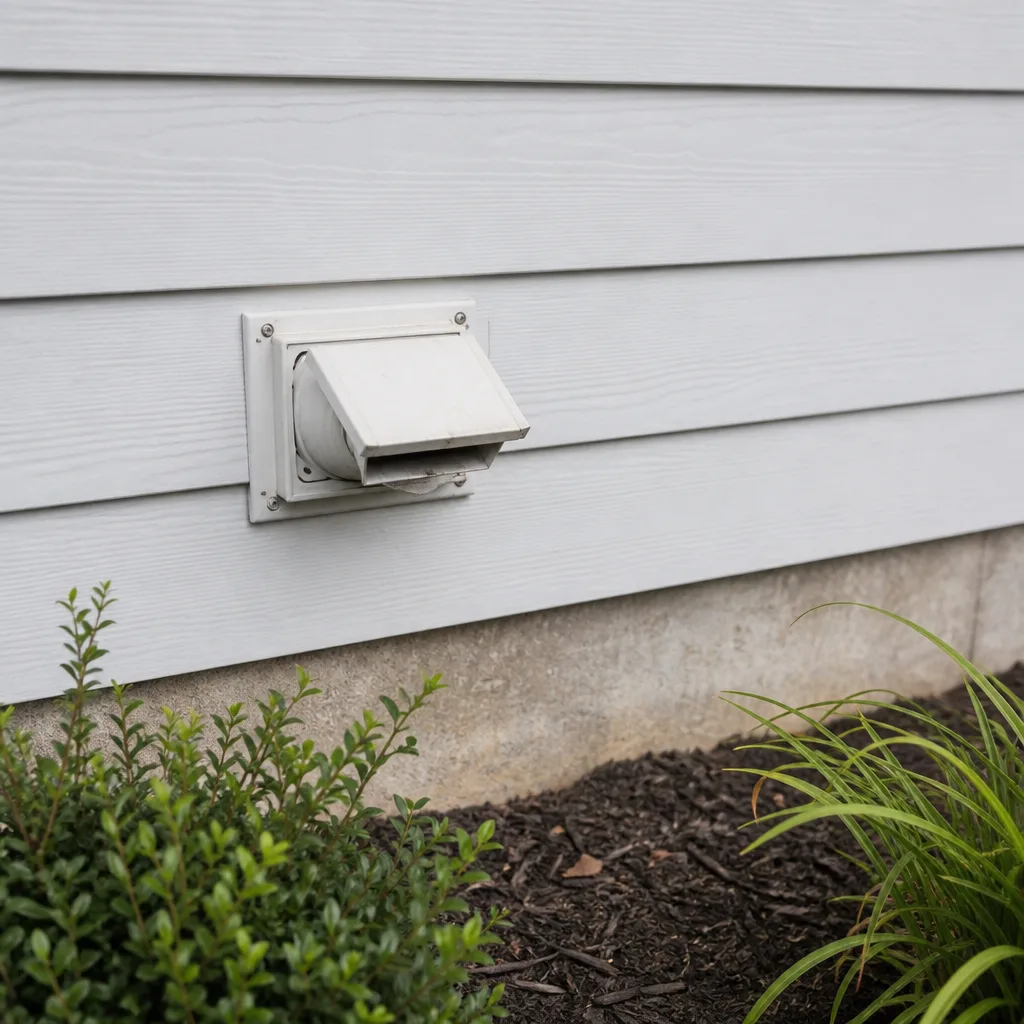
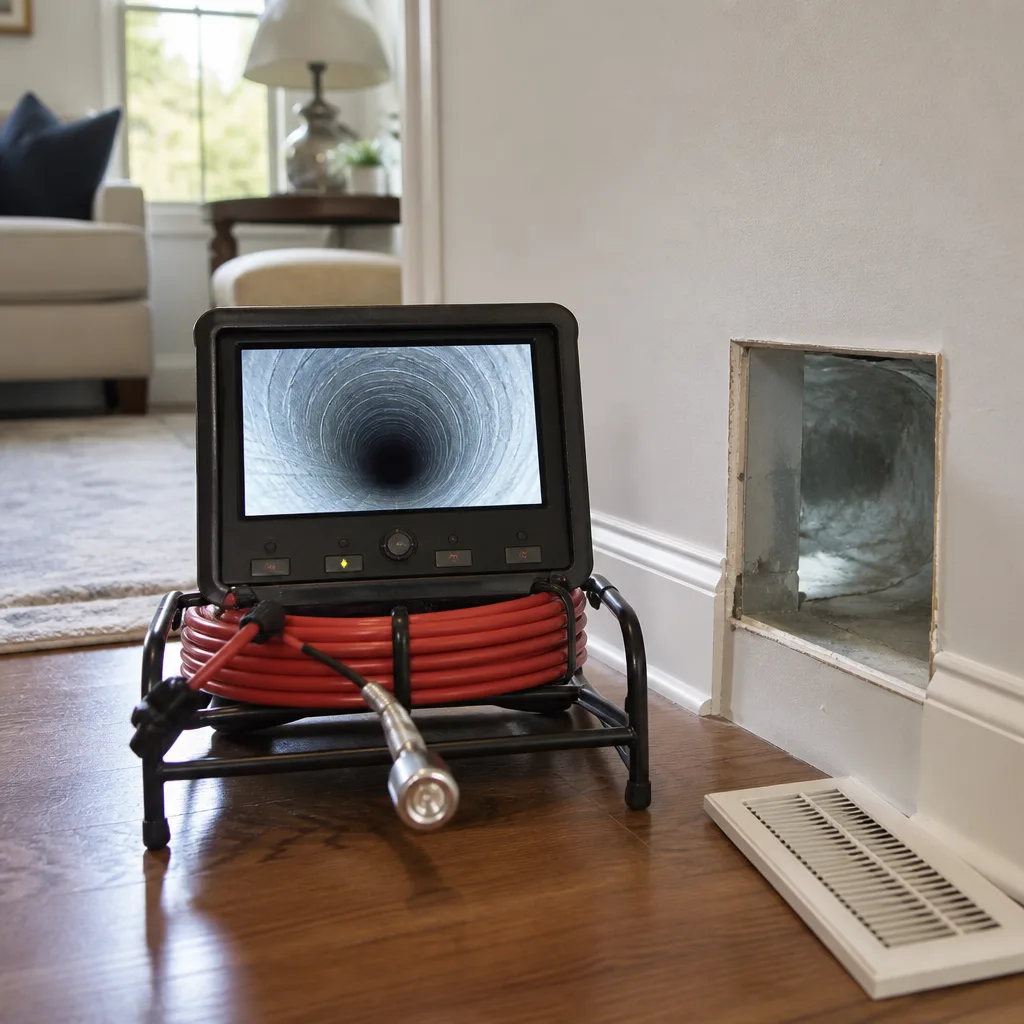
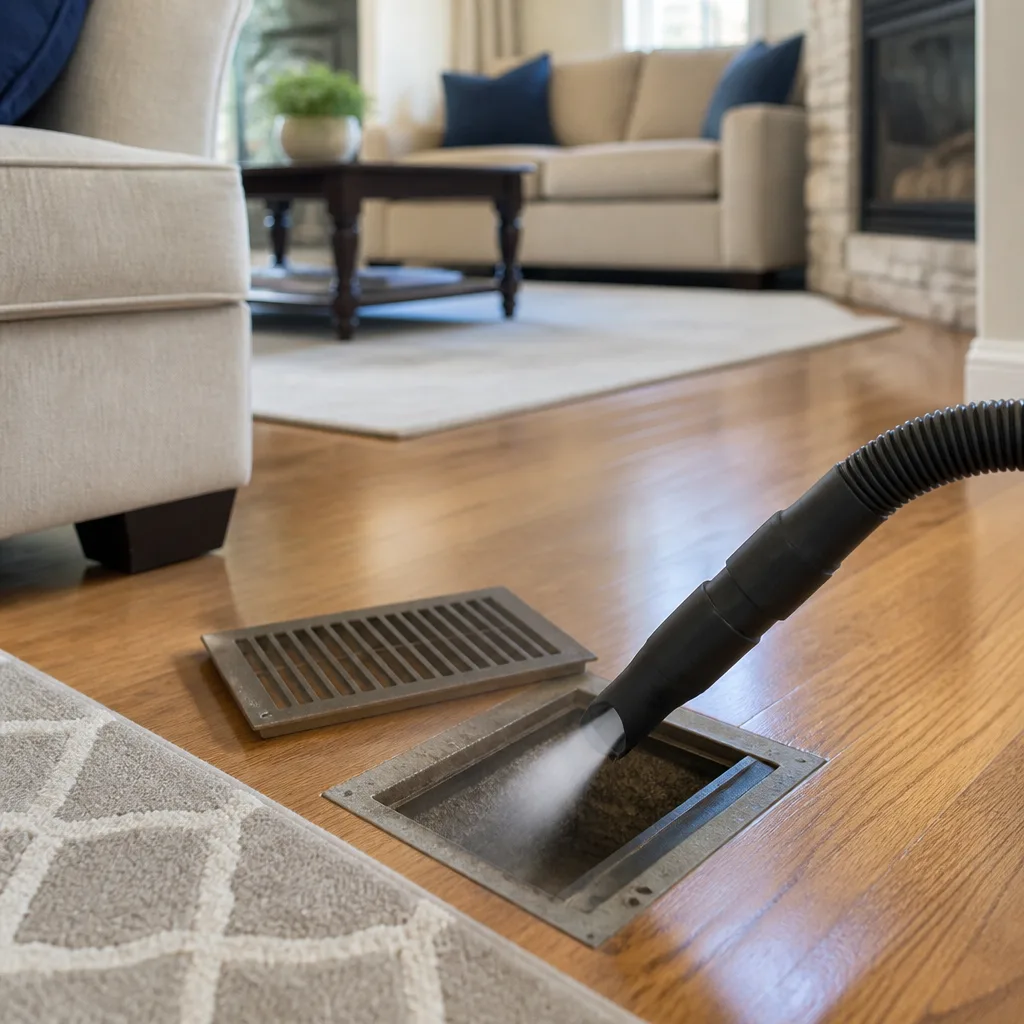
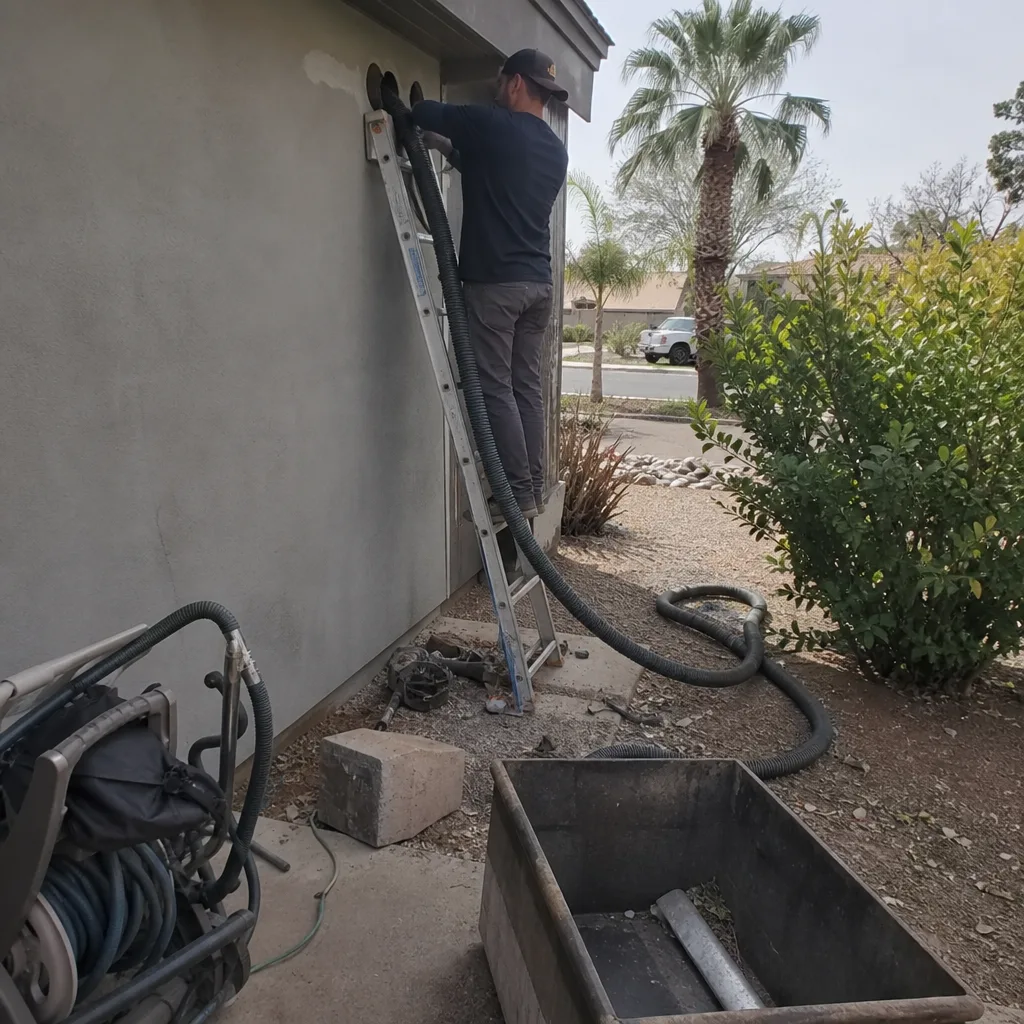 Before
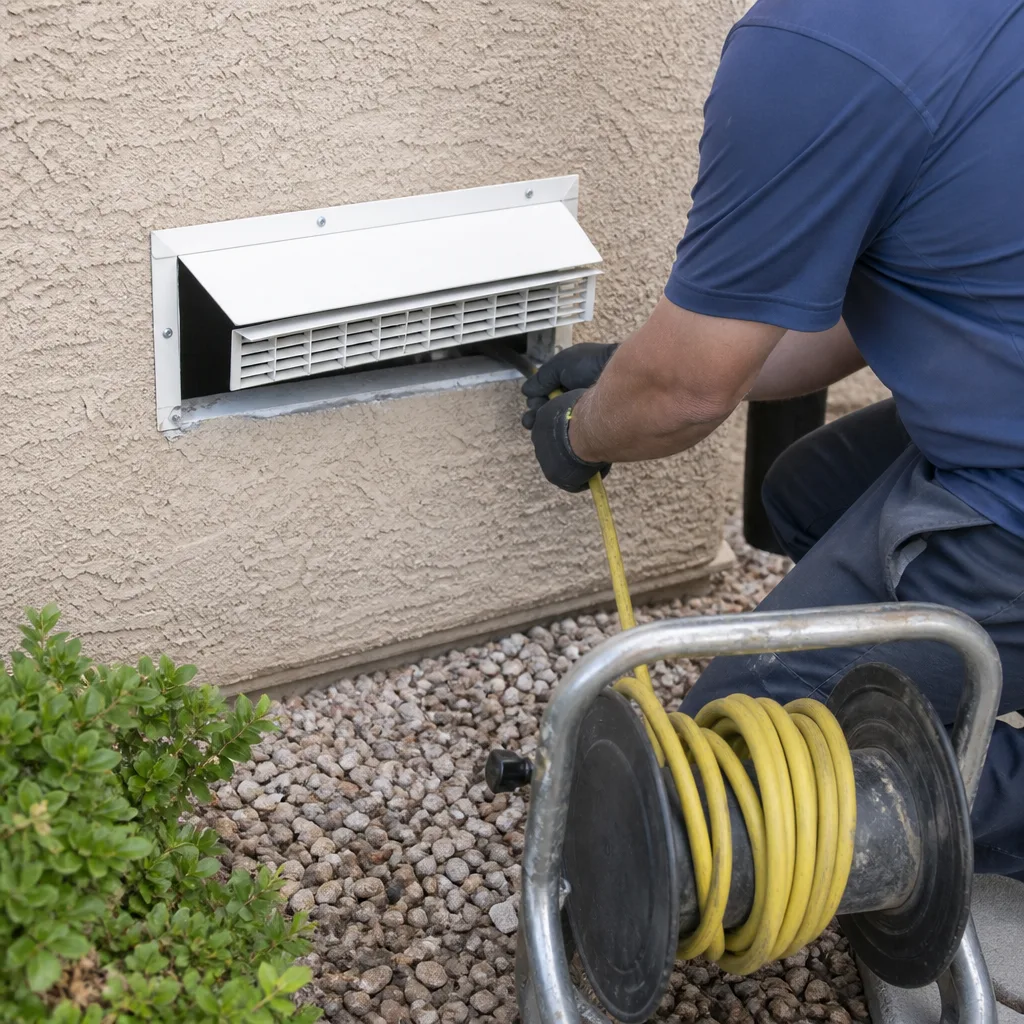 After
After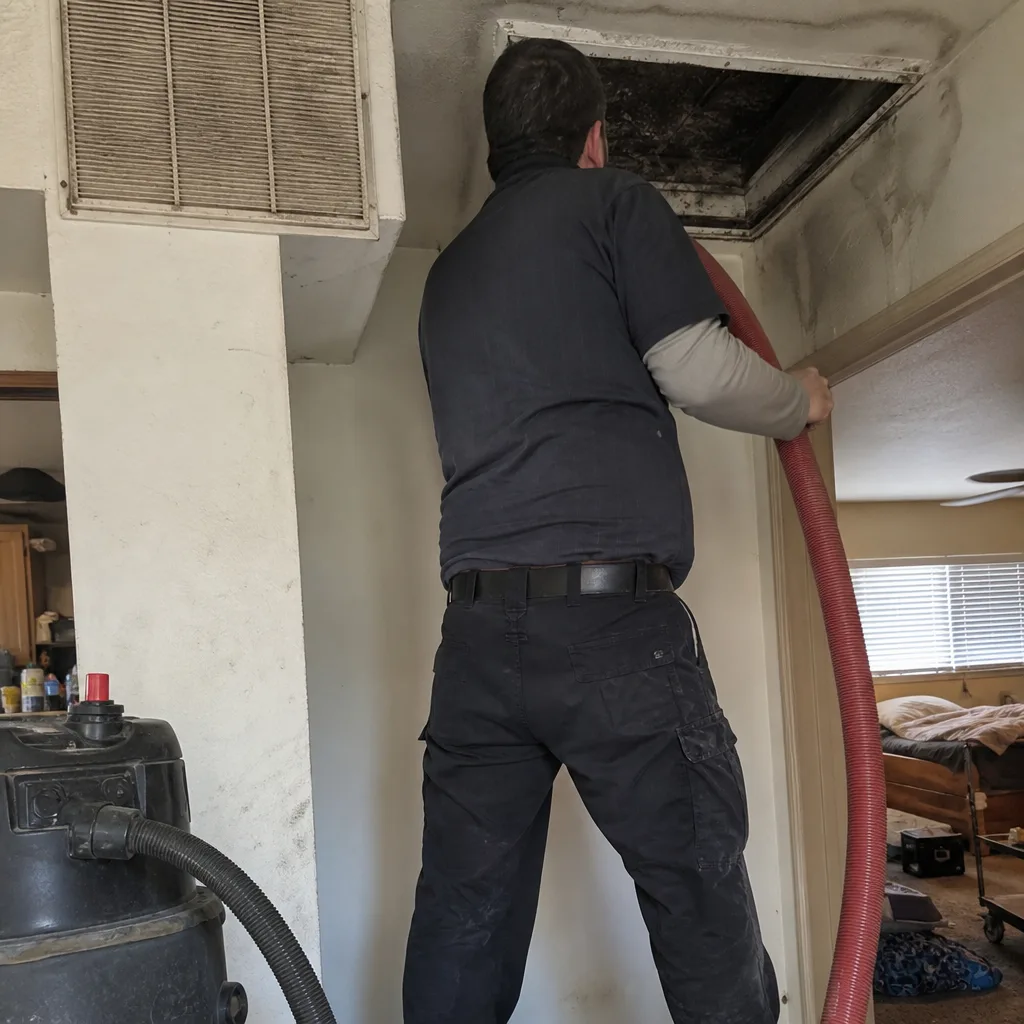 Before
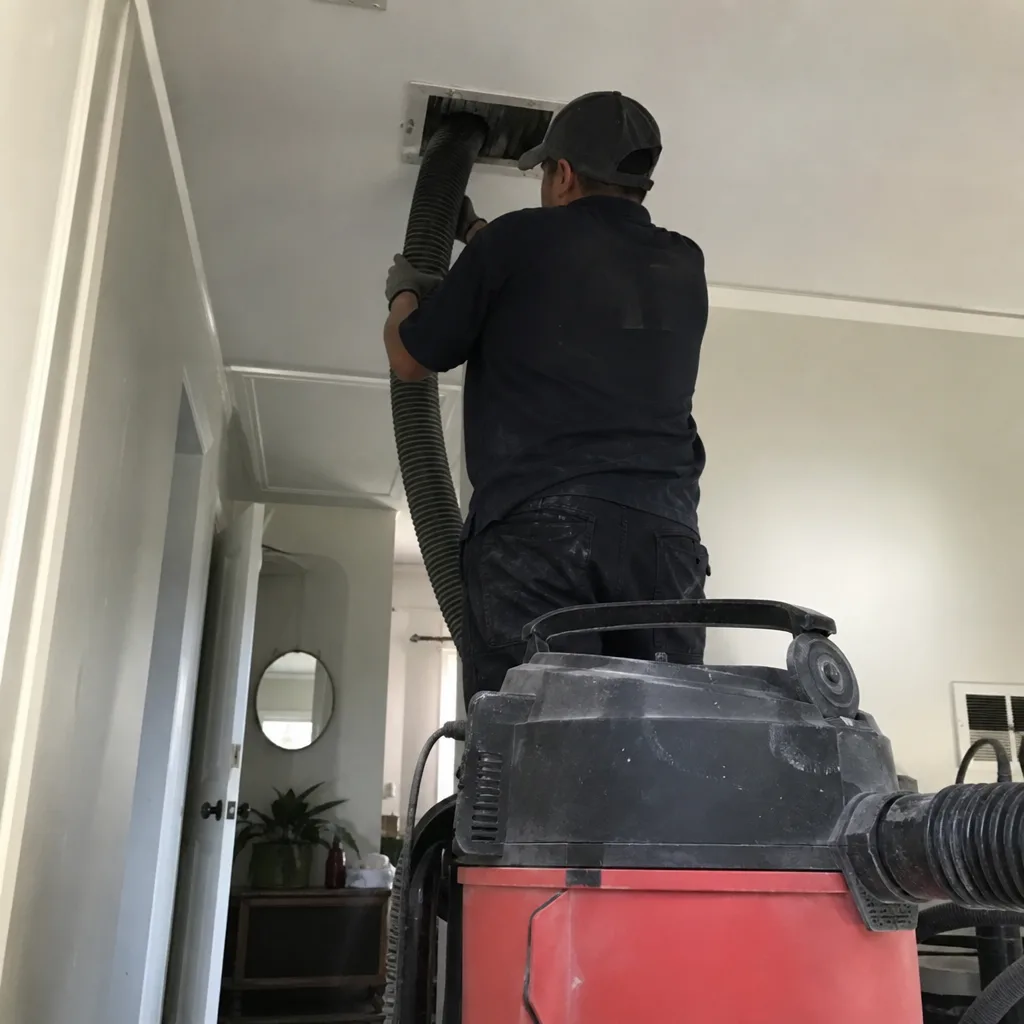 After
After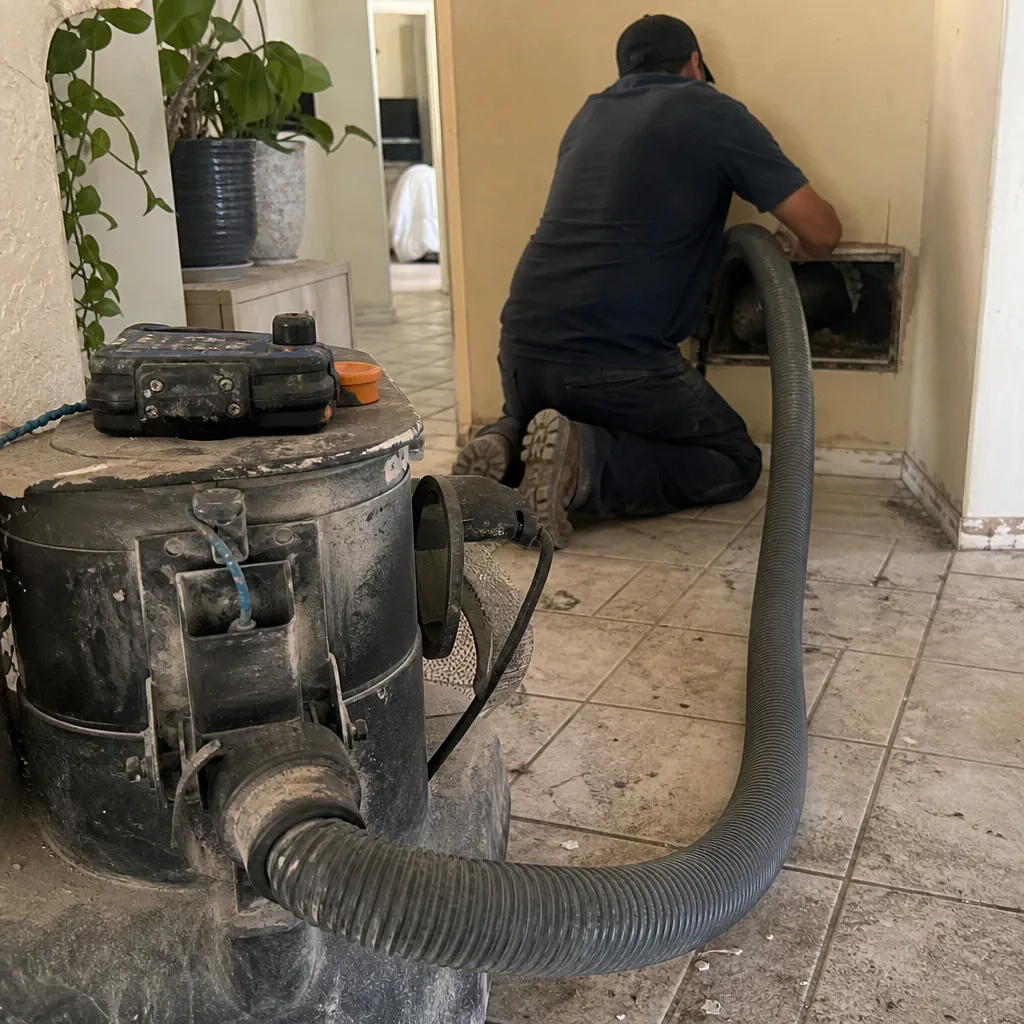 Before
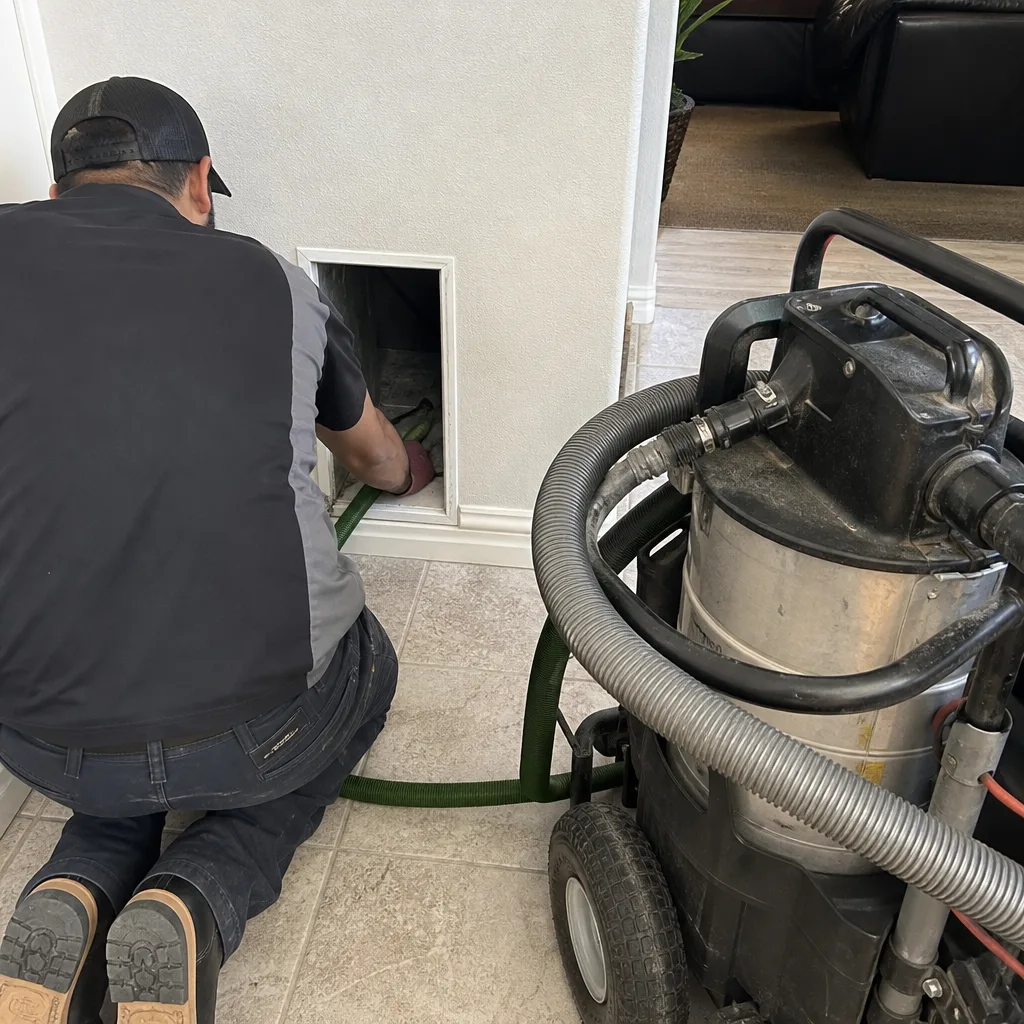 After
AfterAir Duct Cleaning Warning Signs: A Phoenix Homeowner’s Reference Guide
Here’s something most duct cleaning companies won’t tell you: dust blowing from your registers right after you’ve changed the filter is almost never a sign that your ducts need cleaning. In our experience across more than 52,000 Phoenix homes, it’s usually bypass air from a poorly seated filter, and a $400 duct cleaning won’t fix it. This guide exists because the internet is full of symptom lists that send homeowners toward the wrong service call. We’ll show you how to tell whether what you’re seeing starts in the duct system, the air handler, or just the register grille itself, so you spend money on the right fix-or explore The Complete Guide to Air Duct Cleaning in Phoenix for deeper context.
Quick Answer
The warning signs that actually indicate dirty or damaged ductwork in Phoenix homes include: visible debris accumulation inside floor registers, persistent musty odors that intensify when the blower cycles on, uneven room temperatures combined with low airflow at distant vents, and utility bills that climb without thermostat changes. Most other symptoms, like dust on furniture or brief odors after filter changes, point to HVAC equipment issues or filter bypass rather than duct contamination.
Table of Contents
- A Diagnostic Framework: Duct, Handler, or Register?
- Phoenix-Specific Warning Signs: Caliche, Monsoons, and Insulation Debris
- Dirty Duct vs. Damaged Duct: Why Cleaning the Wrong One Wastes Money
- How to Document Warning Signs Before Calling a Contractor
- When Cleaning Won’t Solve It: Signs You Need Repair or HVAC Service First
- What a Proper Duct Inspection Actually Includes
- What Duct Cleaning Costs in Phoenix, and What the Price Should Include
- Common Mistakes to Avoid
- When to Call a Professional
- Frequently Asked Questions
BeforeAfterA Diagnostic Framework: Duct, Handler, or Register?
Every symptom that seems like a “duct problem” has three possible origins. Misdiagnosing which one costs Phoenix homeowners hundreds in unnecessary service calls every year.
The duct system is the network of supply and return runs, trunk lines, and the plenum (the main distribution box attached to your air handler). Problems here affect multiple rooms, worsen over months or years, and typically require mechanical cleaning or physical repair.
The air handler contains the blower, evaporator coil, and heat exchanger. Problems here often produce sudden symptoms, affect the whole house uniformly, and need HVAC service rather than duct cleaning.
The register or grille is just the visible endpoint. Problems here are localized to one spot, easy to inspect yourself, and sometimes solvable with a vacuum and screwdriver.
Symptom: Excessive Dust on Furniture
Check your filter first. A MERV 8 filter that’s clogged will let fine particles through. But if you’re changing it monthly and still seeing dust, note where it accumulates. Dust that settles uniformly throughout the house, especially near return air pathways, suggests the filter isn’t sealing properly in its rack. Dust that appears primarily in rooms farthest from the air handler, or only in rooms with floor supplies, suggests debris being carried through the duct system itself.
In Phoenix, caliche dust (the fine, alkaline soil from our desert substrate) has a distinctive pale color and gritty texture. If you’re wiping this off surfaces weekly, and your home was built during the 2005-2008 construction boom in areas like Laveen or Queen Creek, there’s a reasonable chance the original duct system was never properly cleaned after construction debris settled inside.
Symptom: Musty or Chemical Odors
Timing is everything. Odors that appear only when the blower first cycles on, then dissipate, usually originate in the air handler: condensate pan bacteria, dirty evaporator coil, or degraded insulation on internal wiring. Odors that persist throughout the blower cycle, or that vary by room, suggest duct contamination or a dead rodent in an isolated run.
The monsoon season in Phoenix, typically June through September, introduces a specific pattern: return-side ducts in homes near irrigated areas or with mature landscaping can draw in humid air that condenses on cool metal duct walls. This produces a mildew odor that intensifies when the system runs. The problem is moisture, not dirt, and cleaning alone won’t prevent recurrence without addressing the humidity source.
Symptom: Uneven Temperatures Between Rooms
This is where homeowners most often buy duct cleaning they don’t need. A room that’s 8 degrees warmer in August could have:
- A collapsed flex duct section in the attic (duct repair, not cleaning)
- A disconnected duct joint leaking conditioned air into the attic (duct repair)
- An undersized duct run for the room’s heat load (duct redesign)
- A failing blower motor or dirty evaporator coil (HVAC service)
- Actual debris blockage restricting airflow (duct cleaning)
Before calling any contractor, perform this simple check: with the blower running, hold your hand 6 inches from the problematic register. If airflow is weak compared to other registers, the problem is likely in the duct run serving that room. If airflow feels normal but the air isn’t cool, the problem is in the air handler or the refrigerant system.
Symptom: Rising Utility Bills
A duct system leaking 20% of its conditioned air into the attic can raise cooling costs significantly in Phoenix’s 115-degree summers. But so can a refrigerant leak, failing capacitor, or coil fouled with dust. The diagnostic question: is your thermostat reaching setpoint, but running longer to get there? That’s often duct leakage. Is it struggling to reach setpoint at all? That’s usually equipment.
Our crews in Phoenix have documented this distinction repeatedly. In a 2019 job in the Arcadia neighborhood, a homeowner had received two quotes for duct cleaning to address high summer bills. Our inspection found a disconnected return duct in the attic pulling 130-degree air directly into the system. Cleaning would have done nothing. Reconnecting and sealing the joint dropped their August bill by $87.
Phoenix-Specific Warning Signs: Caliche, Monsoons, and Insulation Debris
Phoenix’s desert environment creates duct contamination patterns you won’t find in humid climates. Recognizing these local signatures helps distinguish normal desert housekeeping from actual duct problems.
Caliche Dust Rings Around Supply Registers
Caliche is the cement-like calcium carbonate layer beneath our desert topsoil. When disturbed by construction, landscaping, or seasonal dust storms, it produces an extremely fine, pale dust that infiltrates homes through every gap. If you notice a distinct ring of pale, almost white dust accumulating on the ceiling or wall around supply registers, particularly in homes built on former agricultural land in areas like Gilbert, Chandler, or the west Valley, this indicates the register boot (the metal fitting connecting duct to wall) isn’t sealed to the drywall.
The dust isn’t coming from inside the duct. It’s being drawn from the wall cavity or attic space through the gap around the boot, then deposited by the turbulent airflow at the register face. Cleaning the duct won’t stop this. Sealing the boot to the drywall with mastic or foam, and ensuring the duct connection to the boot is secure, will.
Post-Monsoon Mildew Odor from Return-Side Ducts
Phoenix’s monsoon pattern is unique: brief, intense humidity spikes followed by rapid drying. In homes with return air pathways through crawl spaces, garages, or exterior wall cavities, this humidity can condense on cool metal duct surfaces during the wet hours, then leave behind organic material that supports mildew growth.
The signature is specific: a musty odor that appears within 48 hours of the first significant monsoon moisture, intensifies when the blower cycles on, and may diminish after several days of dry heat. The source is typically the return plenum or trunk line, not individual supply runs, because that’s where the humid air first enters the system.
Cleaning addresses the mildew growth. But without addressing the humidity infiltration point, usually a poorly sealed return air pathway or missing vapor barrier, the problem returns next season. Our crews document both the contamination and the infiltration path in the photo record, so homeowners understand why we recommend sealing work alongside cleaning.
Visible Insulation Debris at Registers
Fiberglass duct liner, common in systems installed before 2010 in Phoenix, degrades over time in our extreme heat. If you’re seeing small, shiny fiberglass fragments or gray, fuzzy material at register openings, particularly in older homes in central Phoenix neighborhoods like Encanto or Coronado, this indicates the duct liner is breaking down.
This is not a cleaning issue. It’s a duct repair or replacement issue. Cleaning a lined duct with degraded liner will accelerate the breakdown and distribute more fibers into the living space. The correct response is inspection with a borescope camera to assess liner condition, then repair or replacement of affected sections.
Construction Debris in Newer Homes
Phoenix’s building boom in 2020-2022, particularly in north Phoenix and the far west Valley, produced a specific pattern: duct systems left open during construction, then sealed without cleaning. Drywall dust, wood fragments, and even discarded lunch wrappers end up in trunk lines. The warning sign is unusual: a “new house smell” that persists beyond the first year, or debris visible when removing a register in a home less than five years old.
We’ve photographed 2×4 cutoff blocks and soda cans in duct systems. This isn’t normal. It’s a construction defect that should be documented and addressed, sometimes under builder warranty if caught early enough.
Dirty Duct vs. Damaged Duct: Why Cleaning the Wrong One Wastes Money
A dirty duct has accumulated debris on its interior surfaces but maintains its designed shape and airflow capacity. A damaged duct has compromised structure: collapsed sections, disconnected joints, torn flex duct, or deteriorated liner. Cleaning the second type produces no improvement in system performance, which is the actual reason most homeowners consider duct cleaning in the first place.
How to Tell the Difference Before Calling
- Check airflow at the problem register. Remove the register and hold a tissue 6 inches into the duct opening. With the blower running, the tissue should stand nearly horizontal. If it barely moves, or if you feel significant air movement around the register face but little from the duct itself, suspect a collapsed or disconnected duct upstream.
- Inspect what you can see. Use a flashlight and your phone camera. In floor registers, look for debris accumulation at the bottom of the vertical duct (the boot). In ceiling registers, look for dark staining on the duct walls, which indicates sustained airflow with particulate loading. Look also for gaps between duct sections, torn flex duct, or compressed areas where someone has stepped on the duct in the attic.
- Note the symptom pattern. Dirty ducts produce gradual, house-wide degradation: more dust, slowly increasing allergies, gradual airflow reduction. Damaged ducts produce sudden, room-specific problems: one room that was fine last summer and is hot this summer, or a register that suddenly seems to blow less air.
- Check your utility bills for step changes, not slopes. A gradual bill increase over three years suggests accumulating duct leakage or equipment degradation. A sudden jump from one month to the next suggests a physical failure: disconnected duct, failed blower component, or refrigerant leak.
What Cleaning Actually Accomplishes
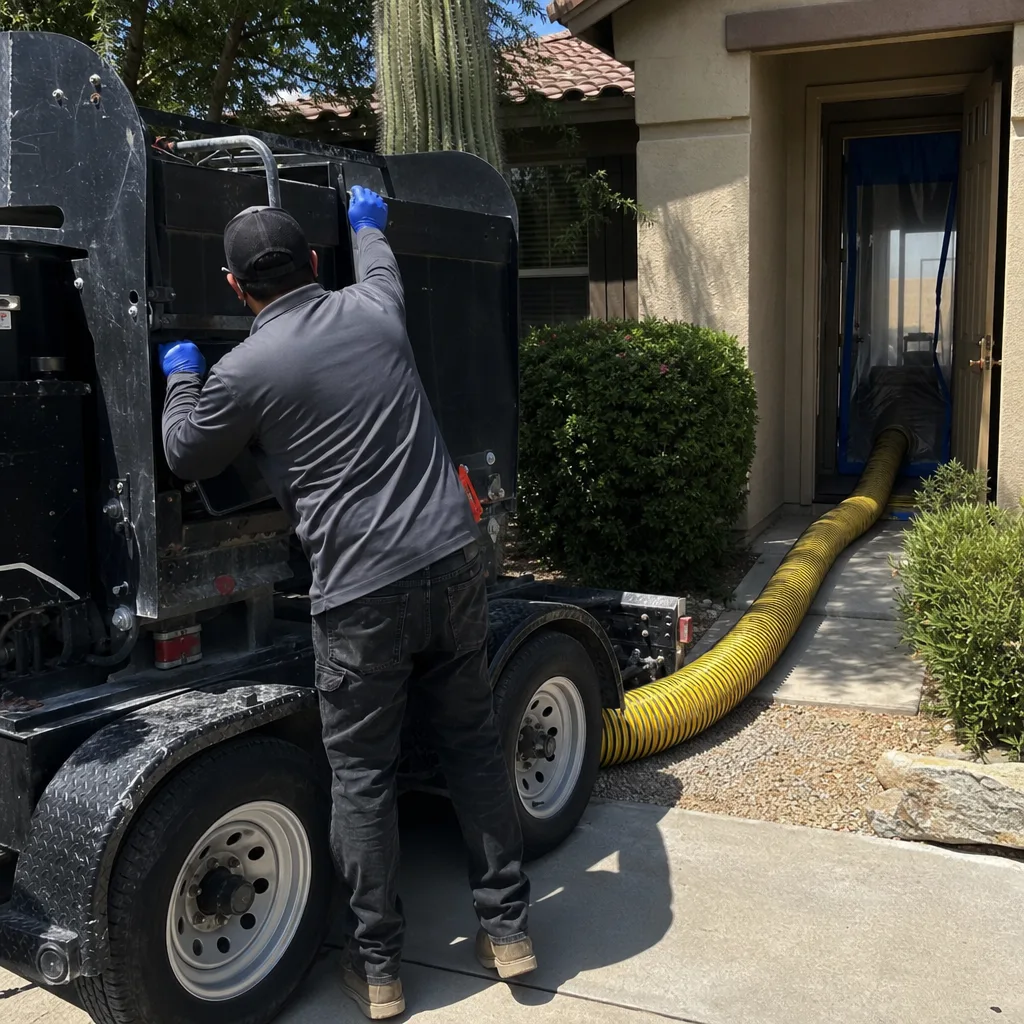
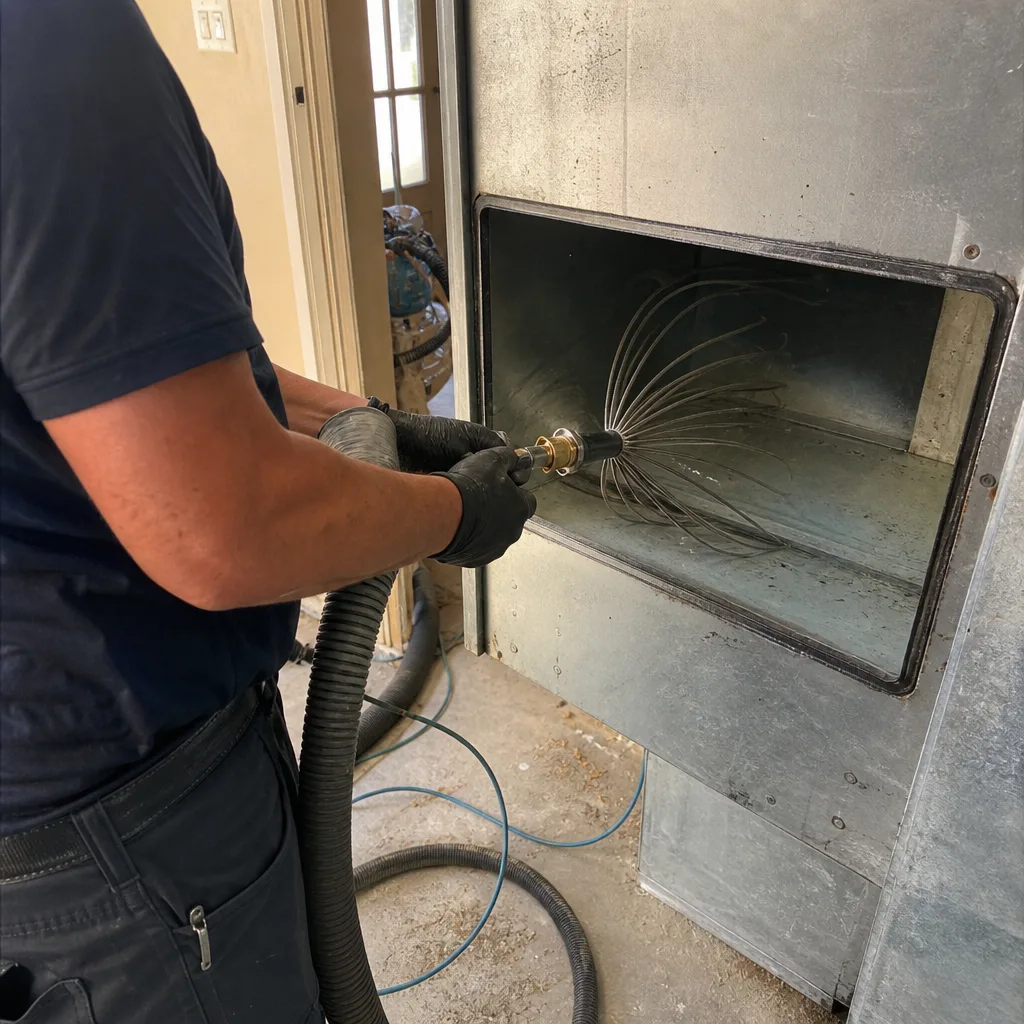
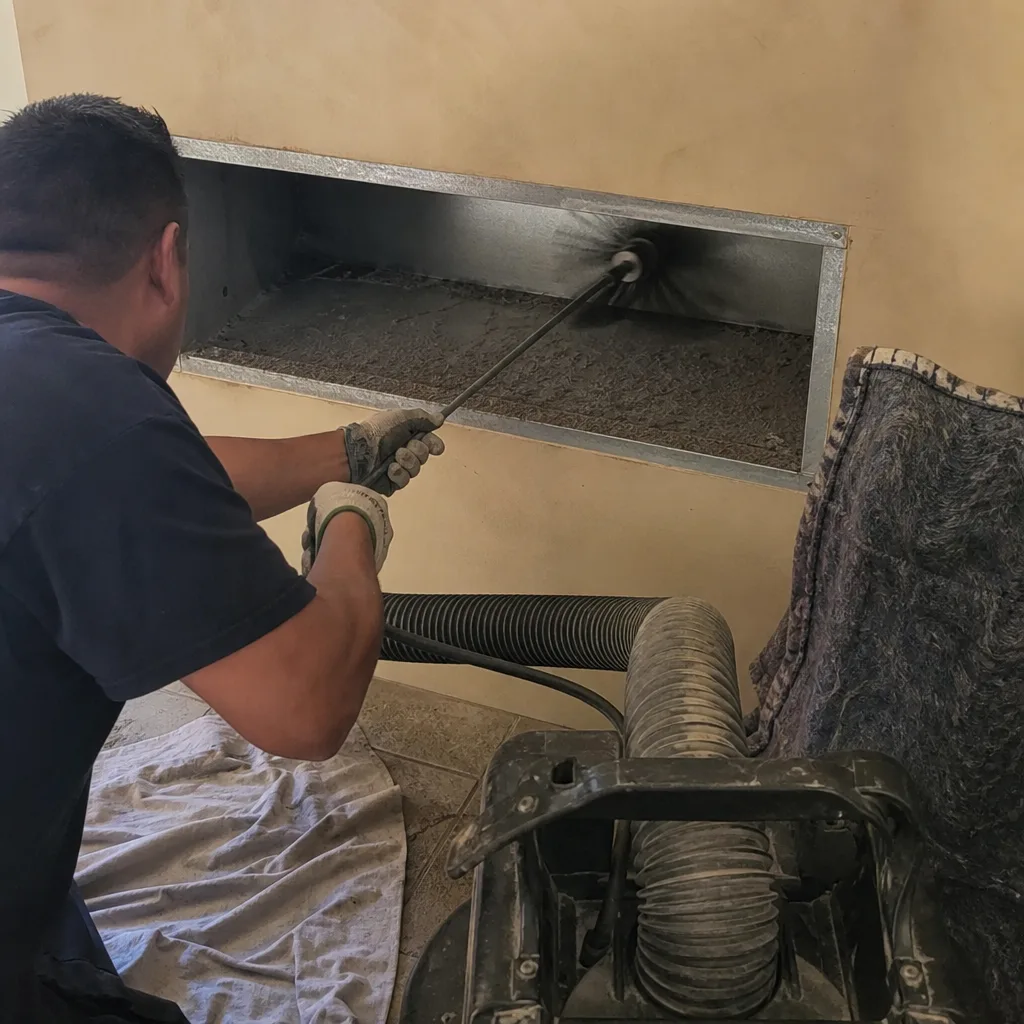
Our Air Duct Cleaning services use negative-pressure extraction equipment (a large vacuum attached to the duct system that pulls debris toward collection) to remove accumulated particulate matter from accessible duct surfaces. It does not:
- Seal leaks or reconnect separated joints
- Restore collapsed flex duct to proper diameter
- Repair degraded duct liner
- Fix bypass air from poorly fitted filters
- Clean the evaporator coil or blower assembly (these are separate services)
In Phoenix’s climate, where cooling dominates energy costs, a damaged return duct pulling 130-degree attic air into the system can raise bills by 30% or more. Cleaning that duct without repairing the damage leaves the problem untouched and the homeowner disappointed.
Our Air Duct Cleaning in Phoenix service includes a pre-cleaning inspection with photo documentation of duct condition. If we find damage that cleaning won’t address, we stop and show you the photo before proceeding. Haven Standard Clause 1 requires a written price before any work starts, and that price reflects what we’re actually going to do, not what we wish the problem was.
How to Document Warning Signs Before Calling a Contractor
The documentation you create before a contractor arrives becomes your baseline. Any claim the contractor makes must improve upon what you’ve recorded, or you have grounds to question the scope of work.
Photograph the Register Area
Remove the register and photograph the duct opening from multiple angles. Include a coin or ruler for scale. Photograph the back of the register itself; debris accumulation here indicates room-side dust loading, not necessarily duct contamination. Photograph any gaps between the register boot and the surrounding wall or ceiling material.
Record Airflow Subjectively
With the blower on high, hold a tissue at each register and note how far it extends horizontally. Photograph or video this. Note which registers perform differently. This simple test has helped many Phoenix homeowners avoid unnecessary service calls: if all registers show similar tissue movement, uniform airflow isn’t the problem.
Document the Filter and Filter Rack
Photograph the filter in place, then removed. Note whether it sits squarely in the rack or has visible gaps around the edges. A 16x25x1 filter that’s actually 15.5×24.5 will bypass significant air. Note the MERV rating and installation date. If you’ve been using MERV 13 filters in a system designed for MERV 8, the restricted airflow can cause blower strain and dust bypass that mimics duct problems.
Track Symptoms with Dates
A simple log: “July 15, noticed musty odor when AC first turns on, lasts 3 minutes.” “August 3, master bedroom 6 degrees warmer than thermostat setting at 3pm.” This timeline helps contractors distinguish monsoon-related moisture issues from ongoing contamination, and it protects you from scope creep if a contractor claims to find problems you haven’t experienced.
Photograph Any Visible Debris
If you can see material inside a floor register, photograph it before disturbing it. Note color, texture, and approximate quantity. Fiberglass fragments, drywall chunks, and organic debris (rodent droppings, insect parts) each indicate different problems requiring different responses.
When Cleaning Won’t Solve It: Signs You Need Repair or HVAC Service First
Certain symptoms indicate that duct cleaning, even thorough professional cleaning, will not produce the improvement you’re seeking. Recognizing these saves the cost of the wrong service call and directs you toward the correct one.
Symptoms Pointing to HVAC Service
- Ice on the refrigerant lines or evaporator coil: This indicates airflow restriction at the coil, refrigerant issues, or blower problems. Cleaning ducts won’t address it.
- Short cycling (system turns on and off rapidly): Typically an oversized system, failing capacitor, or thermostat issue. Duct cleanliness doesn’t affect cycle timing.
- Humidity that won’t drop below 60% indoors: In Phoenix, this usually means the evaporator coil isn’t reaching proper temperature due to refrigerant issues or airflow problems. Clean ducts won’t fix it.
- Electrical burning smell: Turn off the system and call an HVAC technician. This is a safety issue, not a contamination issue.
Symptoms Pointing to Duct Repair
- One room suddenly much warmer or cooler than others: Especially if this changed abruptly rather than gradually. Suspect collapsed flex duct or disconnected joint.
- Whistling or rushing air sounds from walls or ceilings: High-velocity air escaping through a duct tear produces distinctive noise. Cleaning won’t seal the leak.
- Visible duct damage in accessible areas: Crushed flex duct in the garage, disconnected joints in the attic, torn liner visible at register openings.
- Dust accumulation concentrated around one register, with strong airflow: This often indicates a duct leak upstream that’s pulling attic or wall-cavity debris into the system at that point.
The Arcadia Case: A Cautionary Example
A homeowner in Phoenix’s Arcadia neighborhood called for duct cleaning after a $79 coupon mailer promised to solve her high summer bills and dusty home. Our inspection found a return duct completely separated from the plenum, pulling unconditioned attic air. The “dust” she was seeing was actually deteriorated attic insulation being drawn through the gap. Cleaning the ducts would have cost $425 and produced zero improvement. Reconnecting and sealing the return duct, plus replacing the contaminated flex section, solved both problems. The photo record showed her the before condition and the completed repair.
This is why CleanRun provides a CleanRun Air Duct Cleaning Phoenix home inspection with photo documentation before quoting any work. Haven Standard Clause 1 is written price before work starts; we can’t write an accurate price without knowing what we’re actually dealing with.
What a Proper Duct Inspection Actually Includes
Not every company that sells duct cleaning performs a meaningful inspection first. Understanding what a proper inspection includes helps you evaluate whether you’re receiving a diagnostic service or just a sales pitch-see more guides & resources for additional homeowner protection tips.
Visual Register and Boot Inspection
The technician should remove and inspect multiple registers, not just one. They should photograph the duct opening, the boot condition, and the back of the register itself. They should note gaps between the boot and surrounding material, which indicate bypass air paths.
Borescope Camera Examination
A borescope (a flexible camera on a long cable) allows visual inspection of duct interiors beyond the register opening. In a typical Phoenix home, this means examining at least the first 10 feet of each main trunk line and any accessible branch ducts. The technician should show you the live feed or recorded images, not just describe what they saw.
Our crews use borescope equipment from Abatement Technologies and Rotobrush to document duct condition. The images become part of the standard photo record delivered with every job. If a company can’t or won’t show you what your ducts actually look like, you have no basis to evaluate whether cleaning is warranted.
Airflow Measurement
Professional airflow measurement uses a calibrated anemometer or flow hood at each register, with the blower on a known speed setting. This produces quantitative data: Register 1 delivers 85 CFM, Register 2 delivers 42 CFM, against design targets for each room. Subjective hand-waving at register openings is not measurement.
System Pressure Testing
Static pressure testing measures the resistance the blower works against. High static pressure indicates restrictions (dirty coil, undersized ducts, clogged filter). Low static pressure with low airflow indicates leaks or disconnected ducts. This test takes 10 minutes and reveals whether the problem is in the ducts, the equipment, or both.
Leakage Detection
Duct leakage testing pressurizes the duct system and measures air escape. In Phoenix, where attic temperatures exceed 140 degrees in summer, even modest return-side leakage significantly impacts efficiency. A proper inspection quantifies this, not guesses at it.
What the Inspection Should Produce
You should receive: written findings with specific locations and measurements; photographs of conditions observed; a clear statement of what problems cleaning will and won’t address; and a written price for recommended work before any equipment is activated. This is exactly what CleanRun delivers under Haven Standard Clause 1: Written Price Before Work Starts.
What Duct Cleaning Costs in Phoenix, and What the Price Should Include
Phoenix homeowners researching duct cleaning encounter a confusing price landscape: $79 coupons, $199 “whole house specials,” and quotes ranging upward of $800. Understanding what legitimate duct cleaning actually costs, and what should be included, protects you from bait-and-switch pricing and incomplete work.
Honest Price Ranges for Phoenix Market
Based on our pricing and market knowledge, legitimate whole-system duct cleaning in Phoenix typically falls in these ranges:
| Home Size / System Type | Price Range | What’s Included |
|---|---|---|
| Condo or townhome, single system | $280 – $380 | Supply and return ductwork, registers cleaned, basic photo documentation |
| Single-family home 1,200-2,000 sq ft, single system | $350 – $480 | Full supply and return network, register cleaning, photo record, written scope |
| Single-family home 2,000-3,500 sq ft, single system | $420 – $580 | Extended duct network, possible zone damper inspection, full documentation |
| Home with dual systems | $680 – $920 | Both complete systems, coordinated cleaning, comprehensive photo record |
| Additional services: dryer vent cleaning | $120 – $180 | Full vent run from dryer to exterior, lint removal, airflow verification |
Prices below these ranges should trigger scrutiny. A $79 service cannot cover technician wages, equipment costs, insurance, and travel time for legitimate work. These prices typically involve minimal actual cleaning, aggressive upselling once inside the home, or both.
What the Price Must Include
Under the H.A.V.E.N. Standard, a legitimate duct cleaning quote in writing should specify:
- The exact duct runs to be cleaned (supply vs. return, main trunk vs. branches)
- The cleaning method (negative-pressure extraction with mechanical agitation is standard for occupied homes)
- Whether register and grille cleaning is included or additional
- Whether the photo record is delivered digitally, printed, or both
- The warranty terms, including duration and what “done right” means specifically
CleanRun’s 365-Day Done Right Promise, backed in writing on every job, means if the work doesn’t produce the documented improvement, we return to address it. This isn’t a satisfaction guarantee subject to manager discretion; it’s a written contractual obligation.
Red Flags in Pricing
Per-vent pricing ($15/vent, $25/vent) is a classic bait-and-switch structure. The low per-vent rate applies only to easily accessible supplies, with returns, mains, and plenums priced separately at much higher rates. A whole-system flat price, agreed before work starts, eliminates this ambiguity.
Similarly, “free inspection” offers that require a deposit, or that convert to a mandatory service charge if you decline work, are structured to create psychological commitment rather than genuine evaluation. Our Free Second Opinion on Any Written Estimate means exactly that: bring a competitor’s written quote, and we’ll put our number next to it with no obligation.
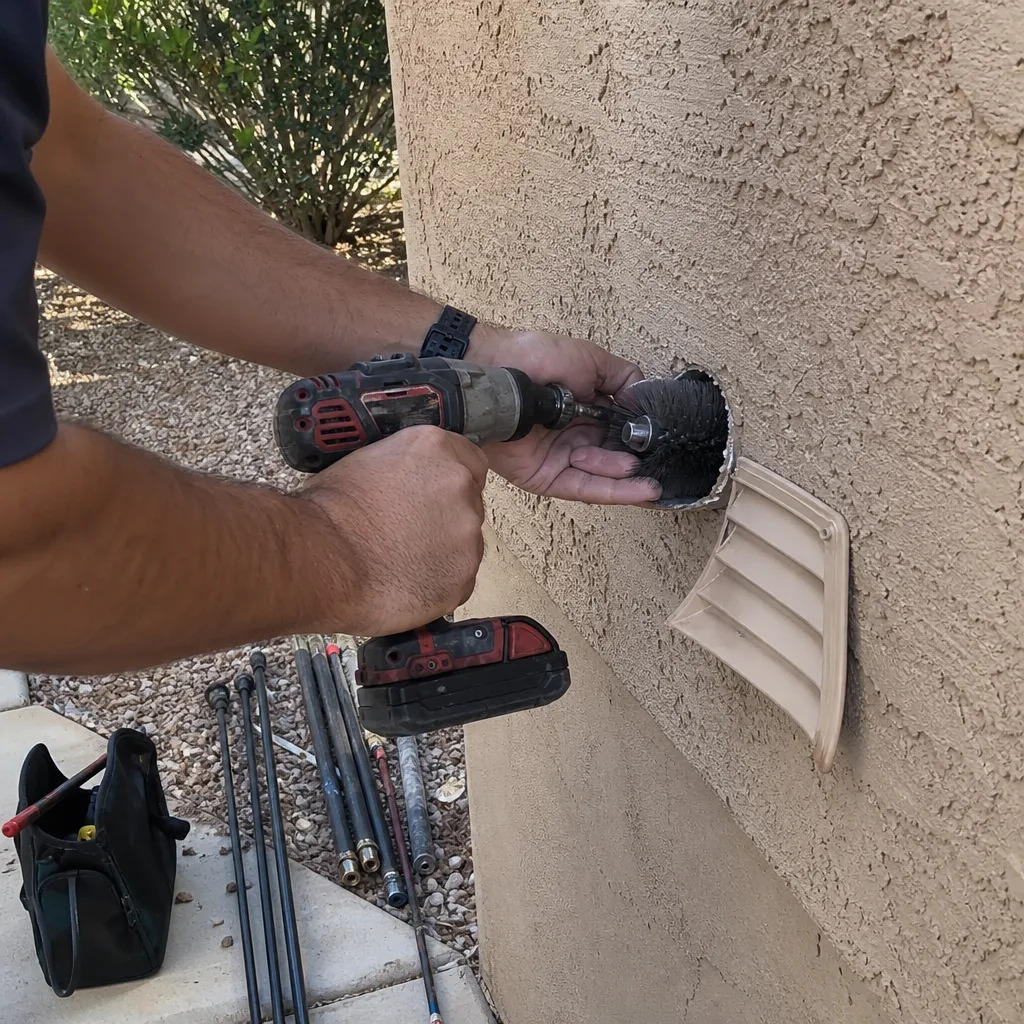
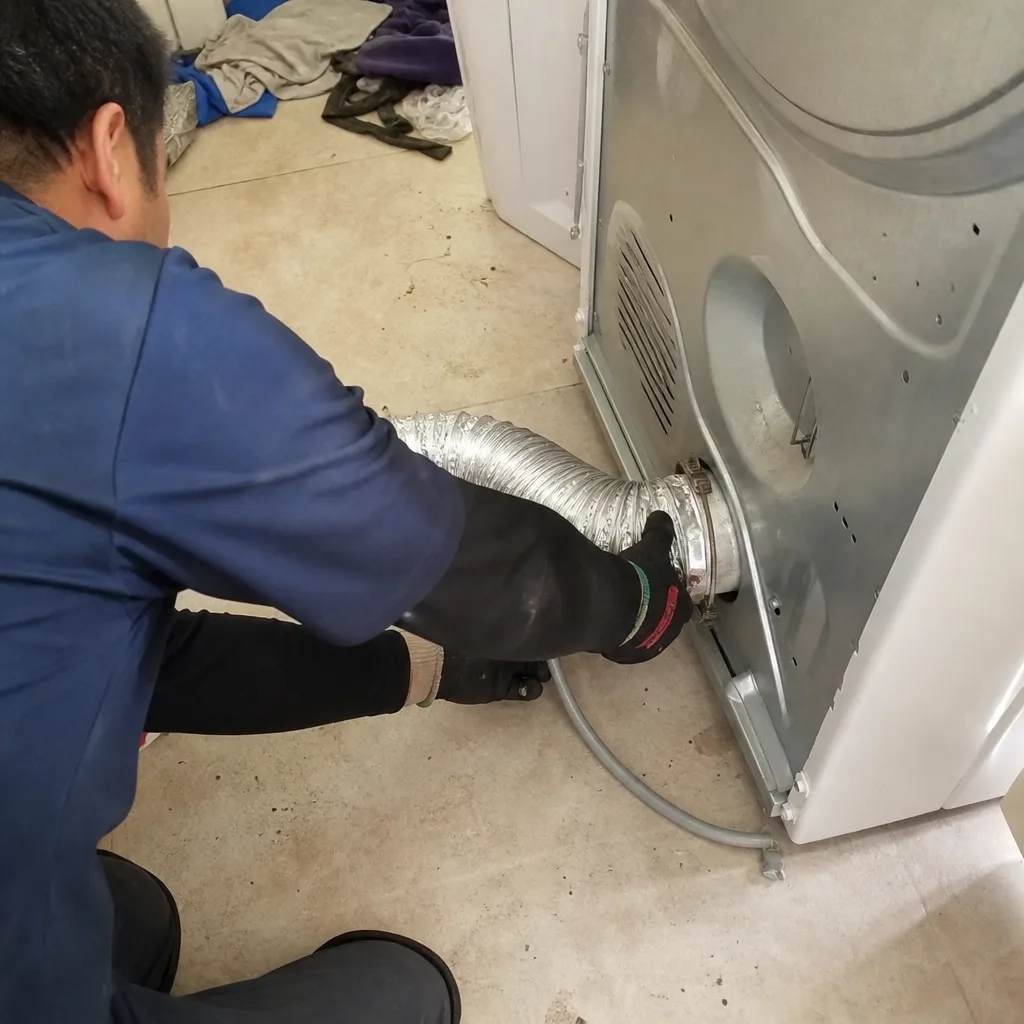
For Dryer Vent Cleaning in Phoenix, which is often bundled with duct cleaning, the same pricing discipline applies. A legitimate dryer vent cleaning to the exterior, with airflow verification, runs $120-$180 in the Phoenix market. Offers below this typically clean only the accessible portion and leave the majority of lint accumulation in the wall or attic run.
Common Mistakes to Avoid
- Booking duct cleaning after every dust storm. Phoenix’s haboob season deposits visible dust on surfaces, but your HVAC filter is designed to handle this. If you’re changing filters appropriately, the duct system isn’t accumulating significant additional debris from seasonal events.
- Assuming new construction means clean ducts. Some of the most contaminated systems we’ve photographed were in homes built in 2021-2022 in north Phoenix. Construction debris left in ducts during building, then sealed in when drywall went up, doesn’t disappear on its own.
- Treating all contractors as equivalent. Ask specifically: Will you photograph my ducts before and after? Will you put the full price in writing before starting? What equipment brands do you use? Contractors who hesitate on any of these points are operating below the standard CleanRun applies under the H.A.V.E.N. Standard.
- Ignoring register boot gaps. That ring of caliche dust around your ceiling register isn’t a duct problem. It’s an installation detail that costs $20 in materials to fix. Paying $400 for duct cleaning to address it is mismatched spending.
- Confusing coil cleaning with duct cleaning. The evaporator coil sits in your air handler, not your ducts. It’s a separate component requiring separate service. If your symptom is musty odor that dissipates quickly, ask specifically about coil condition before authorizing duct work.
- Accepting verbal warranties. “We’ll make it right” means nothing without written terms. The 365-Day Done Right Promise is printed on every CleanRun invoice because verbal assurances evaporate when the truck leaves.
- Neglecting dryer vent maintenance while focusing on ducts. A clogged dryer vent is a genuine fire hazard and efficiency problem. If you’re investing in home maintenance, HVAC Cleaning in Phoenix and dryer vent service often produce more immediate safety and efficiency returns than duct cleaning in marginally dirty systems.
When to Call a Professional
Call for professional evaluation when: you’ve documented persistent symptoms over two weeks or more; one room has developed sudden, significant temperature variation; you can see debris or damage when inspecting register openings; your utility bills have increased without thermostat changes and basic filter maintenance hasn’t helped; or you’re experiencing musty odors that correlate with blower operation.
Don’t call when: you’ve just changed the filter and noticed brief dust; you’ve had one high bill during a record heat week; or you’re reacting to a coupon mailer without specific symptoms. In these cases, monitor and document first.
CleanRun Air Duct Cleaning Phoenix offers free estimates in Phoenix. Our inspection includes photo documentation of what we find, a written price before any work starts, and no obligation to proceed. Call (480) 500-6377 to schedule. All calls are answered by a live person, and our background-checked, uniformed technicians are identified by name before arrival under Haven Standard Clause 3: Verified Crews.
Frequently Asked Questions
Whole-system duct cleaning for a typical Phoenix single-family home runs $350-$580, with condos and townhomes starting around $280. Dual-system homes range $680-$920. Prices below $200 for whole-system work typically indicate minimal service with aggressive upselling, while legitimate work includes negative-pressure extraction, mechanical agitation, register cleaning, and photo documentation. Call (480) 500-6377 for a written estimate specific to your home - estimates are free.
The $79-$199 offers almost always use a per-vent or teaser pricing structure that balloons once the technician is in your home. The low price covers only easily accessible supply registers, with returns, trunk lines, plenums, and “deep cleaning” priced separately. A legitimate whole-system price, agreed in writing before work starts, protects you from this pattern. CleanRun’s Haven Standard Clause 1 requires written upfront pricing with no exceptions.
Require before-and-after photography of every duct run, delivered to you as part of the job record. Not a verbal description, not a single representative photo, but documentation of each supply and return run. CleanRun has provided this Documented Photo Record on every job since 2013. If a contractor can’t or won’t produce this, you have no verification that the work occurred.
For most Phoenix homes with proper filter maintenance, every 5-7 years is reasonable. Homes with pets that shed heavily, recent construction or renovation, or known rodent issues may need more frequent service. The monsoon season’s humidity spikes can accelerate contamination in homes with return-side moisture infiltration. Rather than calendar-based scheduling, we recommend inspection with photo documentation every 3-4 years to assess actual condition.
Ducts are one component of indoor air quality, not the sole determinant. For most healthy adults, accumulated dust in ducts is more nuisance than health threat. However, individuals with asthma, severe allergies, or immunocompromised conditions may react to elevated particulate levels, mold spores, or pest debris. The more relevant question is whether your specific symptoms correlate with blower operation and whether duct inspection reveals contamination that matches your sensitivity profile.
Generally no. Your HVAC filter is designed to handle elevated particulate loads during dust storm season. Change your filter promptly after major events, and monitor for unusual symptoms. The duct system itself doesn’t accumulate significant additional debris from seasonal dust storms if the filter is maintained. Haboob-related duct contamination typically only occurs if the filter was missing, improperly installed, or severely overloaded when the storm hit.
The Bottom Line
Most “warning signs” for duct cleaning are actually warning signs for something else: filter bypass, duct damage, or HVAC equipment issues. The diagnostic framework in this guide, developed across 52,000 Phoenix homes since 2013, lets you distinguish these before spending money on the wrong service. Document what you observe, understand whether the symptom originates in the duct system, the air handler, or the register itself, and demand written specifics from any contractor before authorizing work. In Phoenix’s extreme climate, where every efficiency loss costs real money for months each year, getting the diagnosis right matters more than getting the ducts clean.
Written by Tomas Reyes, Owner at CleanRun Air Duct Cleaning Phoenix, serving Phoenix since 2013.