
Last updated September 23, 2026
Whole-system duct and dryer vent check with before-and-after photos - you see exactly what came out of your vents
That "$99 whole-house special" is a bait ad - the real number appears once they are in your hallway, or the "clean" is a shop-vac at the register. We photograph the inside of your ducts before and after instead.
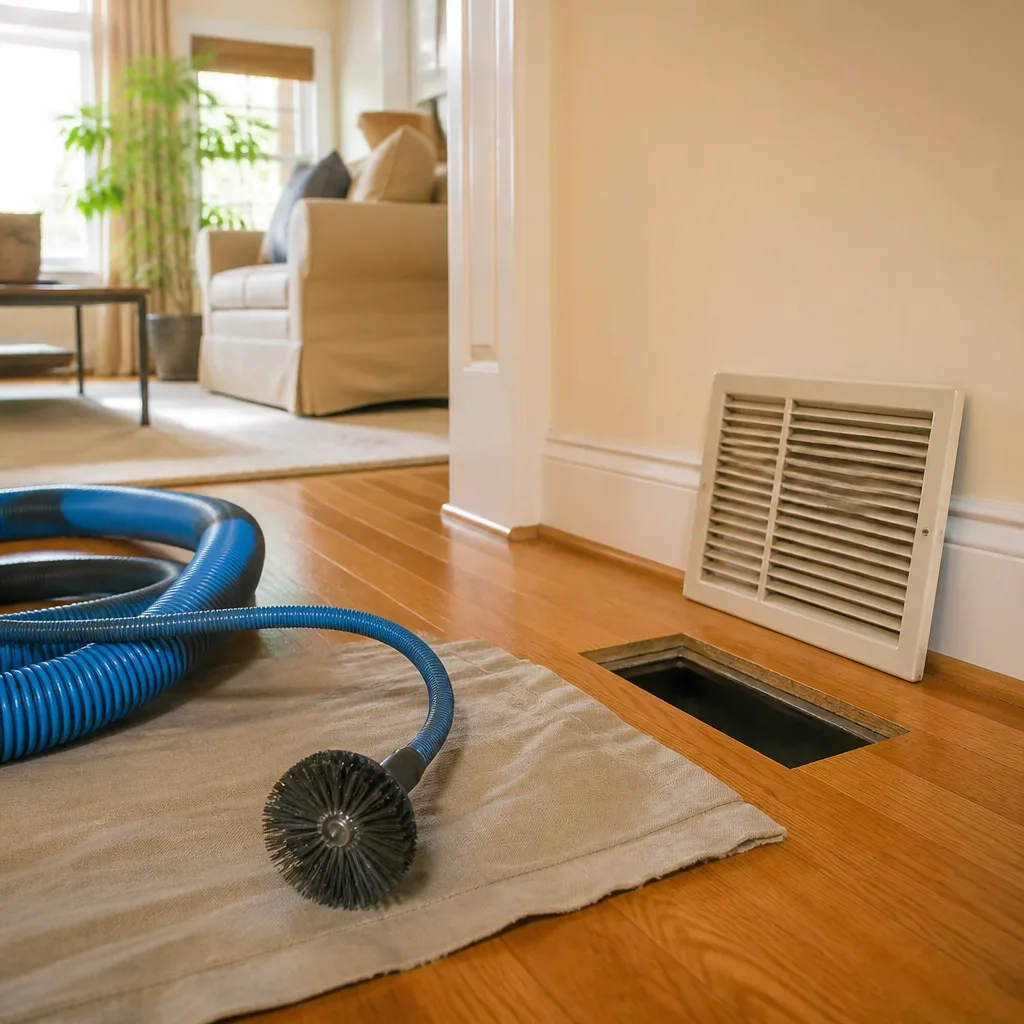
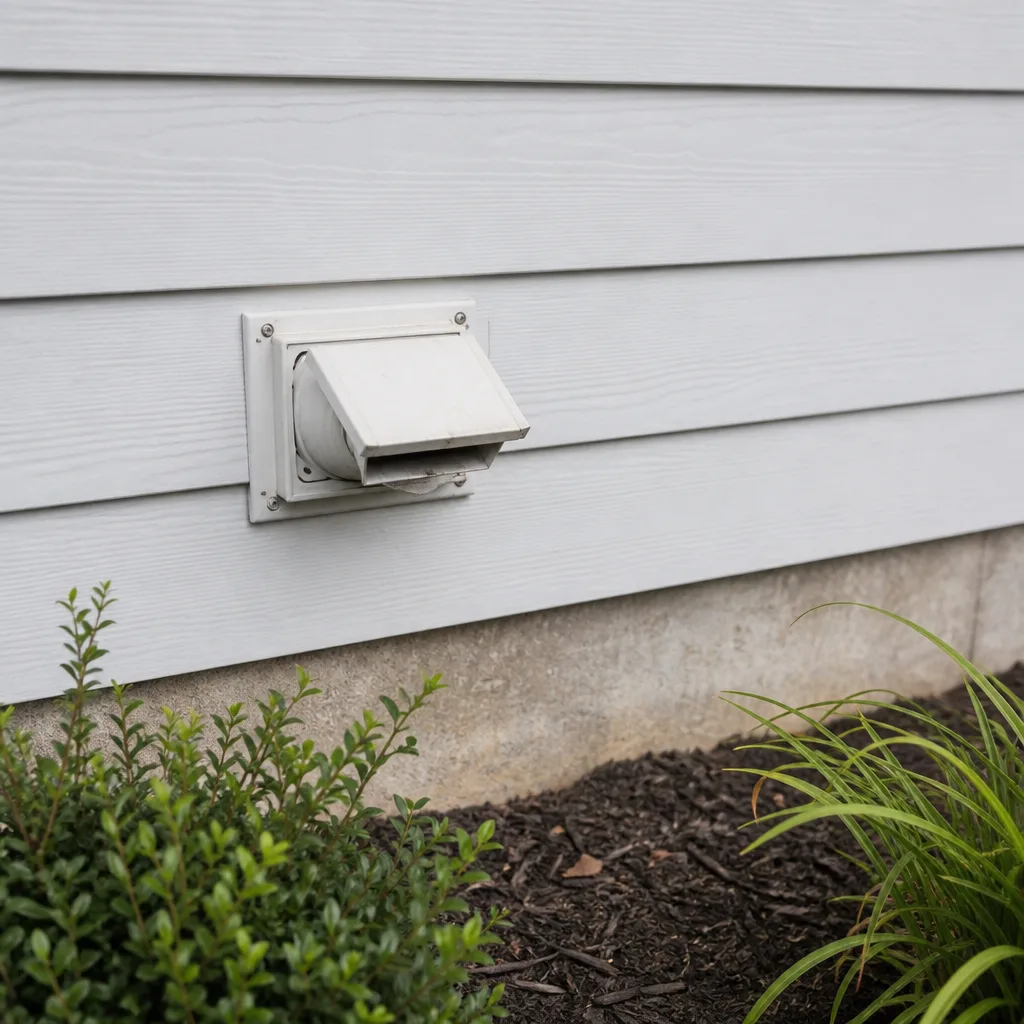
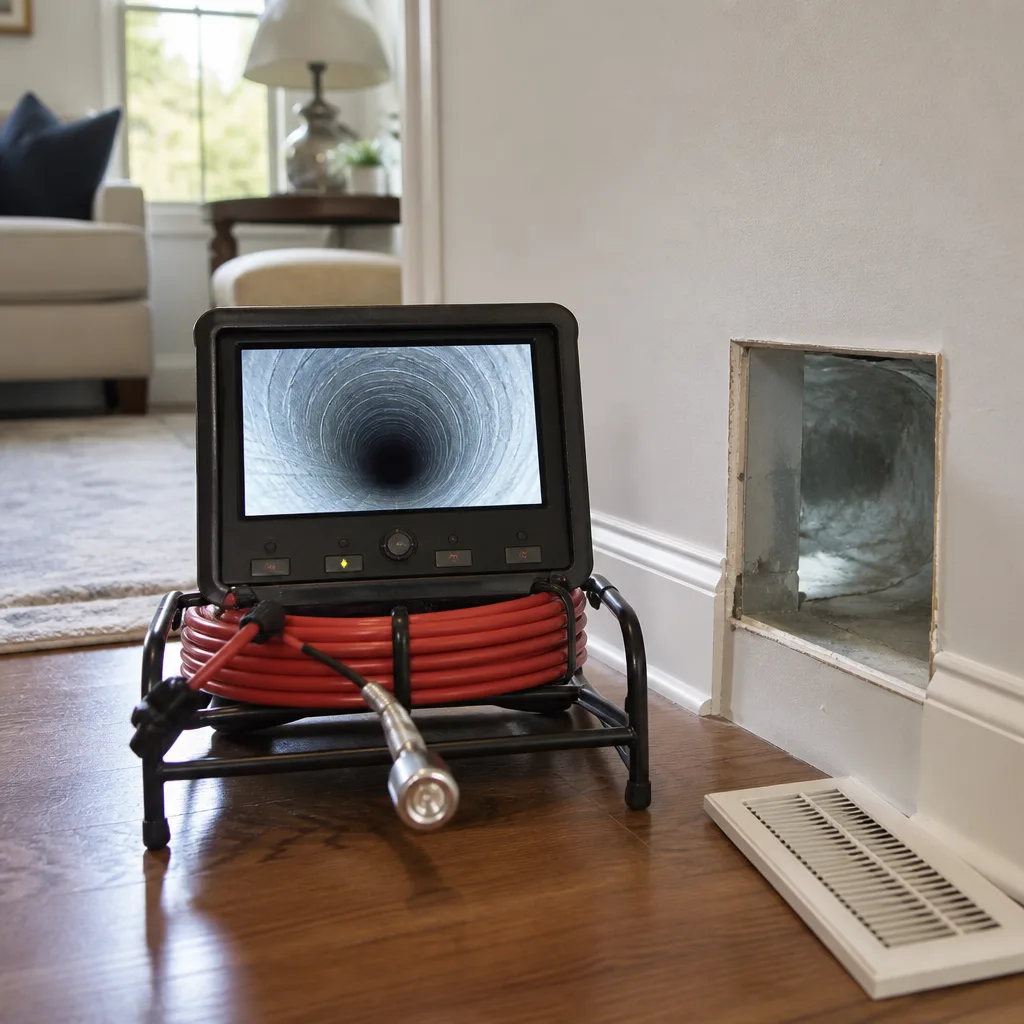
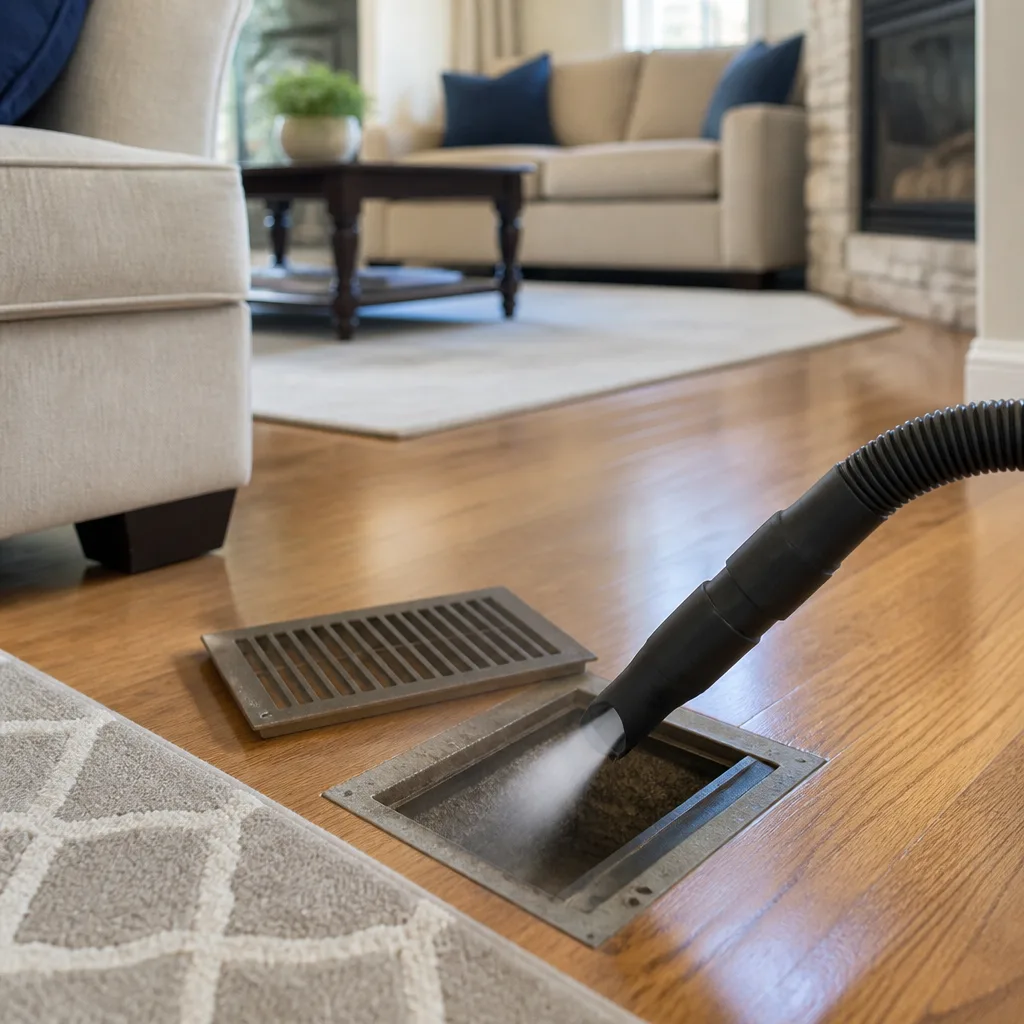
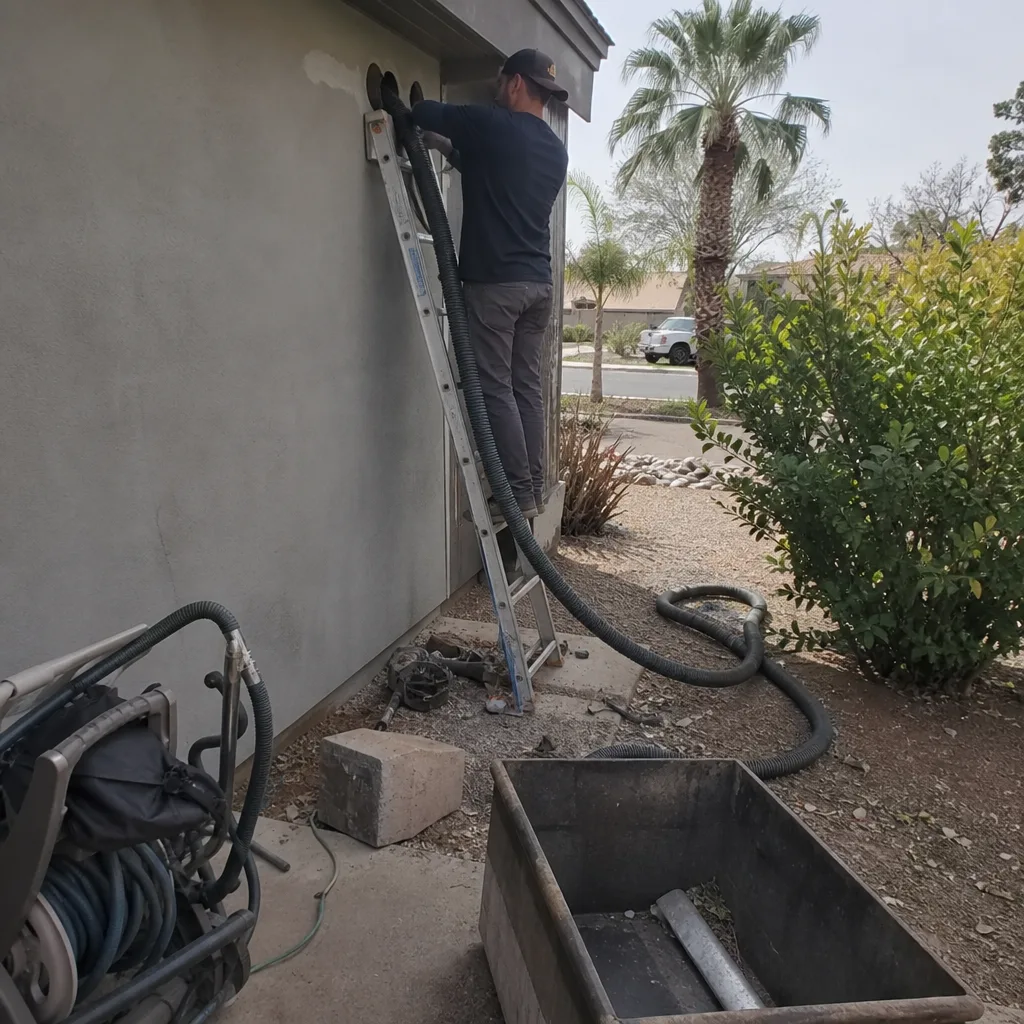 Before
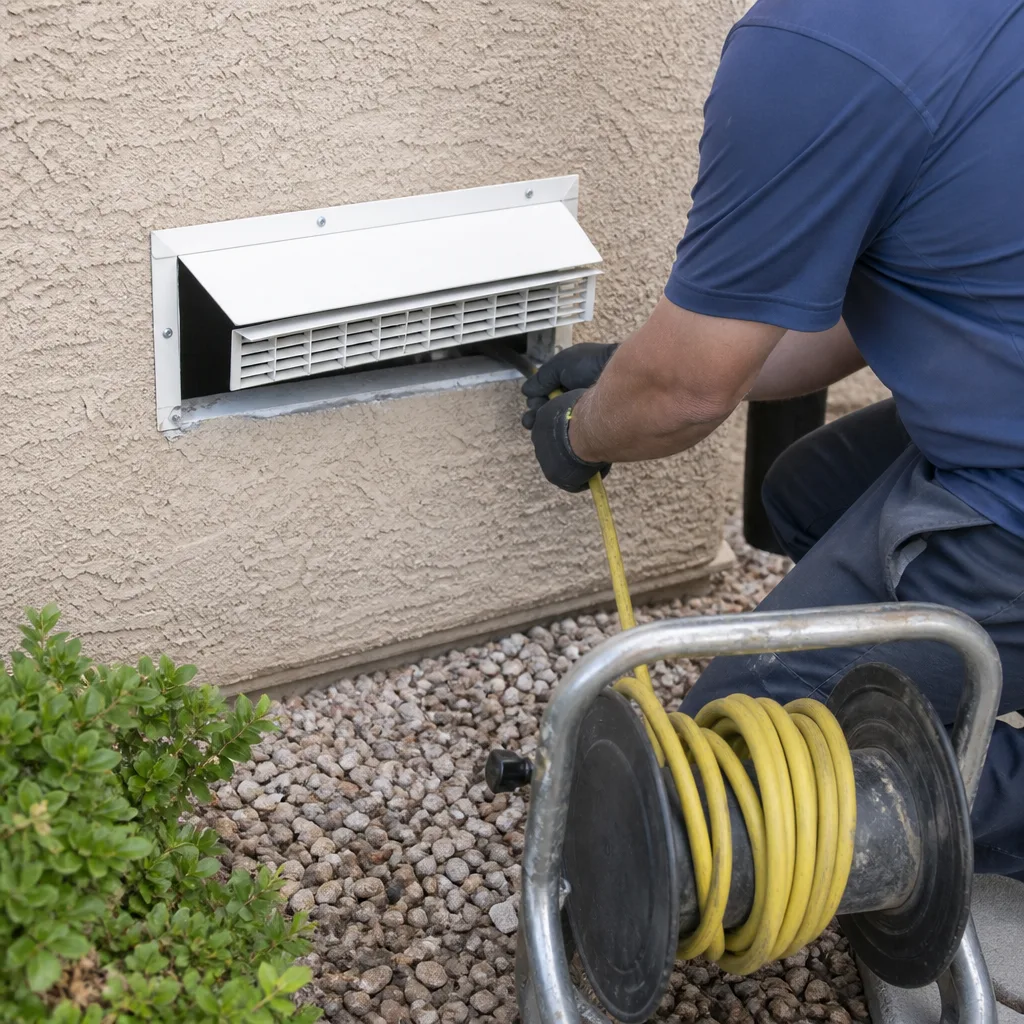 After
After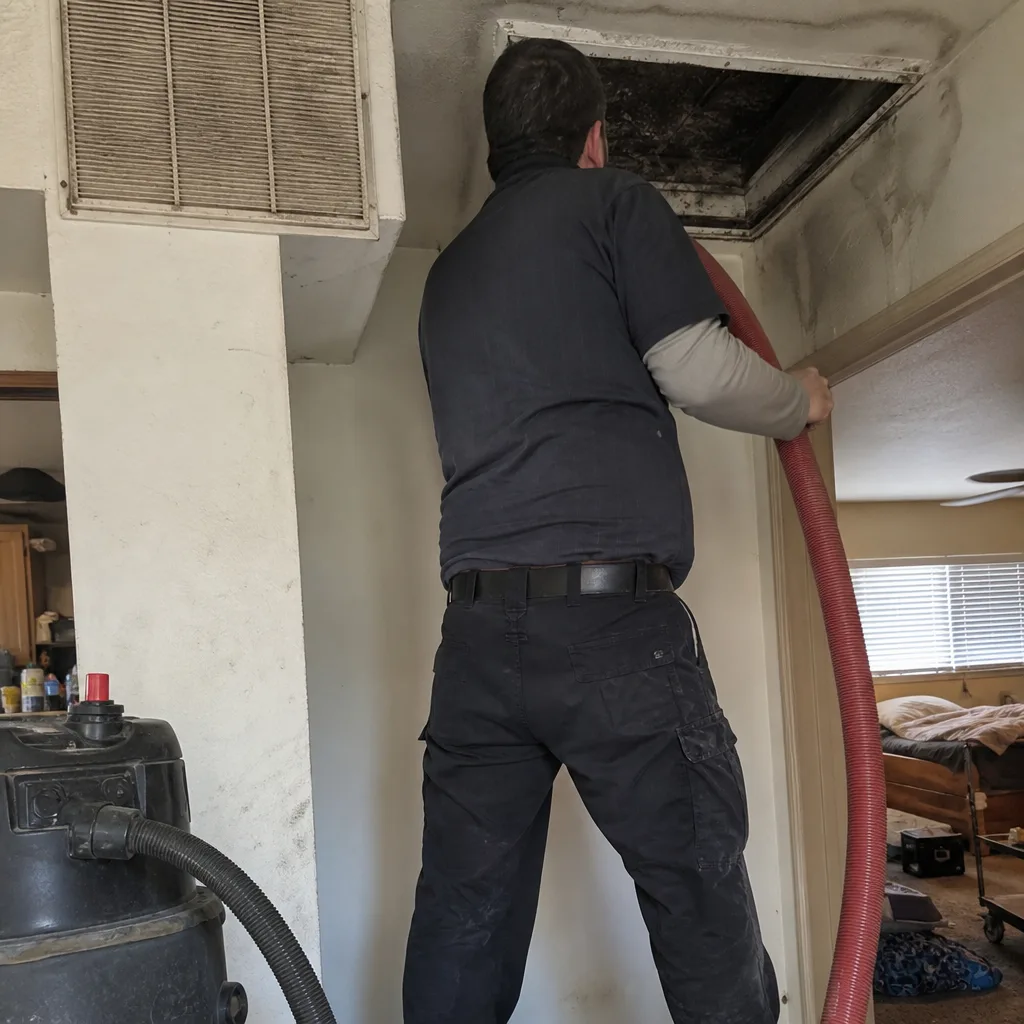 Before
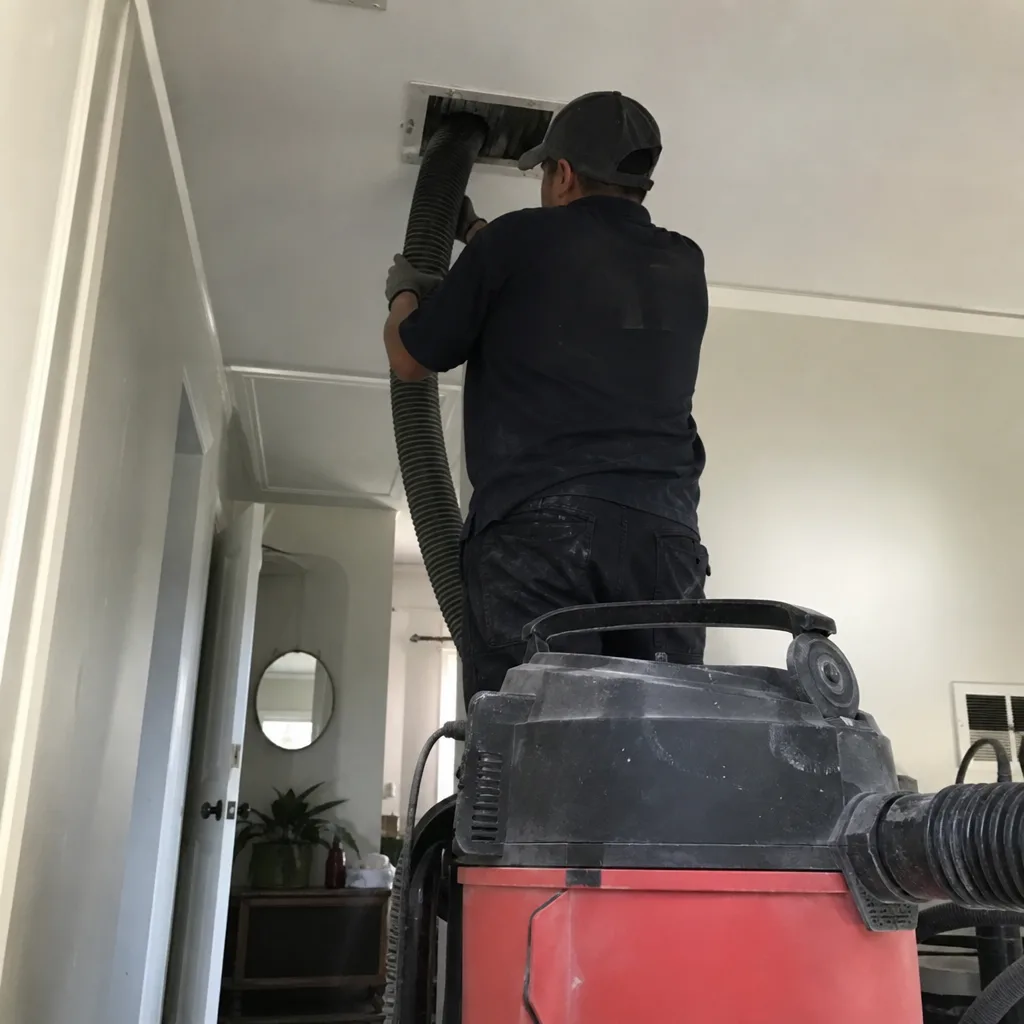 After
After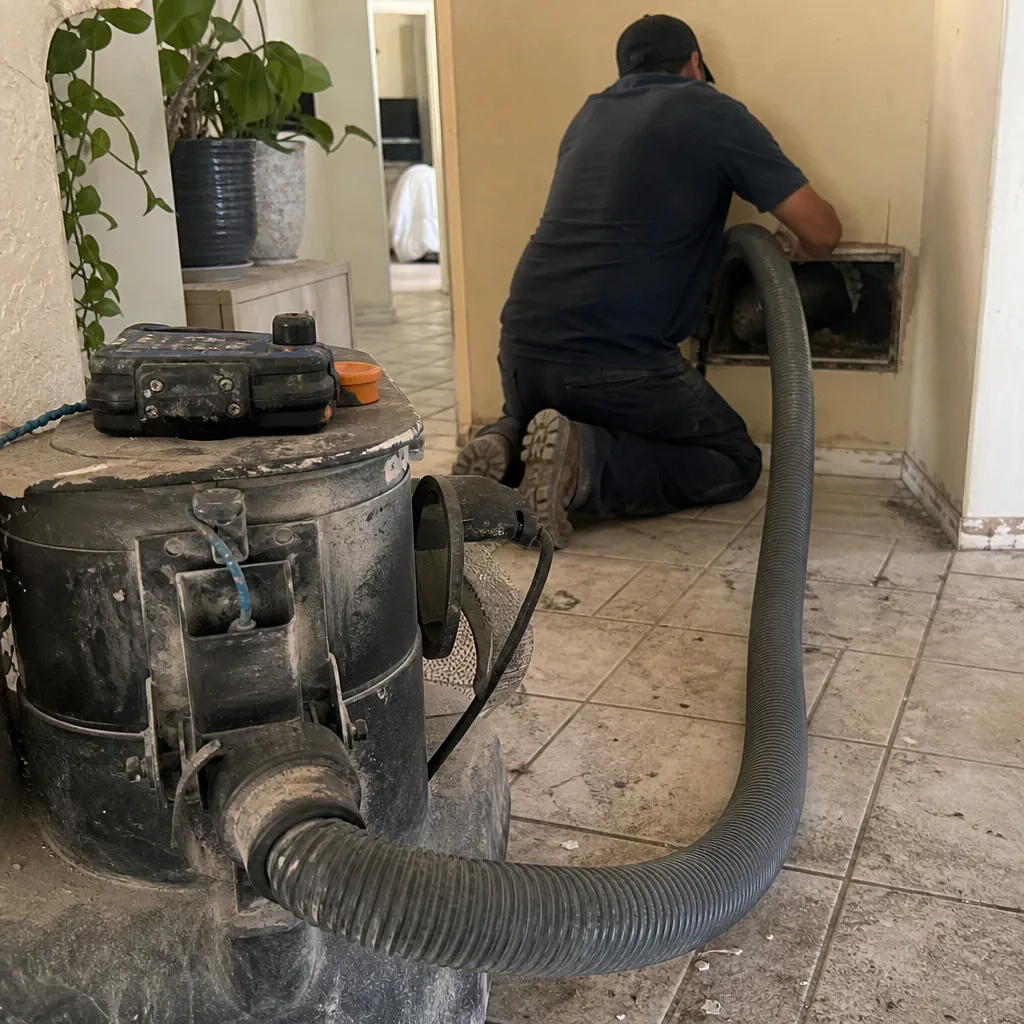 Before
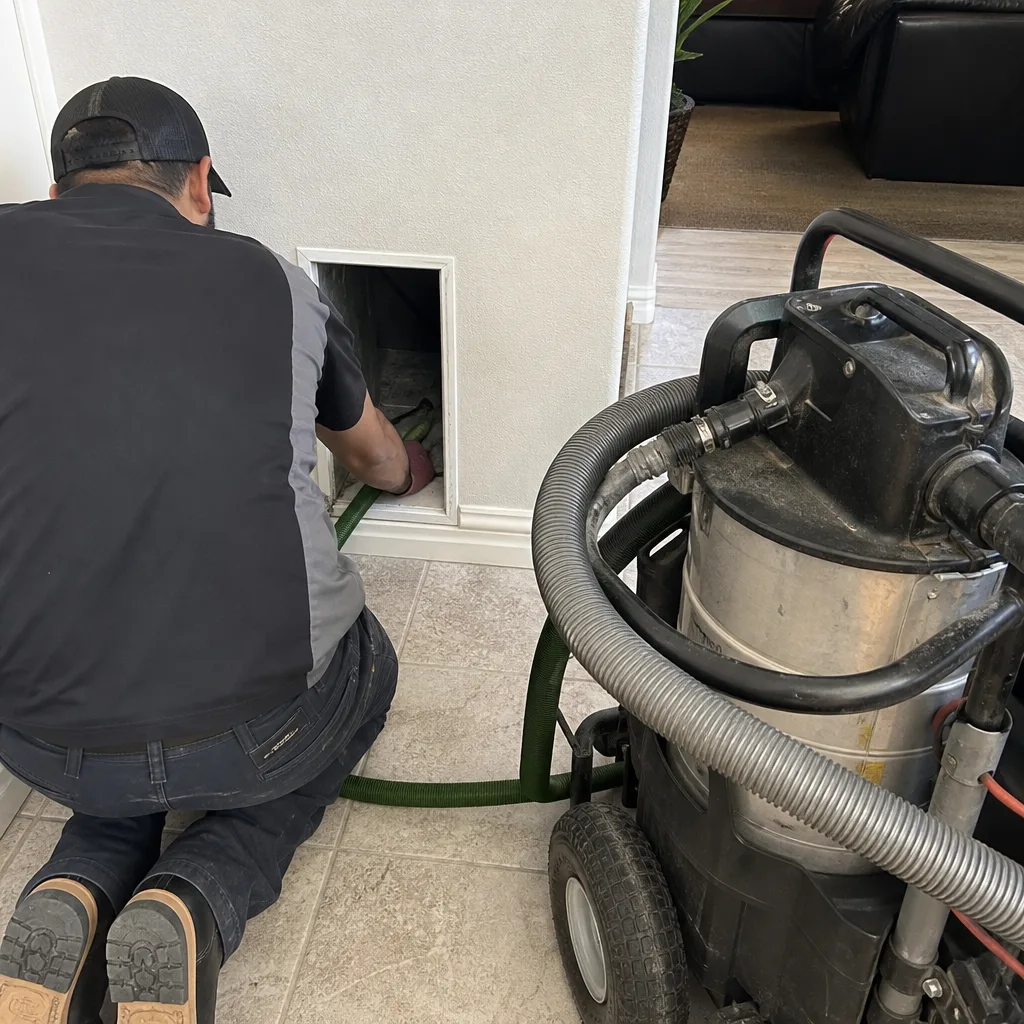 After
AfterDIY vs Professional Air Duct Cleaning: The Phoenix Homeowner’s Decision Guide
Every DIY duct cleaning kit sold online works on the same principle as brushing crumbs toward a dustpan. It’s effective at the register face and useless six feet into the duct trunk where accumulation actually affects air quality. In Phoenix, where dust storms coat HVAC systems with fine particulate from March through June, this distinction matters more than most homeowners realize. This guide explains the physics of what actually removes debris from ductwork, what you can safely handle yourself, and how to use your own inspection findings to hold any Air Duct Cleaning Contractor in Phoenix accountable for scope and price.
Quick Answer
Most Phoenix homeowners can clean registers and return grilles themselves with basic tools, but whole-system duct cleaning requires negative-pressure extraction equipment operating at 3,000-5,000 CFM that no consumer tool can replicate. A DIY kit costs $40-$80 and reaches 2-3 feet into visible ductwork; professional cleaning runs $350-$550 for a documented, photographed whole-system service that includes every duct run, plenum (the main distribution box), and trunk line.
Table of Contents
- What DIY Kits Actually Do (and Where They Stop Working)
- The Physics of Negative-Pressure Cleaning Explained
- DIY Tasks That Actually Work: A Step-by-Step Guide
- When DIY Makes Things Worse
- Honest Cost Comparison: DIY vs. Professional in Phoenix
- Using Your DIY Inspection as Leverage in a Professional Quote
- Phoenix-Specific Factors: Dust, Heat, and System Design
- Common Mistakes to Avoid
- When to Call a Professional
- Frequently Asked Questions
BeforeAfterWhat DIY Kits Actually Do (and Where They Stop Working)
A typical DIY duct cleaning kit includes a brush head that attaches to a cordless drill, flexible rods that extend 10-15 feet, and a shop-vac adapter. The brush spins against duct walls, theoretically dislodging debris, while the vacuum sucks at the register opening. This works well enough for the first 18-24 inches of ductwork visible from the floor. Beyond that, three problems emerge.
First, residential ductwork in Phoenix homes built after 1990 is predominantly flexible duct (flex duct) or rigid sheet metal with internal insulation. A spinning brush in flex duct can tear the mylar lining or detach the fiberglass insulation from the wire coil. We’ve photographed this damage during service calls in Ahwatukee and Arcadia, where homeowners heard rattling after DIY attempts and found brush bristles lodged at elbow joints.
Second, the shop-vac generates approximately 100 CFM (cubic feet per minute) of airflow at the hose opening. A typical residential supply duct in a Phoenix ranch home runs 6 inches in diameter and extends 20-40 feet from the plenum to the register. At 10 feet into that run, the vacuum’s suction has dissipated to near zero. The brush dislodges debris that then settles deeper in the system, often at the low point where the duct passes through a scuttle hole or drops into a soffit.
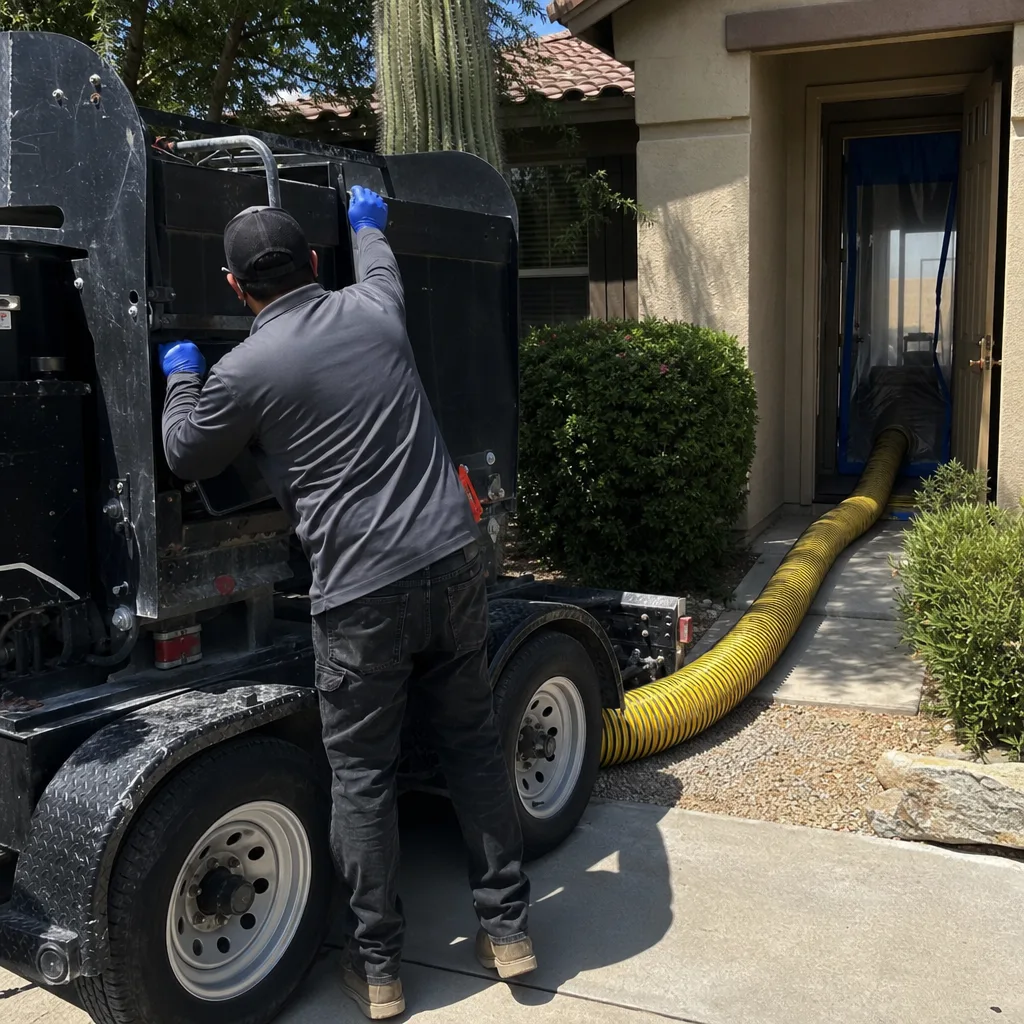
Third, and most important: DIY kits have no containment strategy. Professional negative-air systems create a closed loop. The ductwork is placed under suction, debris is agitated with compressed air or mechanical brushes, and all particulate is captured in a HEPA-filtered collection device. A shop-vac at a register opening pulls air from the room through the duct and back into the room, potentially bypassing the filter entirely if the vacuum seal is imperfect.
What DIY kits do accomplish: register face cleaning, grille deconstruction and washing, and superficial debris removal at duct openings. These are not trivial tasks. They’re simply not whole-system cleaning.
The Physics of Negative-Pressure Cleaning Explained
Negative-pressure extraction is the industry-standard method for whole-system duct cleaning. Understanding why requires grasping one number: pressure differential.
A professional truck-mounted system, such as those built on Nikro or Abatement Technologies platforms, generates 3,000-5,000 CFM through an 8- or 10-inch suction hose connected directly to the duct trunk. This creates negative pressure throughout the entire connected duct network, typically -1.5 to -3.0 inches of water column (a unit of pressure measurement). Every register in the home becomes an intake point; air rushes inward through each duct run, carrying loosened debris toward the central collection point.
Here’s what this means in practical terms. Imagine a 2,000 square foot Phoenix home with a single HVAC unit in the attic, 12 supply registers, and 2 return grilles. The total ductwork length might exceed 300 linear feet. A professional system places the entire 300-foot network under suction simultaneously. A shop-vac at one register pulls from that register only, and its 100 CFM rating drops precipitously as hose length increases.
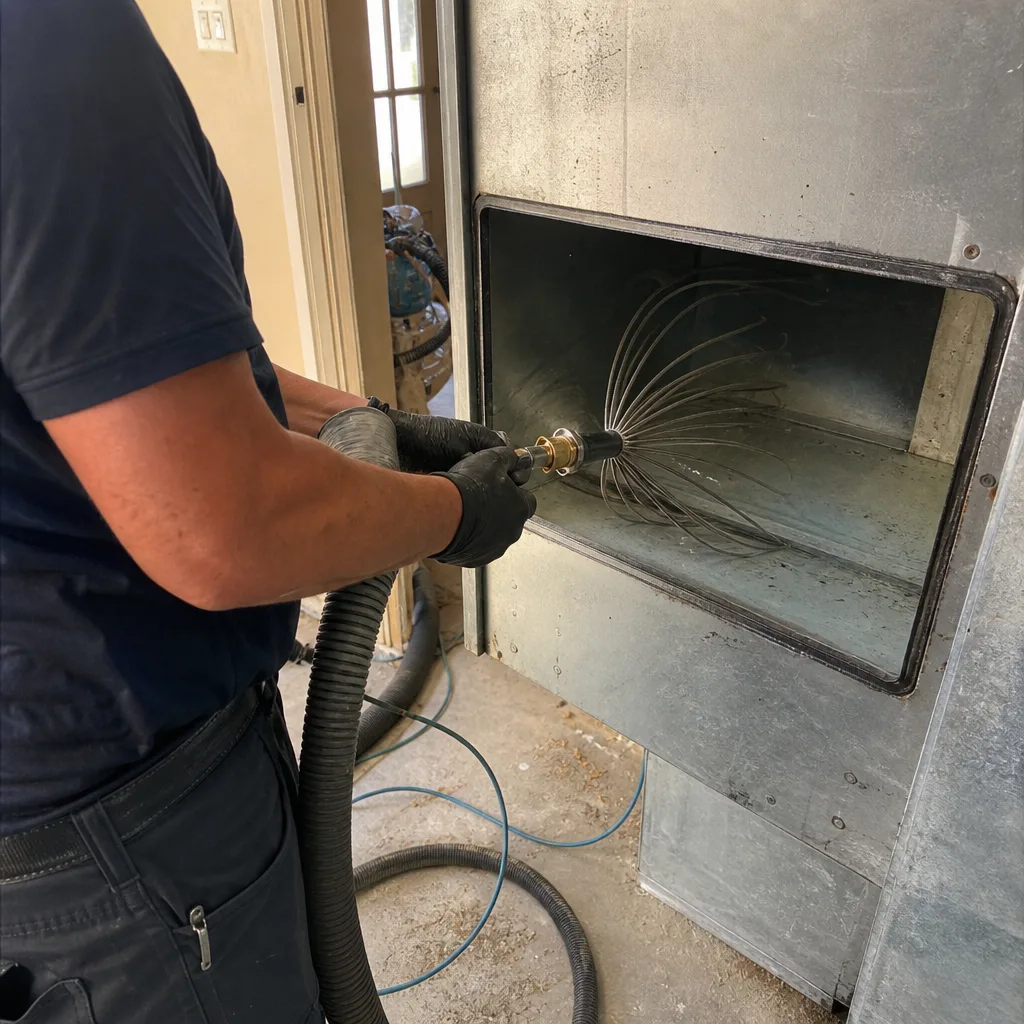
The agitation tools matter too. Professional crews use compressed air whips that snake through ductwork at 200 PSI, or rotary brush systems powered by dedicated motors, not cordless drills. These tools are inserted at each register while the trunk is under negative pressure. Debris is knocked free and immediately entrained in airflow traveling 30-50 times faster than a shop-vac can generate.
Phoenix’s climate amplifies the need for this level of extraction. Our caliche soil produces extremely fine dust, smaller than 10 microns, that settles in duct low points and adheres to damp surfaces near evaporator coils. A shop-vac lacks the airflow velocity to entrain these particles. They remain in the system, redistributing during the next cooling cycle.
Equipment brands matter for verification. CleanRun crews operate Rotobrush mechanical systems and Nikro negative-air machines, with HEPA filtration rated at 99.97% efficiency at 0.3 microns. Homeowners can look up these specifications independently. The equipment roster is not marketing; it’s a verifiable claim about what will arrive at your door.
DIY Tasks That Actually Work: A Step-by-Step Guide
Certain maintenance tasks are genuinely appropriate for homeowners and can improve system performance between professional services. The key is matching the tool to the scope.
Task 1: Register and Grille Deep Cleaning
- Turn off the HVAC system at the thermostat.
- Remove each floor or wall register by unscrewing or lifting (depending on type).
- Soak metal grilles in warm water with dish detergent for 15 minutes.
- Use a bottle brush or old toothbrush to clean between louver blades.
- Vacuum the duct opening with a shop-vac, extending the hose as far as it will reach without forcing.
- Allow grilles to dry completely before reinstalling to prevent moisture introduction into the duct system.
Task 2: Return Air Filter Housing Maintenance
- Locate the return air filter housing, typically at the air handler or a large central grille.
- Remove and discard the old filter, noting the airflow direction arrow.
- Wipe the filter track and housing interior with a damp microfiber cloth. In Phoenix, this area accumulates surprising dust loading between filter changes.
- Install a new filter rated MERV 8-13 for standard residential systems, or MERV 11-16 if your system has a variable-speed blower and the manufacturer permits it. Higher is not always better; excessive MERV rating restricts airflow and strains the blower motor in Phoenix’s 115°F summer load conditions.
Task 3: Visual Inspection with Phone Camera
- Turn off the system.
- Remove a register in a high-use room and one in a low-use room for comparison.
- Enable your phone’s flashlight and video recording.
- Slowly insert the phone into the duct opening, recording continuously.
- Review the footage for visible debris, standing water (indicating condensate drainage problems), or insulation damage.
- Date and save these videos. They establish a baseline and can be shown to any contractor for scope discussion.
These three tasks address the accessible portions of the system where homeowner effort produces measurable results. They do not clean duct trunk lines, plenums, or evaporator coils. That distinction is not a failure of effort; it’s a boundary set by equipment physics.
When DIY Makes Things Worse
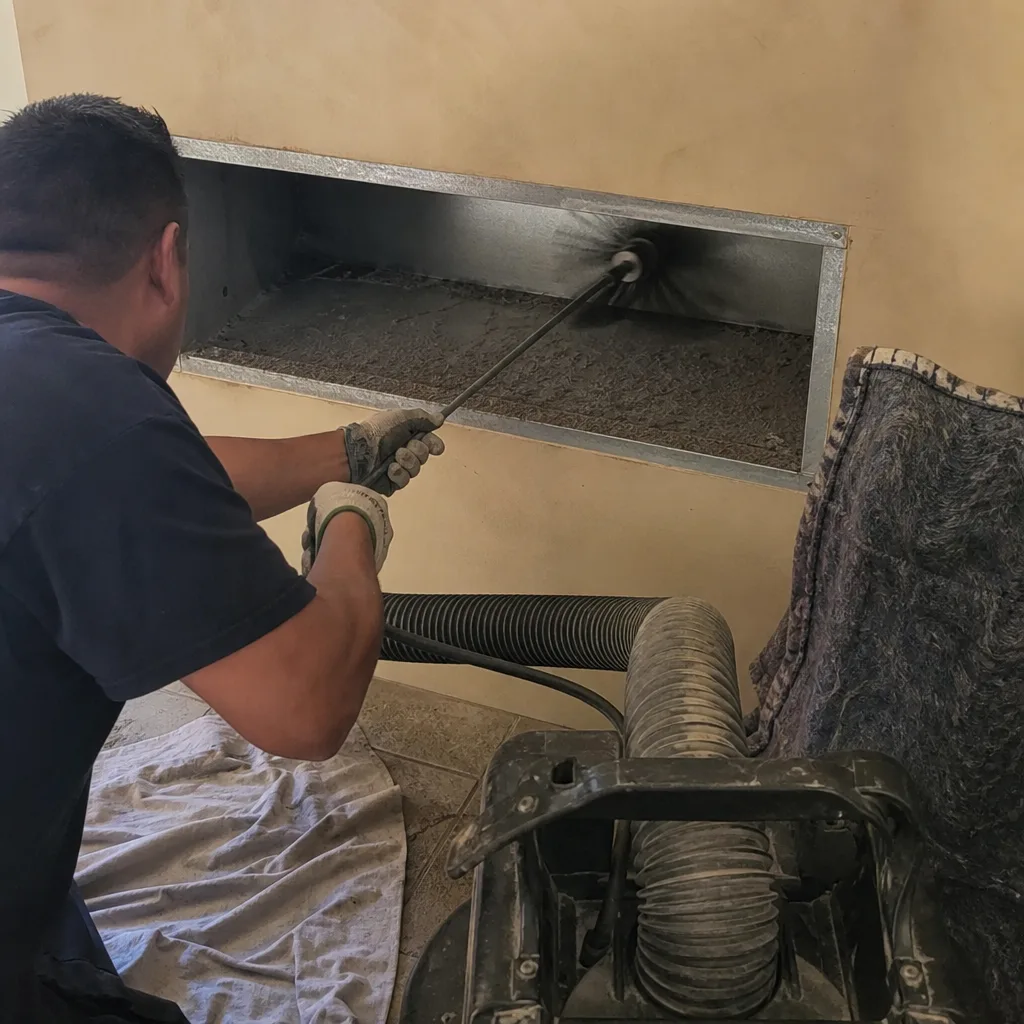
There are specific conditions where DIY duct cleaning attempts actively damage system performance or indoor air quality. We’ve documented these scenarios across our 52,000+ service records in Phoenix.
Compromised filter situations. If your return filter has been missing, incorrectly installed, or severely overloaded for more than a few weeks, the blower compartment and evaporator coil are likely coated with debris. Disturbing this material without containment equipment redistributes it throughout the home. In Phoenix’s dry climate, this includes crystalline silica from desert soil, a respiratory irritant flagged by Maricopa County Air Quality Department in annual dust storm advisories.
Mold or moisture indicators. If your phone camera inspection reveals dark staining, fuzzy growth, or standing water, stop immediately. Disturbing microbial growth without proper containment and antimicrobial treatment aerosolizes spores. Phoenix’s evaporative cooling history means many older homes have swamp cooler ducts converted to refrigerated air; these systems often have residual moisture patterns in low-velocity duct sections that support Aspergillus or Cladosporium growth. This requires professional remediation with EPA-registered products, not household cleaners.
Asbestos-containing materials. Homes in Phoenix built before 1980 may have duct insulation or register packing containing asbestos. Disturbing these materials without abatement certification violates Arizona Department of Environmental Quality regulations and creates serious health exposure. If your home’s original construction predates 1980 and you encounter gray, fibrous insulation at duct joints, cease work and consult an ADEQ-licensed inspector.
Flex duct with deteriorated lining. The mylar inner lining of flex duct degrades after 15-20 years in Phoenix’s attic heat, which regularly exceeds 140°F in summer. A spinning brush catches torn edges and can unravel sections of duct, creating leaks that reduce system efficiency by 20% or more. We’ve repaired this damage in Sunnyslope and Maryvale homes where DIY attempts preceded our service calls.
Honest Cost Comparison: DIY vs. Professional in Phoenix
Cost discussions in this industry are typically polluted by $79 coupon prices that balloon to $800+ once the technician arrives. This comparison uses actual, documented price ranges for real scope.
| Approach | Cost Range | What’s Included | What’s Excluded | Documentation Provided |
|---|---|---|---|---|
| DIY Kit (drill brush + shop-vac adapter) | $40-$80 | Register face cleaning; 2-3 feet of visible ductwork | Trunk lines; plenum; evaporator coil; blower; return ductwork | None |
| Professional negative-air cleaning (single system, typical Phoenix home) | $350-$550 | All supply and return duct runs; plenum; registers; grilles; before/after photo record | Evaporator coil cleaning (often separate scope); duct repair or sealing | Written scope; written price; photo record of every duct run; 365-Day Done Right Promise |
| Professional with coil and blower service | $550-$850 | Full duct cleaning plus evaporator coil and blower wheel cleaning | Duct repair; sealing; equipment replacement | Same as above plus coil and blower photos |
The framing matters here. A DIY kit is not a cheaper version of professional cleaning. It’s a different service entirely, appropriate for a different scope. Comparing them on price alone is like comparing a garden hose to a pressure washer because both use water.
At CleanRun Air Duct Cleaning Phoenix home, every job begins with a written price before any work starts, under Haven Standard Clause 1. The price you receive is the price you pay. This is not an exception or a promotion; it’s the operating standard since 2013.
For homeowners weighing the decision, consider this: the DIY kit saves $270-$470 but leaves 90% of the duct network untouched. If your goal is reducing dust accumulation on furniture or addressing allergy symptoms, the register-level cleaning that DIY provides will not produce the outcome you’re seeking. If your goal is basic maintenance between professional services, the DIY approach is appropriate and cost-effective.
Using Your DIY Inspection as Leverage in a Professional Quote
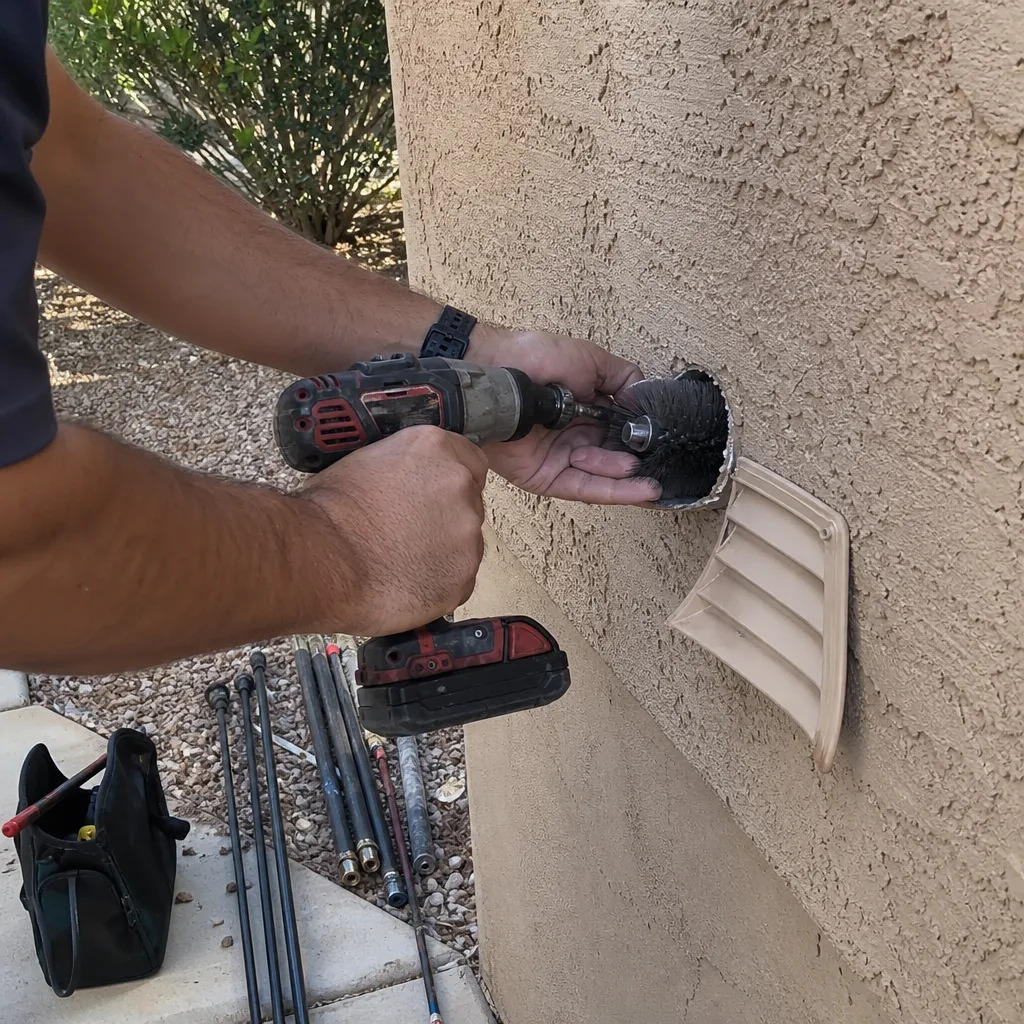
The phone camera inspection described earlier has value beyond your own knowledge. It becomes a negotiating tool that protects you from scope inflation and price ambiguity.
Here’s how to use it. After recording video of debris at register openings, contact any contractor and describe what you’ve documented. Request that their written scope specifically address the conditions you’ve observed. A legitimate professional will incorporate your findings into their assessment, not dismiss them.
When CleanRun provides a written estimate, we specify:
- Number of supply and return duct runs to be cleaned
- Whether the plenum is included (it should be, on every whole-system service)
- Equipment to be used (Rotobrush mechanical agitation, Nikro negative-air extraction)
- Deliverables: written price, photo record, 365-Day Done Right Promise documentation
Your DIY photos establish a baseline. If a contractor’s scope does not match your documented conditions, ask why. If their price seems disproportionate to the visible debris you’ve recorded, a second opinion is warranted. CleanRun offers a Free Second Opinion on any written estimate; bring a competitor’s quote and we’ll put our number next to it in writing, with no obligation.
This approach inverts the typical power dynamic. Instead of accepting a contractor’s assessment as authoritative, you arrive with evidence. The contractor must then justify their scope and pricing against documented conditions. This is particularly valuable in Phoenix, where seasonal demand spikes after dust storms can attract transient operators with minimal equipment and no local accountability.
Phoenix-Specific Factors: Dust, Heat, and System Design
Phoenix presents unique conditions that affect both DIY feasibility and professional service requirements.
Caliche dust composition. Our desert soil contains high calcium carbonate content, producing extremely fine, abrasive dust. This material penetrates standard fiberglass filters more readily than organic pollen or pet dander. It also adheres to damp metal surfaces near evaporator coils, forming a cement-like layer that mechanical agitation alone cannot remove. Professional systems using compressed air whips at 200 PSI are required to dislodge this accumulation.
Attic temperature extremes. Phoenix attics reach 140-160°F in summer. Ductwork in these conditions experiences thermal expansion and contraction cycles that loosen tape seals and flex duct connections. A DIY brush inserted into compromised ductwork can separate joints that were already marginal, creating leaks that waste cooled air and increase utility bills. We’ve found separated flex duct connections in Paradise Valley and North Phoenix homes where the homeowner was unaware of energy loss until our camera inspection revealed daylight through attic vents.
Monsoon moisture intrusion. July through September brings humidity spikes and occasional roof leaks. Water in ductwork, even temporarily, creates conditions for microbial growth on dust deposits. DIY cleaning of moist duct sections without antimicrobial treatment spreads contamination. Professional service includes moisture assessment and, when indicated, EPA-registered sanitizing agents applied under controlled conditions.
Refrigerated air conversions. Many Phoenix homes built before 1990 used evaporative cooling. Converting these systems to refrigerated air often reused existing ductwork designed for high airflow, low pressure applications. The resulting velocity mismatches create dead zones where debris accumulates. These systems require professional assessment of duct sizing and airflow balance; DIY cleaning cannot address the underlying design issue.
HOA and municipal considerations. Some Phoenix-area municipalities require mechanical contractor licensing for duct modification or repair, though cleaning alone typically falls under maintenance exemptions. Homeowners in master-planned communities should verify HOA notification requirements for service vehicles, though this rarely affects the cleaning itself.
Common Mistakes to Avoid
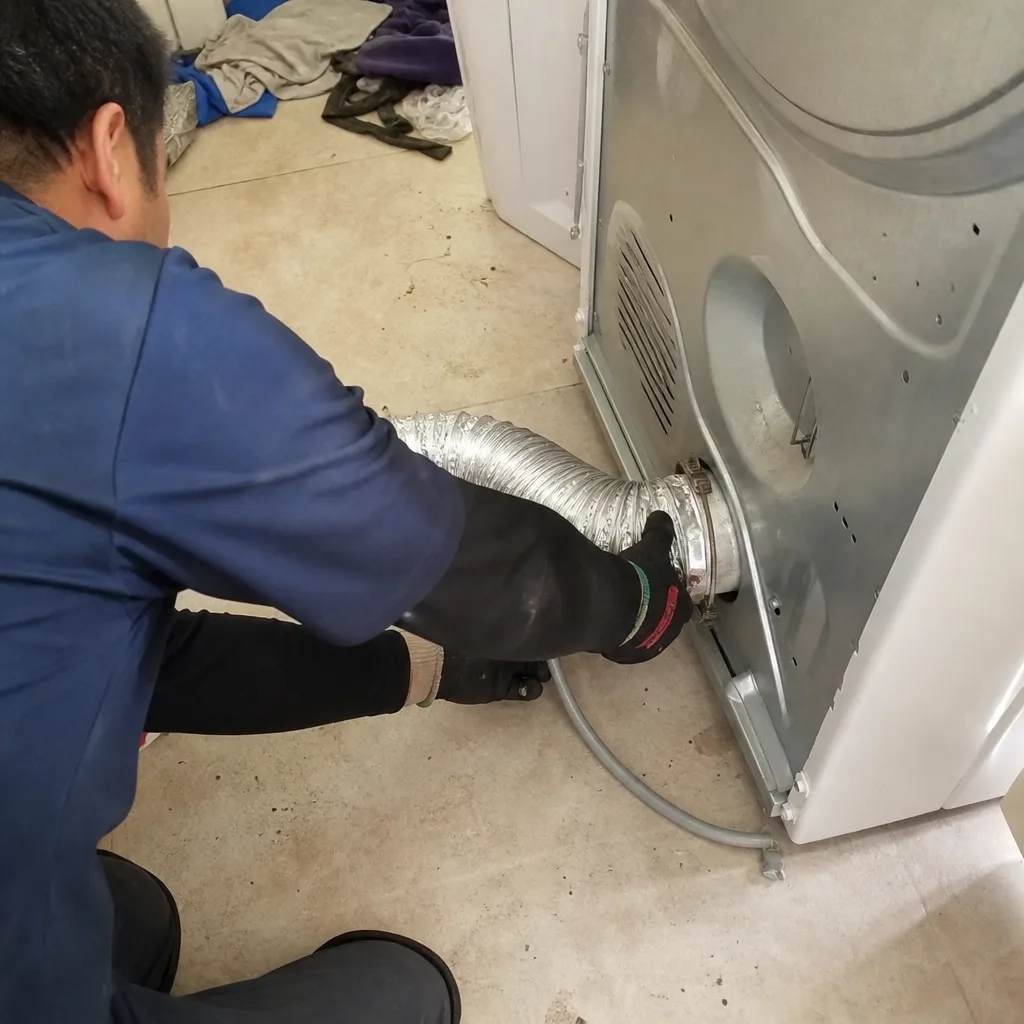
- Using a standard household vacuum without HEPA filtration. Non-HEPA vacuums exhaust fine particulate through the motor housing. In Phoenix’s dust-heavy environment, this can increase indoor particle counts rather than reduce them. If using a shop-vac for register cleaning, verify it has a HEPA-rated exhaust filter or vent it outdoors.
- Cleaning only visible registers while ignoring return ductwork. Return ducts pull air from the home and are typically the dirtiest portion of the system, yet they’re often hidden in hallways or ceilings. A homeowner who cleans six supply registers but ignores two return grilles has addressed the cleaner half of the network.
- Applying chemical treatments without identifying the problem. Retail duct “sanitizing” foams and sprays are widely available. Applied to a system with active moisture or mold, they can drive growth deeper into porous materials. Applied to a clean system, they’re unnecessary chemical exposure. Professional assessment precedes any treatment at CleanRun; we don’t sell solutions to problems we haven’t documented.
- Assuming all ductwork is accessible from registers. In Phoenix split-level and two-story homes, ductwork often runs through soffits, chases, or slab duct (embedded in concrete foundation). None of these are reachable from register openings. Only professional systems with trunk line access points can clean these sections.
- Neglecting the evaporator coil. The coil sits downstream of the filter and upstream of the supply ductwork. If it’s coated with dust, cleaned ducts become recontaminated immediately. Coil cleaning requires specialized foaming agents and proper drainage management; it’s not a DIY task.
- Trusting visual cleanliness at the register face. A clean register proves nothing about trunk line conditions. We’ve photographed 2-inch debris build-ups at first elbows in homes where registers appeared spotless. The camera doesn’t lie; visual inspection from the floor does.
- Falling for seasonal coupon pricing that lacks written scope. Phoenix sees annual influxes of “$79 whole house” offers every March before dust storm season. These invariably convert to higher prices on arrival, or consist of register vacuuming marketed as whole-system service. Demand written scope and written price before any work begins. Haven Standard Clause 1 exists precisely because this practice is endemic.
When to Call a Professional
Call a professional Air Duct Cleaning service when your DIY inspection reveals debris beyond register depth, when the system has operated without a proper filter for any extended period, when you detect musty odors or moisture indicators, or when your home was built before 1980 and original duct materials are unknown. Also call when you’re preparing to sell; documented duct cleaning with photo records supports disclosure requirements and buyer confidence in Phoenix’s competitive resale market.
CleanRun Air Duct Cleaning in Phoenix offers free estimates with written prices before any work begins. Every service includes a Documented Photo Record of every duct run, delivered as part of the standard job record. Call (480) 500-6377 to schedule.
Frequently Asked Questions
Whole-system negative-air duct cleaning for a typical single-HVAC Phoenix home runs $350-$550, including all supply and return duct runs, the plenum, registers, grilles, before/after photo documentation, and the 365-Day Done Right Promise. Add $200-$300 for evaporator coil and blower wheel cleaning if needed. Call (480) 500-6377 for a written estimate specific to your home.
Low quotes typically reflect reduced scope, not efficiency. A $79-$149 service usually means register vacuuming only, sometimes with a shop-vac brought into your home. True negative-air extraction with professional equipment, HEPA filtration, and documented photo records cannot be performed at those prices. The industry bait-and-switch model depends on arriving with a low quote, then “discovering” additional requirements. Protect yourself by requiring written scope and written price before work begins.
Demand a photo record of every duct run, before and after. At CleanRun, this is standard on every job, included in the base price, and delivered to the customer as a documented record. If a contractor cannot or will not provide dated, location-specific photos of your actual ductwork, you have no verification that the service occurred as described.
For most Phoenix homes with standard 1-inch fiberglass filters changed every 60-90 days, seasonal air duct cleaning care means professional cleaning every 3-5 years is adequate. Homes with pets, recent renovation, or occupants with respiratory sensitivity may benefit from 2-3 year intervals. The visible inspection method described in this guide lets homeowners assess conditions annually without cost. After major dust storms, particularly the haboob events of June and July, check return grilles for accelerated loading.
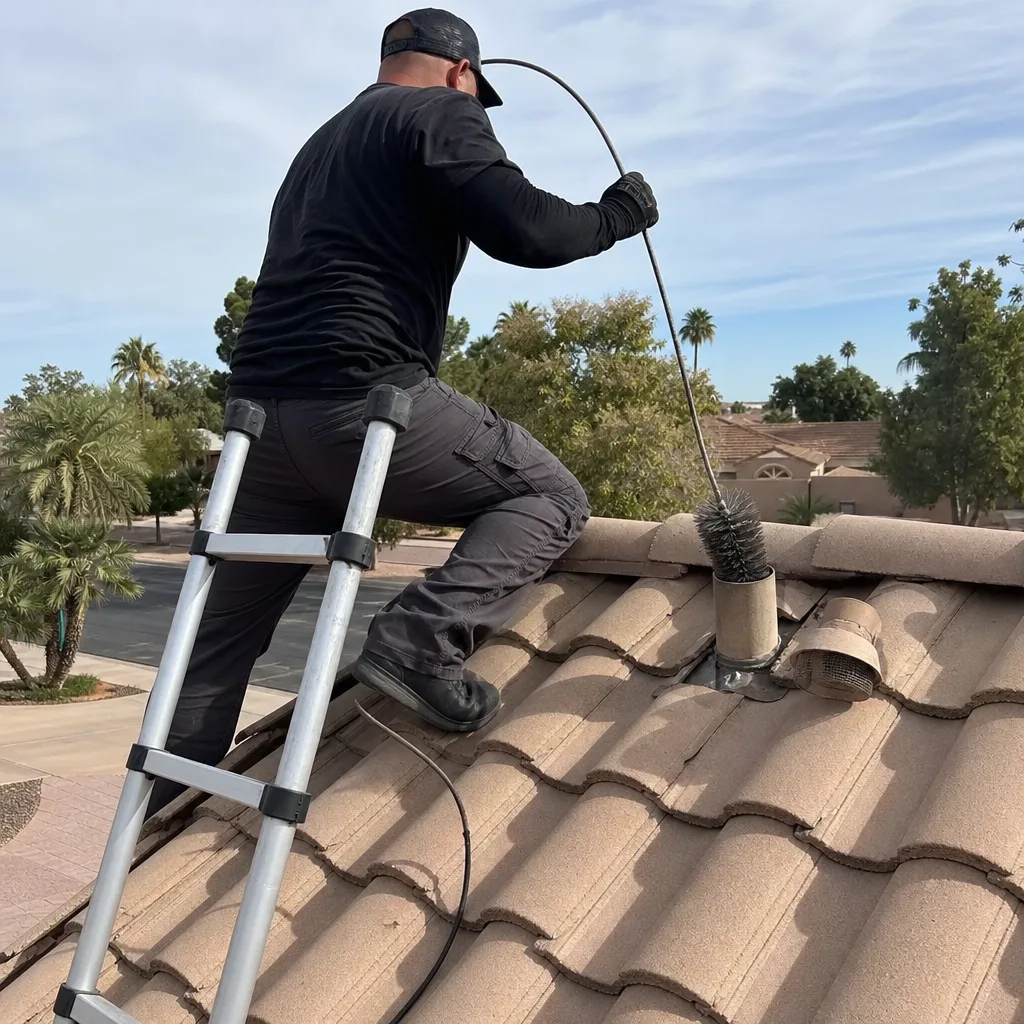
Short, straight dryer vents terminating through an exterior wall can often be cleaned by homeowners with a brush kit and drill. Longer runs, particularly those exceeding 15 feet, with multiple elbows, or terminating through the roof, require professional equipment for safe, complete lint removal. Dryer vent fires are a leading cause of residential fires in Arizona; if your vent configuration is complex, Dryer Vent Cleaning in Phoenix is the safer choice. CleanRun provides this service with the same written price and photo documentation standards as our duct cleaning.
Moderately, and conditionally. Clean ducts reduce airflow resistance, which can improve system efficiency by 5-15% in cases of significant debris accumulation. The larger efficiency gains in Phoenix come from sealed ductwork (preventing 140°F attic air infiltration) and clean evaporator coils. For comprehensive system performance, consider HVAC Cleaning in Phoenix that addresses coils, blowers, and ductwork as an integrated system.
The Bottom Line
The DIY versus professional question is not about homeowner capability. It’s about equipment physics and scope honesty. A drill-mounted brush and shop-vac clean registers effectively and reach slightly into visible ductwork. They cannot generate the negative pressure differential required to extract debris from trunk lines, plenums, and deep duct runs where accumulation actually occurs.
Phoenix homeowners can perform valuable maintenance themselves: register cleaning, filter changes, and documented visual inspection. These tasks establish baselines, improve immediate air quality at the room level, and provide leverage when engaging professionals. They do not replace whole-system cleaning.
When professional service is warranted, the decision criteria should be documentation, not price alone. Written scope. Written price. Photo records. Verifiable equipment. These are the deliverables that separate accountable service from vacuum noise. CleanRun has operated under this standard since 2013, with 52,000+ homes served and every one documented.
Written by Tomas Reyes, Owner at CleanRun Air Duct Cleaning Phoenix, serving Phoenix since 2013.