
Last updated September 23, 2026
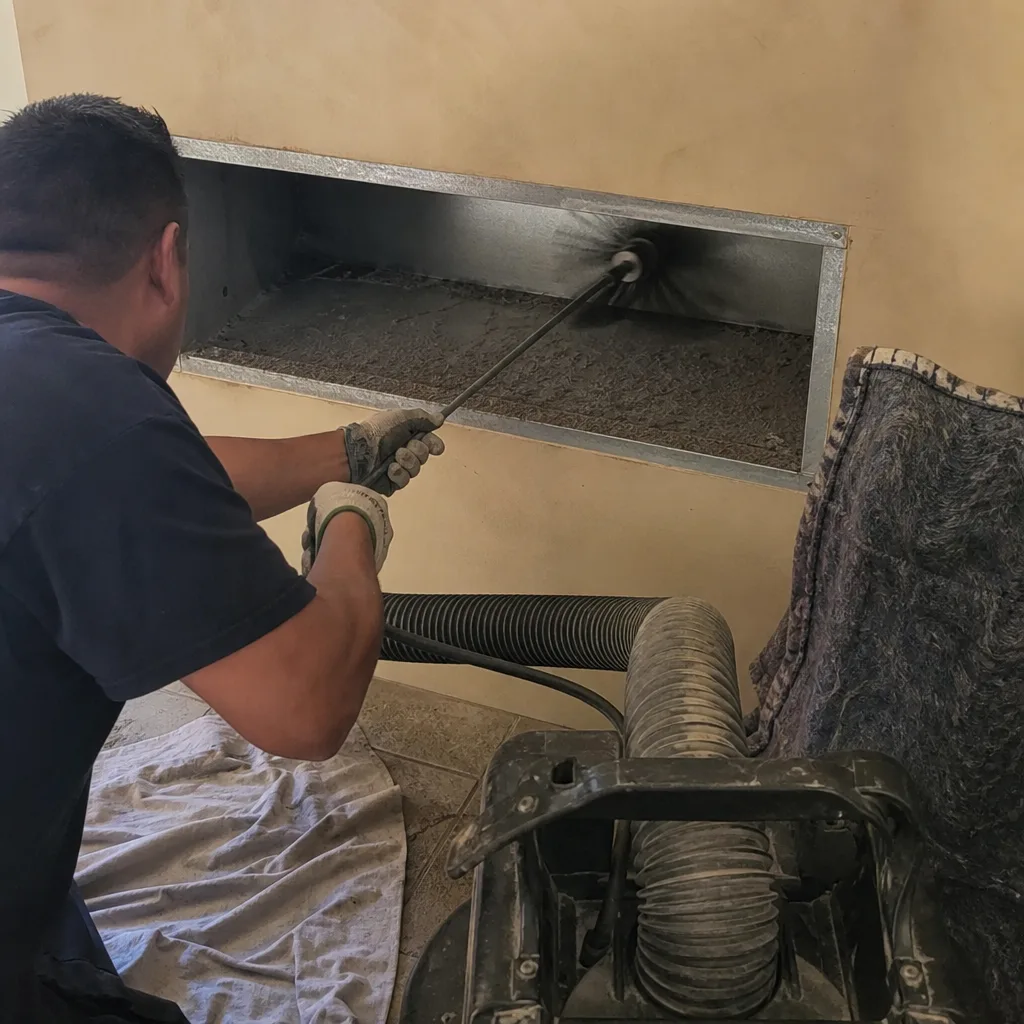
Whole-system duct and dryer vent check with before-and-after photos - you see exactly what came out of your vents
That "$99 whole-house special" is a bait ad - the real number appears once they are in your hallway, or the "clean" is a shop-vac at the register. We photograph the inside of your ducts before and after instead.
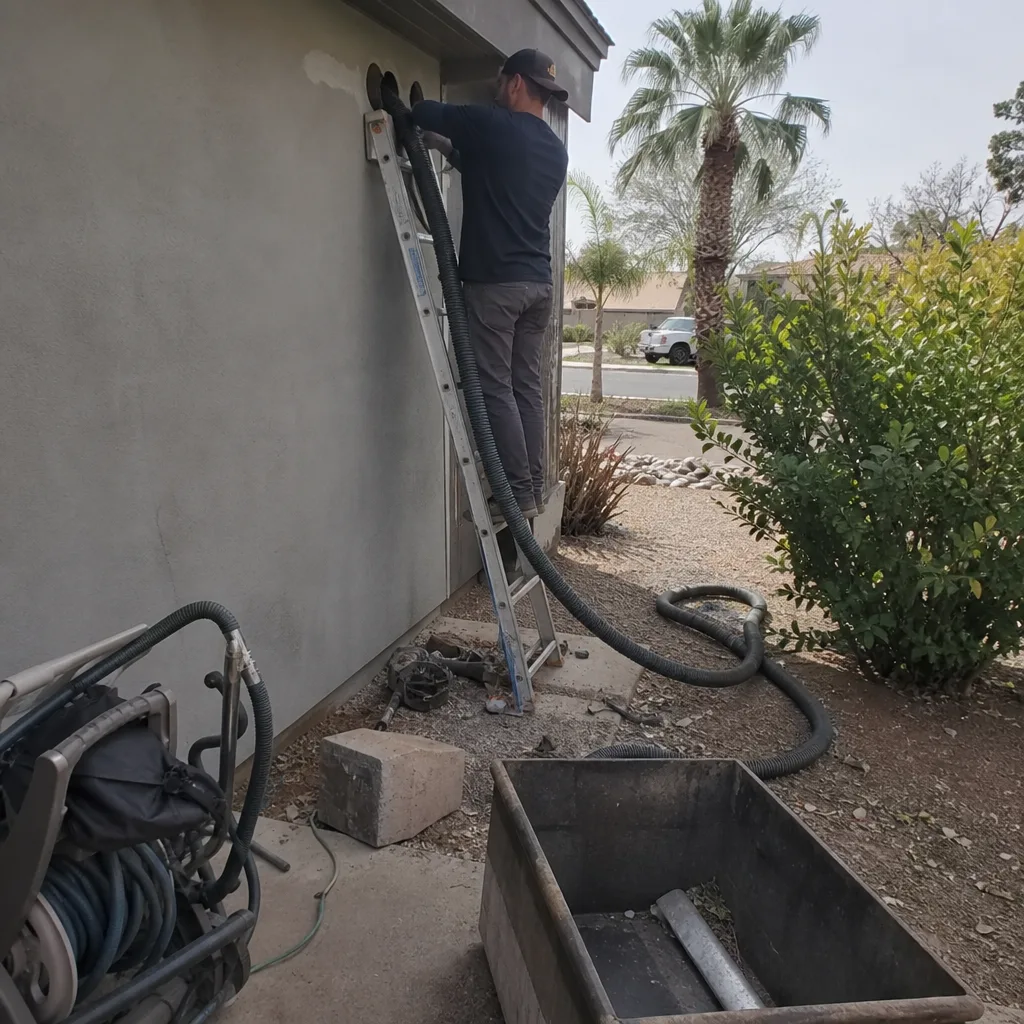 Before
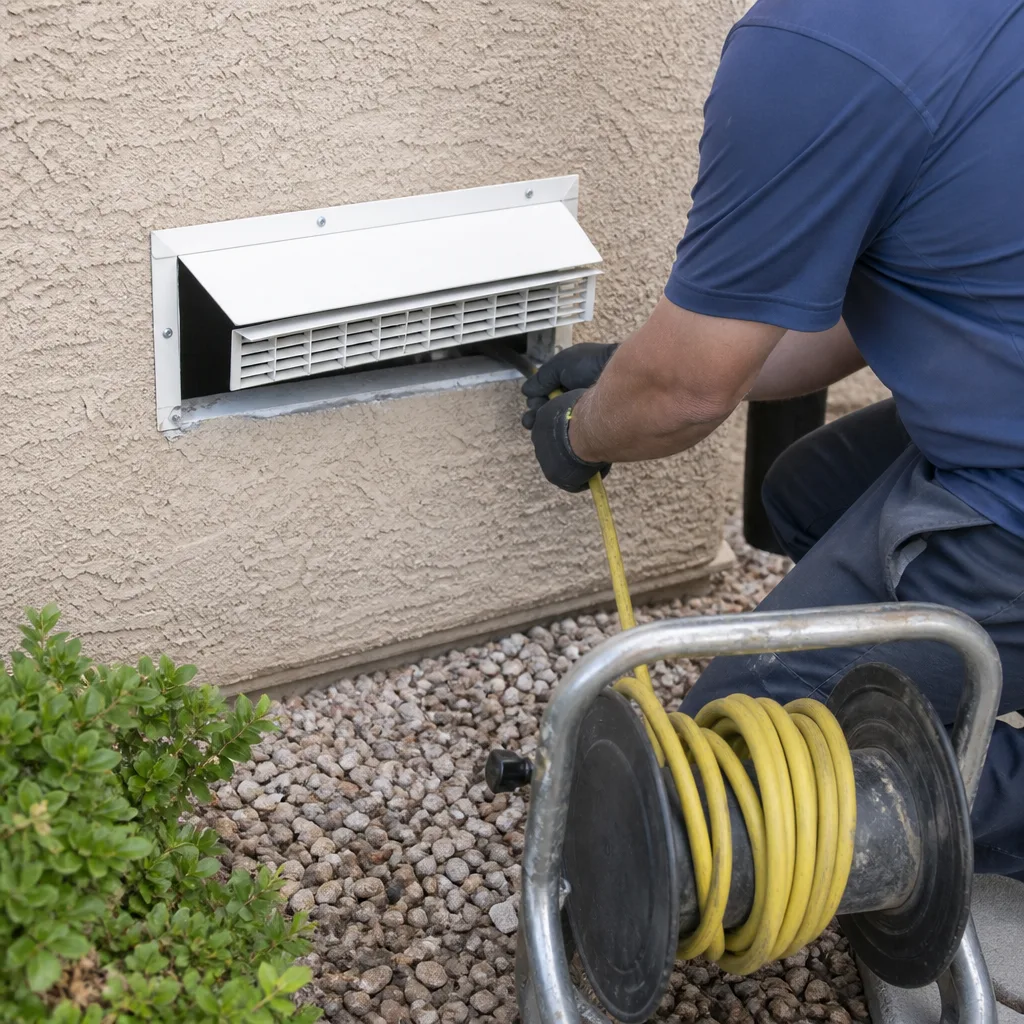 After
After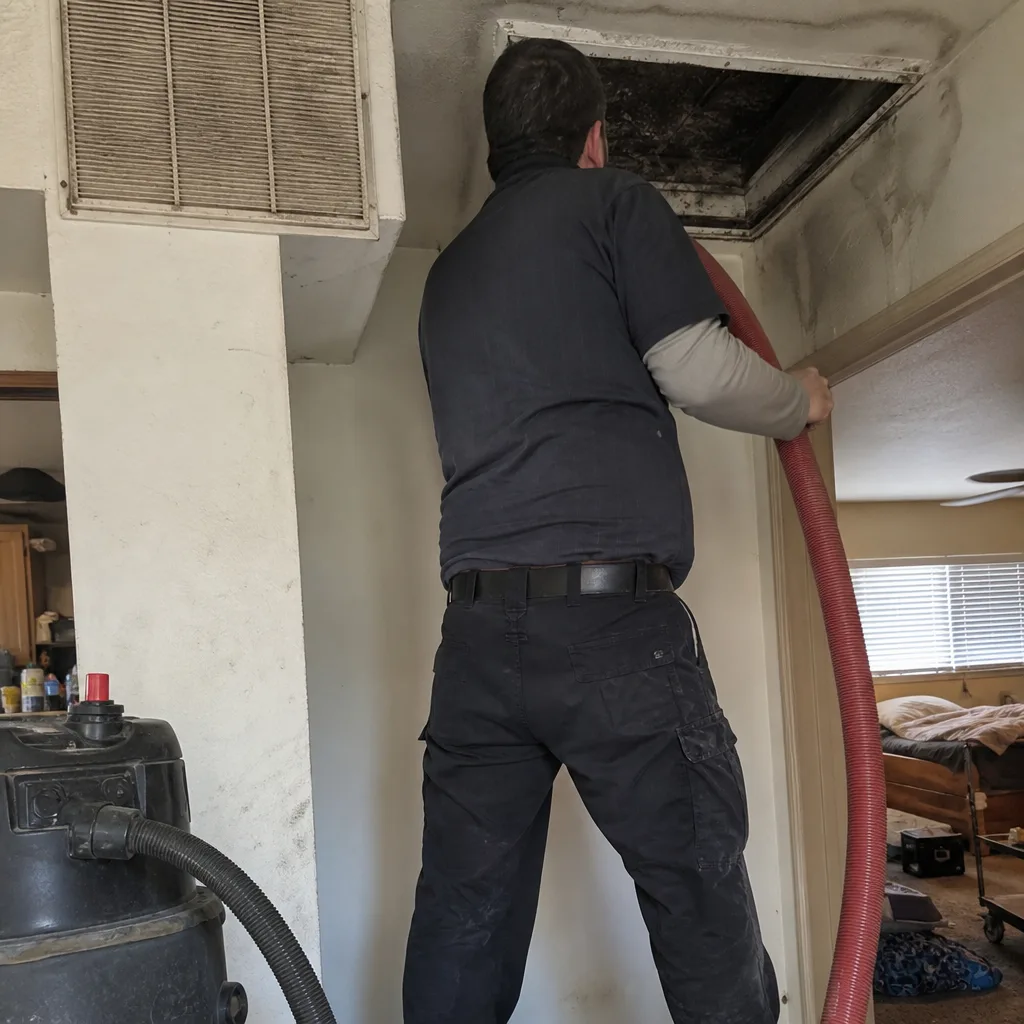 Before
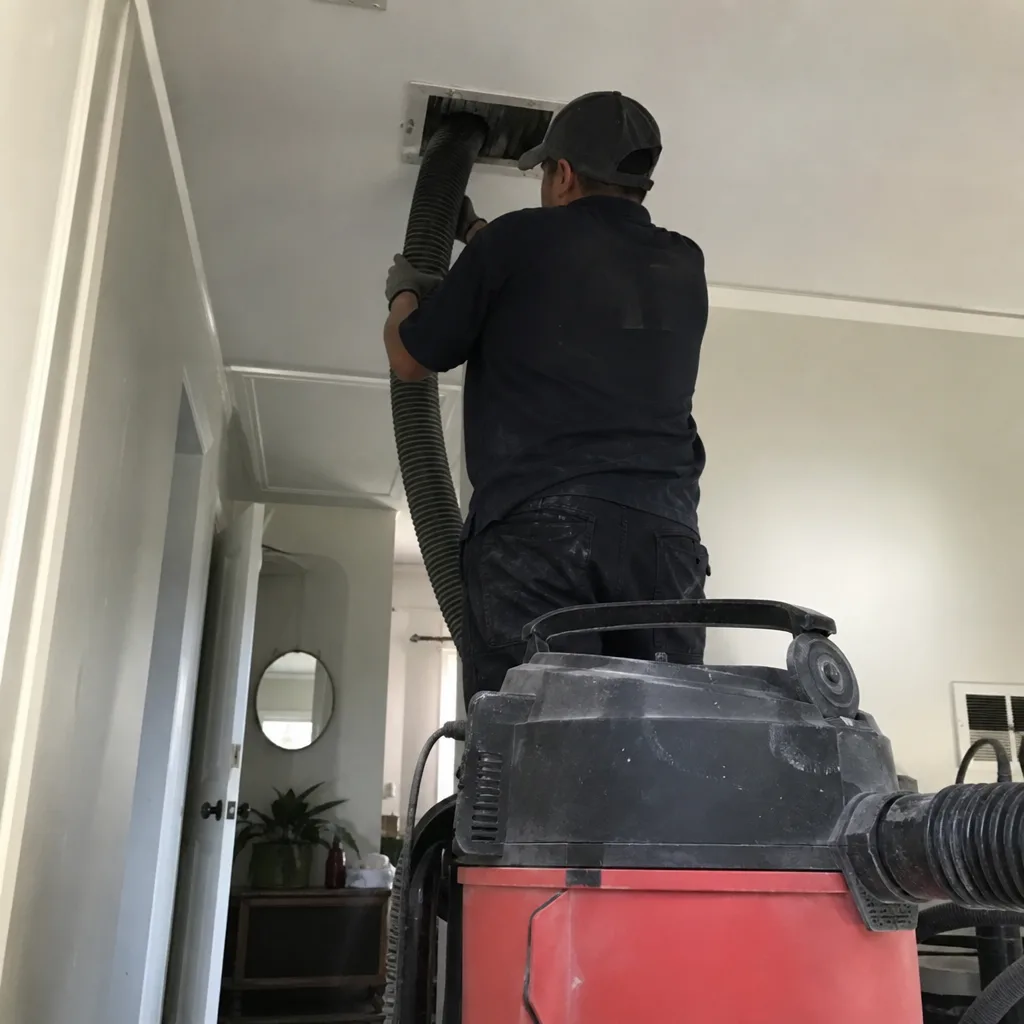 After
After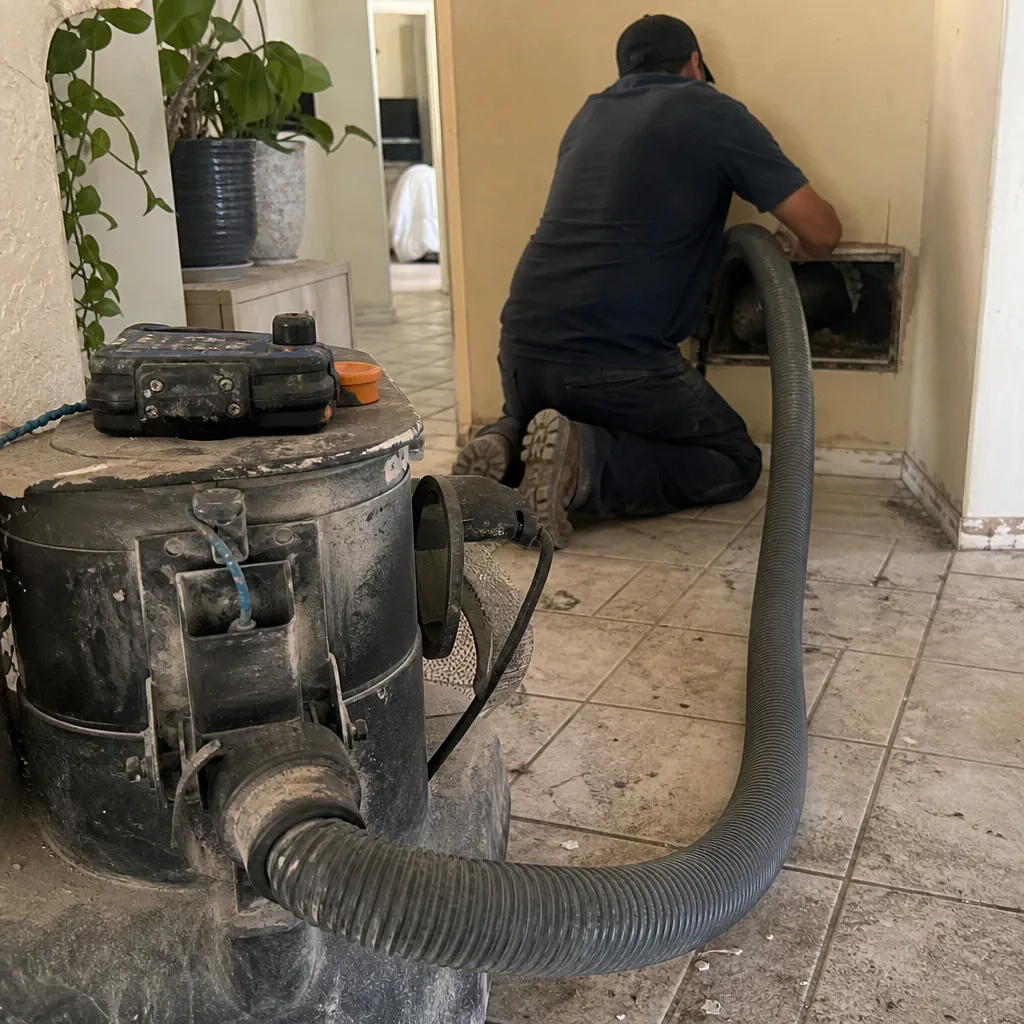 Before
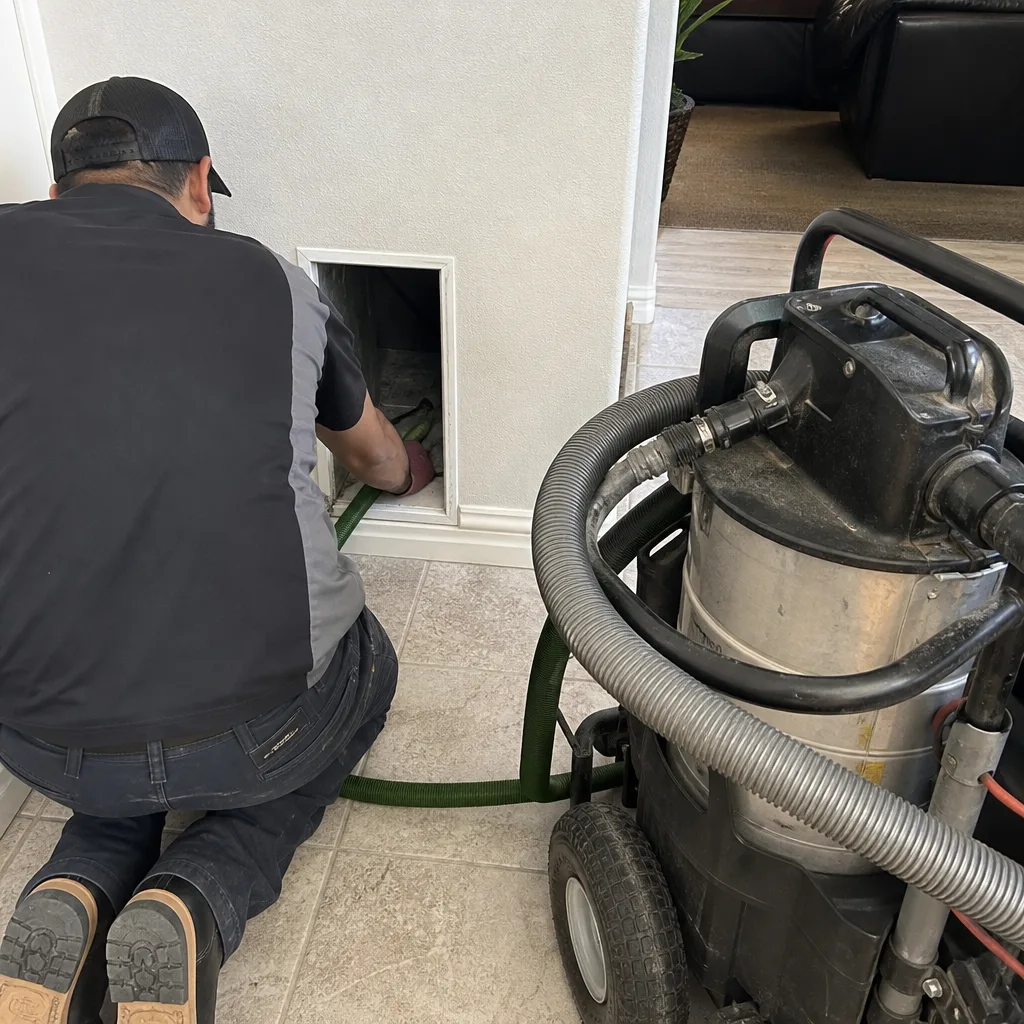 After
AfterSeasonal Air Duct Cleaning Care for Phoenix: Year-Round Homeowner’s Guide
The 90 days between Phoenix’s monsoon season and the start of winter heating are the single most important window for duct inspection. The humidity that entered your system in July has had time to grow something by October. Most homeowners in Arcadia, Ahwatukee, and the North Central corridor don’t realize that musty odors appearing in fall are a post-monsoon symptom, not a year-round problem. This guide maps a Phoenix-specific four-phase duct calendar that accounts for our unique climate: pre-summer preparation, five months of continuous cooling, the critical post-monsoon inspection window, and heating startup. You’ll learn when to inspect, when to clean, when to wait, and what you can check yourself versus what requires professional equipment access.
Quick Answer
In Phoenix, seasonal duct care follows a two-peak calendar: pre-summer cleaning in March-April before five months of continuous AC operation, and a post-monsoon inspection in October after humidity has settled into the system. Dryer vent cleaning should happen before summer heat peaks, and heating system startup in November-December warrants a filter change and register check. Whole-system Air Duct Cleaning services are most valuable when performed before the longest continuous runtime period, not after it.
Table of Contents
- Why Phoenix Seasons Are Different for Duct Care
- Pre-Summer Phase: March-April Preparation
- Peak Cooling: May-September Continuous Operation
- Post-Monsoon Window: October Inspection
- Heating Startup: November-December Transition
- What Homeowners Can Check vs. What Requires Equipment
- Costs and Timing: When Cleaning Pays Off
- Common Mistakes to Avoid
- When to Call a Professional
- Frequently Asked Questions
BeforeAfterWhy Phoenix Seasons Are Different for Duct Care
Generic seasonal home maintenance guides divide the year into four equal quarters. That model fails in Phoenix. Our climate produces two distinct HVAC stress periods separated by a monsoon window that deposits more biological material inside ductwork than the other nine months combined.
From May through September, Phoenix residential cooling systems run continuously. The compressor cycles on and off, but the air handler moves air through the duct system 18 to 24 hours daily for 150-plus days. This is not typical seasonal use. In climates with mild summers, ducts rest. In Phoenix, they never do. Every particle that entered the system in March or April circulates repeatedly, accumulating at elbows, dampers, and the supply plenum, the large metal box where conditioned air collects before entering the duct runs.
The monsoon season, roughly mid-June through mid-September, introduces a second variable: humidity spikes. Phoenix averages 10 to 15 percent relative humidity for much of the year, but monsoon moisture can push indoor levels above 50 percent for days at a stretch. That moisture enters the duct system through return grilles, condenses on cooler metal surfaces, and creates conditions for microbial growth on fiberglass duct liner, the soft insulation inside many Phoenix homes built between 1985 and 2010.
By October, the humidity has subsided, but what grew inside the liner has not. This is why musty odors appear in fall, not summer. The biological material dries, releases spores, and distributes through the system on the first cool evenings when homeowners switch from cooling to heating. Understanding this sequence, moisture in July, growth by September, spore release in October, is the foundation of proper Phoenix duct timing.
Neighborhoods matter too. Homes in Paradise Valley and the Foothills, built on slopes with expansive views, often have longer duct runs and more return air pathways. Homes in central Phoenix historic districts, built before widespread ducted cooling, may have retrofitted systems with undersized returns that concentrate debris. We’ve documented 3-inch debris build-ups at first elbows in 1920s bungalows near Encanto Park, while newer builds in Desert Ridge typically show more uniform, lighter accumulation.
Pre-Summer Phase: March-April Preparation
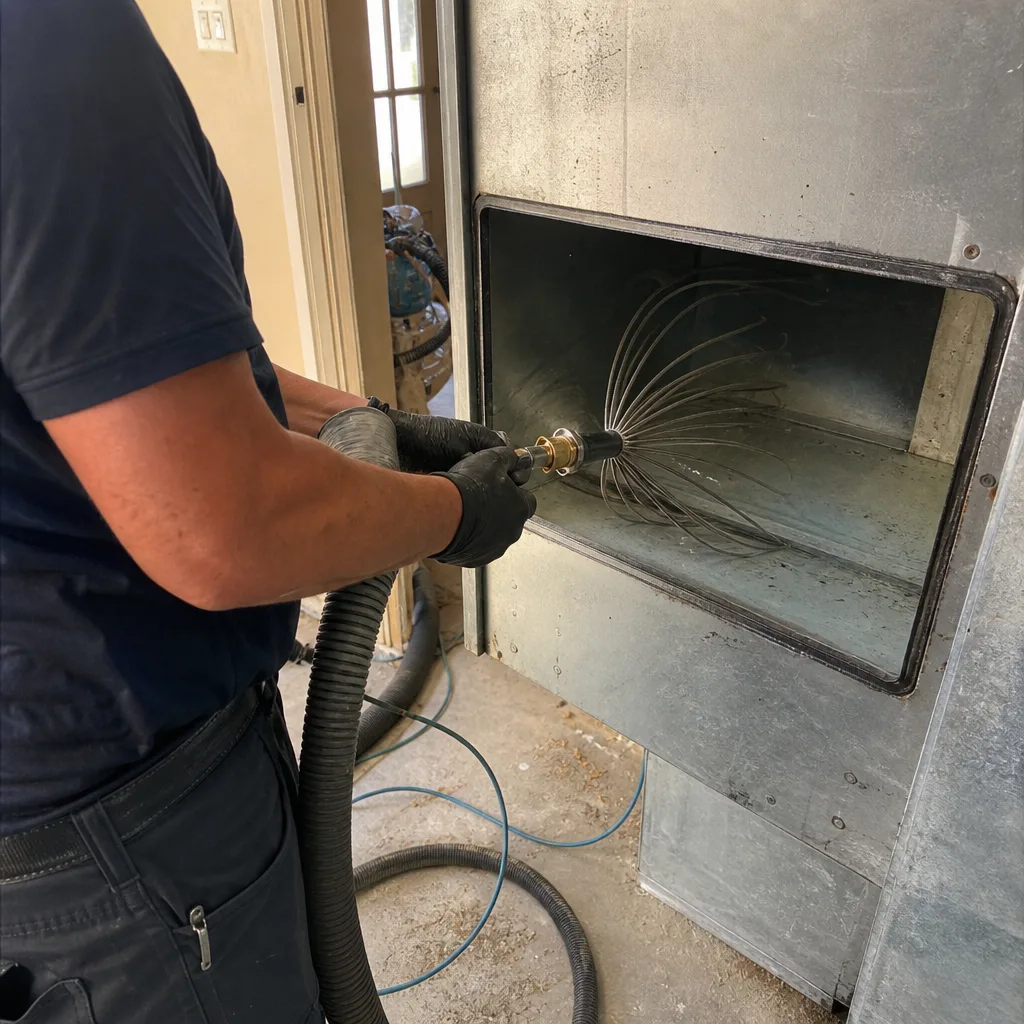
Pre-cooling-season preparation is the highest-value timing for whole-system duct cleaning in Phoenix. The system is about to enter its longest continuous runtime period. Cleaning before this load means five months of circulating air through clean duct runs rather than five months of grinding accumulated debris through the blower motor and evaporator coil.
What happens during this phase:
- Filter replacement and upgrade. The standard 1-inch fiberglass filter gets replaced with a pleated media filter, typically MERV 8 to 11 for Phoenix dust loads. Higher MERV ratings restrict airflow in undersized systems; we verify static pressure before recommending upgrades.
- Register and grille inspection. Remove floor and ceiling registers. Check for debris accumulation at the boot, the transition piece between the duct run and the room opening. In homes with pets or recent remodeling, we often find construction debris or concentrated hair at this junction.
- Outdoor condenser cleaning. Not a duct task directly, but a dirty condenser raises head pressure, reduces cooling capacity, and forces longer runtime, which moves more air through whatever debris remains in the ducts.
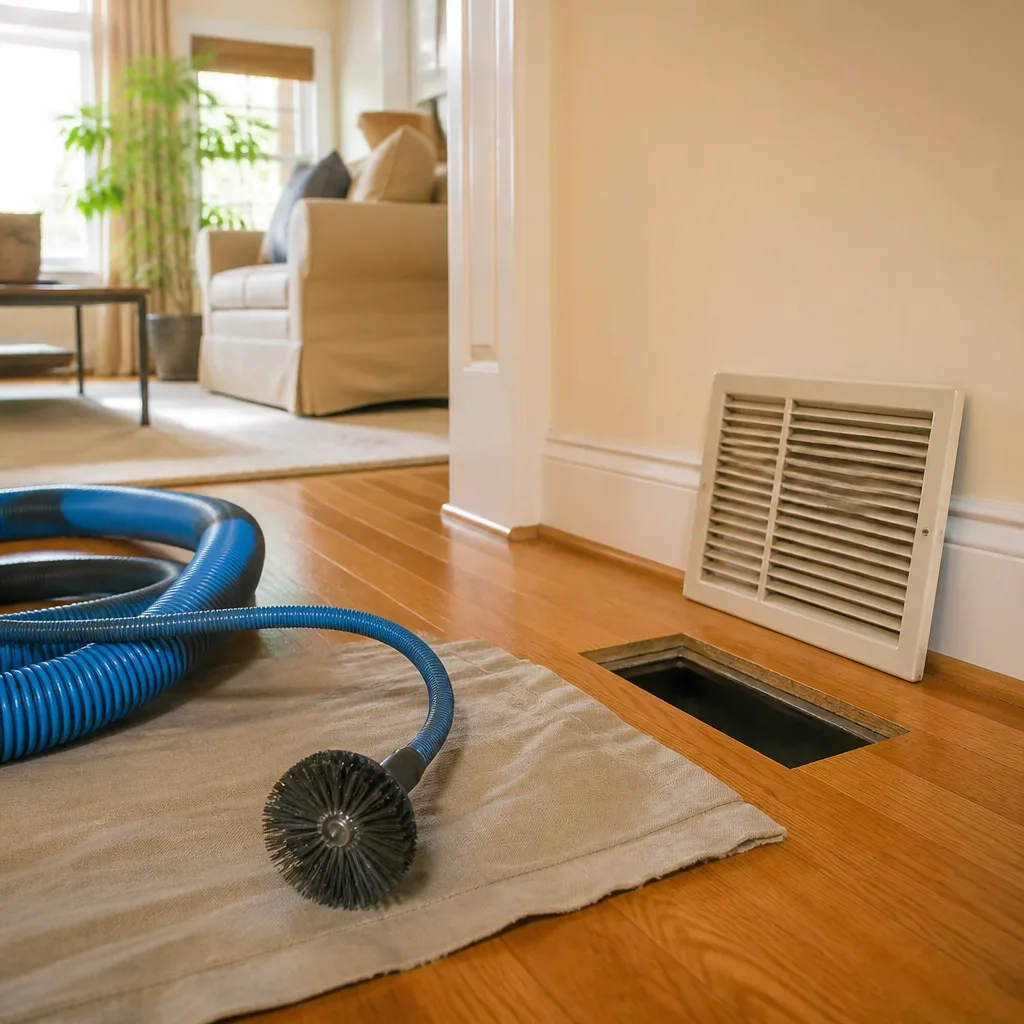
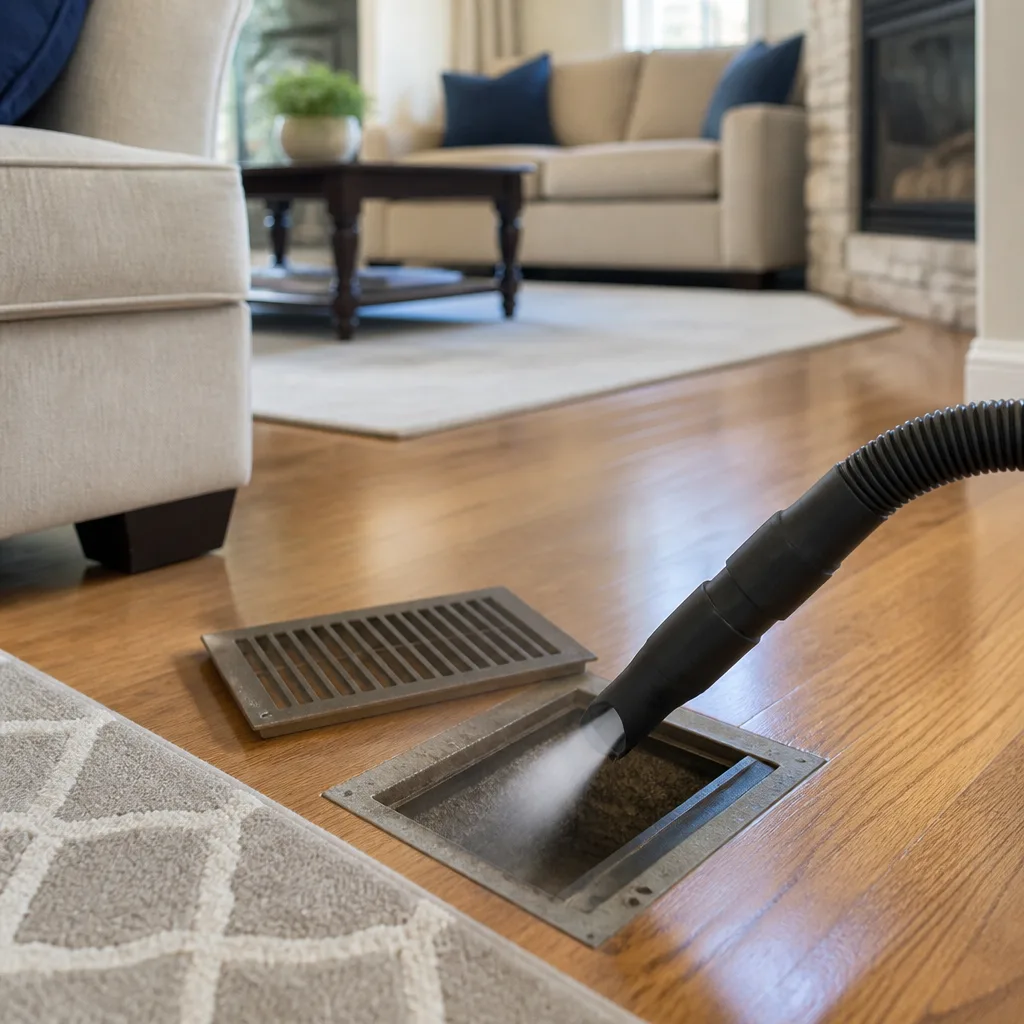
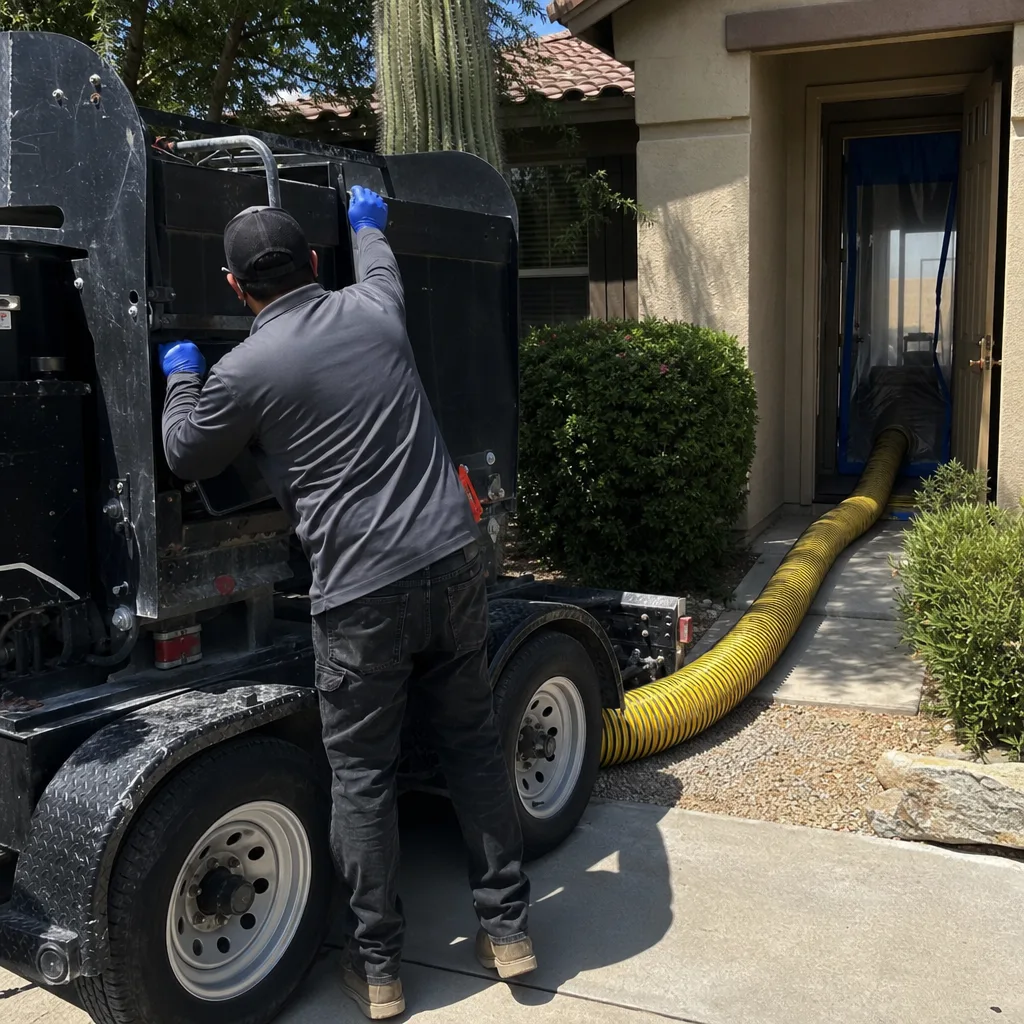
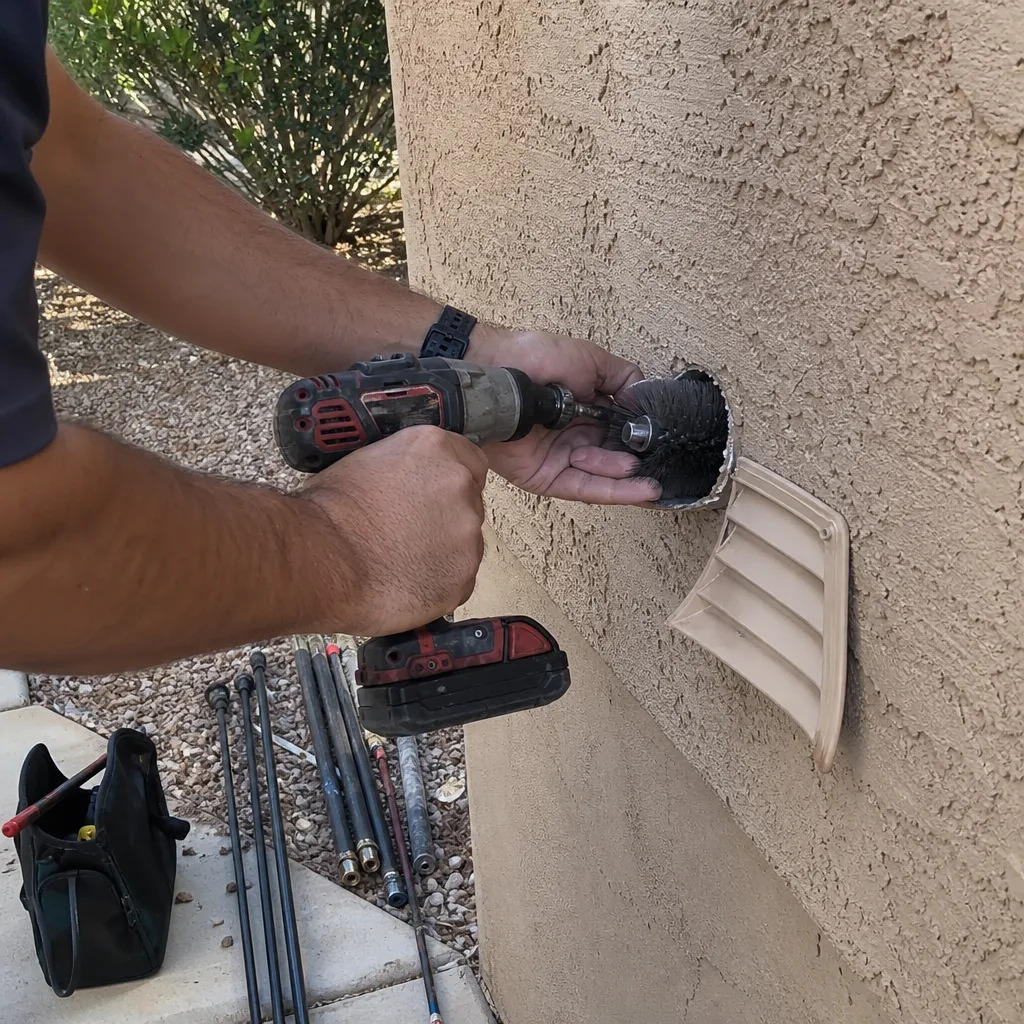
- Whole-system duct cleaning, if indicated. Using negative-pressure extraction, a large vacuum connected to the main trunk line that pulls debris backward through the system while agitation tools loosen material at the duct walls. Our crews use Rotobrush and Nikro equipment, with Abatement Technologies HEPA filtration on the vacuum exhaust.
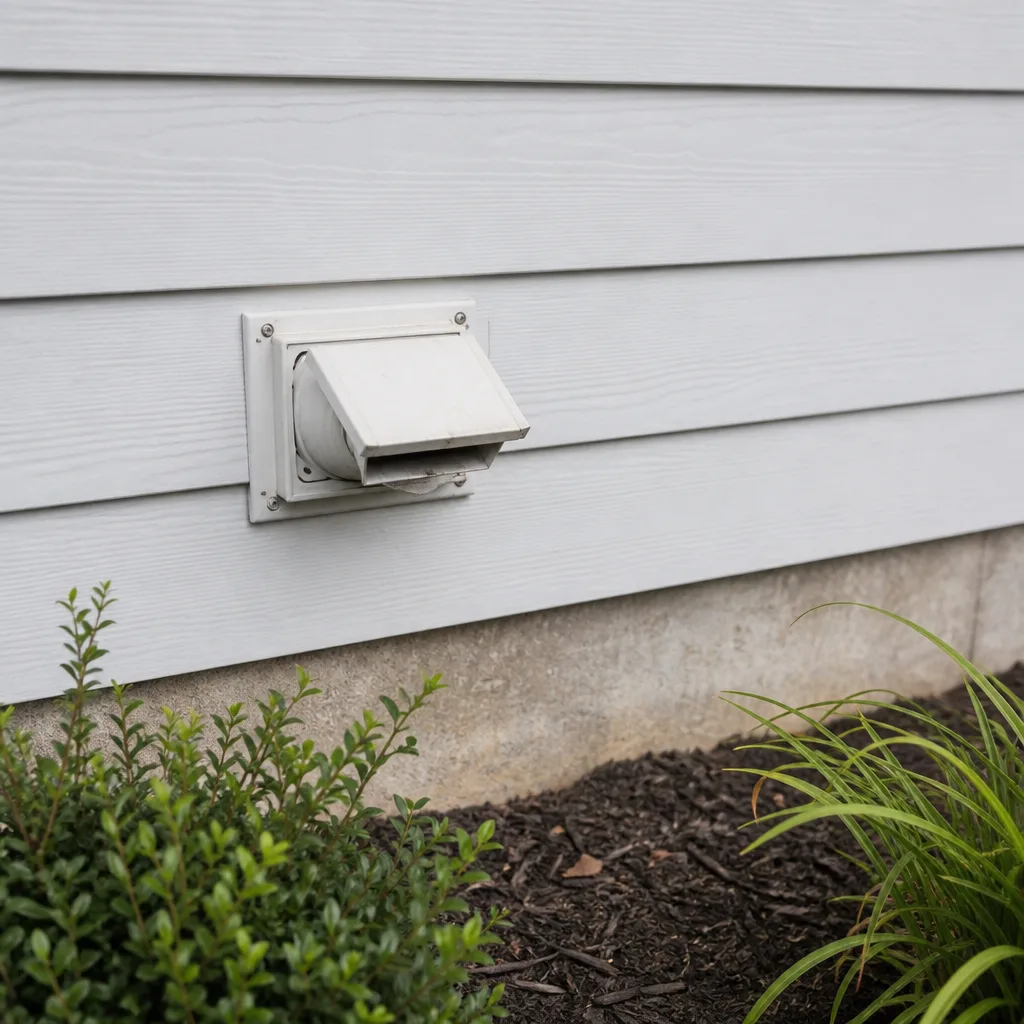
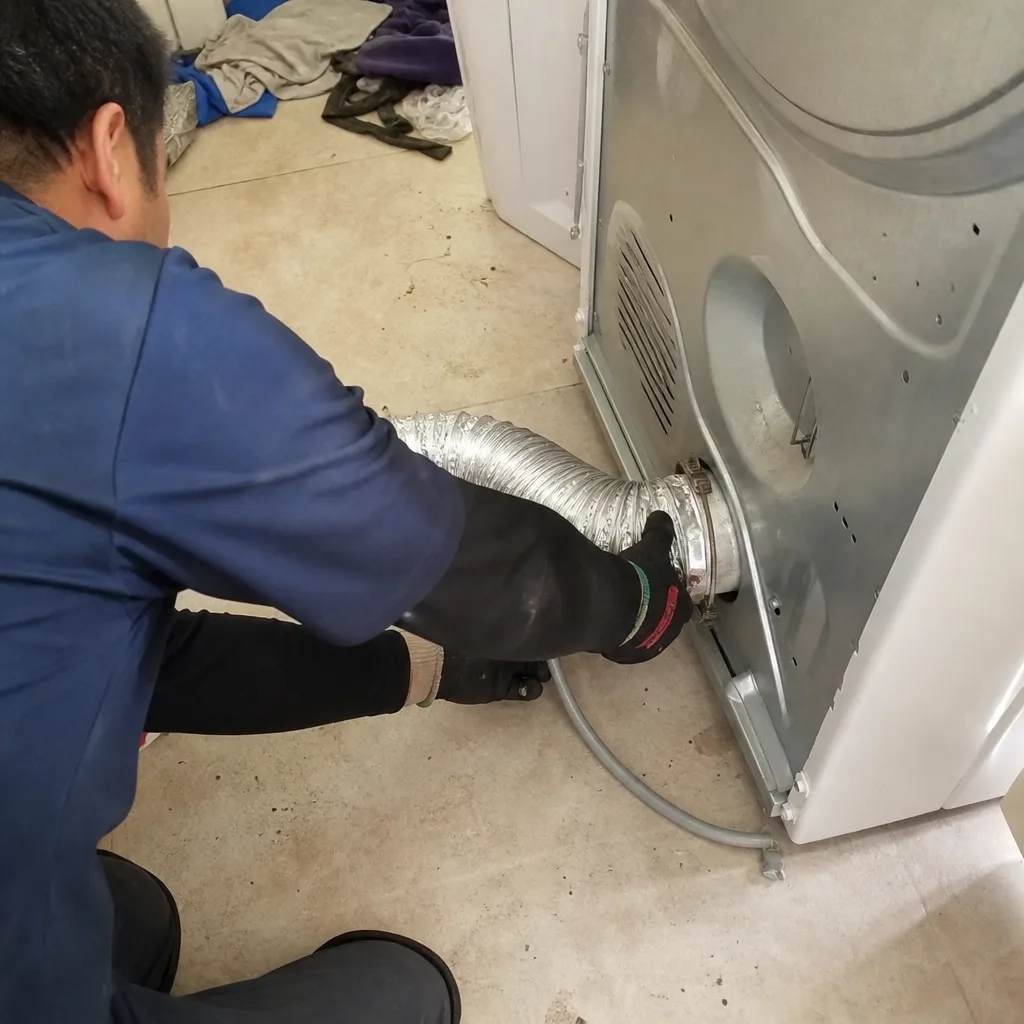
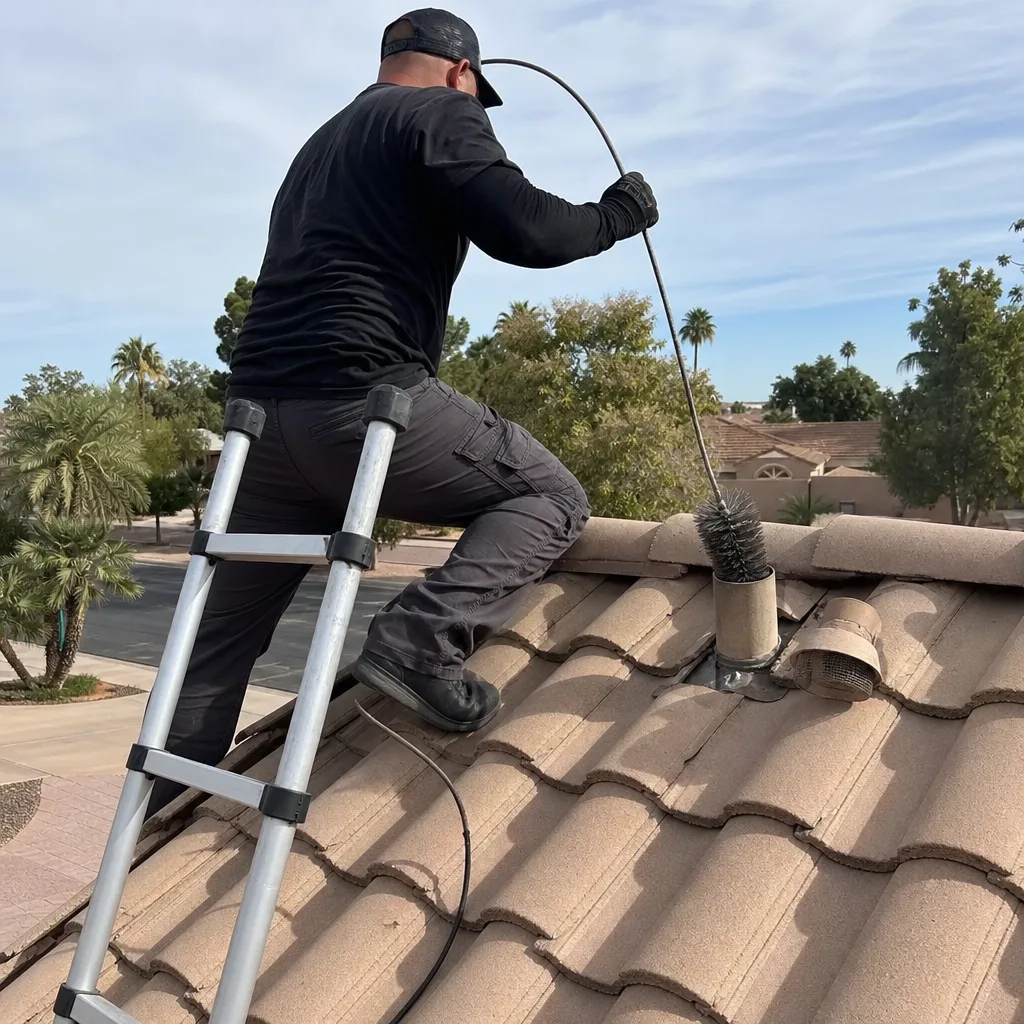
- Dryer vent cleaning. Dryer vent cleaning in Phoenix before summer heat peaks reduces fire risk and improves dryer efficiency when the appliance is already working against 110-degree ambient temperatures.
The pre-summer window also allows time for duct repair and sealing if inspection reveals disconnected runs or deteriorated flex duct in attics. Phoenix attic temperatures reach 140 to 160 degrees in summer. Sealing leaks before this thermal load prevents cooled air loss and reduces the moisture infiltration that feeds monsoon-season microbial growth.
Our documented photo records from March 2024 show a typical pre-summer finding in a 2006-built Ahwatukee home: moderate debris throughout, but a concentrated 2-inch accumulation at the return plenum where the flex duct connected to the air handler. The homeowner had changed filters regularly but had no access to inspect this junction. After negative-pressure extraction with Rotobrush agitation, the photo record showed bare metal at that junction for the first time since construction.
Peak Cooling: May-September Continuous Operation
Once the system enters continuous operation, the goal shifts from preparation to monitoring. This is not the time for whole-system cleaning unless a specific problem emerges. The system is under load, and disrupting ductwork during peak demand risks imbalance or temporary shutdown.
Monitoring tasks during peak cooling:
- Monthly filter inspection. In Phoenix peak season, filters load faster than manufacturer estimates. Check monthly, not quarterly. Hold the filter up to light; if you cannot see through it, replace it regardless of the printed schedule.
- Register airflow check. Walk the house monthly. A register that suddenly blows weaker than others may indicate a blockage or damper failure. Note which rooms feel warmer than others at the same thermostat setting.
- Condensate line verification. The line that drains moisture from the evaporator coil can clog with algae or debris. A backed-up condensate line shuts down the system or floods the return plenum. Check the exterior drain outlet monthly for active dripping during operation.
- Thermostat schedule review. Programmable setbacks save energy, but aggressive setbacks, 85 degrees while away, 72 degrees for return, force longer recovery runs that strain the system. A 4 to 6 degree setback is more sustainable in Phoenix’s thermal load.
The monsoon period within this window deserves specific attention. When humidity spikes, watch for these indicators:
- Condensation on supply registers, the metal grilles where cold air enters rooms. This signals supply air temperature below the dew point of the humid room air, often caused by restricted airflow from a dirty filter or closed dampers.
- Musty odor at startup after the system has cycled off during a humid period. This suggests moisture accumulation in the return plenum or duct liner.
- Unexplained increase in dust accumulation on horizontal surfaces within 48 hours of a monsoon storm. This often means the return system pulled in particulate through gaps in window seals or attic access points.
If these indicators appear, the correct response is documentation, not immediate cleaning. Note dates, conditions, and locations. This record determines whether October inspection reveals active growth requiring cleaning or merely residual moisture requiring monitoring. We’ve found that homeowners who document monsoon symptoms accurately can distinguish between a $280 inspection and a $1,400 cleaning when the post-monsoon window arrives, as detailed in our Air Duct Cleaning Cost Breakdown: The Phoenix Homeowner’s Reference for 2026.
Post-Monsoon Window: October Inspection
October is the critical decision point in Phoenix’s duct calendar. The monsoon moisture has subsided. Temperatures drop to the 70s and 80s, and homeowners begin considering heating use. The biological material that grew during humid periods has dried and is ready to distribute. This is when musty odors appear, when “something smells off” calls spike, and when the difference between inspection and cleaning matters most.
Post-monsoon inspection versus post-monsoon cleaning:
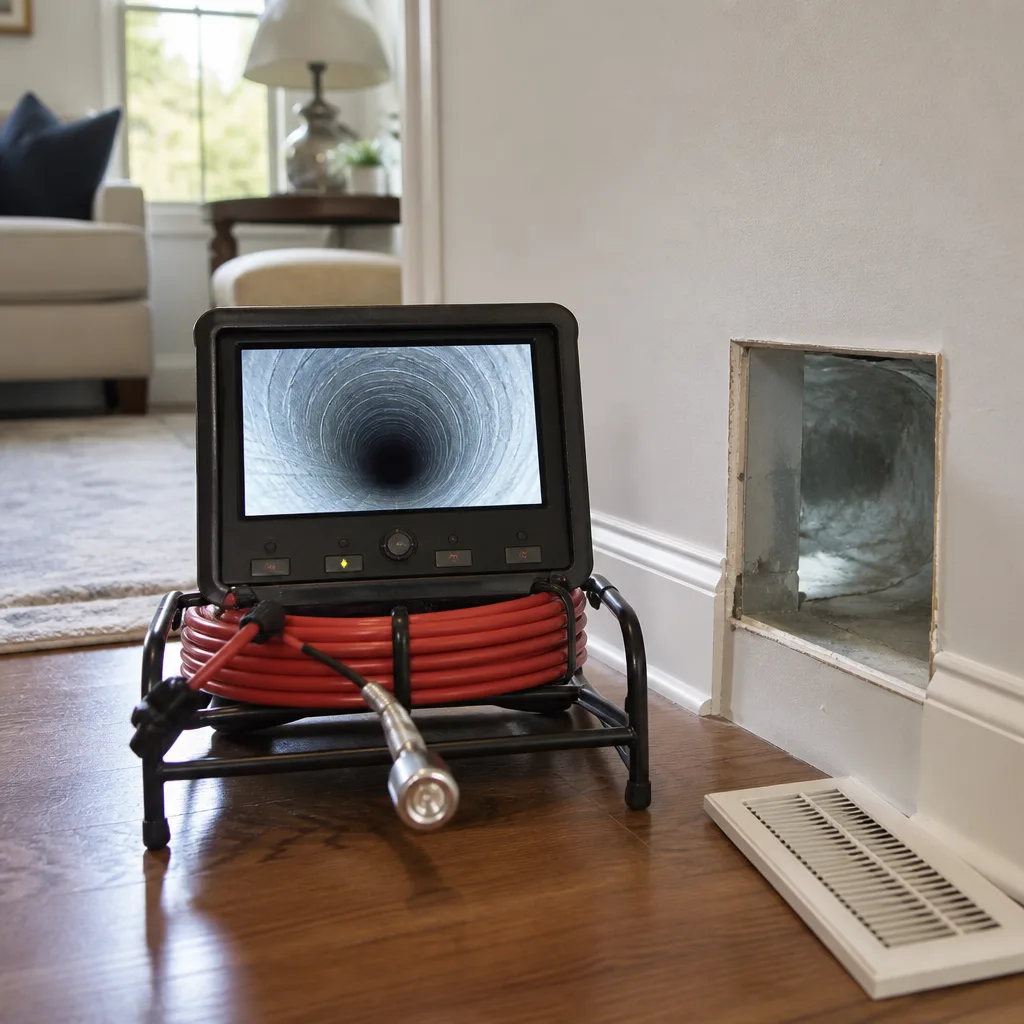
Inspection is visual and photographic. A technician accesses the supply plenum, return plenum, and representative duct runs with a borescope camera. The images reveal whether fiberglass liner shows discoloration, whether metal surfaces bear residue, and whether debris accumulation exceeds baseline. Inspection produces a documented photo record and a written recommendation. It does not remove material.
Cleaning is mechanical extraction. Negative-pressure vacuum, agitation tools, and HEPA filtration remove accumulated debris and biological material. Cleaning follows inspection when the photo record shows active growth, significant debris, or liner degradation that requires debris removal before further assessment.
The documented difference matters for cost and timing. In October 2023, we inspected a home near 32nd Street and Camelback where the homeowner reported musty odor since late September. The borescope showed light surface debris on metal ductwork but intact, unmarked fiberglass liner. We recommended inspection only, with filter upgrade and register cleaning, at $340. The odor resolved within 72 hours as the residual material cleared through normal filtration. A competitor had quoted $1,200 for whole-system cleaning based on the symptom alone, without visual verification.
Conversely, a 1998-built home in Moon Valley showed dark discoloration on fiberglass liner at the first return elbow, with visible moisture staining on the surrounding metal. Here, cleaning was indicated to remove the compromised material before it became a permanent odor source. The photo record, delivered as part of the standard job documentation, showed the progression from contaminated to clean surface.
October inspection checklist:
- Schedule borescope inspection of supply and return plenums.
- Request photo documentation of fiberglass liner condition, if present.
- Verify filter housing seal integrity; monsoon humidity can warp plastic filter racks.
- Test heating system startup while temperatures still permit open-window ventilation if odor releases.
- Review dryer vent for monsoon debris; wind-driven dust and vegetation accumulate in exterior terminations.
The October window is narrow. By mid-November, nighttime temperatures drop to the 40s, heating runs begin in earnest, and any material in the ducts distributes throughout the home. Schedule inspection by October 15 to allow decision time before heating dependency.
Heating Startup: November-December Transition
Phoenix heating systems operate intermittently compared to cooling, but the startup period carries specific risks for duct systems that have accumulated debris during five months of continuous cooling.
The primary concern is combustion byproduct safety. Gas furnaces, common in Phoenix homes built before 2010, produce carbon monoxide and other gases that must vent through the heat exchanger and flue. A cracked heat exchanger can introduce these gases into the supply air stream. This is not a duct cleaning issue; it is a safety issue that requires professional inspection. We recommend annual furnace inspection by a licensed HVAC technician before first heating use, separate from duct cleaning.
For duct-specific heating startup tasks:
- Filter replacement with heating-appropriate media. Heating airflow is typically lower velocity than cooling airflow. A filter that performed adequately in summer may restrict too much in heating mode. Verify static pressure if upgrading.
- Register position check. Many Phoenix homeowners close registers in unused rooms during summer to redirect cooling. Closed registers in heating mode can cause supply air to back-pressure into the return system, pulling attic air through leaks. Open all registers for balanced operation.
- Thermostat heat anticipator or cycle adjustment. Older mechanical thermostats have a heat anticipator setting that prevents temperature overshoot. Digital systems may need cycle-per-hour adjustment for gas versus heat pump operation. Incorrect settings cause short cycling, which increases wear and reduces filtration efficiency.
- Humidifier assessment, if equipped. Whole-house humidifiers attached to supply plenums can harbor standing water and biological growth. The pad or drum should be replaced, and the reservoir cleaned, before humidifier activation. Aprilaire and Honeywell whole-house units, common in Phoenix installations, have specific pad replacement intervals that should be verified against the installation date.
Heating startup is also the right time to schedule HVAC cleaning in Phoenix if it was deferred from pre-summer. The evaporator coil, blower assembly, and return plenum can be accessed and cleaned without disrupting cooling operation. This timing works well for homeowners who purchased in spring or summer and inherited a system of unknown maintenance history.
In December 2023, we serviced a home in the Willo Historic District where the new owners had run cooling continuously since May without knowing the system’s maintenance status. The blower assembly showed a 1-inch debris mat that restricted airflow 15 percent below specification. Cleaning the blower and evaporator coil restored capacity without duct disruption, and the documented photo record gave the owners a baseline for future comparison.
What Homeowners Can Check vs. What Requires Equipment
Understanding this boundary prevents unnecessary service calls and identifies when professional access is genuinely needed.
Homeowner-accessible tasks:
- Filter inspection and replacement. No tools required beyond knowing the correct size, printed on the filter frame edge.
- Register and grille removal for visual check of the boot and first few inches of duct run. A flashlight and smartphone camera can document what you see.
- Condensate line exterior outlet verification. Active dripping during cooling operation indicates flow; absence indicates potential clog.
- Thermostat programming and filter-change scheduling.
- Dryer lint trap cleaning after every load, and visual check of the exterior termination for obstruction.
Tasks requiring professional equipment:
- Borescope inspection of internal duct runs beyond the boot. The camera enters through register openings or small access cuts, navigating elbows and transitions not visible from the grille.
- Negative-pressure extraction. The vacuum equipment requires a truck-mounted or large portable unit with sufficient airflow to maintain negative pressure across the entire system. Shop vacuums and residential units lack this capacity.
- Fiberglass liner assessment. Determining whether discoloration is surface staining or active growth requires magnification and often sampling, not casual visual judgment.
- Static pressure measurement. Manometers or digital pressure gauges verify whether filter upgrades or duct modifications have restricted system airflow beyond manufacturer specification.
- Duct sealing and repair. Mastic application, aerosol sealant injection, and flex duct replacement require access tools and material handling equipment.
The H.A.V.E.N. Standard governs how this boundary is communicated. Haven Standard Clause 1, Upfront Written Pricing, applies before any equipment is deployed. Haven Standard Clause 3, Verified Crews, ensures the technician who arrives is background-checked, uniformed, and identified by name before entering the home. These are not marketing claims; they are operational protocols that determine what happens when you schedule service.
Costs and Timing: When Cleaning Pays Off
Whole-system duct cleaning in Phoenix typically ranges $800-$1,600 for residential systems, depending on duct configuration, accessibility, and whether dryer vent cleaning is bundled. This is not a per-vent price; CleanRun quotes one flat price per system, agreed in writing before work begins, under Haven Standard Clause 1. Per-vent pricing creates incentive to find more vents, or to rush through each one. Flat pricing aligns the company’s interest with thoroughness.
Inspection-only service ranges $280-$450, producing a documented photo record and written recommendation without cleaning.
When cleaning pays off:
| Scenario | Recommended Service | Typical Range |
|---|---|---|
| Pre-summer preparation, system never cleaned, 5+ years occupancy | Whole-system cleaning + dryer vent | $1,100-$1,600 |
| Post-monsoon inspection, no visible growth, light debris | Inspection + filter upgrade | $280-$450 |
| Post-monsoon inspection, active growth on liner, significant debris | Whole-system cleaning + sanitizing | $1,200-$1,800 |
| Heating startup, unknown maintenance history, reduced airflow | HVAC cleaning (coil, blower, plenum) | $600-$950 |
| New home purchase, pre-occupancy baseline | Inspection + optional cleaning based on findings | $280-$1,400 |
The highest-return timing is pre-summer cleaning for systems that have not been serviced in five or more years. Five months of continuous runtime through clean ductwork, versus five months grinding accumulated debris, extends blower motor life and maintains evaporator coil efficiency. We’ve measured airflow improvement of 12 to 18 percent post-cleaning in systems with significant accumulation, directly reducing runtime and energy consumption.
The lowest-return timing is reactive cleaning triggered by a single odor complaint without diagnostic inspection. Odors have multiple sources: drain pan contamination, evaporator coil biofilm, dead rodents in inaccessible trunk lines, or off-gassing from new furnishings pulled into return air. Cleaning ducts without identifying the source wastes money and delays resolution. Our Free Second Opinion on Any Written Estimate exists precisely for this scenario: bring a competitor’s quote, and we’ll put our diagnostic findings next to it in writing.
Common Mistakes to Avoid
- Cleaning after summer instead of before. Post-summer cleaning removes debris that has already circulated for five months. The damage to blower motor and coil from that circulation is done. Pre-summer cleaning prevents it.
- Treating all musty odors as duct problems. In Phoenix, monsoon-season moisture often contaminates the evaporator coil and drain pan, not the ducts. Coil cleaning resolves these odors; duct cleaning does not. Inspection distinguishes the source.
- Using the cheapest filter that fits. Fiberglass panel filters capture less than 10 percent of fine particles. In Phoenix’s dust environment, they allow rapid accumulation in the return system. Upgrade to pleated media, but verify static pressure with your HVAC technician.
- Ignoring the dryer vent until clothes stop drying. Dryer vent restriction is a progressive fire hazard, not a convenience issue. Phoenix’s heat already stresses dryer components; restricted airflow compounds the risk. Clean before summer peak.
- Closing registers in unused rooms. This practice, common in two-story Phoenix homes with zoned temperature imbalance, increases static pressure and can pull unconditioned attic air through duct leaks. Address imbalance with proper zoning or damper adjustment, not register closure.
- Scheduling duct cleaning without photo documentation. Without before-and-after images, you have no verification that work occurred. The documented photo record is standard on every CleanRun visit, included without additional charge, and delivered as part of the job record.
- Deferring inspection until heating odor forces the call. By November, monsoon growth has dried and distributed. October inspection catches active conditions before they become household-wide air quality problems.
When to Call a Professional
Call for professional inspection when you observe sustained musty odor after monsoon season, visible debris at registers that recurs within weeks of cleaning, uneven airflow between rooms that filter changes do not resolve, or any suspicion of fiberglass liner degradation in homes built 1985-2010. These conditions require borescope access and negative-pressure equipment beyond homeowner capability.
CleanRun Air Duct Cleaning Phoenix offers free estimates in Phoenix. Every estimate includes a written price before work begins, under Haven Standard Clause 1, and every completed job includes a documented photo record of every duct run. Call (480) 500-6377 to schedule. If you have a written estimate from another provider, our Free Second Opinion puts our findings and pricing next to it at no cost.
Frequently Asked Questions
Whole-system residential duct cleaning in Phoenix typically ranges $800-$1,600, with inspection-only service at $280-$450. The exact price depends on system size, duct accessibility, and whether dryer vent or HVAC cleaning is bundled. CleanRun quotes one flat price per system in writing before work begins; there is no per-vent pricing or “call for a quote” requirement. Call (480) 500-6377 for a written estimate at no charge.
Low quotes often reflect limited scope: a shop vacuum at registers without trunk line access, no photo documentation, or per-vent pricing that expands once the technician arrives. The $79 coupon model typically covers a brief vacuuming of visible register openings, not negative-pressure extraction of the full system. Ask specifically whether the quote includes supply and return trunk lines, plenum access, before-and-after photography, and HEPA filtration on exhaust. If any element is omitted, the price reflects a different service than whole-system cleaning.
Demand a documented photo record showing the inside of every duct run before and after service. This is standard on every CleanRun visit, delivered as part of the job record, and has been since our first job in 2013. Without dated, location-identified images, you have only the technician’s word. The photo record is your verification that agitation and extraction reached beyond the register boot into the full duct system.
For Phoenix homes, whole-system cleaning every 5 to 7 years is typical for systems with regular filter maintenance. Homes with multiple pets, recent remodeling, or monsoon-season moisture intrusion may need more frequent service. Annual inspection with borescope photography is advisable for homes with fiberglass duct liner, particularly those built 1985-2010, to catch liner degradation before it requires replacement. See our Air Duct Cleaning Maintenance Checklist for Phoenix Homeowners for a full seasonal timeline. The October post-monsoon inspection window is the ideal annual checkpoint.
Monsoon humidity itself does not damage metal ductwork, but it activates biological growth on fiberglass liner and can accelerate corrosion at poorly sealed joints. The greater risk is moisture pulled into the return system through attic leaks or crawl space gaps, which condenses on cool surfaces and creates sustained wet conditions. Proper duct sealing, inspected during pre-summer preparation, prevents this pathway. If your home smells musty specifically in October, monsoon moisture is the likely cause, and inspection should focus on liner condition and leak points.
Pre-sale duct cleaning can improve air quality for showings and remove odors that distract buyers, but it is most valuable when documented. A written price, photo record, and 365-Day Done Right Promise transfer credibility to the buyer. In Phoenix’s competitive market, buyers who research service history appreciate verifiable maintenance over vague claims. Schedule cleaning 30 to 45 days before listing to allow any residual odor from cleaning agents to dissipate.
The Bottom Line
Phoenix duct care follows a calendar shaped by continuous summer cooling and monsoon humidity, not four equal seasons. Pre-summer cleaning in March-April delivers the highest return by preparing the system for five months of uninterrupted operation. The October post-monsoon inspection window catches moisture-driven problems before heating distribution spreads them. Homeowner monitoring, filter discipline, and register checks maintain performance between professional visits. For conditions beyond visual access, professional inspection with borescope documentation separates necessary cleaning from unnecessary expense. Explore more guides & resources on Phoenix HVAC maintenance. Every service decision should be backed by written pricing and photographic evidence, not urgency or symptom alone.
Written by Tomas Reyes, Owner at CleanRun Air Duct Cleaning Phoenix, serving Phoenix since 2013.