
Last updated September 23, 2026
Whole-system duct and dryer vent check with before-and-after photos - you see exactly what came out of your vents
That "$99 whole-house special" is a bait ad - the real number appears once they are in your hallway, or the "clean" is a shop-vac at the register. We photograph the inside of your ducts before and after instead.
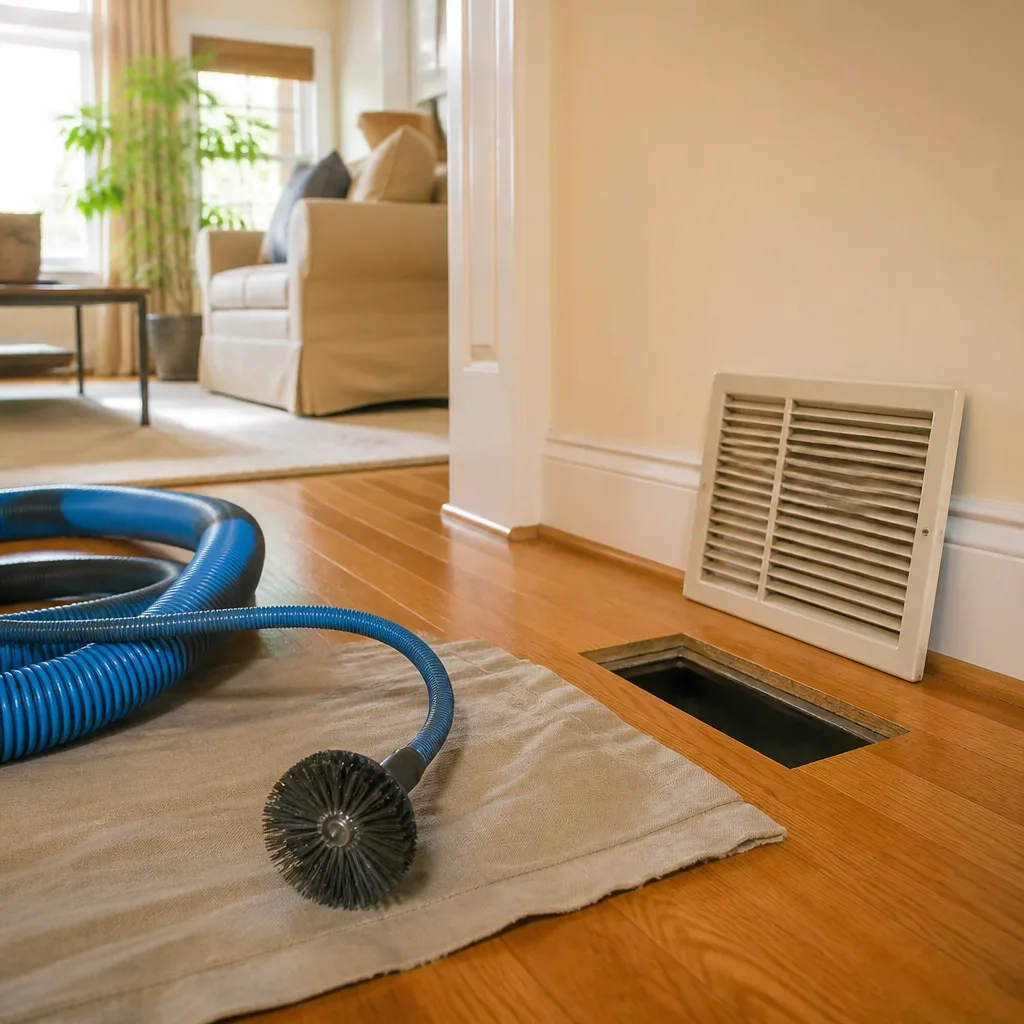
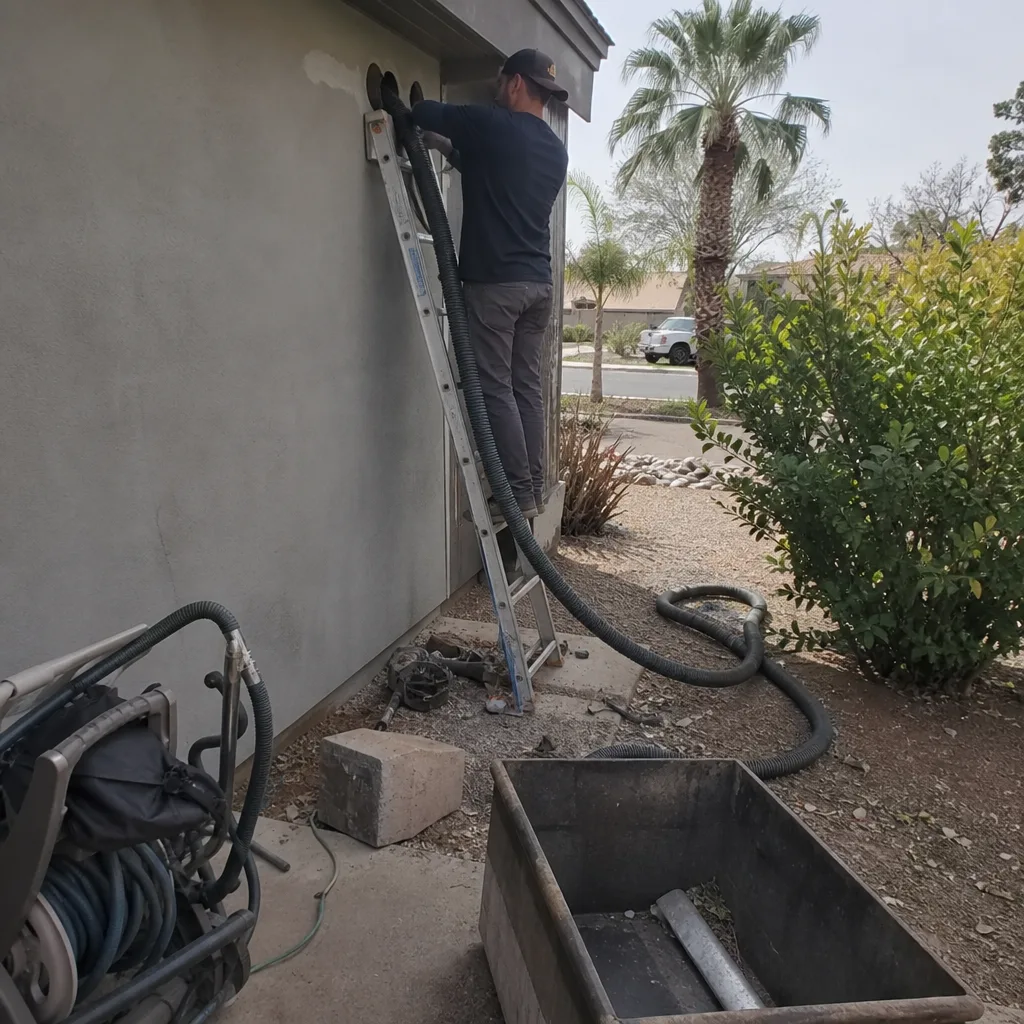 Before
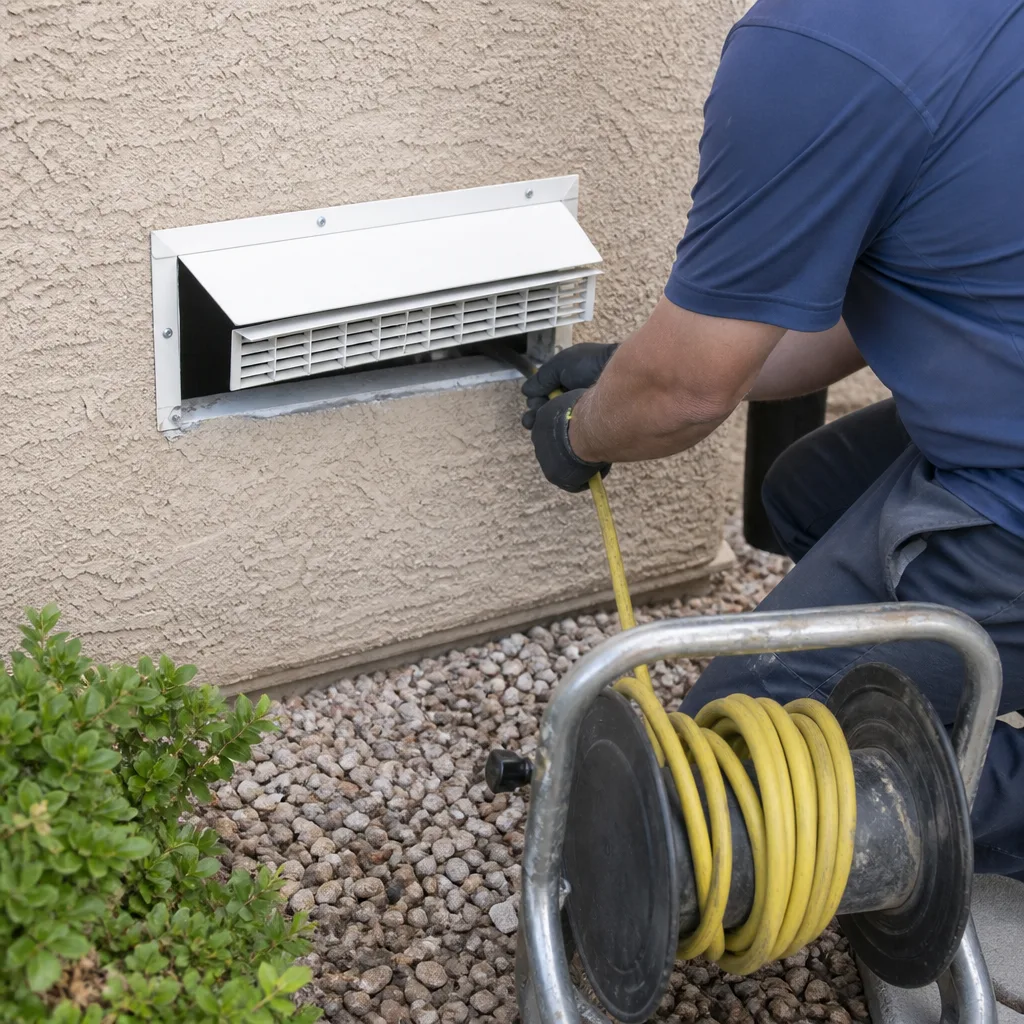 After
After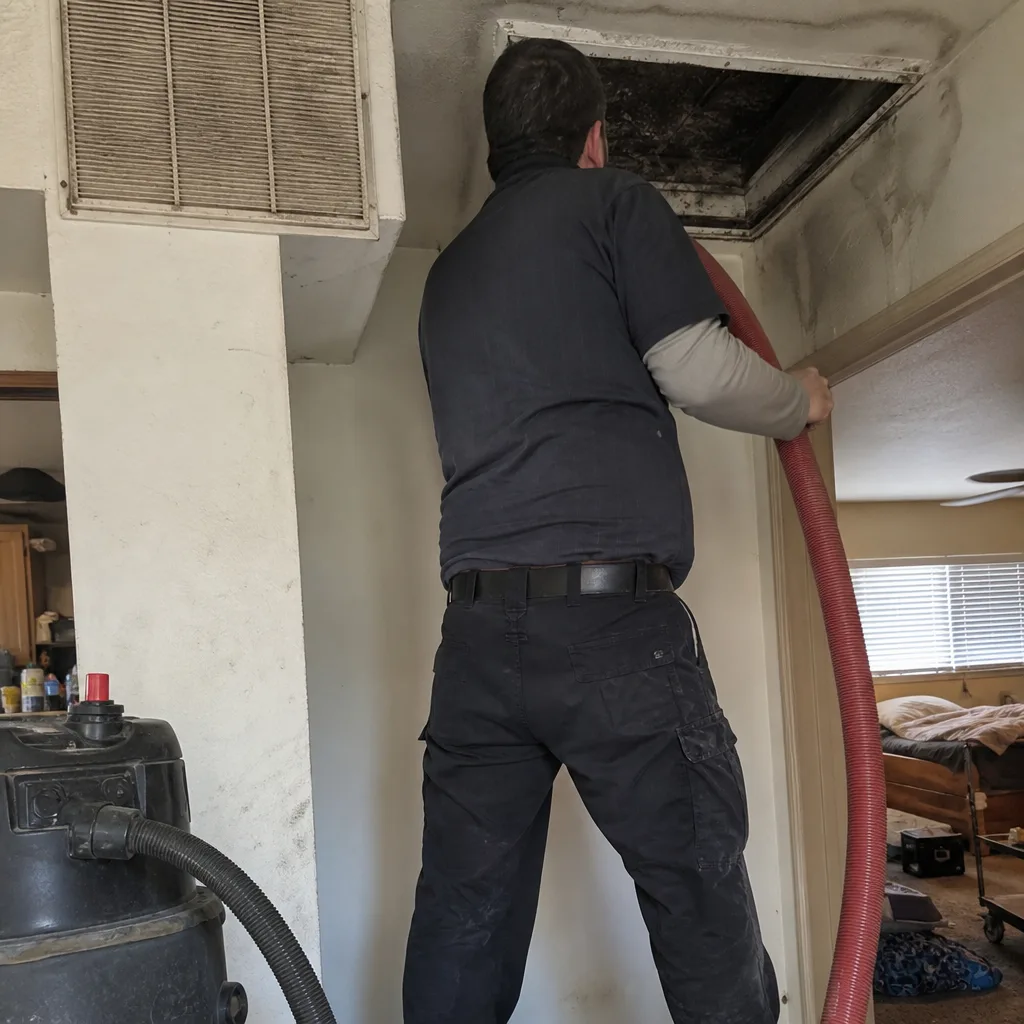 Before
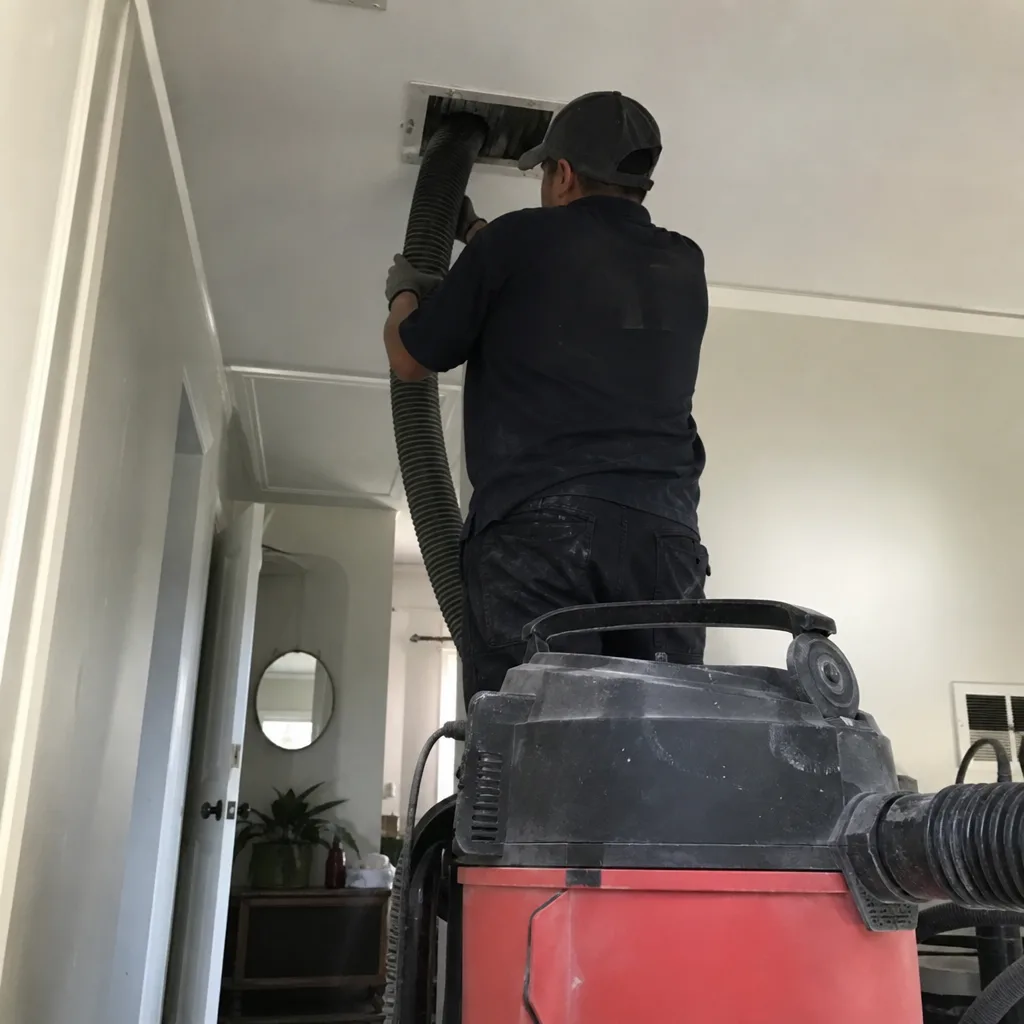 After
After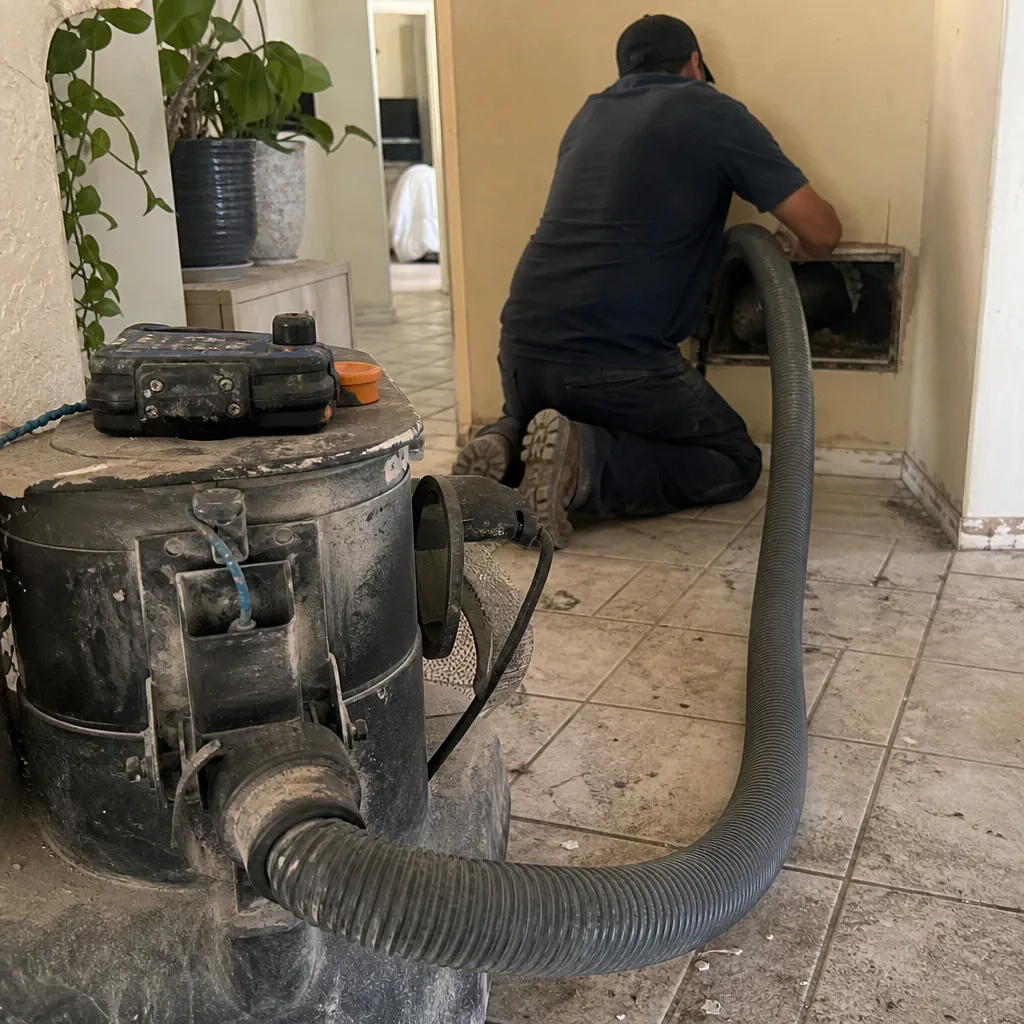 Before
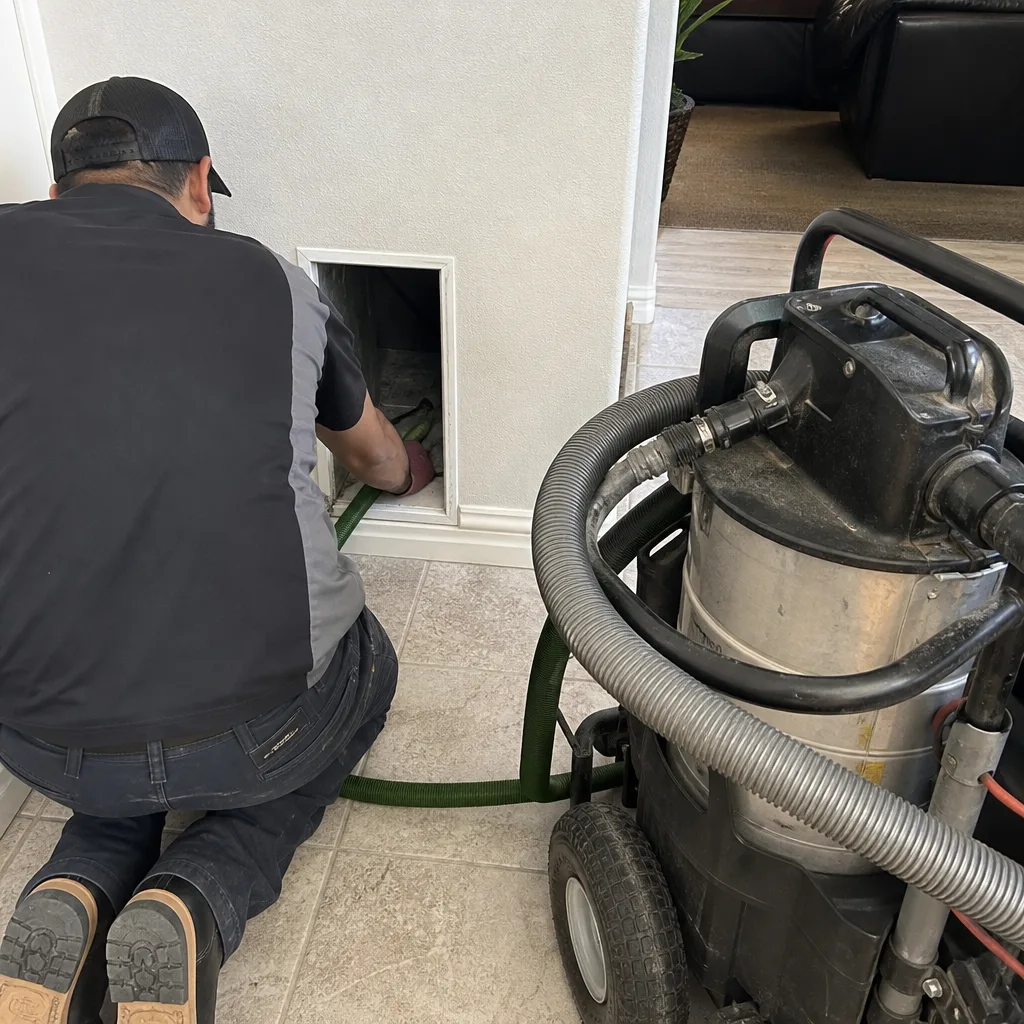 After
AfterHow to Hire a Air Duct Cleaning Contractor in Phoenix: A Step-by-Step Guide
A $79 coupon duct cleaning in Phoenix typically takes 45 minutes for a 2,000 square foot home. Negative-air-pressure cleaning with photo documentation of every run takes 3-4 hours. That time difference tells you more than any online review. In this guide, you’ll learn how to separate accountable contractors from coupon operations by requesting four specific written documents before anyone enters your home, and how to read the warning signs that show up in the first phone call.
Quick Answer
To hire a legitimate Air Duct Cleaning services contractor in Phoenix, request four documents before scheduling: a written scope of work with duct-run count, an itemized price with no mandatory add-ons, proof of general liability insurance, and NADCA membership or equivalent certification. Verify the ROC license number through the Arizona Registrar of Contractors website, confirm the vacuum collection unit runs at least 4,000 CFM, and insist on before-and-after photos of every duct run as a standard deliverable - not an upgrade.
Table of Contents
- The Four Documents That Separate Real Contractors from Coupon Operations
- How to Verify a Phoenix Contractor’s ROC License in Under Two Minutes
- Equipment Questions Most Homeowners Don’t Know to Ask
- What a Legitimate Written Estimate Must Include
- Red Flags in the Hiring Conversation
- Phoenix-Specific Factors That Affect Your Duct Cleaning
- Common Mistakes to Avoid
- When to Call a Professional
- Frequently Asked Questions
BeforeAfterThe Four Documents That Separate Real Contractors from Coupon Operations
We’ve been in Phoenix homes since 2013, and the pattern is consistent: the homeowners who get their money’s worth are the ones who treat the hiring decision like a documentation request, not a price hunt. Here are the four documents that accountable contractors provide without hesitation, and that coupon operations treat as an inconvenience.
Document 1: Written Scope of Work with Duct-Run Count
A scope of work is a written description of what will be cleaned, room by room. It should list the number of supply runs (the ducts that blow conditioned air into rooms) and return runs (the ducts that pull air back to the HVAC unit). For a typical Phoenix single-story home built 2015-2025 in neighborhoods like Arcadia Lite, North Central, or Ahwatukee Foothills, expect 12-20 supply runs and 2-4 return runs.
The scope should also note the plenum - the central distribution box where ducts connect to your HVAC unit - and whether the blower compartment and evaporator coil are included. Some contractors clean only the ducts and leave the coil untouched, which means the air passes through a dirty heat exchanger immediately after “cleaning.”
At CleanRun Air Duct Cleaning Phoenix home, every scope is written and signed before work begins under Haven Standard Clause 1: Written Price Before Any Work Starts. No exceptions.
Document 2: Itemized Price with No Mandatory Add-Ons
The written price should break out:
- Base cleaning per duct run or per linear foot
- Plenum cleaning (if separate)
- Coil or blower cleaning (optional, priced separately)
- Access point creation or repair (if needed for sealed systems)
- Sanitizer or antimicrobial treatment (optional line item - never mandatory)
Phoenix market pricing for legitimate negative-pressure duct cleaning in 2024-2025 runs approximately $350-$650 for homes under 2,500 square feet, and $600-$950 for larger homes or those with multiple HVAC systems. See our Air Duct Cleaning Cost Breakdown: The Phoenix Homeowner’s Reference for 2026 for detailed pricing factors. The $79-$129 coupon range does not cover this scope of work; it covers a rotary brush run through accessible vents with no collection unit, which re-deposits debris in the ductwork.
CleanRun’s written price is delivered before any panel comes off, and it is the final price - not an opening bid.
Document 3: Proof of General Liability Insurance
Request a certificate of insurance (COI) naming your household as additional insured, or at minimum showing current general liability coverage of at least $1 million. This is standard for contractors working inside Phoenix homes, and any legitimate operation emails it within hours. The COI should show the policy effective dates and the insurance carrier - not a hand-written note or a logo on a business card.
Document 4: NADCA Membership or Equivalent Certification
The National Air Duct Cleaners Association (NADCA) sets the industry standard for HVAC system cleaning. A NADCA-certified contractor follows Assessment, Cleaning, and Restoration of HVAC Systems (ACR) guidelines. Equivalent certifications include ASCS (Air Systems Cleaning Specialist) or VSMR (Ventilation System Mold Remediator) credentials.
Ask for the certification number and verify it on NADCA’s website. In our experience, fewer than 30% of Phoenix-area duct cleaners advertising “certified” technicians hold current individual certifications.
How to Verify a Phoenix Contractor’s ROC License in Under Two Minutes
Arizona requires anyone performing air duct cleaning for compensation to hold a license from the Arizona Registrar of Contractors (ROC). Here’s how to verify it, and what the license classifications actually mean.
Step-by-Step Verification
- Go to roc.az.gov and click “Verify a License.”
- Enter the contractor’s six-digit ROC number or business name.
- Check three fields: License Status (should read “Active”), Bond Status (should show current), and Complaint History (review any filed in the past 36 months).
- Click “License Details” to confirm the classification includes C-39 (Air Conditioning and Refrigeration), B-3 (General Residential Remodeling), or R-39 (Air Conditioning and Refrigeration - Residential). Pure duct cleaning falls under C-39 or R-39; B-3 is acceptable if the contractor holds it for HVAC-related work.
The entire process takes 90 seconds. Any contractor who hesitates to provide their ROC number, or who provides a business license number instead (a tax document, not a trade credential), is operating outside Arizona requirements.
CleanRun operates under ROC license published on every page - not buried in a footer - as Haven Standard Clause 3: Verified Crews requires.
What the Classifications Cover (and Don’t)
C-39 and R-39 holders are trained on HVAC system integrity, refrigerant handling, and ductwork modification. A handyman with a B-3 only, or no license at all, cannot legally modify ductwork, seal plenums, or access the evaporator coil. This matters in Phoenix, where summer attic temperatures exceed 140°F and duct tape adhesive fails within 2-3 years - proper repairs require licensed work.
Equipment Questions Most Homeowners Don’t Know to Ask
The equipment roster determines whether debris leaves your home or simply relocates within it. These are the questions that separate technicians from salespeople.
What CFM Rating Does Your Vacuum Collection Unit Operate At?
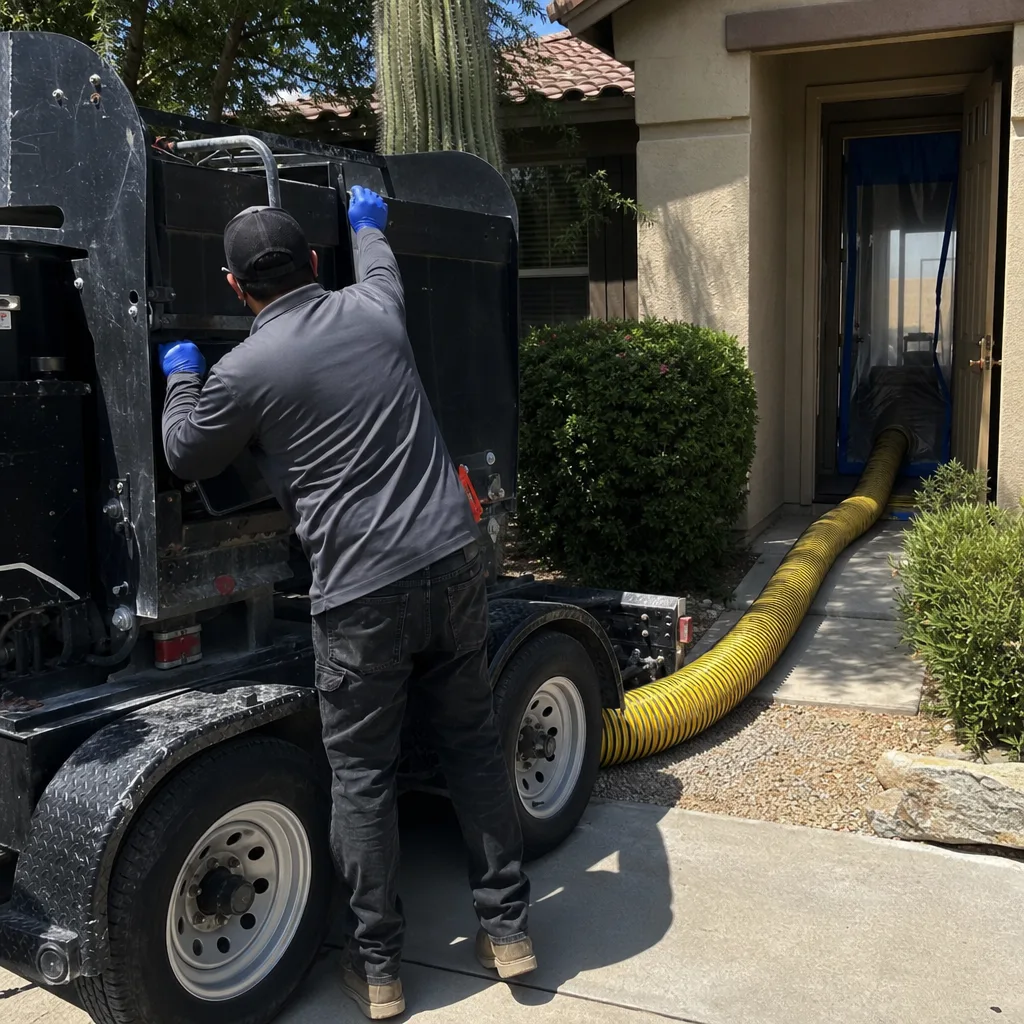
CFM stands for cubic feet per minute - the volume of air the vacuum moves. For residential duct cleaning, the collection unit must pull at least 4,000 CFM to create sufficient negative pressure (suction that exceeds the blower’s output, preventing debris from escaping into living spaces during cleaning). Truck-mounted systems typically achieve 5,000-15,000 CFM. Portable electric units range from 1,500-4,500 CFM and are acceptable for townhomes or condos where truck access is impossible, but marginal for single-family homes.
Ask the specific number. A contractor who answers “commercial-grade” or “heavy-duty” without a CFM rating is either uninformed or evading.
Truck-Mounted or Portable?
Truck-mounted systems use the vehicle’s engine or a dedicated power unit to drive high-CFM collection. They’re parked outside, with a large-diameter hose run to the HVAC unit. Portable units roll inside on casters. Both are legitimate; the issue is matching the equipment to the job. In Phoenix, where many homes in neighborhoods like Desert Ridge and Verrado have rooftop HVAC units or side-yard pads with limited access, portables are sometimes necessary - but the CFM must still meet the 4,000 threshold.
What Agitation Method Do You Use?
Negative pressure alone doesn’t dislodge debris. Agitation methods include:
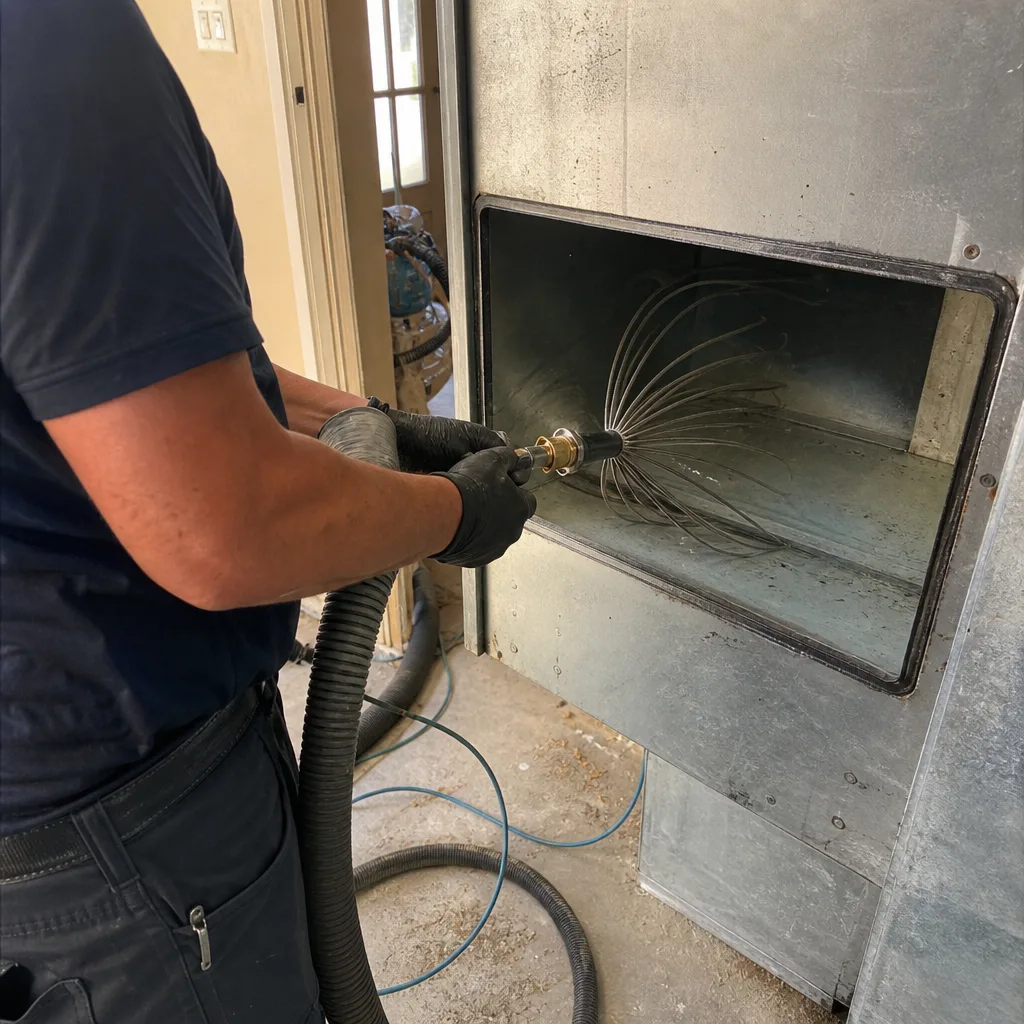
- Rotary brush systems (mechanical brushes on flexible cables, like Rotobrush equipment)
- Compressed air whips or skipper balls (pneumatic tools that strike duct walls)
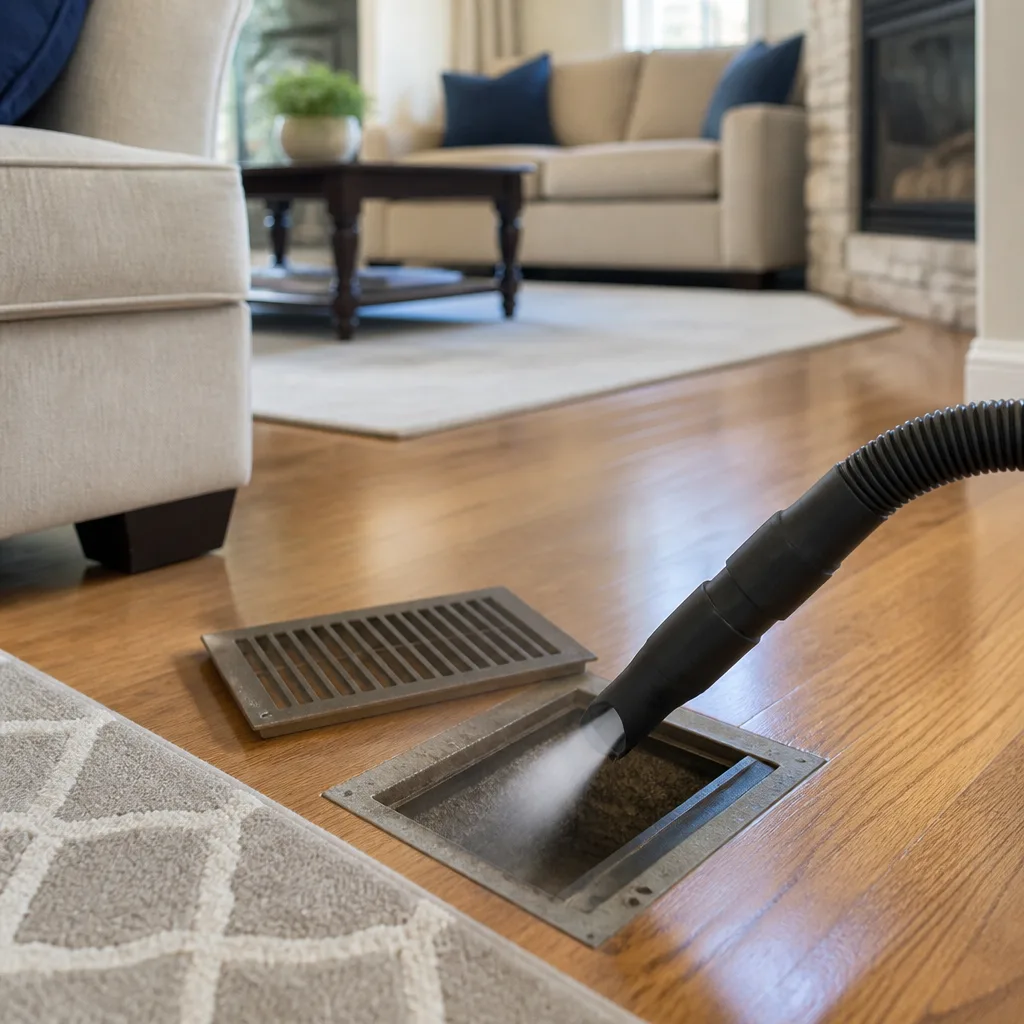
- Contact vacuuming (hand-held HEPA vacuums at the register)
Each has applications. Rotary brushes work well on sheet metal ductwork common in Phoenix homes built 2000-2015. Compressed air tools are preferred for flex duct, which tears under brush contact. A competent contractor matches the method to your duct type - and can explain why.
CleanRun’s equipment roster includes Rotobrush, Abatement Technologies, and Guardsman tools, selected per duct type and job requirements. Customers can verify these brands independently; we name them precisely so you can.
What a Legitimate Written Estimate Must Include
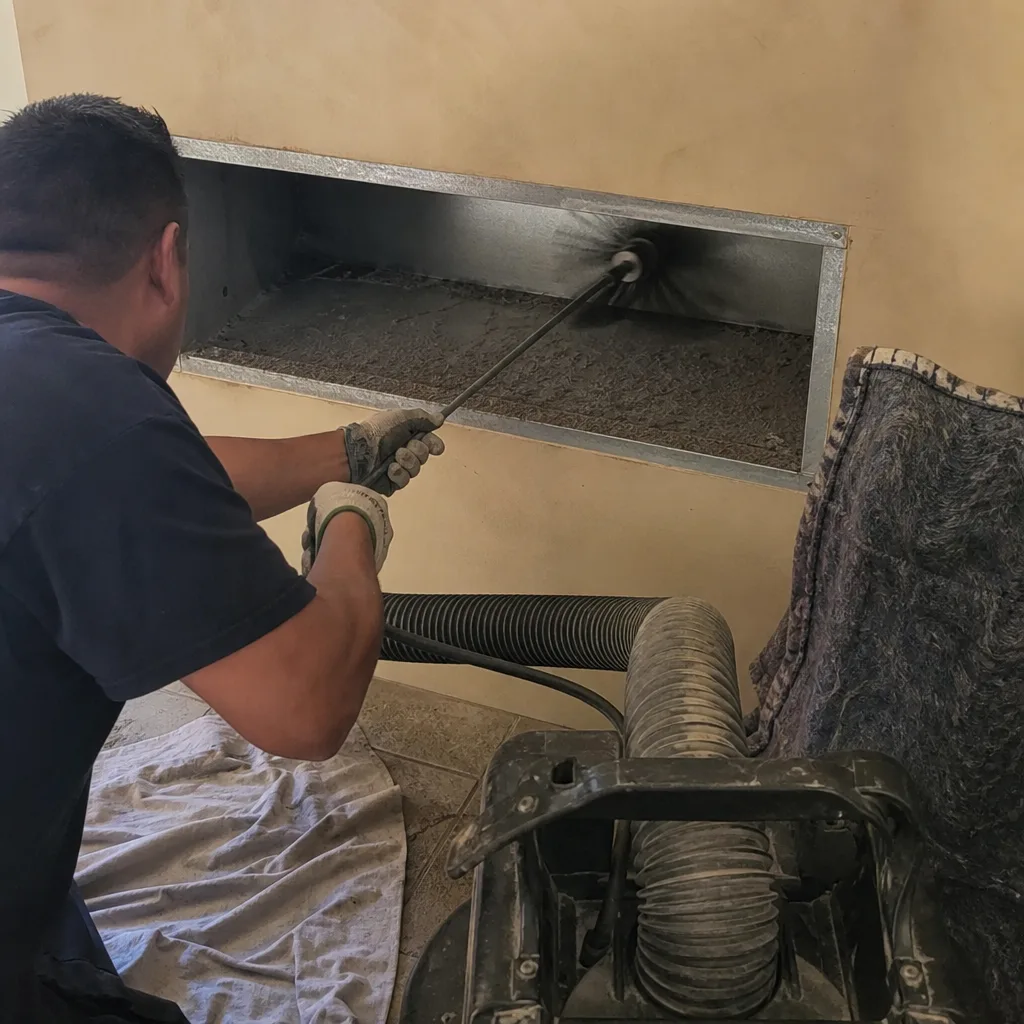
The estimate is a contract precursor, not a marketing piece. Here’s what belongs in it, and what signals a bait-and-switch operation.
Required Elements
- Linear footage or duct-run count: “14 supply runs, 3 return runs” - not “whole house.”
- Access point fees: If your system lacks service openings, creating them takes time and materials. This should be priced separately, not discovered mid-job.
- Sanitizer as optional line item: EPA-registered sanitizers (like those applied with Abatement Technologies equipment) are legitimate add-ons for homes with mold concerns or after rodent intrusion. They should never be mandatory or presented as “included free” - free items have no stated value and invite substitution with unregistered products.
- Equipment specification: The CFM rating and agitation method noted above.
- Photo documentation clause: A statement that before-and-after photos of every run will be provided as a standard deliverable.
- Warranty terms: Duration, scope, and process for claims - in writing, not verbal.
Phoenix-Specific Pricing Context
Desert dust composition affects cleaning difficulty. Phoenix’s caliche-rich soil creates fine particulate that packs tightly in duct elbows and register boots. Homes near construction zones - common in developing areas like Laveen, South Mountain Village, and the far West Valley - may require additional agitation time. A legitimate estimate notes this possibility without turning it into an upsell.
CleanRun’s estimates include the written price, the equipment to be used, and the Air Duct Cleaning in Phoenix scope - all before work begins, per Haven Standard Clause 1.
Red Flags in the Hiring Conversation
These patterns appear consistently in complaints filed with the Arizona Attorney General and the ROC. Recognize them in the first call and decline politely.
Upsell Pattern: The “Free Inspection” That Finds Mold
The technician arrives, performs a cursory visual check, and reports “black mold” requiring immediate $800-$2,000 treatment. Legitimate mold testing requires laboratory analysis of tape-lift or air samples - not a flashlight and a worried expression. If mold is suspected, the proper response is referral to an industrial hygienist for independent testing, not an on-the-spot treatment proposal.
Vague “Whole-House” Pricing with No Duct Count
“Whole house, $189” means nothing. A 1,200 square foot condo in Midtown Phoenix has 8-10 runs. A 4,500 square foot home in Paradise Valley has 30+. Without a count, the price is arbitrary and the scope is undefined.
Refusal to Commit to Before-and-After Photos
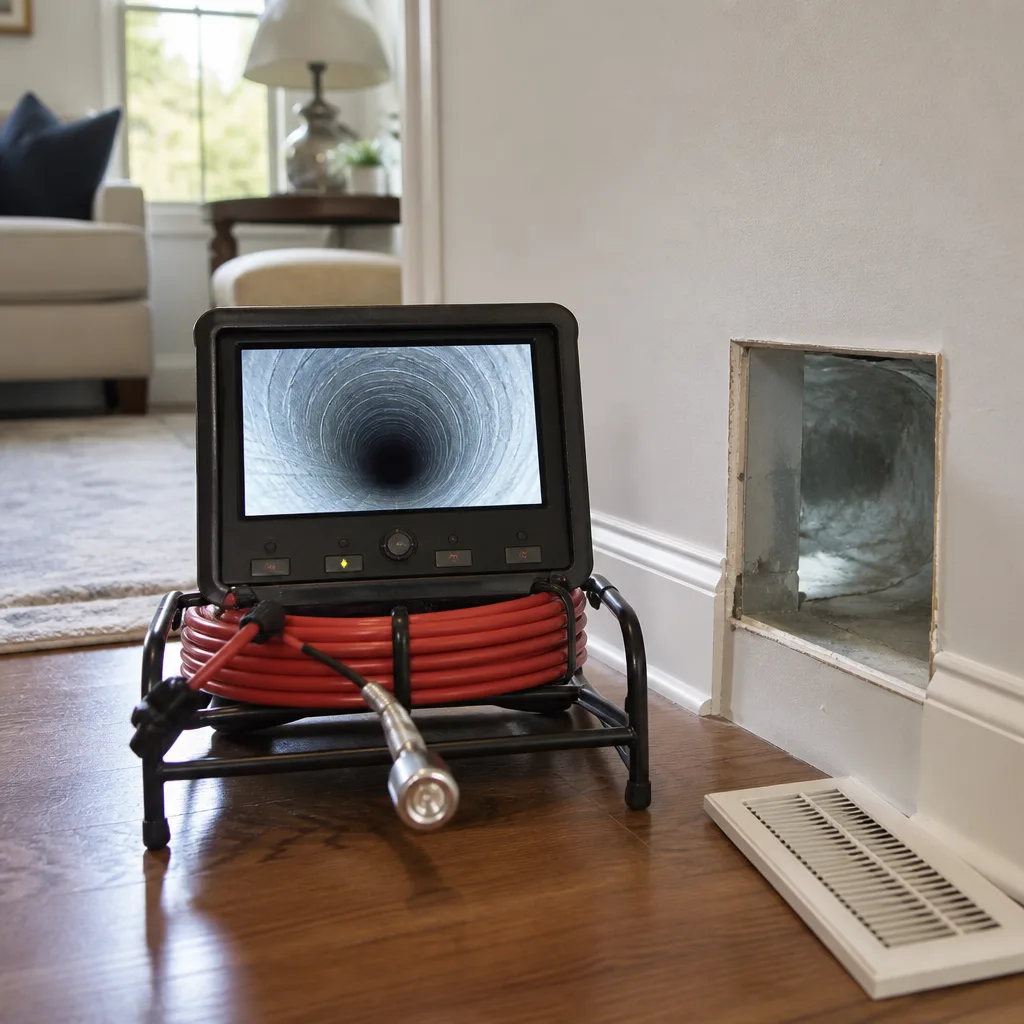
If a contractor won’t photograph every duct run, ask why. The only legitimate reason is a home with no accessible inspection ports - rare in Phoenix construction since 1990. “We don’t do that” or “the camera is broken today” means the work cannot be verified. CleanRun has delivered a Documented Photo Record on every visit since 2013; the camera is not optional equipment.
Pressure to Decide Immediately
“I can only hold this price if you book today” is urgency theatre, not business practice. A written estimate is valid for a defined period - typically 7-30 days - because the inputs (labor, fuel, equipment) don’t change overnight. Any “today only” discount is a sales tactic, not a pricing policy.
No Physical Address or Local Phone Number
Phoenix’s market attracts out-of-state call centers that dispatch independent contractors with no local accountability. Verify the business address through the ROC license (which requires a physical location) and confirm the phone number is a 480, 602, or 623 area code - not a forwarded toll-free line.
Phoenix-Specific Factors That Affect Your Duct Cleaning
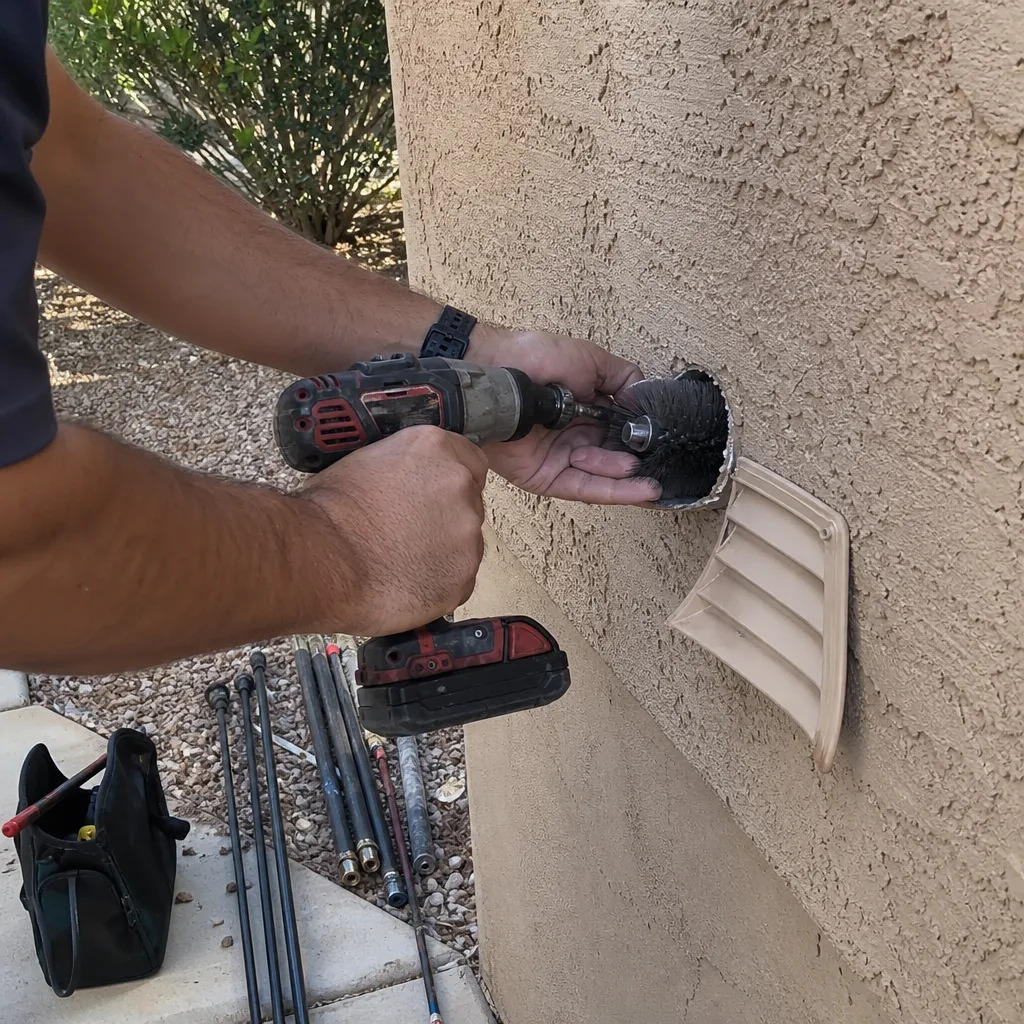
Climate, construction era, and local code create conditions that generic duct cleaning advice misses entirely.
Caliche Dust and Summer Dust Storms
Phoenix’s native soil contains caliche - calcium carbonate-cemented gravel that pulverizes into abrasive dust during haboobs. This dust is harder and more angular than organic pollen or textile fibers, and it accumulates in the first elbow of each duct run, where airflow changes direction. We’ve photographed 2-3 inch buildups in homes within two years of construction in developing areas. Standard vacuuming doesn’t dislodge it; rotary agitation or compressed air whips are required.
Attic Temperatures and Duct Seal Integrity
From May through September, Phoenix attic temperatures routinely exceed 140°F. Mastic sealant and foil tape degrade under thermal cycling; flex duct inner liners become brittle. A duct cleaning visit is an opportunity to inspect seals and photograph deterioration before conditioned air leaks into the attic. Ask whether the estimate includes seal inspection - not repair, which requires additional licensing, but documentation of condition.
Post-Construction Residue in Newer Homes
Homes built 2015-2025 in Phoenix often show construction debris in ducts: drywall dust, wood shavings, and VOC-emitting materials from finish work. The HVAC system runs during final construction phases in most builds, pulling debris into the ductwork. First cleaning should occur before occupancy or within the first year - and should be more thorough than maintenance cleaning, with specific attention to register boots where heavy particles settle.
Monsoon Season Moisture Intrusion
July-September monsoons drive humidity spikes and occasional roof leaks. Ductwork in soffits or chase walls can harbor moisture if the building envelope fails. A cleaning visit during or after monsoon season should include moisture meter readings at return plenums - an indicator of whether the system needs drying before cleaning, or whether mold assessment is warranted.
Common Mistakes to Avoid
- Booking based on coupon price alone. The $79 offer covers 45 minutes of vacuum noise, not a documented cleaning. In Phoenix, legitimate negative-pressure cleaning with photo documentation costs 4-6 times that - and the difference is visible in the photo record.
- Accepting verbal estimates. Arizona law requires written contracts for home improvement work over $1,000, but even sub-$1,000 duct cleaning should be documented. Verbal promises have no enforcement mechanism.
- Ignoring license classification. A handyman ROC number or out-of-state business registration doesn’t authorize ductwork modification. Verify the classification covers HVAC work.
- Assuming “certified” means independently verified. Ask for the certification number and check it. Many Phoenix-area technicians carry expired credentials or company-internal “training certificates” with no third-party standing.
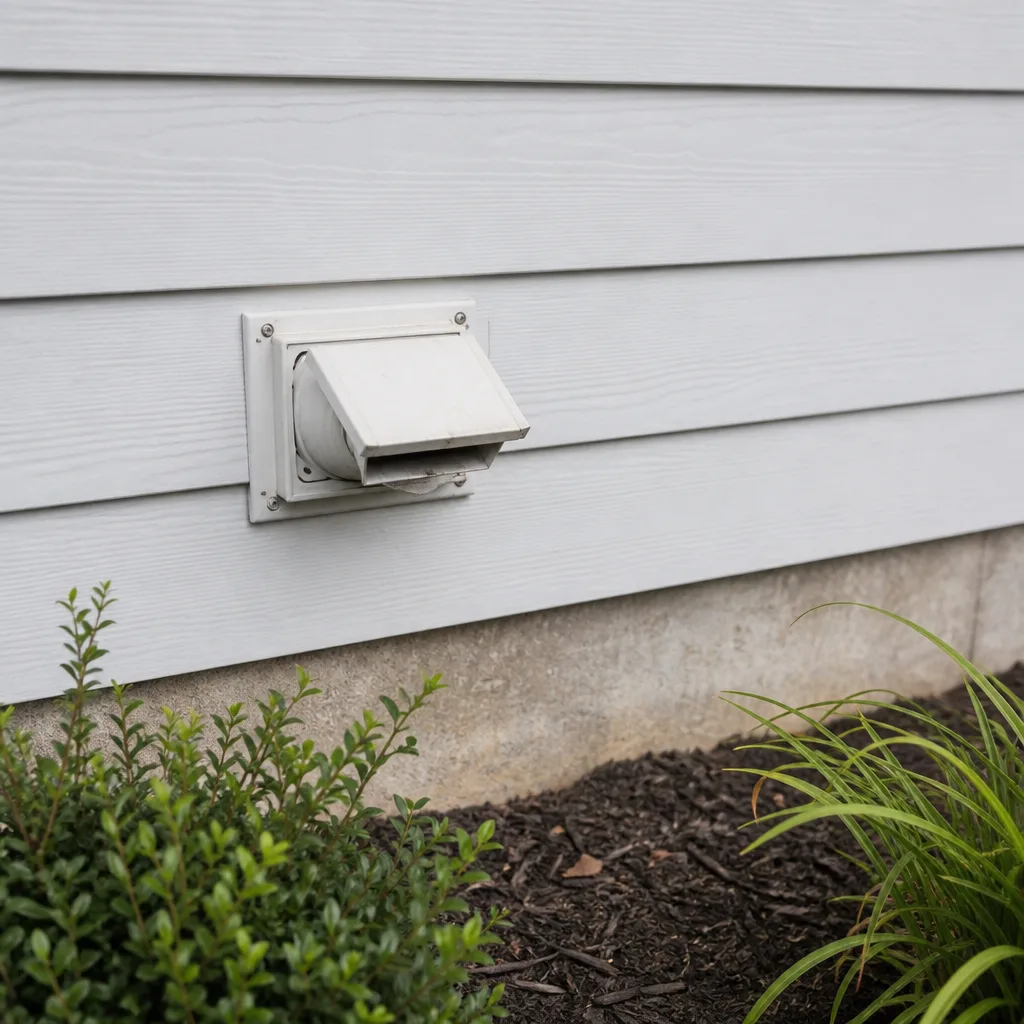
- Neglecting the dryer vent. In Phoenix’s hard water and lint-heavy environment, dryer vents clog faster than ducts and present genuine fire risk. Dryer Vent Cleaning in Phoenix should be scheduled concurrently, with the same documentation standards.
- Failing to request the photo record before payment. The documented photo record is your proof of completed work. Request it, review it, and verify that every run shown in “before” has a matching “after” - not a selection of the most dramatic images.
When to Call a Professional
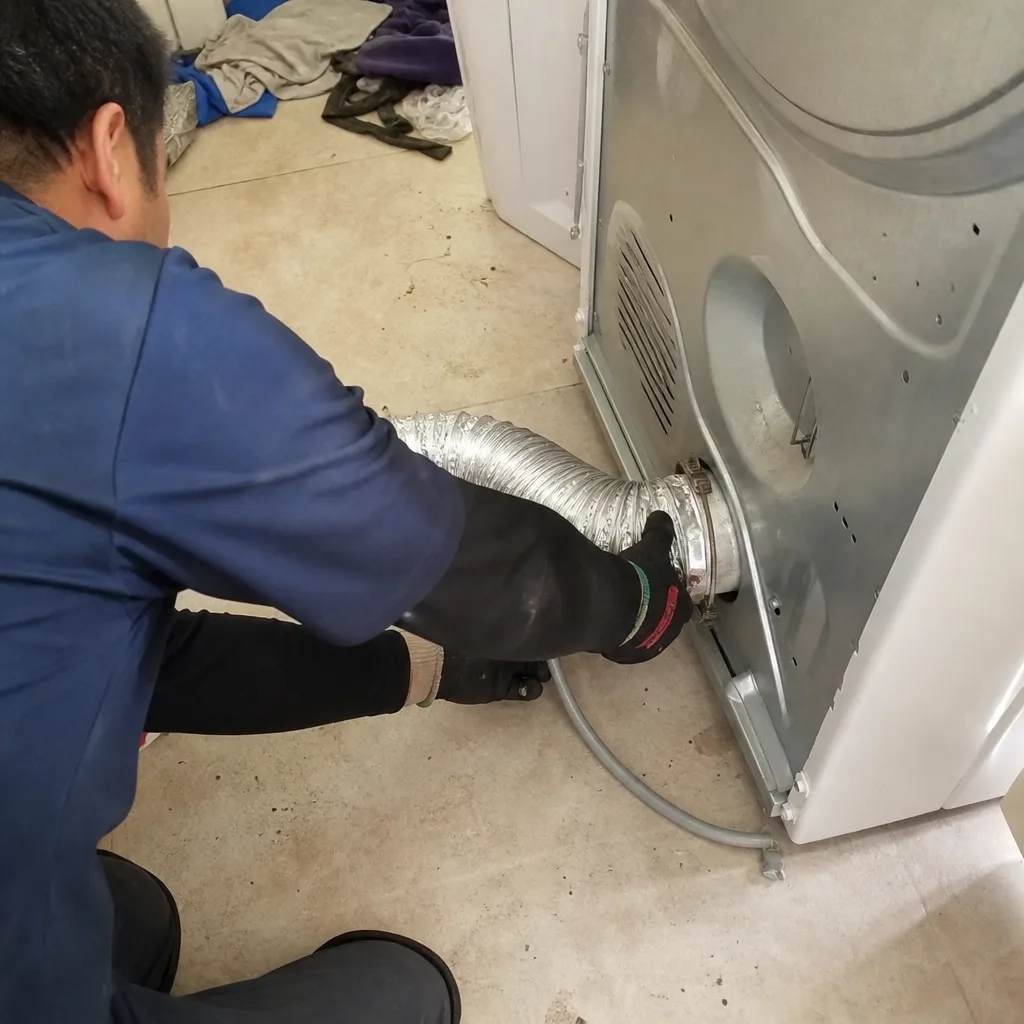
Schedule a professional duct cleaning when you notice visible debris at registers, reduced airflow from specific vents, or musty odors when the HVAC cycles - particularly after monsoon season or during spring pollen peaks. New homeowners should clean before occupancy if the home was constructed or renovated with the HVAC operational.
CleanRun Air Duct Cleaning Phoenix offers free estimates throughout Phoenix and surrounding communities. Visit our more guides & resources page for additional homeowner information. Every estimate includes a written price before work begins, a Documented Photo Record of every duct run, and the 365-Day Done Right Promise backed in writing. Call (480) 500-6377 to schedule, or bring a competitor’s written quote for a Free Second Opinion under Haven Standard Clause 2.
Frequently Asked Questions
Legitimate negative-pressure duct cleaning in Phoenix costs approximately $350-$650 for homes under 2,500 square feet with a single HVAC system, and $600-$950 for larger homes or those with multiple systems. The price depends on duct-run count, accessibility, and whether coil or blower cleaning is included. Call (480) 500-6377 for a written estimate specific to your home - estimates are free and include no obligation.
Low quotes typically omit equipment, documentation, or scope. A $79-$129 service uses a portable vacuum or rotary brush without collection unit, runs 45-60 minutes, and provides no photo record. The debris is disturbed, not removed. Legitimate pricing reflects 3-4 hours of labor, truck-mounted or adequate portable negative-pressure equipment, and documented verification - all of which cost more than a coupon covers.
Request a documented photo record showing the interior of every duct run before and after cleaning, with timestamps or sequential numbering. Review the images for consistency: every “before” should have a matching “after,” and the camera angle should show the same duct section. At CleanRun, this record is a standard deliverable on every job, not an upgrade - we’ve provided it on 52,000+ homes since 2013.
For most Phoenix homes, every 3-5 years under normal conditions. Homes with pets, recent construction, or occupants with respiratory sensitivities may need cleaning every 2-3 years. First cleaning for new construction should occur before occupancy or within 12 months. Monsoon moisture intrusion or visible mold growth requires immediate assessment, not scheduled maintenance.
Duct cleaning addresses the distribution network: supply runs, return runs, and plenums. HVAC Cleaning in Phoenix includes the blower compartment, evaporator coil, and heat exchanger - components that condition air but aren’t part of the duct network. Both are necessary for full system cleanliness; duct cleaning alone leaves the coil, which can harbor mold and restrict airflow, untouched. A complete scope addresses both.
Sanitizer is appropriate after confirmed mold or rodent intrusion, or for homes with immunocompromised occupants - but it should be an optional line item, not mandatory. EPA-registered products applied with proper equipment (like Abatement Technologies systems) are legitimate. “Free sanitizer” offers typically use unregistered or diluted products with no demonstrated efficacy. Request the product name and EPA registration number if sanitation is proposed.
The Bottom Line
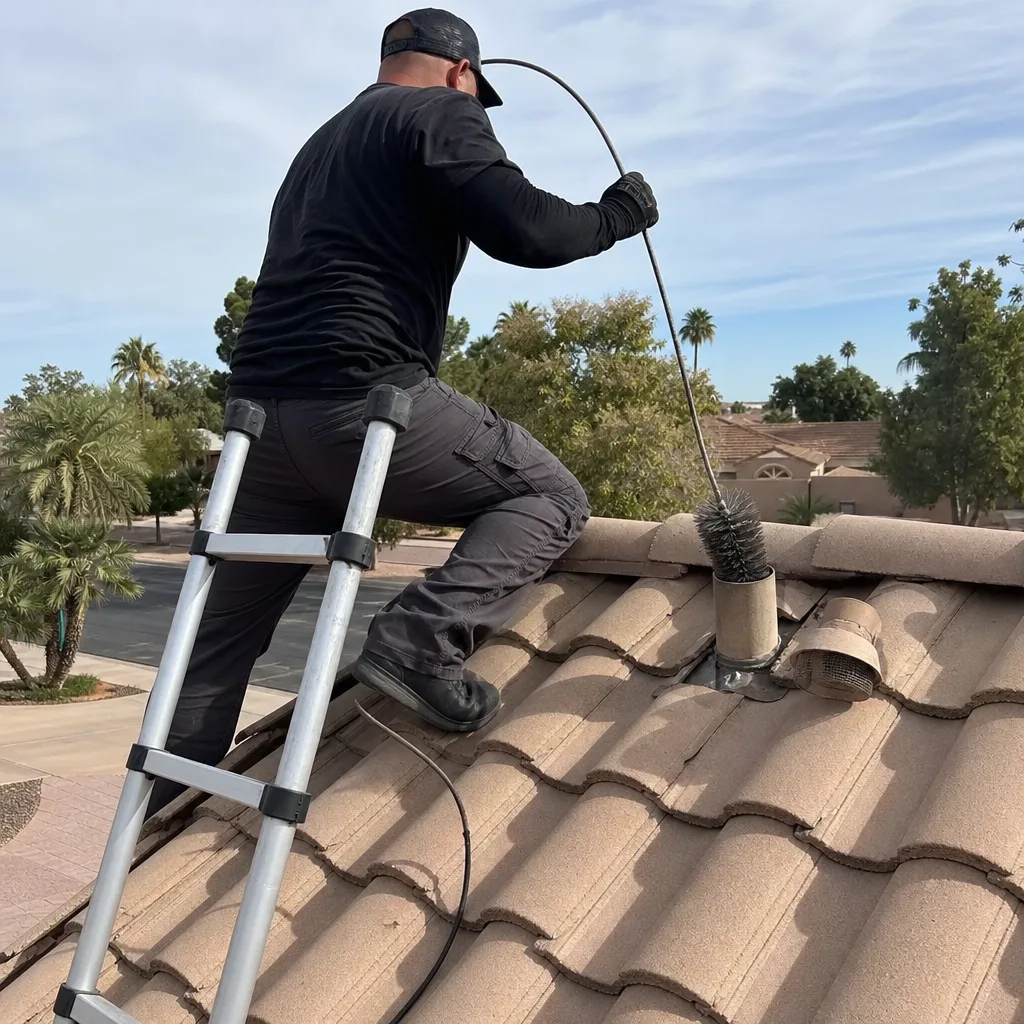
Hiring a duct cleaning contractor in Phoenix is a documentation exercise, not a price hunt. The four documents - written scope, itemized price, insurance proof, and certification - separate accountable operations from coupon noise. Verify the ROC license in 90 seconds. Ask the CFM rating. Insist on before-and-after photos of every run. The contractors who meet these standards without hesitation are the ones who’ll still answer the phone if something needs attention six months later.
Written by Tomas Reyes, Owner at CleanRun Air Duct Cleaning Phoenix, serving Phoenix since 2013.