
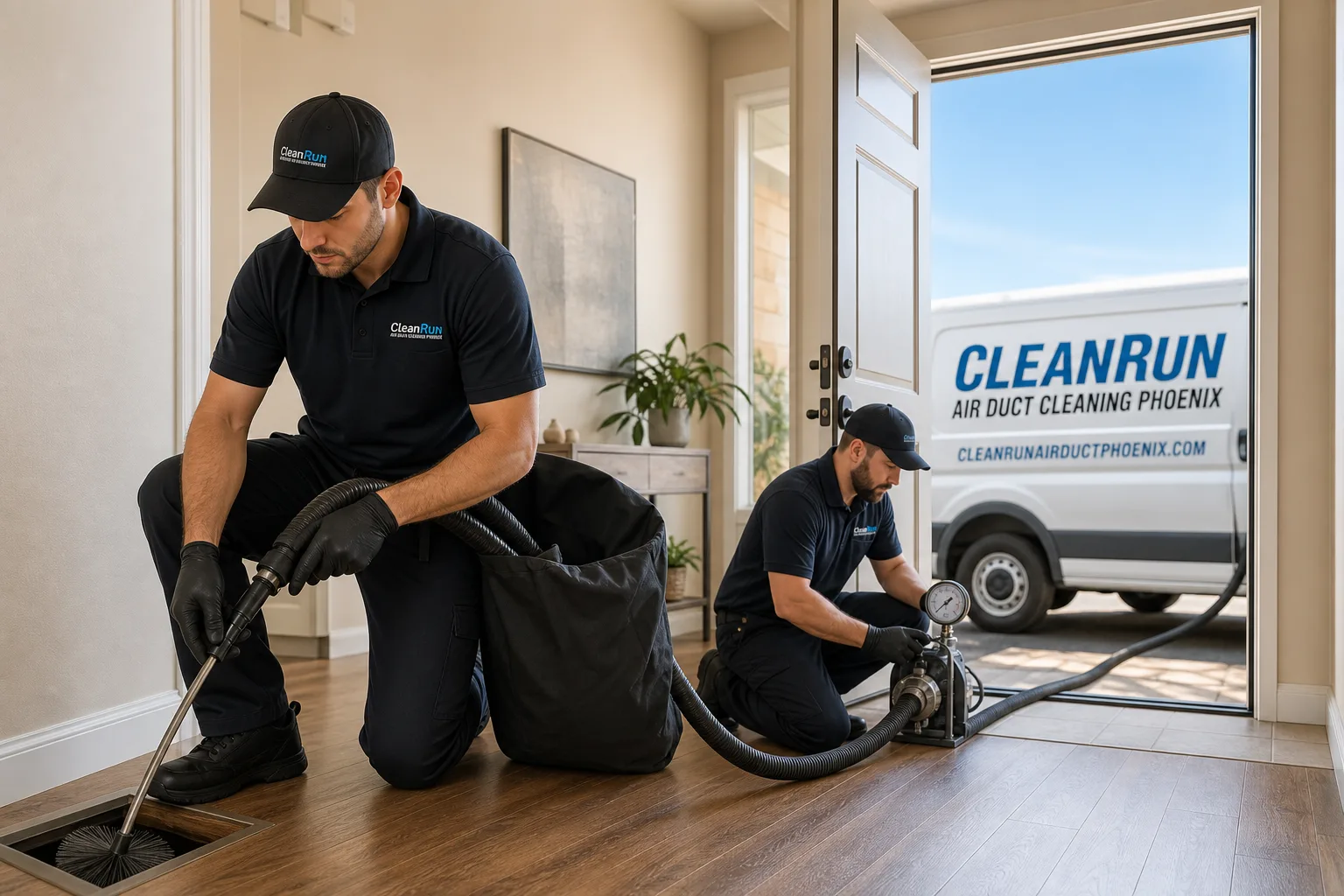
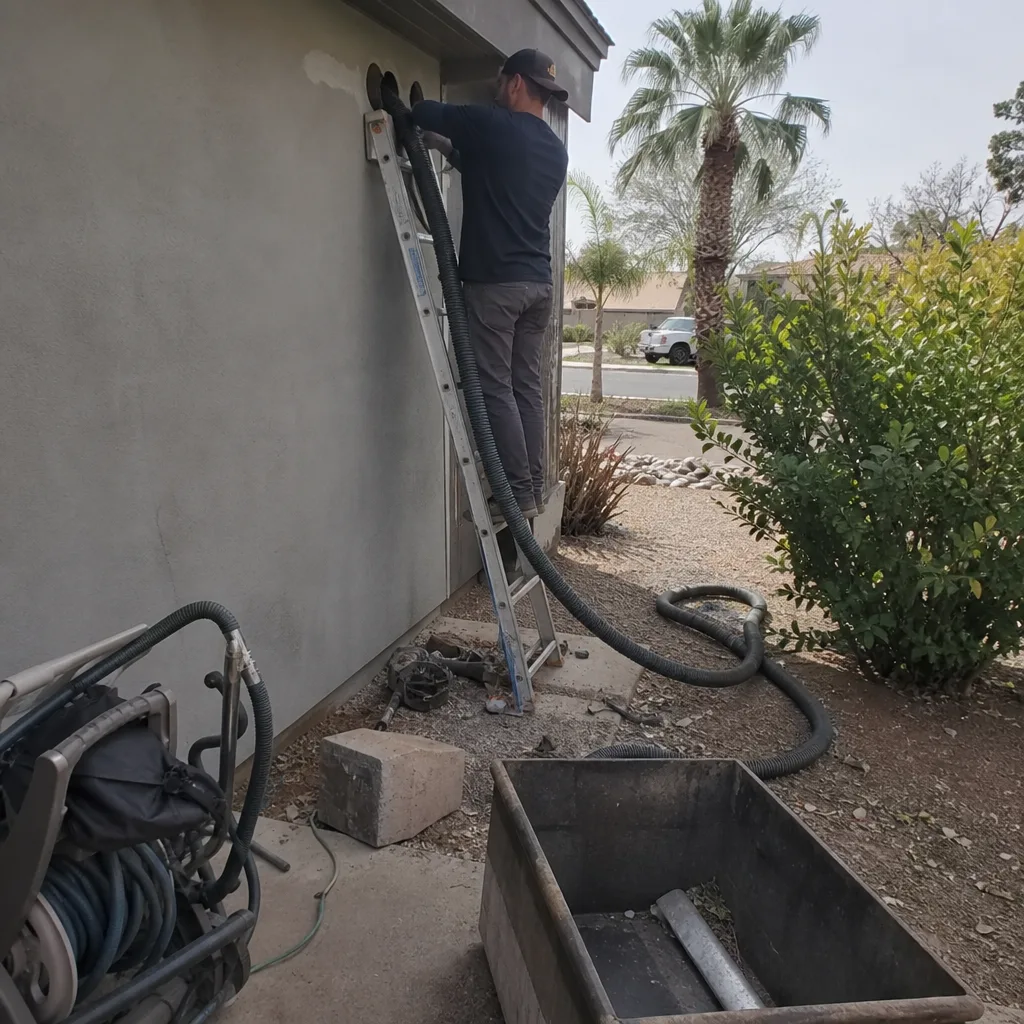
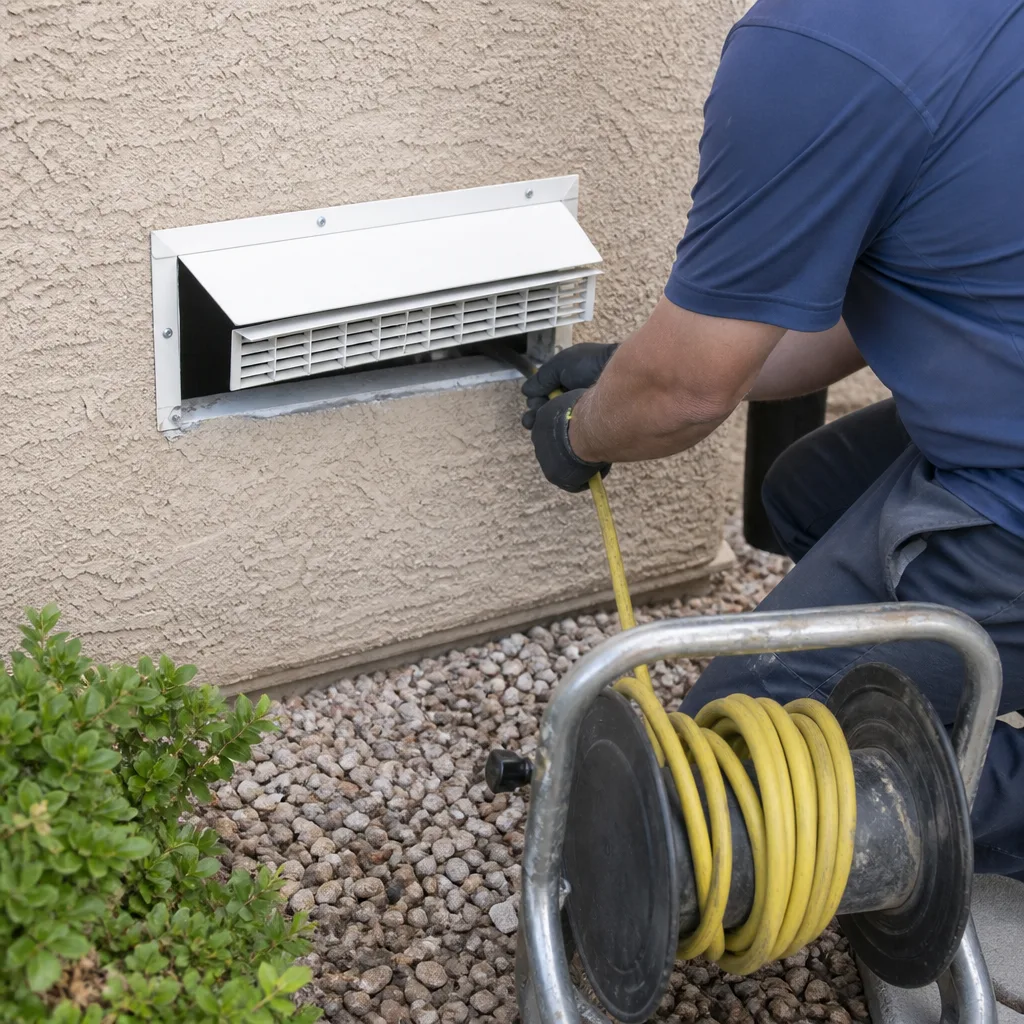
Whole-system duct and dryer vent check with before-and-after photos - you see exactly what came out of your vents
That "$99 whole-house special" is a bait ad - the real number appears once they are in your hallway, or the "clean" is a shop-vac at the register. We photograph the inside of your ducts before and after instead.
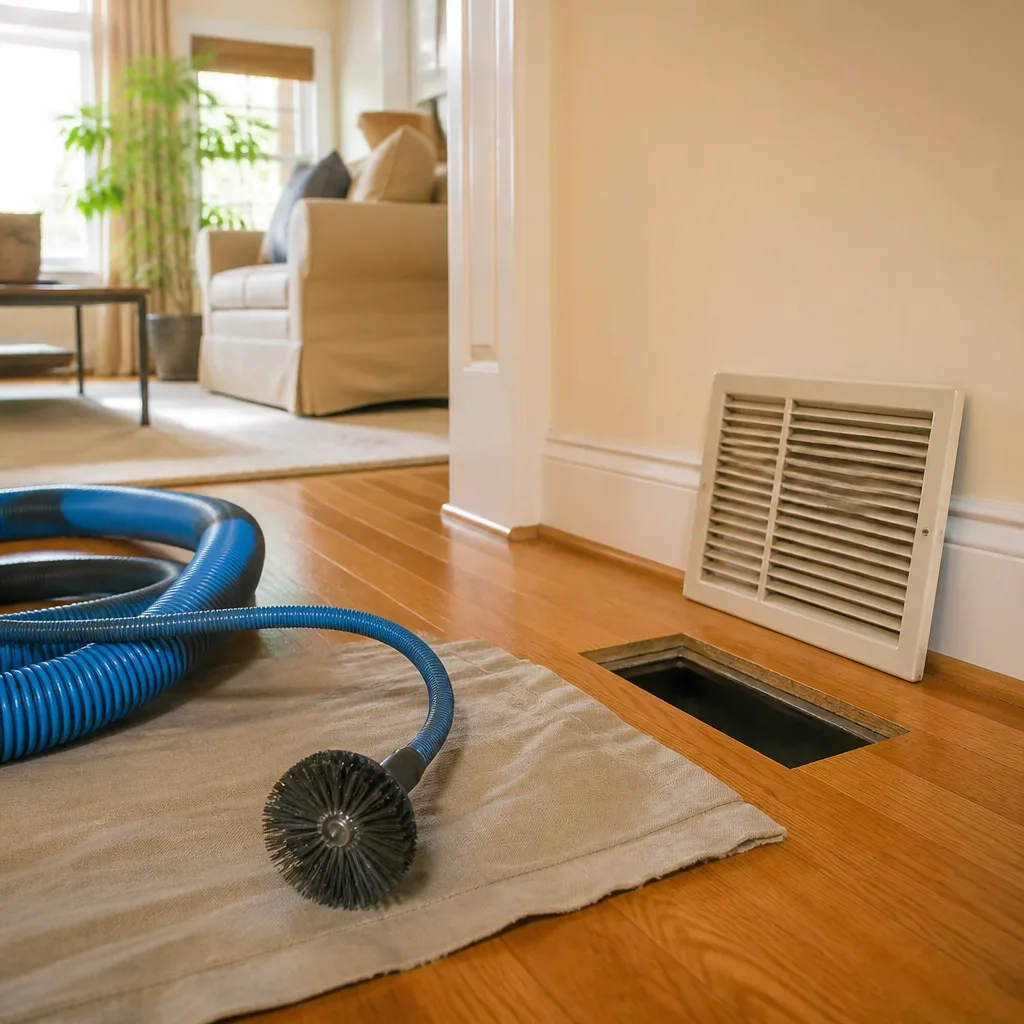
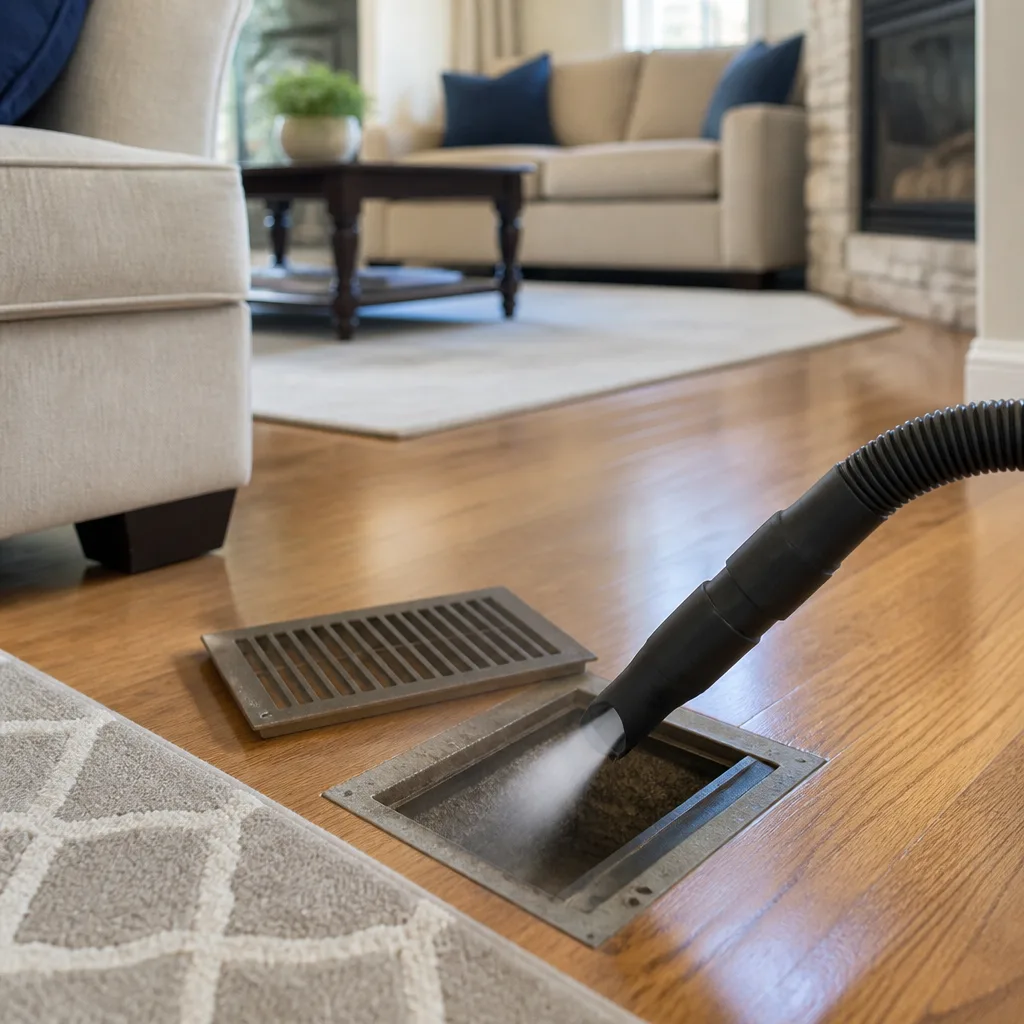
 Before
 After
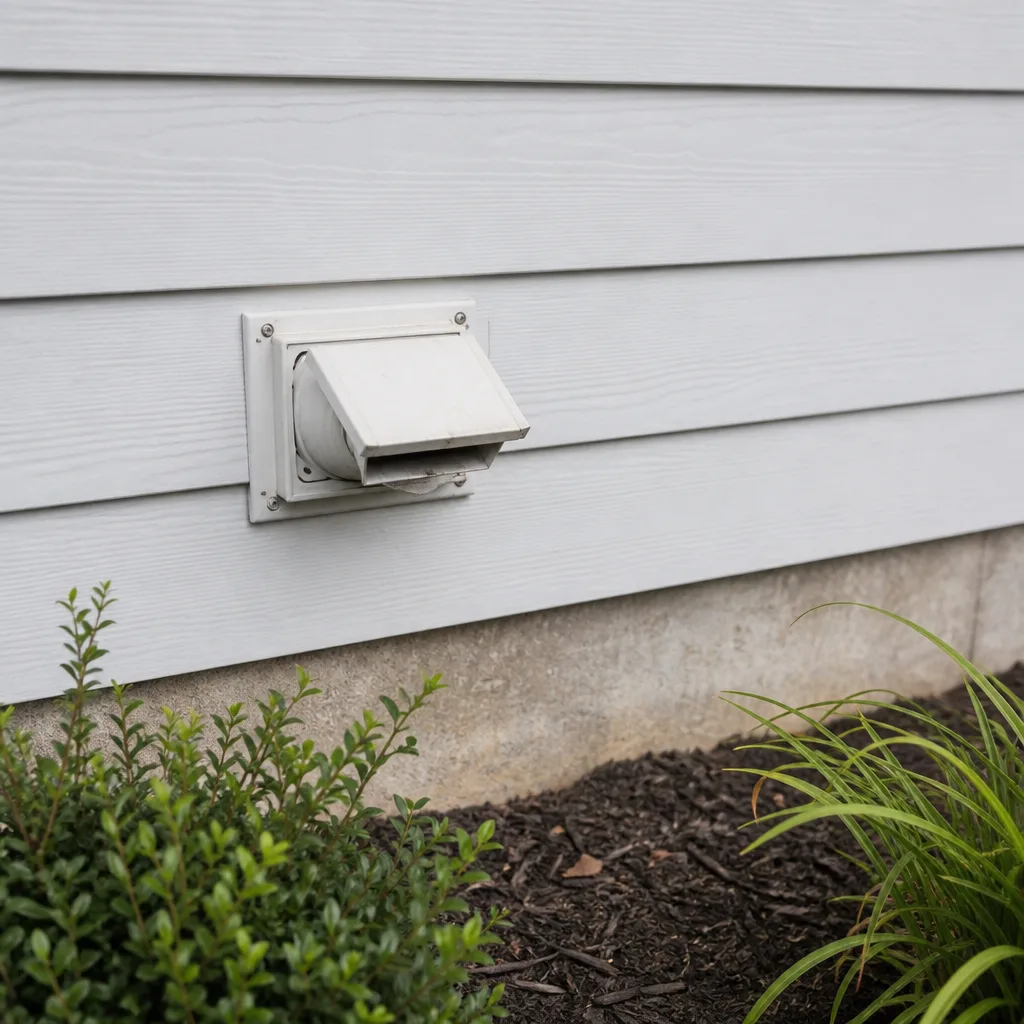
After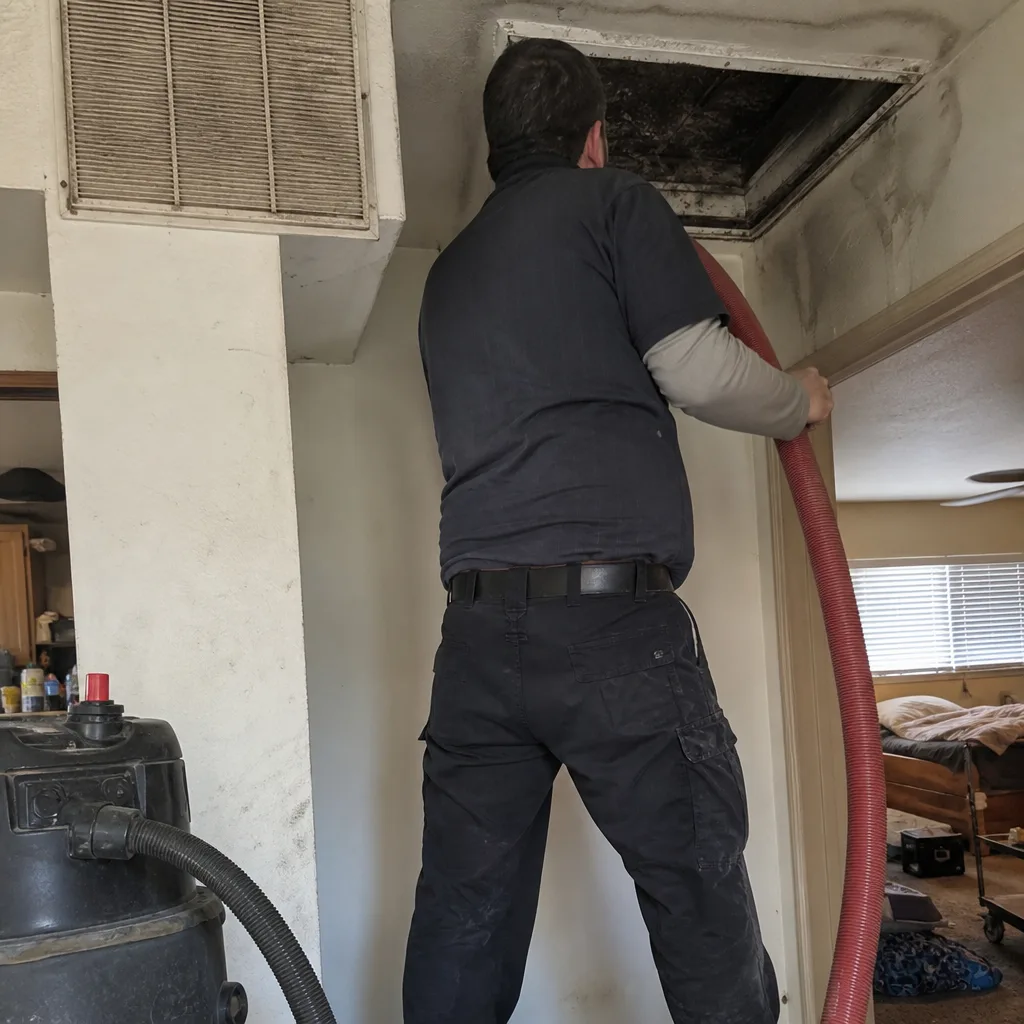 Before
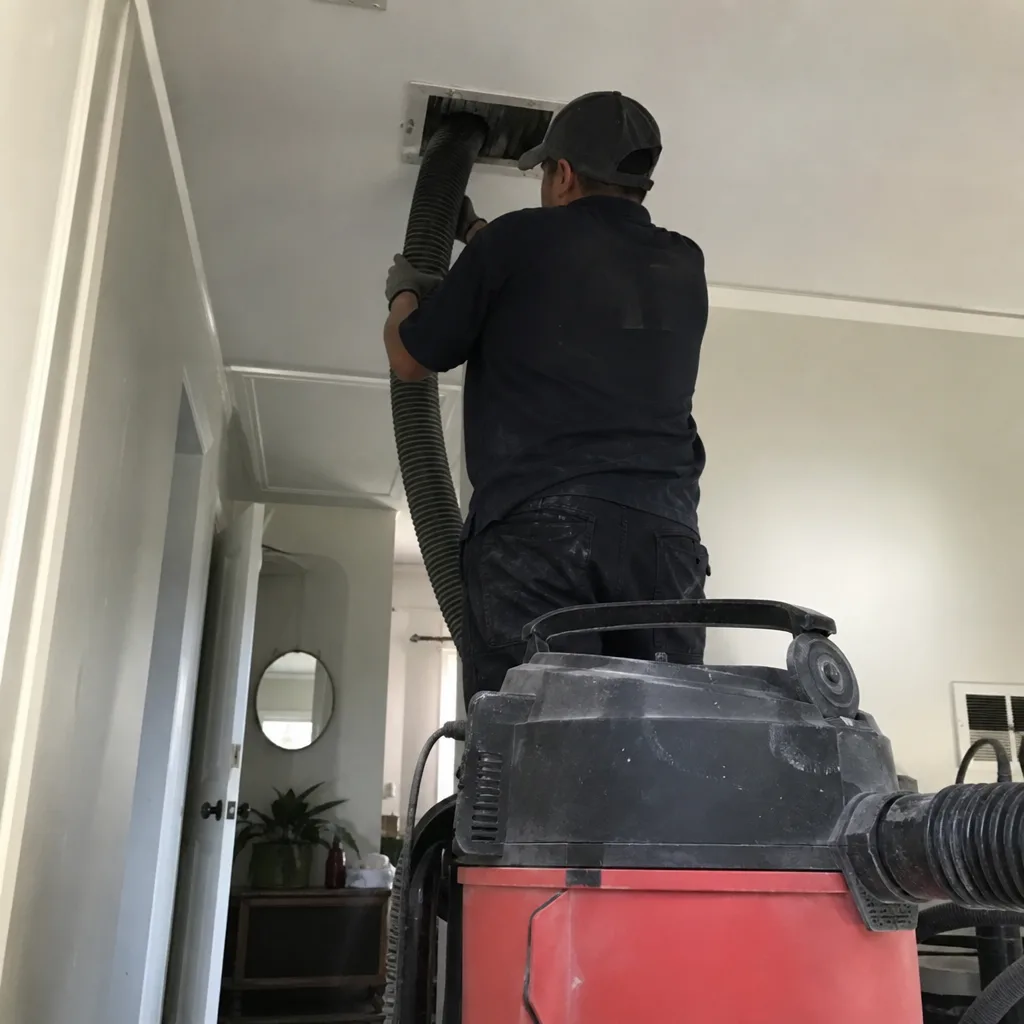 After
After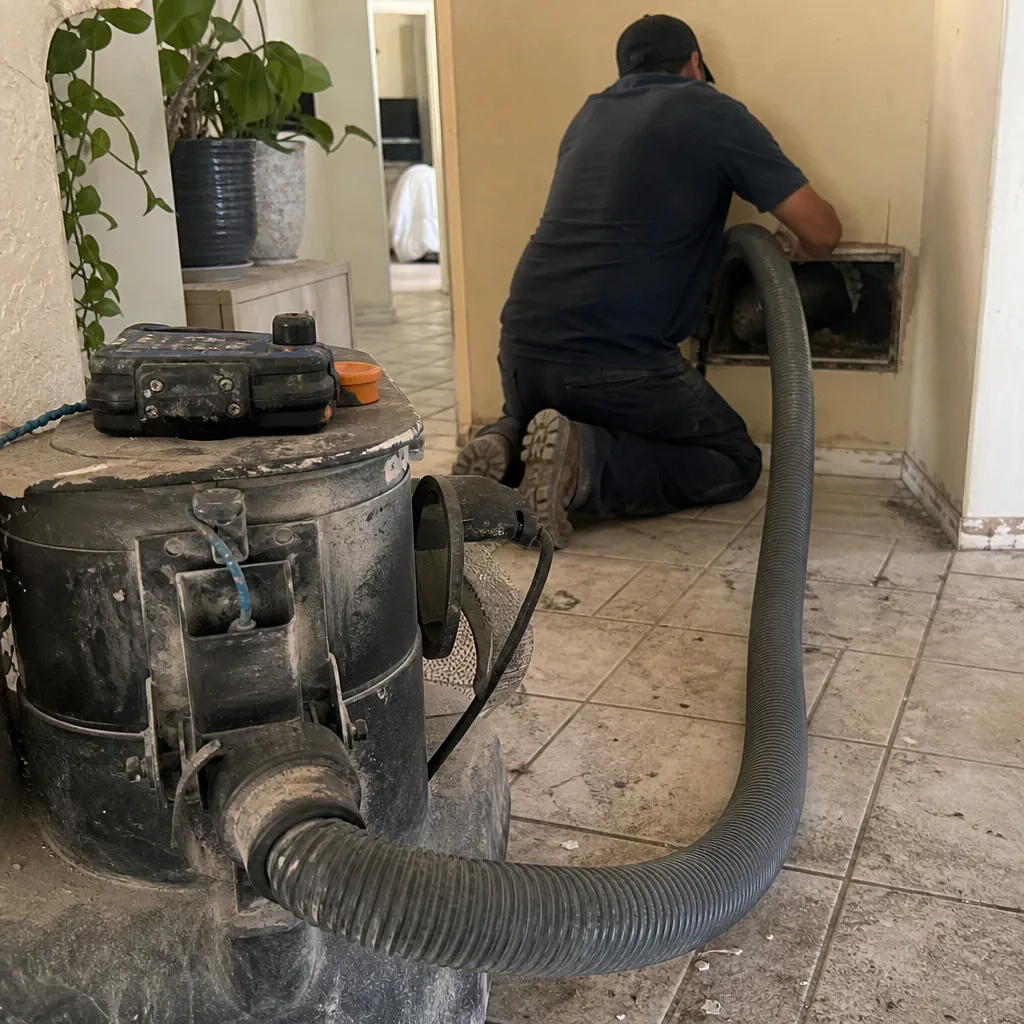 Before
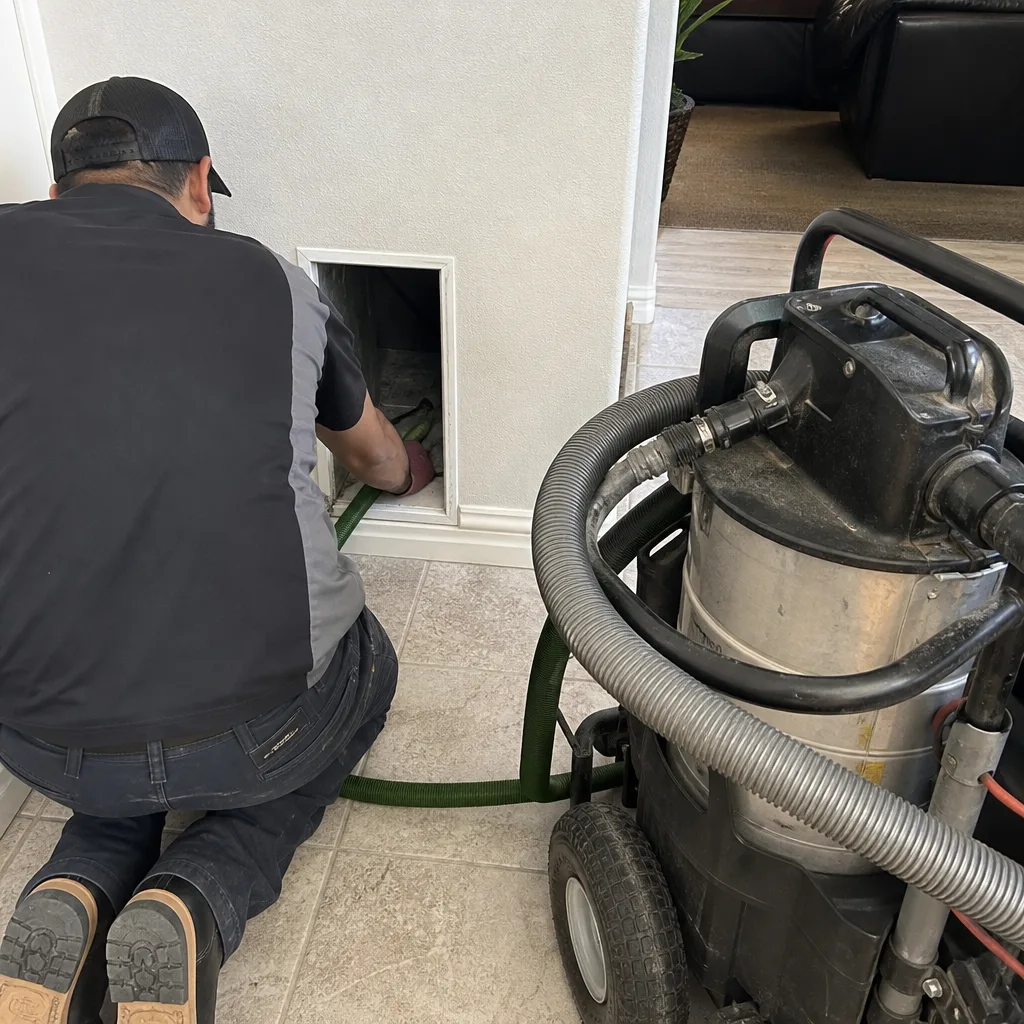 After
AfterHow Much Does Duct Repair & Sealing Cost in Phoenix?
Our Duct Repair & Sealing services in Phoenix typically cost between $350 and $1,200 for a standard single-family home, with most jobs landing in the $450-$850 range depending on how many runs are compromised and how accessible the ductwork is. Aerosol-based sealing (Aeroseal or equivalent) runs higher – generally $1,500-$2,500 for a whole-home treatment – because the equipment and pressurization process are more involved than manual mastic application. At CleanRun, every price is written down before a single panel comes off, so the number you see here is the same kind of number you’ll get on a job ticket.
Duct Repair & Sealing Cost Breakdown (2026)
The table below reflects actual Phoenix market pricing as of 2026. These are real ranges drawn from jobs in neighborhoods across the Valley – Ahwatukee, Arcadia, Laveen, Surprise, and the older stock housing corridors near Central Avenue. Attic-run ductwork in Phoenix gets punishing summer heat exposure, which accelerates flex-duct liner degradation faster than in cooler markets, and that shows up in repair frequency and scope.
| Service | Typical Phoenix Range | What Drives Cost |
|---|---|---|
| Single duct run – mastic seal & wrap repair | $85 – $175 per run | Run length, attic access, number of joints |
| Flex duct replacement (per run) | $120 – $280 per run | Diameter (6″, 8″, 10″), linear footage, attic temp conditions |
| Plenum repair or resealing | $180 – $420 | Plenum size, sheet metal vs. duct board construction |
| Register boot reseal (per boot) | $35 – $75 per boot | Boot condition, mastic vs. foil tape, drywall cutout fit |
| Whole-home manual mastic sealing (no replacement) | $350 – $750 | Number of runs, access points, duct material |
| Aeroseal pressurized whole-home sealing | $1,500 – $2,500 | Home size, leakage rate, number of zones |
| Full duct system replacement (partial – 5-8 runs) | $900 – $2,200 | Run count, material spec, attic access difficulty |
| Duct leakage test (blower door / duct blaster) | $150 – $350 | Home square footage, test type, report included |
A few things worth clarifying about those ranges. The lower end of any line item assumes straightforward attic access and ductwork that is intact enough to repair cleanly. Phoenix attics in July regularly hit 145-160°F, and flex duct liner that has been baking up there for 12-15 years often crumbles on contact. When that happens, a repair estimate properly becomes a replacement estimate – and a company that photographs the inside of every run before quoting can show you exactly why. That is how our photo-documented scope process works: the camera goes in first, the written price comes second, and the customer sees both before anything else happens.
Aeroseal pricing deserves its own note. The $1,500-$2,500 range covers a pressurized injection process where polymer particles are suspended in airflow and self-seal at leakage points throughout the system. It is not a DIY product and it is not the same process as brushing mastic on visible joints. For homes in Scottsdale or Paradise Valley with complex multi-zone systems and hard-to-access duct runs in cathedral ceiling cavities, Aeroseal is sometimes the only practical answer. For a straightforward 1,800 sq ft home in Laveen with accessible attic flex runs, manual mastic sealing at $400-$600 usually closes the gap just as effectively.
What Affects Duct Repair & Sealing Pricing in Phoenix
- Duct material and age – Phoenix housing built between 1978 and 1998 frequently used duct board (fiberglass duct board pressed into rectangular shapes) for supply plenums and early flex duct for branch runs. Duct board that has been heat-cycled for 25+ years delaminates and cannot be mastic-sealed reliably – it needs to be rebuilt in sheet metal or replaced with new duct board, which costs more than sealing intact material. Flex duct installed after 2000 holds up better but the inner liner still degrades under sustained 150°F attic exposure.
- Attic access and working conditions – A one-story home in Ahwatukee with a full walk-in attic and 5 feet of clearance is a different job than a two-story in Arcadia with a low-slope roof, 18-inch clearance over the second floor, and a summer attic temperature that makes 30-minute rotations a safety requirement. Technician time in difficult attics is real time with real cost, and any honest quote reflects that. We photograph every run we access – including the ones that require a crawl – so the documentation shows exactly what conditions we worked in.
- Number of duct runs and zones – A 1,400 sq ft home typically has 8-12 supply runs. A 3,200 sq ft home with two HVAC systems can have 20+ runs plus multiple return air plenums. Each run that needs sealing or repair is a line item. Whole-home pricing is not a flat rate – it is an aggregated count of actual work scopes, written out before any work starts.
- Severity of leakage or damage – A disconnected flex duct joint at a wye fitting costs far less to fix than a collapsed run that needs full replacement. A duct blaster or blower door test can quantify the leakage rate as a percentage of system airflow – a result above 15% typically indicates multiple significant failures, not just minor joint seeping. In Ahwatukee Foothills and South Mountain area homes we regularly see pest intrusion damage (roof rats are active throughout the East Valley) that compounds duct liner deterioration and sometimes contaminates insulation in the same attic cavity.
- Return air sealing vs. supply sealing – Return air ductwork operates under negative pressure (it is pulling air toward the air handler), which means leaks on the return side pull unconditioned attic air – at 150°F plus – directly into the air stream before it hits the coil. Sealing return-side leaks is often more impactful for efficiency than supply-side work, and in older Phoenix construction the return plenum is frequently the worst offender. Identifying which side of the system is leaking, and by how much, is why a leakage test before repair pricing is not optional on larger jobs.
- Permit requirements for HVAC duct work in Phoenix – Maricopa County and the City of Phoenix require permits for duct replacement that is part of an HVAC system modification. Standalone duct sealing (adding mastic to existing, structurally intact ductwork) typically does not require a permit, but full duct replacement connected to an existing air handler may. Confirm permit status on any quote above $800 in scope – a contractor who waves this off is a contractor who may be skipping the inspection step that protects your home’s value and your APS rebate eligibility.
BeforeAfterPhoenix-Specific Pricing Context: Why Duct Work Costs More Here Than the National Average
National pricing guides often quote duct sealing at $270-$500 for a typical home. Those numbers reflect markets with mild attic temperatures, shorter cooling seasons, and duct systems that are not being heat-stressed for 7-8 months per year. Phoenix is a different environment.
The Phoenix metro averages over 100 cooling degree days more per year than Dallas and more than double the cooling load of Denver. That heat exposure does two things to ductwork: it degrades flex duct liner faster, and it means that any leakage is leaking 150°F air into your conditioned space or leaking conditioned air into an attic that is functionally an oven. APS and SRP both offer rebates on duct sealing and testing precisely because the efficiency stakes in this climate are high enough to justify utility subsidy – APS has historically offered $0.10-$0.15 per CFM25 of leakage reduced, and SRP’s Home Energy Efficiency program has covered duct testing costs as a line item in their audit program. Check current program terms directly with your utility before the job, not after.
In Laveen and Tolleson, where newer construction from 2005-2018 used standard flex duct systems, we see a high rate of disconnected wye fittings at branch takeoffs – the original foil tape adhesive gives out after 15 years in that heat, and the connection relies on nothing but a friction fit. In Arcadia and the Camelback Corridor, the older homes often have original duct board plenums from the 1970s that have never been replaced. Both situations require an accurate leakage test before a scope of work can be written honestly.
How to Save on Duct Repair & Sealing
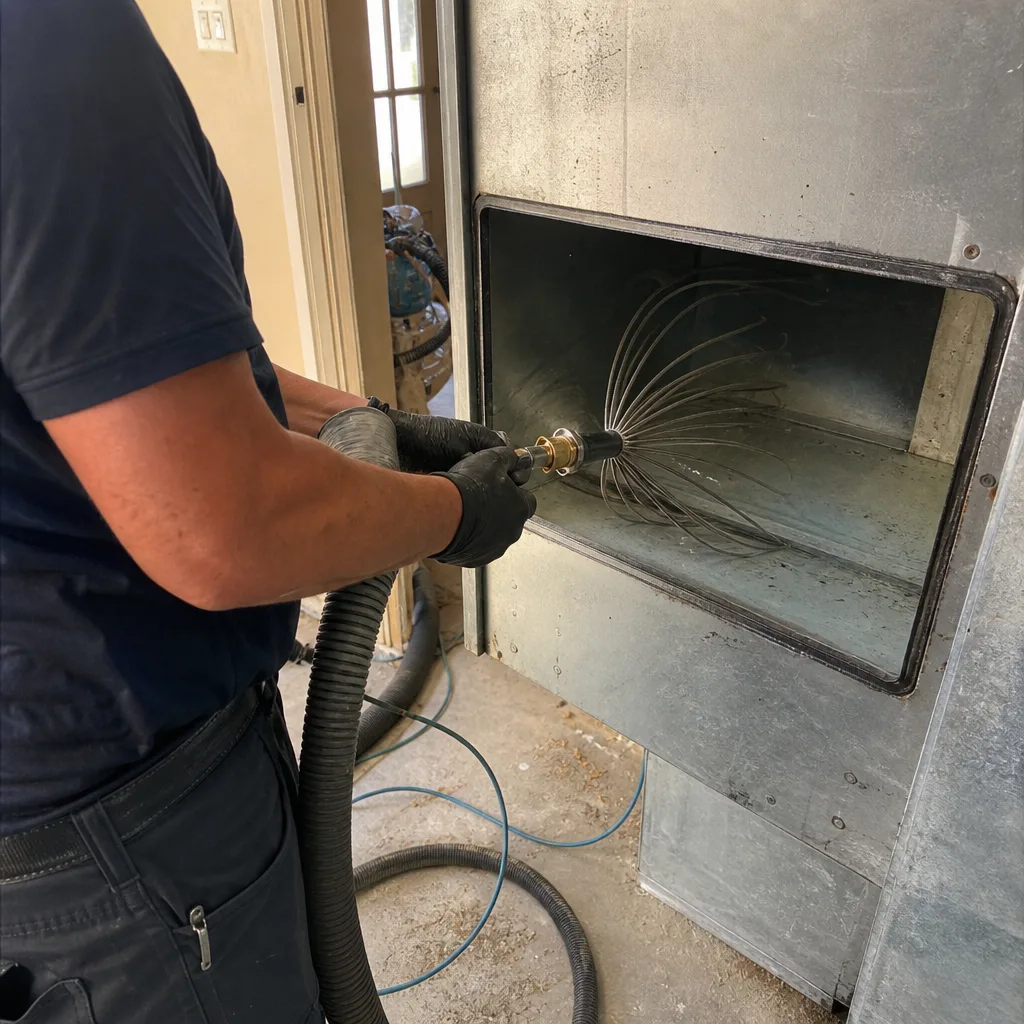
The single most effective way to avoid overpaying for duct repair in Phoenix is to know what you are actually paying for before you agree to anything. That sounds obvious, but the $79 duct cleaning coupon business model exists specifically because most homeowners do not ask for a written itemized scope before work starts. By the time the technician is in your attic and the job has “expanded,” the psychological pressure to approve extra charges is real. A written price before any work starts is not a premium service – it should be the baseline expectation on every job.
- Get a leakage test first on larger jobs. Spending $150-$250 on a duct blaster test before committing to $1,500 in repairs tells you exactly where the leakage is, how severe it is, and whether the proposed repair scope actually addresses it. A technician who resists a pre-repair test on a large job is worth asking about directly.
- Prioritize return-air sealing over supply-side if budget is limited. Return-side leakage in a Phoenix attic pulls the hottest air in the metro directly into your system. If you can only do part of the job this season, fix the return first.
- Ask about APS and SRP rebate eligibility before the job starts. Both utilities have offered incentives on duct sealing and testing. The rebate process requires the test to happen before and after the work, with documented results. If the contractor does not mention this, ask specifically – because a rebate missed after the fact cannot be recovered.
- Combine duct cleaning with sealing when the system is already open. If the duct runs are going to be accessed anyway for cleaning, adding mastic sealing at visible joints during the same visit costs less than scheduling a separate trip. Our Duct Repair & Sealing in Phoenix service is designed to be scoped with this in mind.
- Use the free second opinion on any written estimate. If another company has already given you a written quote, CleanRun will put its own number next to it in writing at no cost. Not to undercut it automatically – to give you a documented comparison so you can evaluate both on paper. Call (480) 500-6377 and bring the quote.
- Schedule in fall or early spring. Phoenix HVAC contractors are booked deep from May through September. Fall scheduling (October-November) and late winter (February-March) typically offer better availability, and in some cases technicians have more attic working time before heat makes extended crawl work impractical. A job scoped thoroughly in October, when the attic is 90°F instead of 155°F, is a job that gets done without the rushed pacing that comes with summer emergency calls.
For a free written estimate on duct repair or sealing in Phoenix, call (480) 500-6377. A live person answers every call, the price is written before any work starts, and the estimate itself costs nothing.
What the Job Actually Looks Like: From Inspection to Invoice
Understanding the process is part of evaluating the price. A duct repair scope that skips steps will quote a lower number – and deliver a lower result.
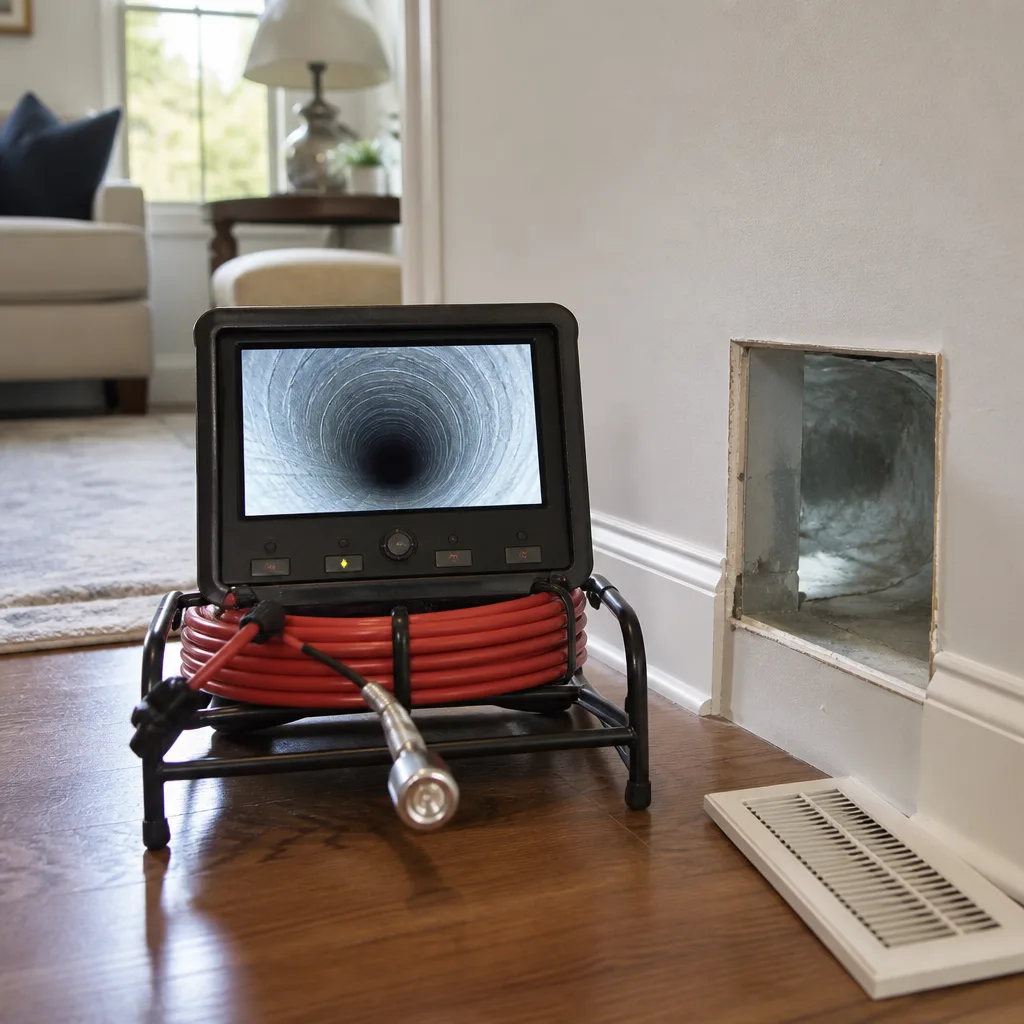
At CleanRun, every job that involves duct repair or sealing starts with a camera inspection of every accessible run. The inner diameter of the duct, the condition of the liner, the state of the joints at each fitting – all of it is photographed before a scope is written. The customer sees those photos. The written price is based on what the camera found, not on a walk-through estimate from the hallway.
Mastic sealing, which is the industry standard for duct joint sealing, involves applying a water-based sealant compound to duct joints, collars, and seams, then reinforcing with fiberglass mesh tape. It cures to a semi-rigid state and handles the thermal expansion and contraction of Phoenix attic conditions far better than standard foil tape, which is why foil tape alone fails in this climate. We use professional-grade materials – the same product lines that HVAC contractors spec on new installations – not hardware store alternatives.
For pressurized sealing (Aeroseal-type processes), the procedure involves capping all registers, pressurizing the duct system from the air handler side, and injecting a polymer aerosol that travels with the airflow and deposits at leak points. A digital controller measures the leakage rate in real time, so the result is documented before and after with actual CFM numbers – not a visual inspection guess. The before-and-after leakage report is part of the job record the customer receives.
The Documented Photo Record – inside every duct run, before and after, delivered to you as a standard part of the job – is not something we offer as an upgrade. It has been standard on every job since 2013. If a contractor does not offer to show you what they found inside your ductwork, that is worth noting before you agree to the price.
What “Duct Sealing” Actually Means – Trade Terms Explained
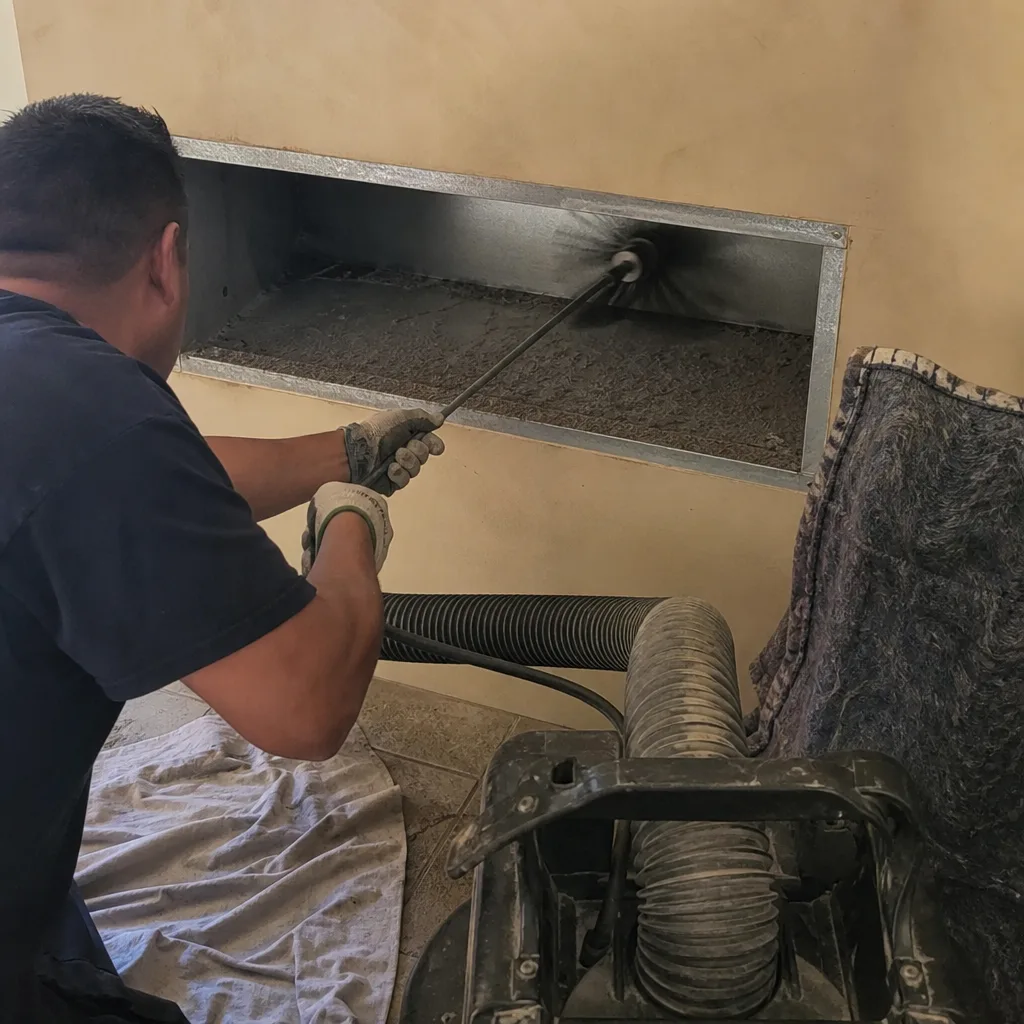
Duct sealing gets used loosely by homeowners and contractors alike. Here is what each term specifically means, because the price difference between them is significant.
Mastic sealing is a manual process: a technician applies duct mastic (UL 181-listed sealant compound) by brush or glove to the exterior surface of duct joints, collars, and seams. It is the method recommended by ACCA, ENERGY STAR, and most state energy codes for permanent duct sealing. Labor-intensive, attic-crawl work. Most of the $350-$850 whole-home manual sealing quotes in Phoenix reflect this method.
Foil tape (UL 181B-rated aluminum foil tape) is used in combination with mastic on sheet metal connections and as a secondary seal. It is not a replacement for mastic on its own – plain duct tape (the fabric kind) is not approved for duct sealing under any current energy code and fails quickly in Phoenix attic heat. If a quote mentions “tape and seal,” ask specifically whether the tape is UL 181B-rated foil tape used alongside mastic, or just tape alone.
Aeroseal is a brand name for the pressurized aerosol sealing process described above. The generic category is “pressurized duct sealing.” There are competing products, but Aeroseal has the most field data and utility rebate documentation behind it in the Arizona market. It seals from the inside of the duct rather than the outside – which means it reaches leaks that a technician cannot physically access, including pin holes in flex duct liner and small gaps at wye fittings buried under insulation.
Plenum is the central air distribution box – the supply plenum connects to the air handler output and feeds all the supply runs, while the return plenum collects air from the living space and feeds it back to the air handler. Plenum leakage is often more significant in dollar-per-CFM efficiency terms than branch run leakage, because the plenum handles the full system airflow.
CFM25 is the standard leakage measurement: cubic feet per minute of air loss at 25 pascals of pressure. A duct blaster test measures this number before and after sealing. It is what utility rebate calculations are based on, and it is the only objective way to verify that a sealing job actually reduced leakage by a meaningful amount.
Duct Repair vs. Full Duct Replacement: How to Know Which One You Need
This is the question that comes up most often in Phoenix homes built before 2000, and the answer matters because the price difference is substantial.
Repair and sealing makes sense when the duct structure is intact – the duct board or flex duct body is sound, joints have separated or were never properly sealed, and the liner is not degraded. A leakage test will show high numbers, but the ductwork itself can be sealed without rebuilding anything.
Replacement becomes the right answer when flex duct liner has crumbled, when duct board has delaminated or grown mold, when rodent damage has created holes or contaminated insulation throughout the system, or when the duct layout itself is poorly designed for the home’s current load. In Glendale and parts of the West Valley where homes from the late 1980s have original duct board systems, we frequently find that the material is too far gone to seal reliably. Photographing each run before quoting is what makes this determination accurate rather than guesswork.
A contractor who quotes repair on a system that needs replacement is doing the homeowner a disservice. A contractor who quotes replacement on a system that only needs sealing is doing the same. The photo record and the written scope are what make the difference between an honest recommendation and a number pulled from the air.
FAQs – Duct Repair & Sealing Cost in Phoenix
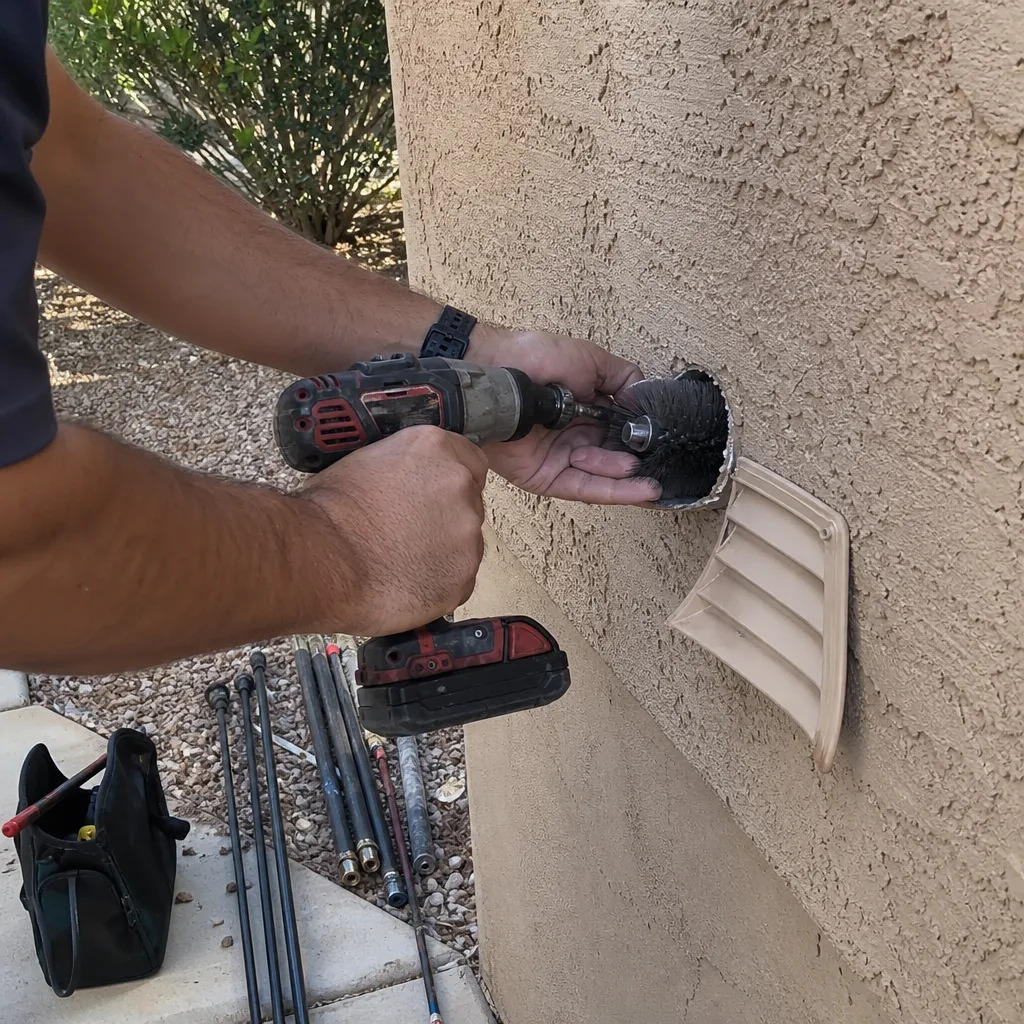
How much does duct sealing cost in Phoenix for an average home?
For a standard Phoenix single-family home between 1,600 and 2,400 square feet, manual mastic duct sealing typically costs $450-$850. Aeroseal pressurized sealing for the same home runs $1,500-$2,200. The difference reflects equipment cost and process complexity – Aeroseal seals from inside the duct and is measured precisely before and after, while manual mastic sealing requires attic access to every run. Both are valid approaches; the right one depends on your duct layout and how much of the system is accessible. Call (480) 500-6377 for a written quote specific to your home.
Is duct sealing worth the cost in Phoenix’s climate?
In Phoenix, the answer is typically yes – more so than in most other U.S. markets. A system with 20% duct leakage is losing one-fifth of its conditioned air into an attic that runs 145-160°F in summer. APS and SRP have both offered rebate programs for duct sealing because the energy savings in this climate are measurable and significant. A sealed system also reduces the load on your compressor during peak summer hours, which is where unit wear concentrates. The payback period on a $600-$800 mastic seal job in Phoenix has generally been 2-4 years based on APS billing data from participating homes – though your specific result depends on your current leakage rate and system size.
How much does Aeroseal cost in Phoenix?
Aeroseal whole-home treatment in Phoenix ranges from $1,500 to $2,500 for most single-family homes. Multi-zone systems or homes above 3,000 square feet may land above that range. The price includes pre- and post-treatment leakage testing, the injection process, and a printed leakage report showing the CFM reduction – documentation you will need for any APS or SRP rebate application. That written report is part of the standard job record, not an add-on. Call (480) 500-6377 for a written estimate.
Can you repair just one duct run, or does the whole system need to be done?
A single disconnected or damaged run can absolutely be repaired on its own – and at $85-$280 per run depending on scope, it is often the right starting point when the problem is isolated. A duct blaster test can tell you whether leakage is concentrated in one area or distributed across the system. If the test shows one bad run and the rest of the system is tight, fixing that one run is the correct scope. If leakage is spread across 6 or 8 runs, a whole-home approach is more cost-effective than individual repairs. We write the scope based on what the test and camera show – not on a whole-system default.
How do I know if my ducts need repair or just cleaning?
Duct cleaning addresses contamination inside the duct – debris, dust, mold, allergen buildup. Duct repair and sealing addresses structural failures – disconnected joints, collapsed liner, unsealed plenums. The two problems are different, though they often coexist. Signs that point toward repair rather than (or in addition to) cleaning: rooms that won’t cool evenly despite a functioning HVAC system, rising APS or SRP bills without a change in habits, visible gaps at register boots, or an air handler that runs constantly but doesn’t hit setpoint. A camera inspection of the duct runs will show both conditions simultaneously – which is why every CleanRun visit includes one, photographed and documented, before a price is written. See our full service overview on the home page if you’re sorting out which service applies to your situation.
Does CleanRun offer written estimates before work starts?
Yes – every time, on every job, with no exceptions. This is Haven Standard Clause 1: the written price is delivered before any work starts. There is no “call for a quote” holding pattern and no on-the-spot pressure to approve a number that showed up after the technician was already in your attic. The price you see on the estimate is the price on the invoice. If the camera inspection reveals a condition that changes the scope, the written price is updated and you approve the revised number before anything else happens. That process has been the same since CleanRun’s first job in 2013.
Get a Written Estimate for Duct Repair & Sealing in Phoenix
If you are trying to understand what your specific duct system needs and what it will cost, the next step is a written estimate based on what the camera actually shows – not a range pulled from a national average. CleanRun serves homeowners throughout the Phoenix metro, including Ahwatukee, Arcadia, Laveen, Scottsdale, Tempe, Chandler, Glendale, and Surprise, with the same process on every job: camera inspection first, written price second, documented photo record when the crew leaves.
The 365-Day Done Right Promise is in writing on every job ticket. If the work is not right, we make it right – not subject to manager approval, not a conversation about what the policy covers. A written guarantee on a documented job record is what backs that up.
Call (480) 500-6377 to schedule a free estimate. A live person answers. The estimate is written. The price does not change after you approve it.
Written by Tomas Reyes, Owner at CleanRun Air Duct Cleaning Phoenix, serving Phoenix, AZ since 2013. Pricing reflects the Phoenix market as of 2026. CleanRun Air Duct Cleaning Phoenix offers free estimates – call (480) 500-6377.
What Our Customers Say
"The before and after photographs of each run are the reason I used them. You cannot argue with what came out of the return."
- Marguerite O."Flat price agreed up front, no per-vent add-ons at the end. That was the whole reason I did not call the coupon company."
- Suzanne B."On time, professional, and explained what the readings meant without talking down to me."
- Warren E.