
Whole-system duct and dryer vent check with before-and-after photos - you see exactly what came out of your vents
That "$99 whole-house special" is a bait ad - the real number appears once they are in your hallway, or the "clean" is a shop-vac at the register. We photograph the inside of your ducts before and after instead.
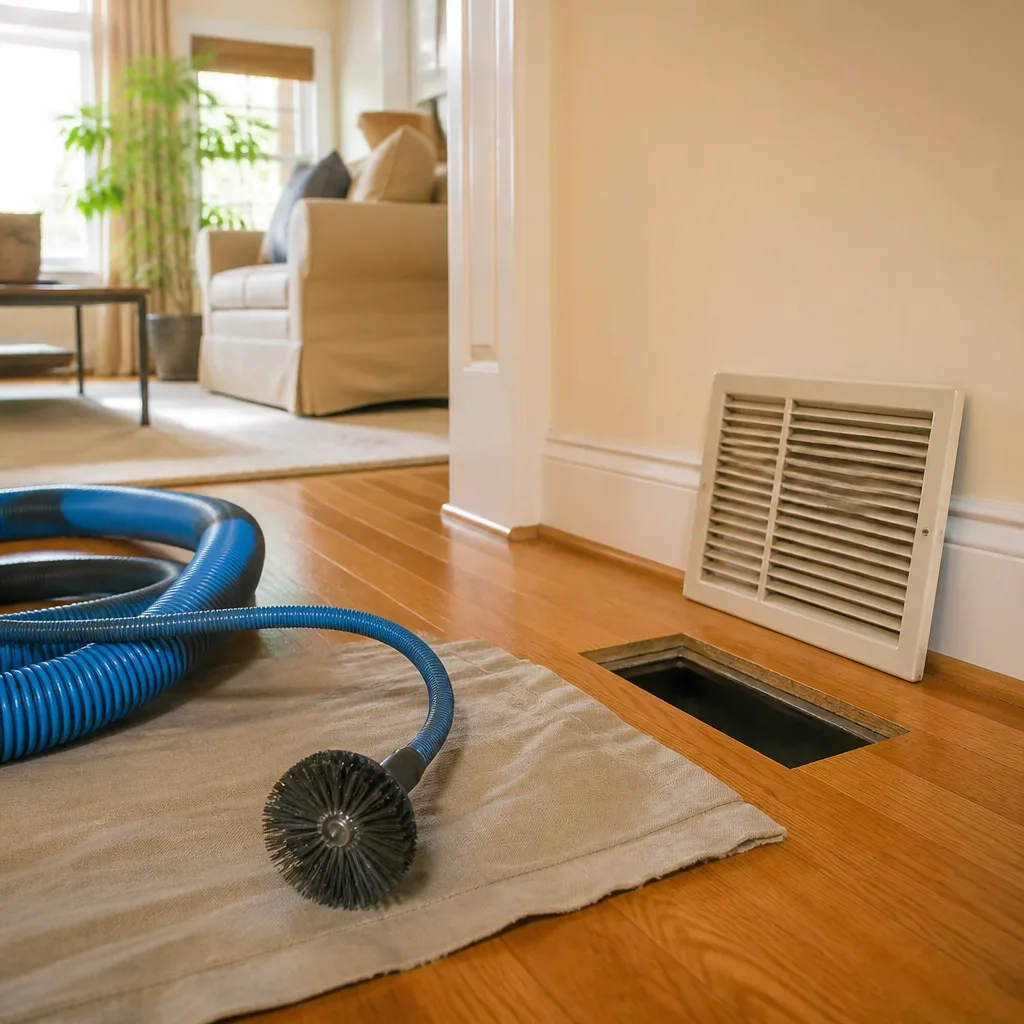
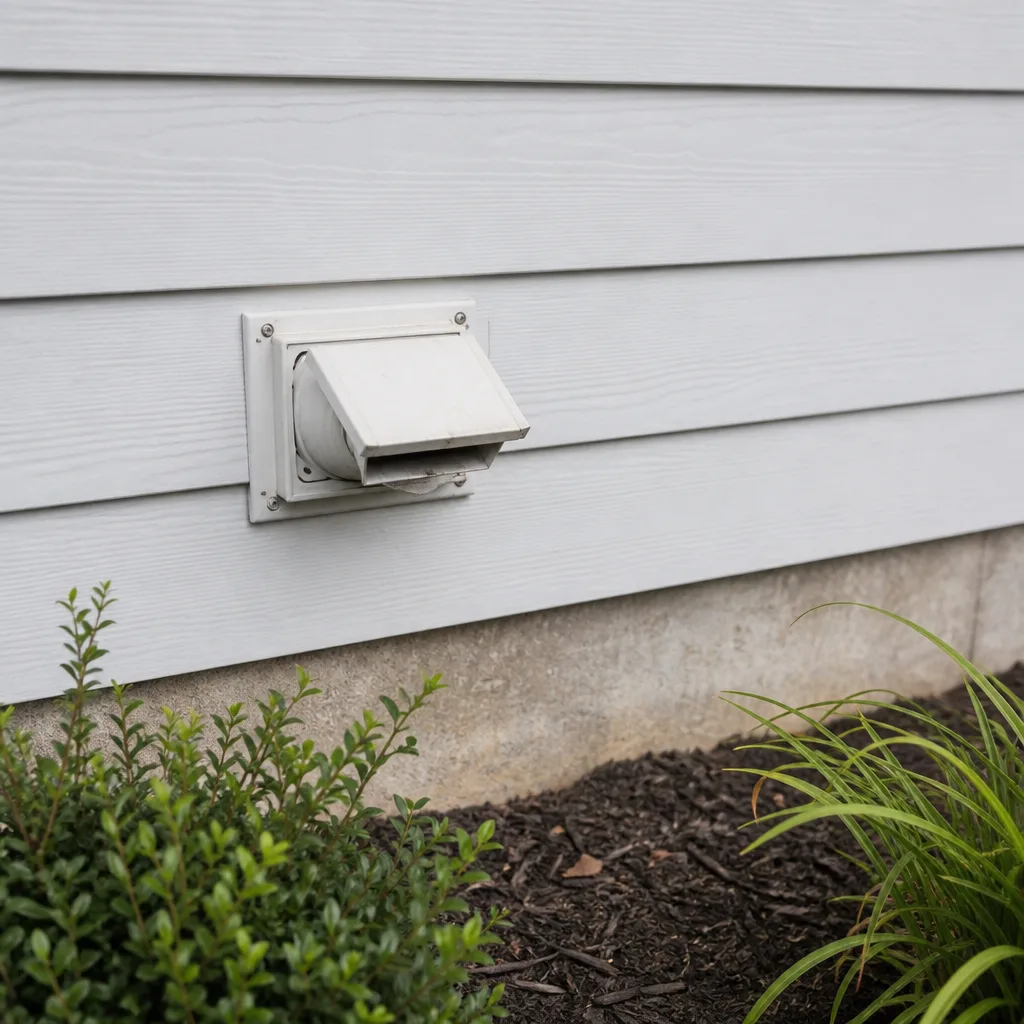
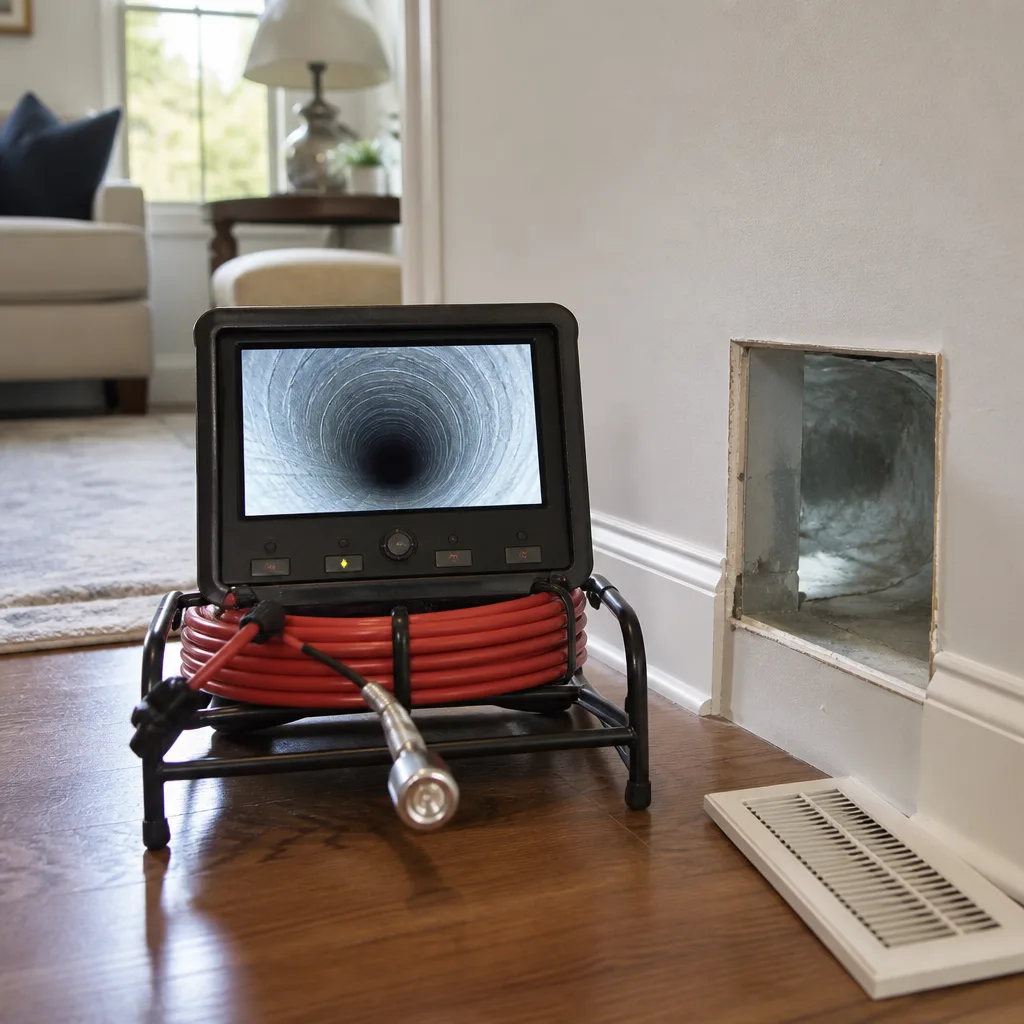
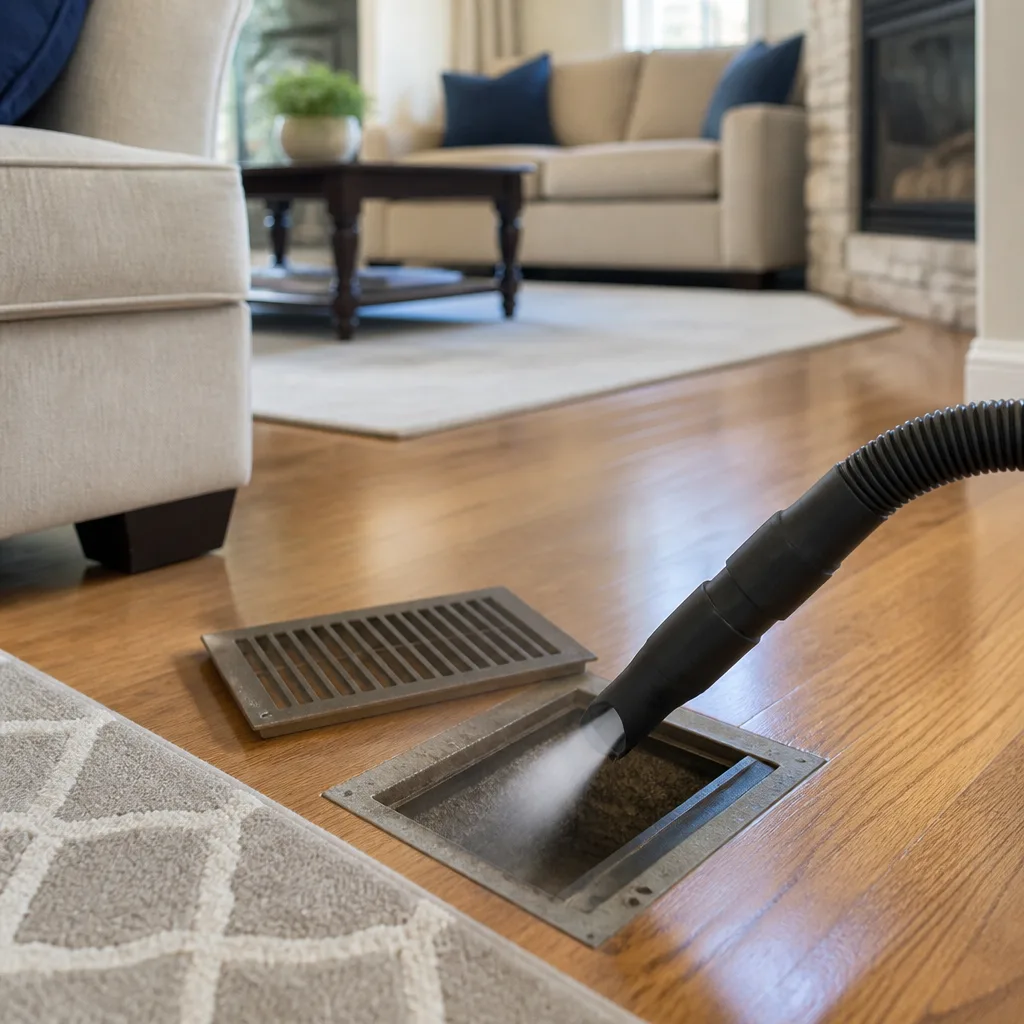
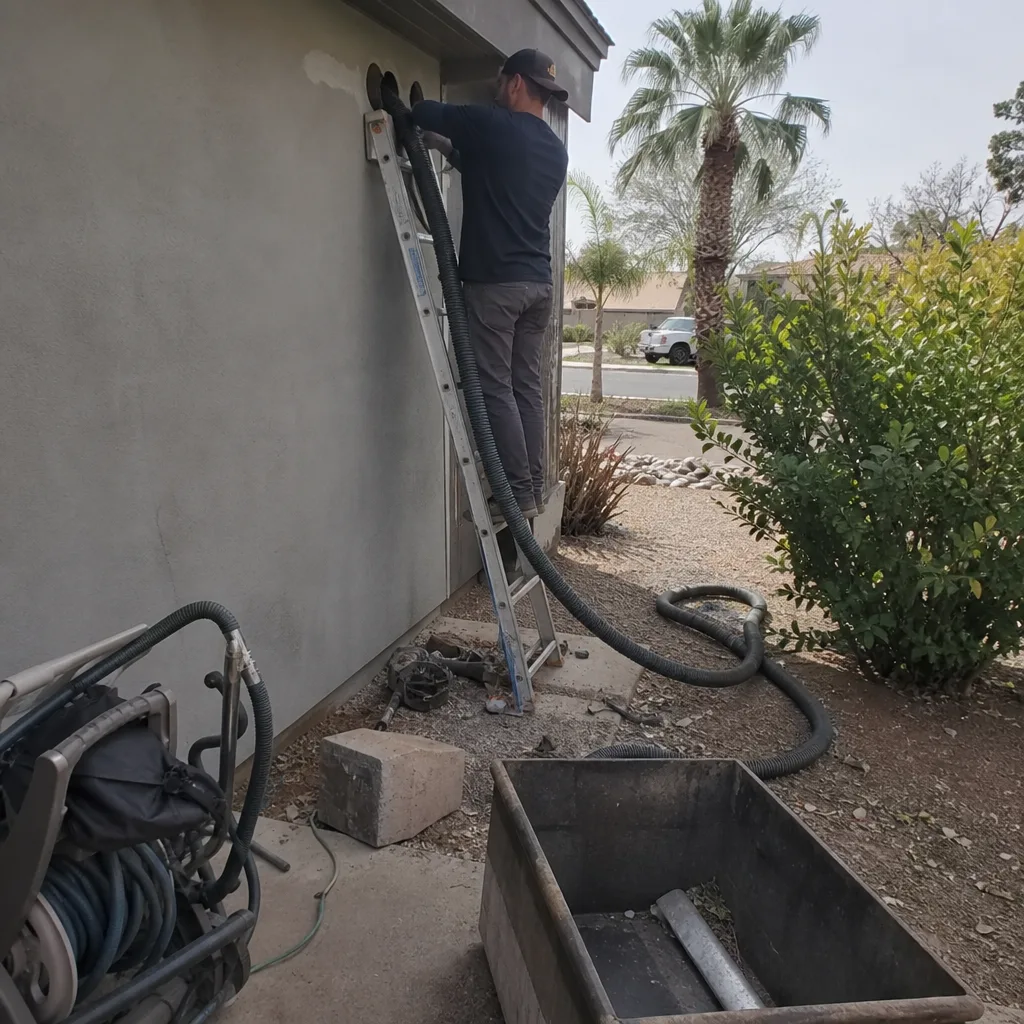 Before
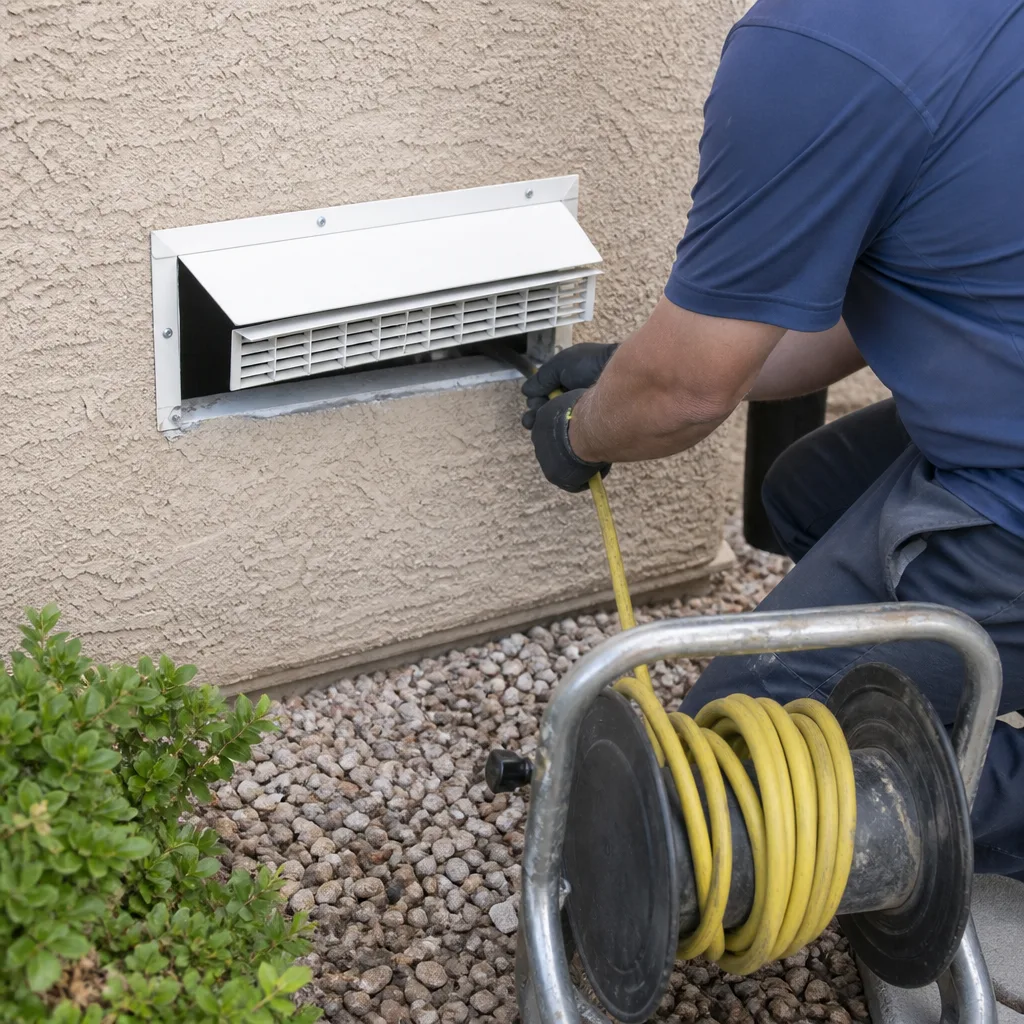 After
After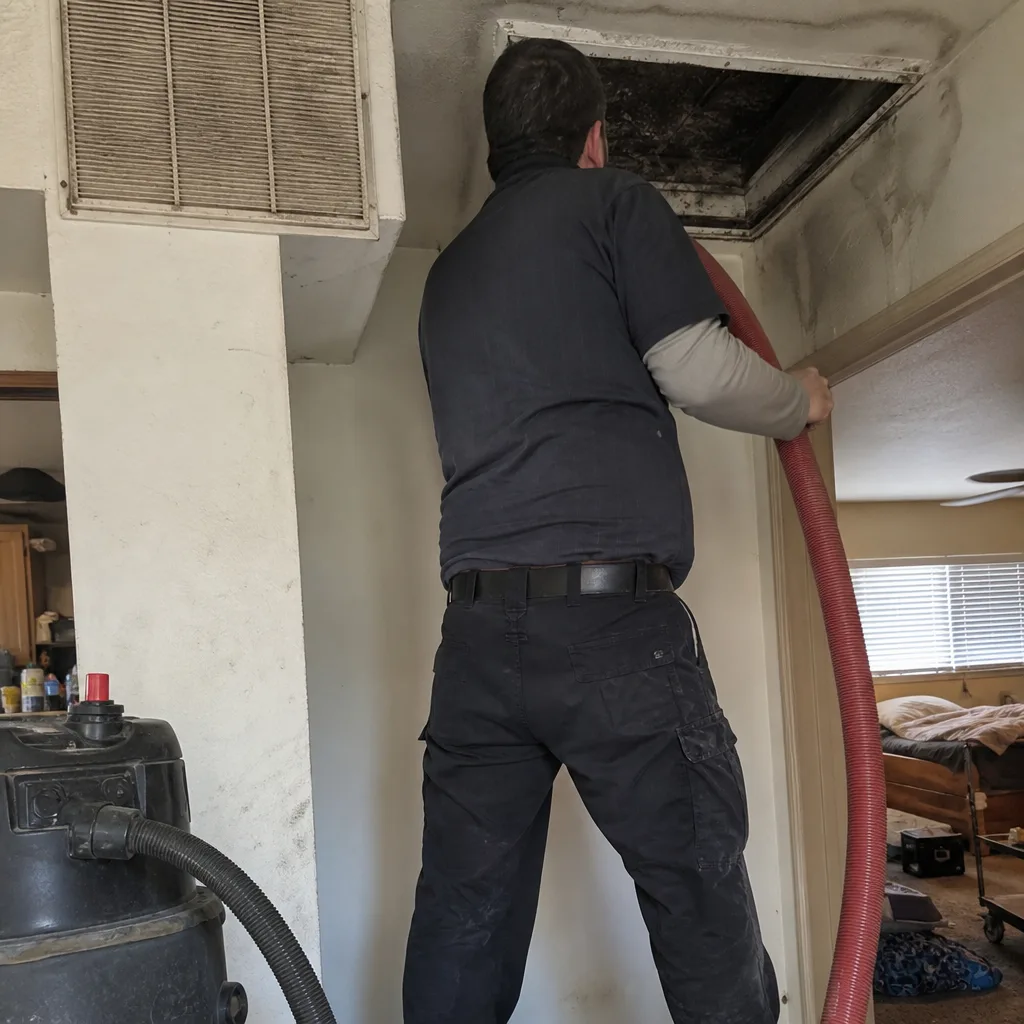 Before
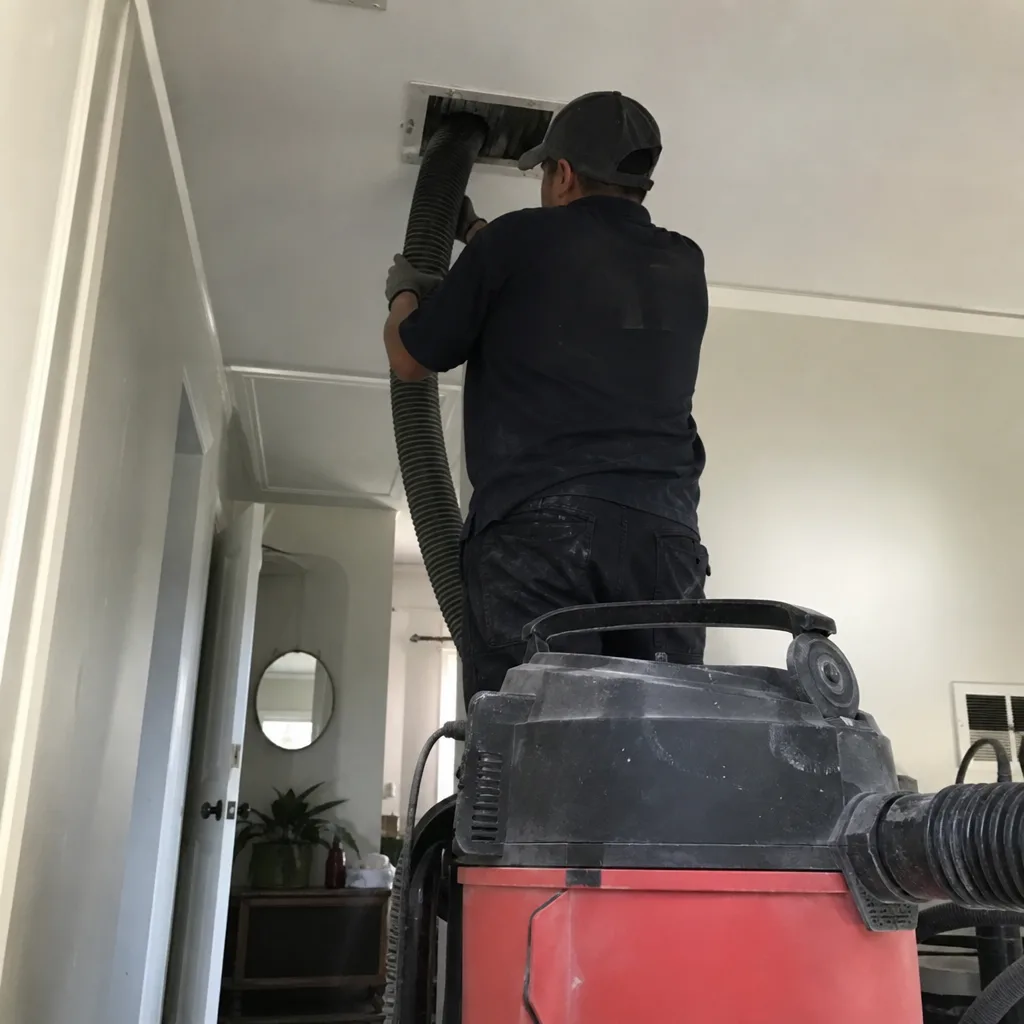 After
After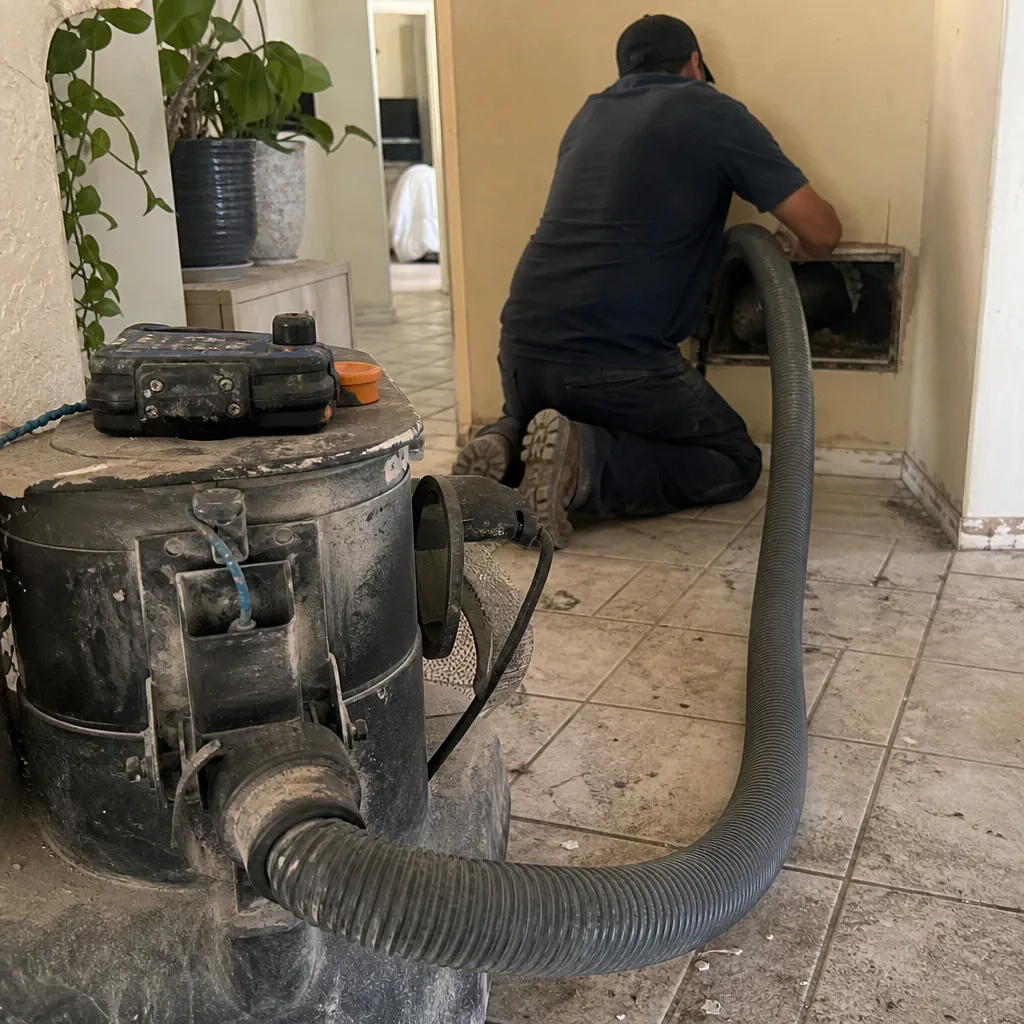 Before
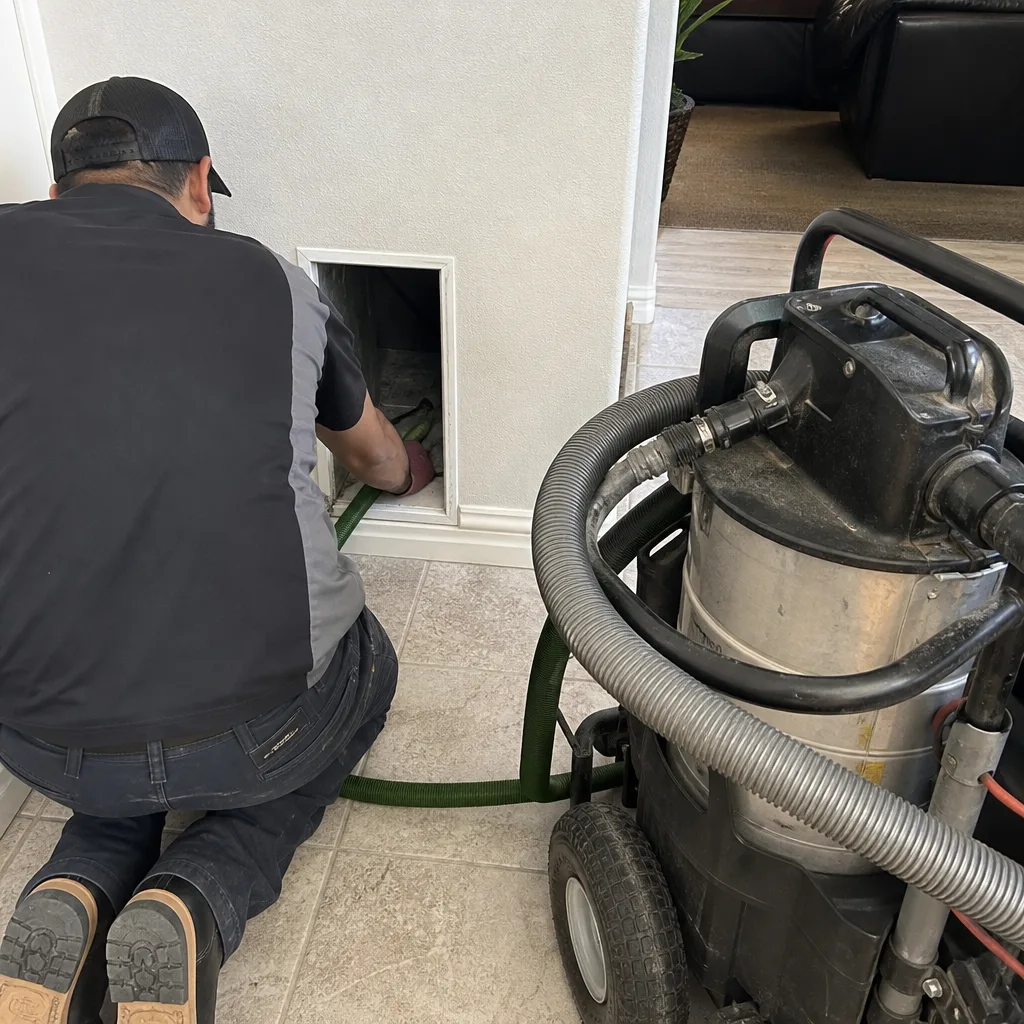 After
AfterRotobrush Register & Grille Cleaning: The Phoenix Owner’s Guide
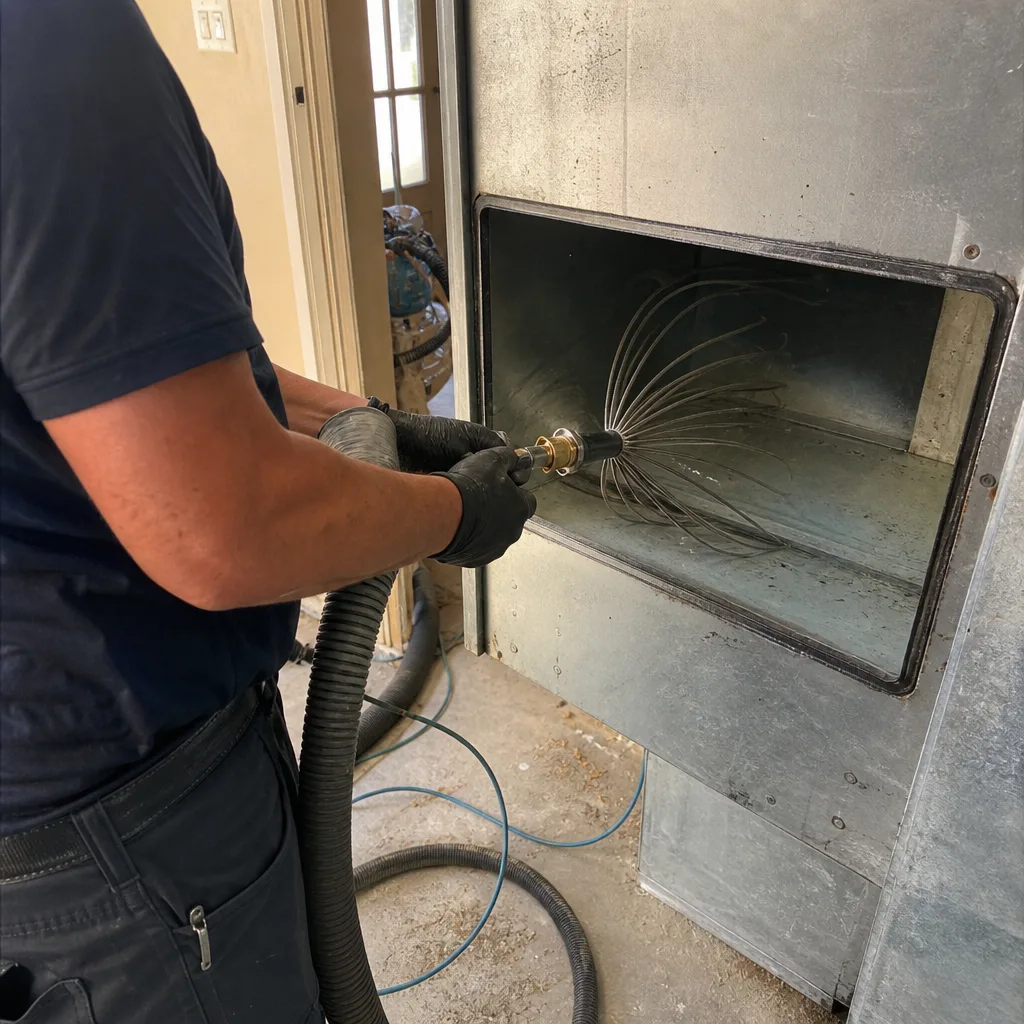
Rotobrush register and grille cleaning in Phoenix typically runs $140-$280 installed for a standard residential system, and we stock the compatible brushes, whips, and adapter kits for same-day service on most Rotobrush models. The work includes full register removal, mechanical agitation of the boot and first 3-4 feet of duct run, debris extraction under negative pressure, and reinstallation with a documented photo record of what came out. Most Phoenix homeowners discover this service is needed when they notice dust reappearing on grilles within days of surface cleaning, or when a Rotobrush duct cleaning they had elsewhere left the supply boots untouched.
Here is what the camera found. Everything else follows from that.
In Ahwatukee and Arcadia, where we do a lot of this work, the combination of desert dust infiltration and 110°F attic temperatures bakes debris onto register boots until it essentially becomes part of the surface. A standard duct cleaning that only runs a brush down the main trunk line misses this entirely. The register and grille are the visible end of the system, but the boot behind them is where the actual accumulation happens.
Which Rotobrush Models This Applies To
Rotobrush has produced three main series relevant to residential register and grille cleaning: the original Rotobrush Classic (discontinued around 2015 but still common in Phoenix homes), the Rotobrush BrushBeast series (2015-present), and the compact Rotobrush aiR+ for lighter residential work. Each uses a different quick-connect fitting for register boot attachments.
The Classic series uses a 1.5-inch threaded collar that accepts the standard register cleaning whip and round brush attachments. BrushBeast moved to a 2-inch bayonet-style lock, which is not backward compatible without an adapter we keep on the truck. The aiR+ uses a proprietary snap-fit that Rotobrush does not publish specs for, so we machine a custom adapter in-house for those jobs.
To identify your model: check the motor housing label for a series name, or measure the attachment collar outer diameter. If it measures 1.5 inches and threads, it’s Classic. If it measures 2 inches with two locking tabs, it’s BrushBeast. If the unit is under 35 pounds and has a molded plastic collar with no threads, it’s likely aiR+.
We carry both OEM Rotobrush register cleaning attachments and quality aftermarket equivalents from Nikro and Abatement Technologies. The OEM whips run $45-$65; our aftermarket equivalents, which we have tested side-by-side on Phoenix jobs since 2018, run $28-$40 and carry the same 365-Day Done Right Promise. The aftermarket brushes use a slightly stiffer nylon bristle that we have found more effective on baked-on desert dust. Haven Standard Clause 1 requires we name the price before work starts, so we will show you both options in writing and let the camera footage from your own ducts inform the choice.
Signs Your Rotobrush Register & Grille Cleaning Is Failing
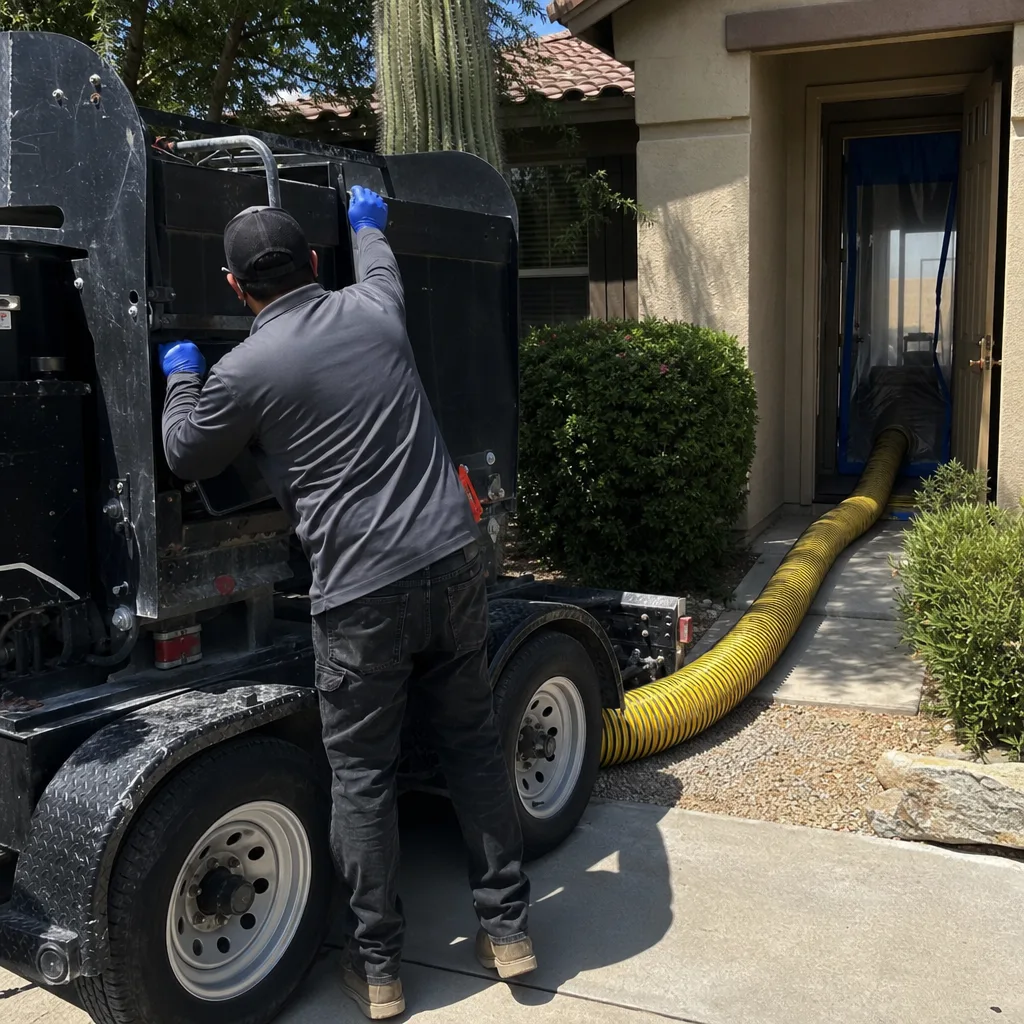
- Dust resets within 48-72 hours of surface cleaning. You wipe the grille, it looks fine, then the film returns. This means debris is actively feeding from the boot behind the register, not settling from the room air. The boot is full enough that airflow is dislodging material with every HVAC cycle.
- Uneven airflow from room to room, especially on second floors. A partially blocked boot chokes supply to that register. In Phoenix’s summer, this shows up as a hot room first because the system cannot push enough conditioned air through the restriction.
- Visible mold or discoloration on the grille face that returns after bleach cleaning. The boot interior is holding moisture and organic material. Phoenix’s monsoon season drives humidity into attic ductwork, and a debris-packed boot becomes a reservoir. Surface cleaning never reaches the actual growth site.
- Odor when the system first kicks on, especially a dusty or musty note. The boot debris heats and dries during system off-cycles, then rehydrates and releases when airflow resumes. This is particularly common in Phoenix’s March-May dust storm season when particulate load is highest.
- Previous duct cleaning did not include register removal or boot inspection. If your last service ran a hose through the main trunk but left every register screwed in place, the boots were not cleaned. We see this constantly on second-opinion jobs in Scottsdale and Paradise Valley, where a low-quote competitor vacuumed the accessible runs and called it complete.
BeforeAfterReplacement Cost & What’s Included
Register and grille cleaning with Rotobrush-compatible equipment in Phoenix:
| Single register/boot cleaning | $140-$180 |
| Whole-home register set (8-12 registers typical) | $680-$980 |
| Heavy debris requiring additional agitation cycles | Add $25-$40 per boot |
| OEM Rotobrush attachment upgrade (vs. standard aftermarket) | Add $15-$25 per boot |
The range reflects three factors: accessibility (cathedral ceilings or furniture-blocked registers take longer), debris volume (we photograph and measure before quoting), and whether the register itself is damaged and needs replacement. Every quote is written and agreed before we touch a screw. The price includes negative-pressure extraction during agitation so debris is removed, not redistributed, and the documented photo record is delivered as part of the standard job record. Work is backed by the 365-Day Done Right Promise in writing.
DIY or Call Us?
What you can safely check yourself: remove a register, shine a flashlight into the boot, and look for visible debris buildup or discoloration more than 6 inches in. If you see it, the blockage likely extends further than your arm reaches. You can also vacuum the boot opening with a household vacuum and a crevice tool, which removes loose surface material but will not dislodge baked-on deposits.
Where DIY goes wrong: register boots in Phoenix homes often connect to flex duct that is 20+ years old and brittle. Aggressive brushing or the wrong diameter tool can puncture the flex, creating a leak in the attic that costs far more than the cleaning would have. The Rotobrush whip is designed to flex around elbows without puncturing, but only when matched to the correct duct diameter and driven at the proper RPM. We have repaired DIY punctures in Gilbert and Chandler where a homeowner used a plumbing snake or drill-mounted brush. If your ductwork is flex, metal, or duct board, the correct tool and speed matter. For that reason, we do not recommend DIY mechanical agitation beyond light vacuuming.
Call (480) 500-6377 and we will quote the work in writing before scheduling. Estimates are free, and we offer a Free Second Opinion on any competitor’s written estimate.
FAQs
In Phoenix’s desert climate, with dust storms and minimal annual rainfall, register boots typically need attention every 3-5 years if the home has standard filtration and no construction activity. Homes near active construction, with pets, or with fiberglass filter media may see buildup in 2-3 years. The 365-Day Done Right Promise covers any recurrence within a year of our service. Call (480) 500-6377 for an exact quote - estimates are free.
If the boot is cracked, separated from the duct, or has stripped mounting holes, cleaning alone will not fix it. We can seal small separations with mastic and mechanical fasteners, but cracked plastic or rusted metal boots need replacement. During our inspection we photograph the boot condition and show you the image before quoting either cleaning or replacement. Call (480) 500-6377 for an exact quote - estimates are free.
A single register boot cleaning takes 20-30 minutes including setup, agitation, extraction, and photo documentation. A whole-home set of 8-12 registers typically takes 3-4 hours for a two-person crew. We schedule by the job, not the hour, so the price does not change if a particular boot takes longer than expected. Call (480) 500-6377 for an exact quote - estimates are free.
Yes. We stock Rotobrush Classic, BrushBeast, and aiR+ compatible register cleaning attachments, plus aftermarket equivalents from Nikro and Abatement Technologies, on every truck. CleanRun Air Duct Cleaning Phoenix is an independent service provider and is not affiliated with Rotobrush. If your model is uncommon or imported, we can typically source the correct adapter within 24 hours. Call (480) 500-6377 for an exact quote - estimates are free.
CleanRun Duct Repair & Cleaning also stocks parts for Lennox, Trane, and Carrier systems where register and grille components interface with those manufacturers’ designs.
Written by Tomas Reyes, Owner & Lead Technician, CleanRun Air Duct Cleaning Phoenix at CleanRun Air Duct Cleaning Phoenix, serving Phoenix and nearby areas.