
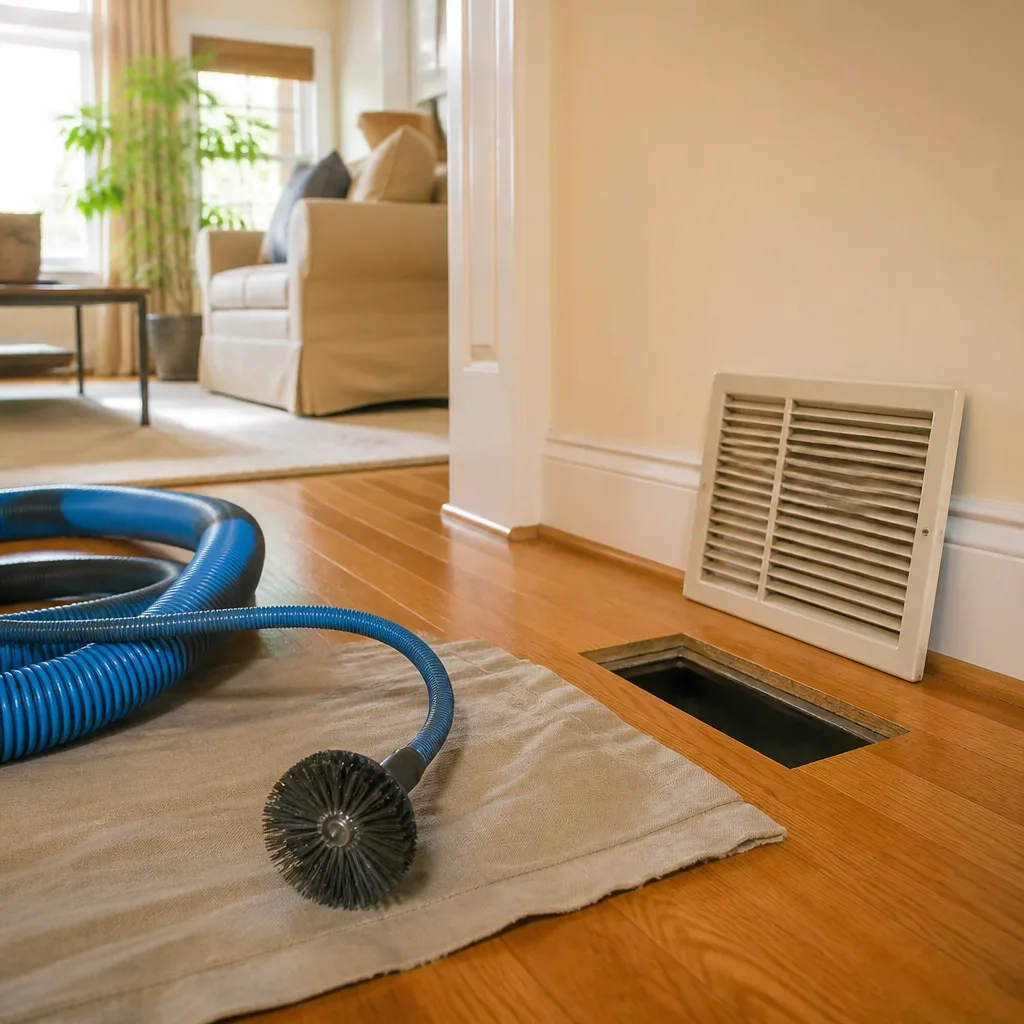
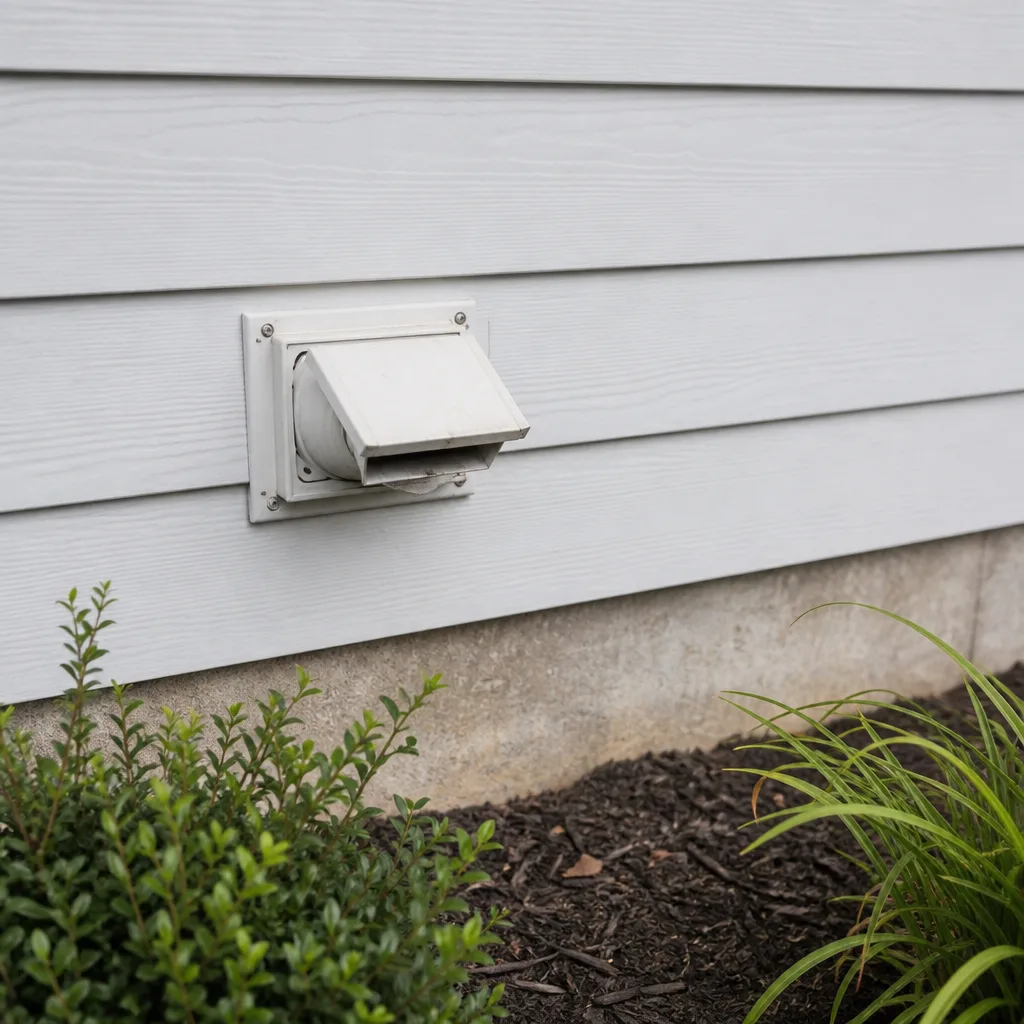
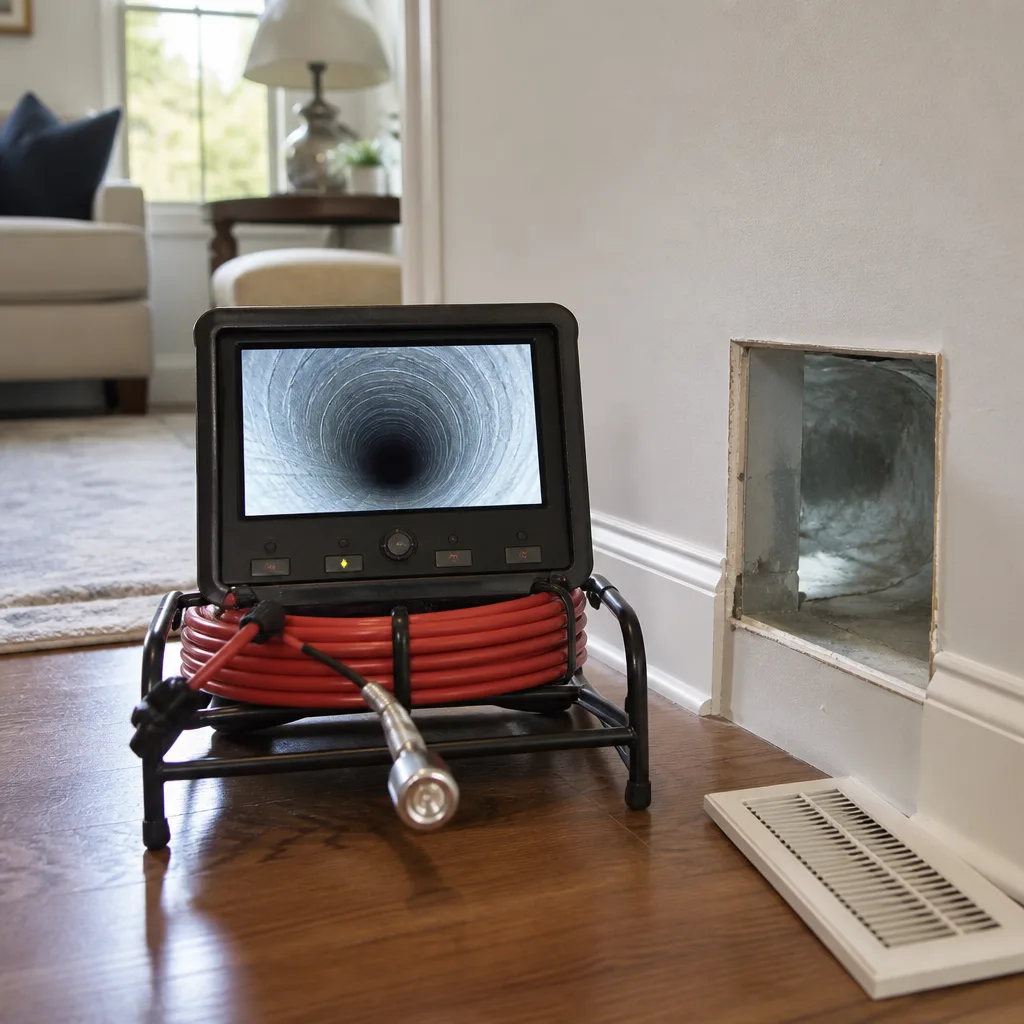
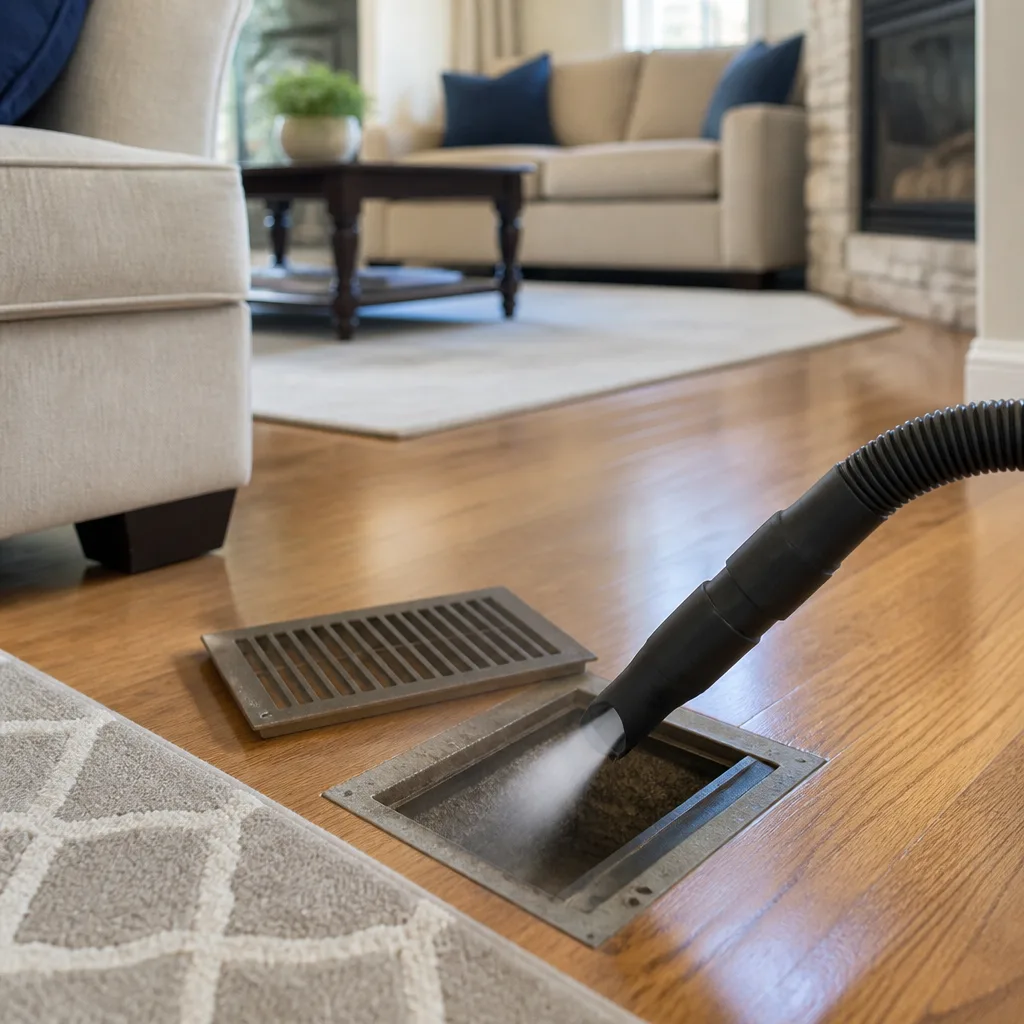
Whole-system duct and dryer vent check with before-and-after photos - you see exactly what came out of your vents
That "$99 whole-house special" is a bait ad - the real number appears once they are in your hallway, or the "clean" is a shop-vac at the register. We photograph the inside of your ducts before and after instead.
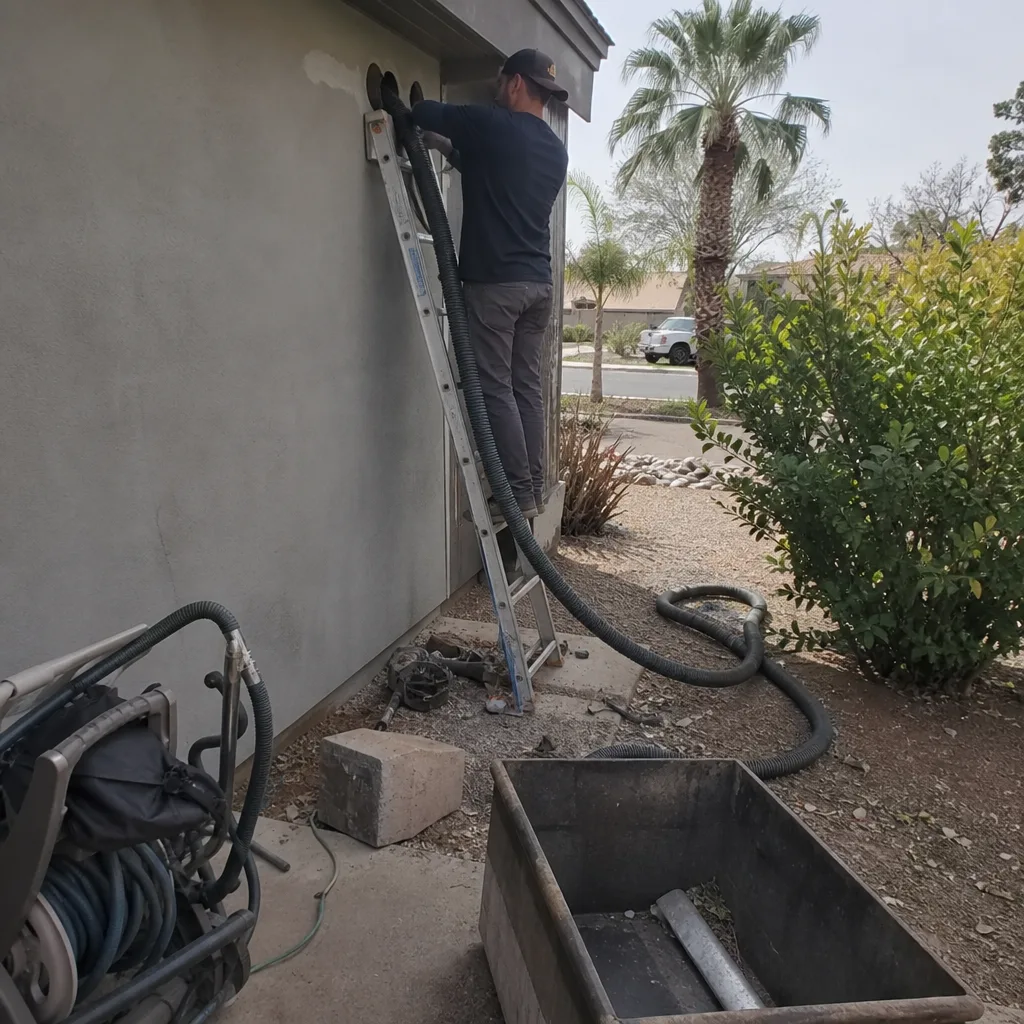 Before
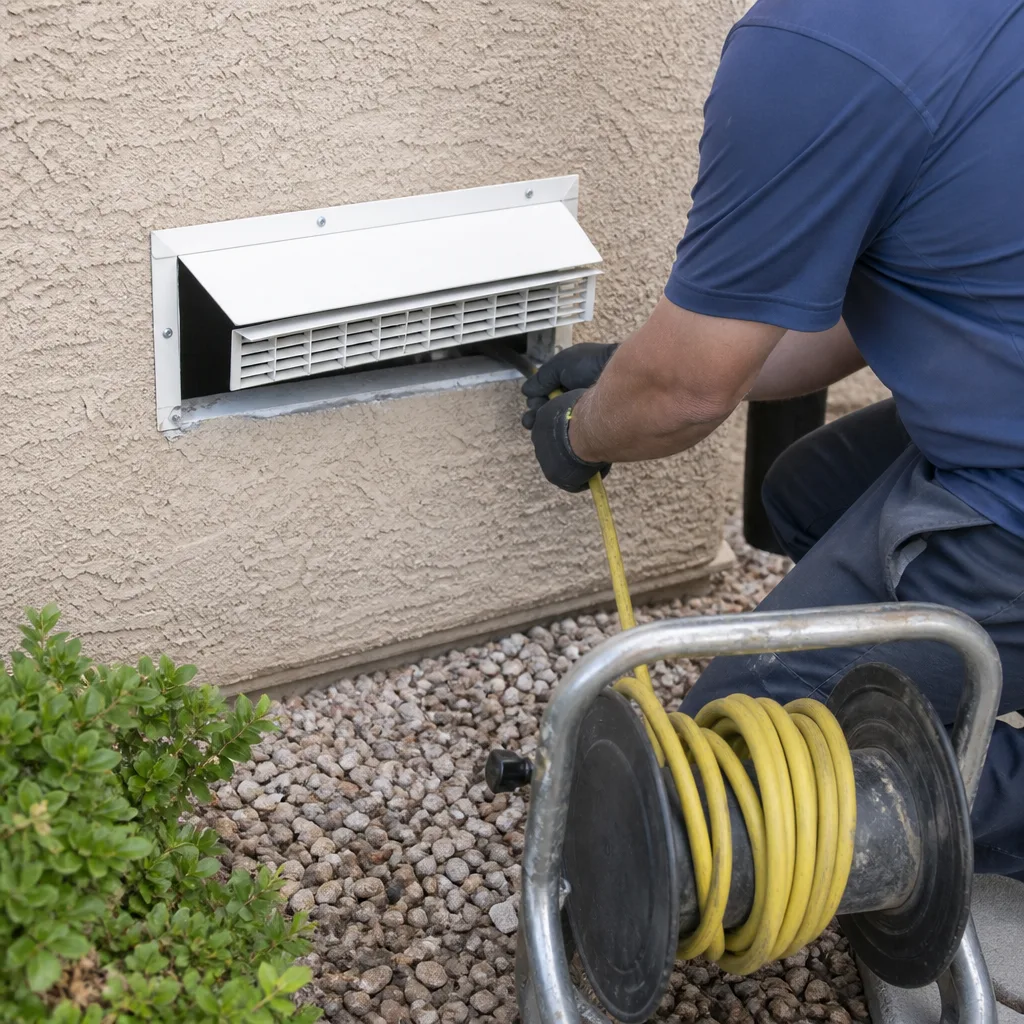 After
After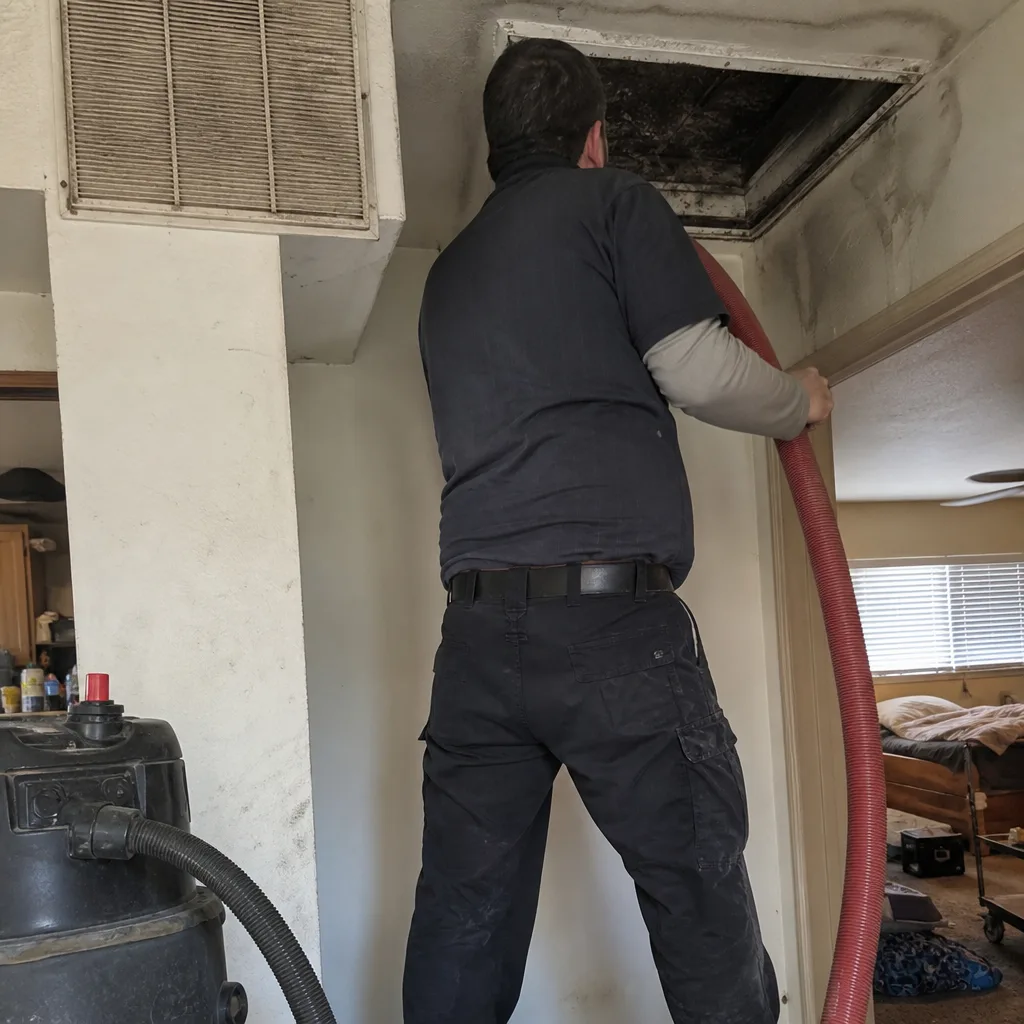 Before
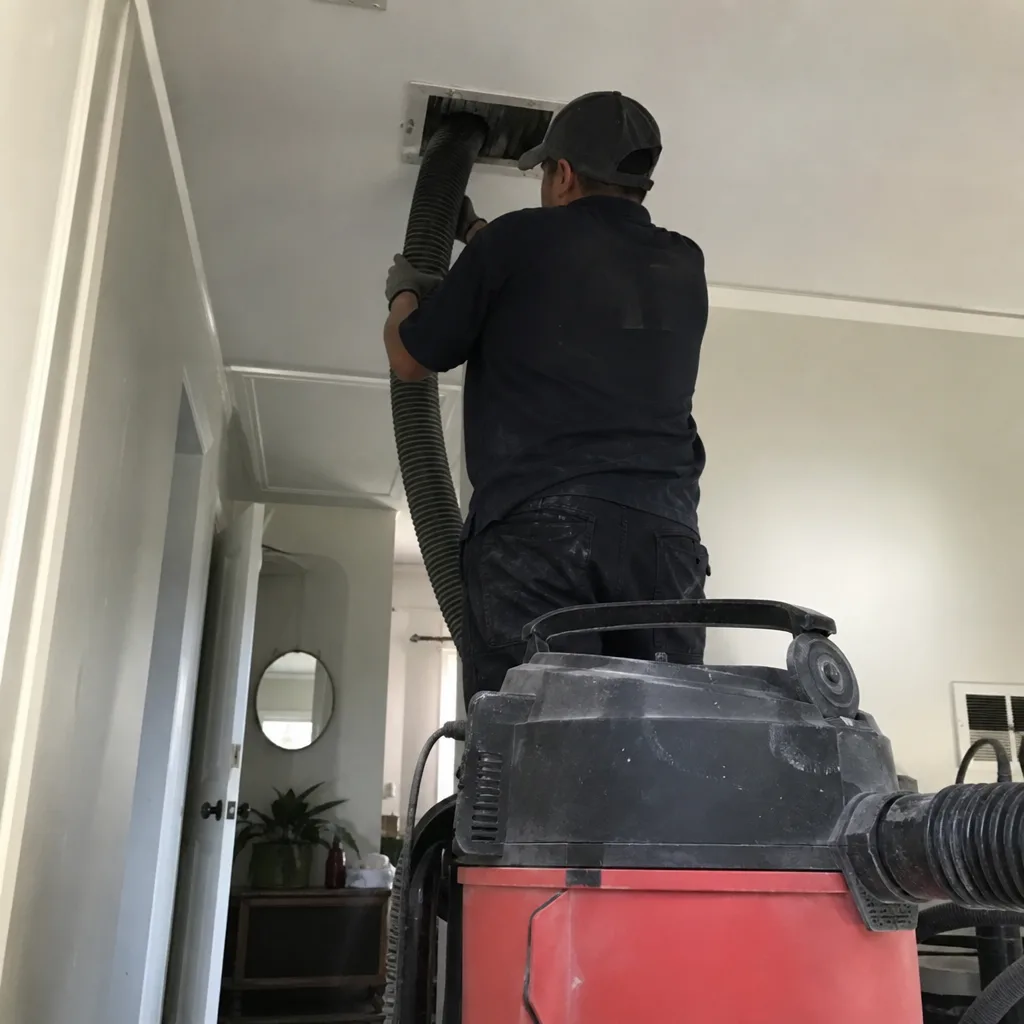 After
After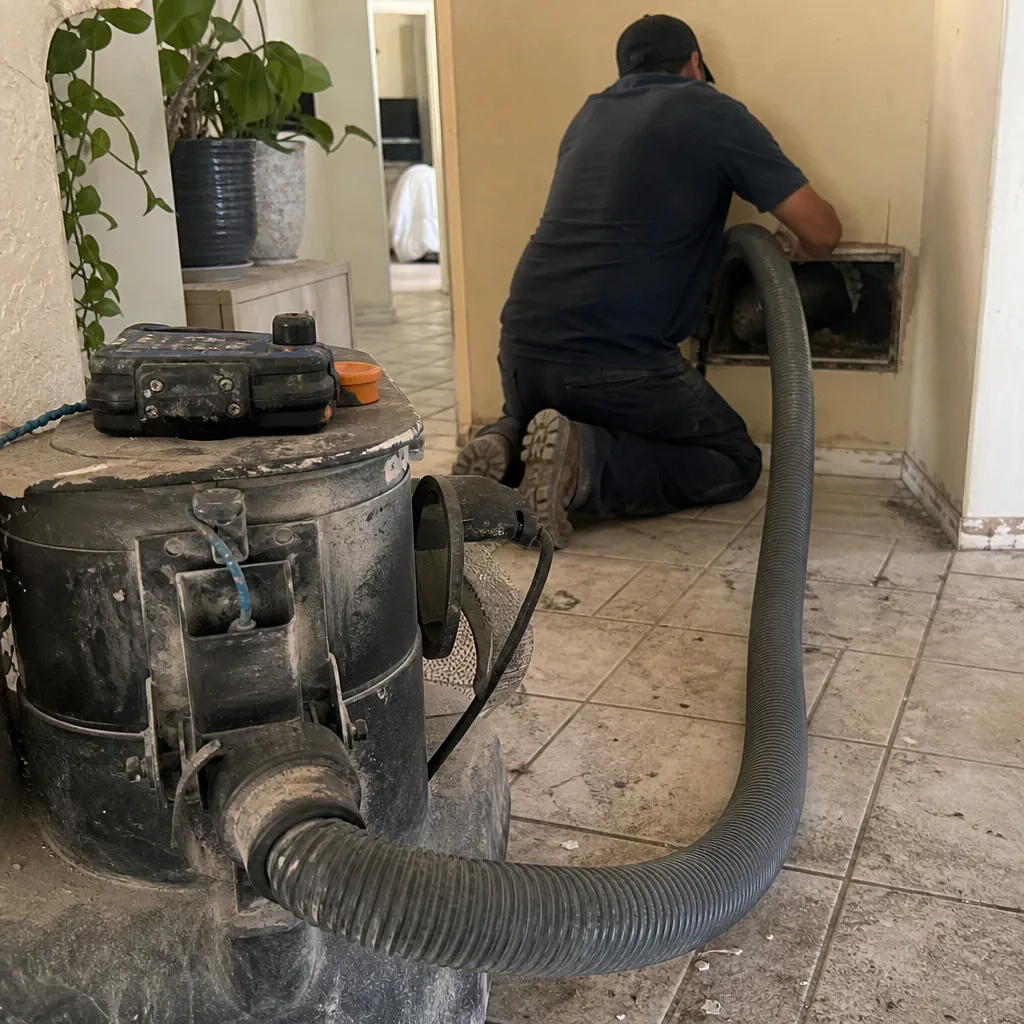 Before
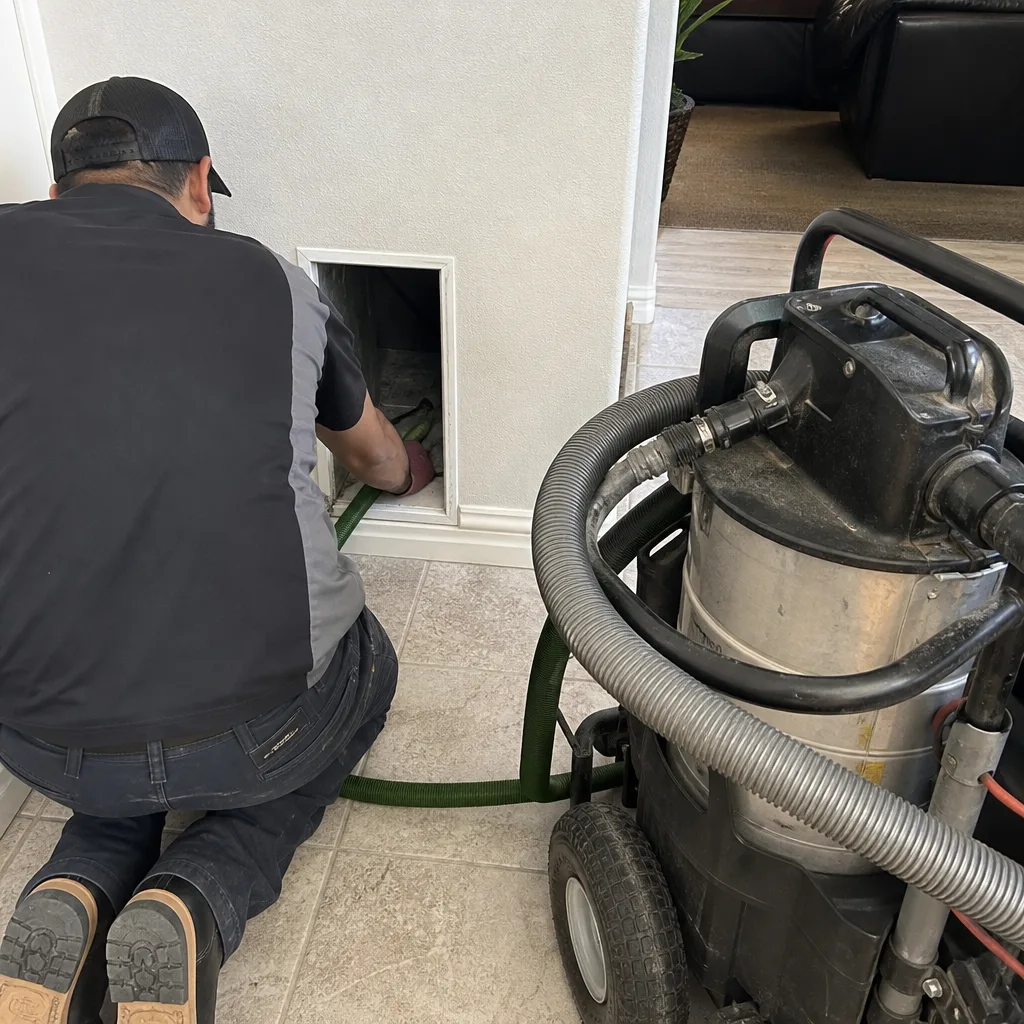 After
AfterNikro Vent Sanitizing: The Phoenix Owner’s Guide
We stock and install Nikro-compatible vent sanitizing systems in Phoenix, with typical installed pricing running $340-$620 depending on system size and whether the existing fogger head, solution pump, or delivery hose needs replacement. Most calls we take in the Valley are same-day completions because we carry the full Nikro UV4000 and SL4000-series sanitizing assemblies on our trucks, including the 1.5-gallon solution tanks and the 50-micron fogger nozzles that clog fastest in hard-water areas like Ahwatukee and Arcadia. Here is what the camera found. Everything else follows from that.
Most Phoenix homeowners discover their Nikro vent sanitizing system has failed when they still smell musty air after a standard duct cleaning, or when their HVAC tech points out that the fogger mounted at the plenum (the main air distribution box) hasn’t produced visible vapor in months. In summer, when Phoenix attics hit 140°F, the solution pump seals harden and crack faster than the manufacturer rates for temperate climates.
Which Nikro Models This Applies To
Nikro’s vent sanitizing line breaks into two series we service regularly in Phoenix: the UV4000 ultraviolet-fogger combination units and the SL4000 standalone fogger systems. The UV4000 mounts at the air handler and pairs a UV-C lamp with a quaternary ammonium fogger; the SL4000 is the fogger-only variant for homes that already have separate UV treatment. Both use the same 871080 solution pump and 871090 fogger nozzle, which is where most failures occur.
To identify your exact unit, check the metal data plate on the solution tank bracket. The model prefix tells you the series; the suffix tells you voltage and whether it shipped with the optional 871120 high-output pump for commercial duct sizing. We see a compatibility gotcha on units sold between 2016 and 2019: some SL4000 units left the factory with UV4000-spec pumps that draw 1.2 amps instead of the SL’s rated 0.8, which burns out the 871080 controller board in Phoenix’s extended heat cycles. We verify amp draw before quoting replacement.
For parts, we stock OEM Nikro assemblies and the Guardman GVS-450 aftermarket equivalent, which carries the same 50-micron nozzle spec and a longer pump-seal warranty. The Guardman unit costs 15-20% less installed; we quote both options in writing under Haven Standard Clause 1 so you can verify specs yourself.
Signs Your Nikro Vent Sanitizing Is Failing
- No visible fog at the register. The fogger nozzle should produce a fine, barely visible mist at the supply register within 30 seconds of activation. If you see nothing, the 50-micron orifice is almost certainly clogged with mineral scale from Phoenix’s hard water, or the solution pump has lost prime due to a cracked suction hose.
- Chemical smell without fog production. This means the solution tank is draining but not atomizing; raw sanitizer is pooling in the duct run (the individual branch line) and evaporating slowly. The pump is running but the nozzle is blocked, which overworks the motor and shortens its remaining life.
- Intermittent operation, especially afternoons. Phoenix attic heat causes thermal expansion in the pump housing; a seal that’s marginal in the morning fails completely by 2 p.m. We see this pattern most in Sunnyslope and North Mountain homes where roof pitch traps heat.
- UV lamp glows but fogger never cycles. On UV4000 units, this points to a failed 871080 controller board, not the pump itself. The board costs more than the pump to replace, and we test both components before quoting so you don’t pay for a pump you don’t need.
- Solution tank empties faster than rated. Nikro specs 1.5 gallons per 2,000 square feet of conditioned space. If you’re refilling weekly, the check valve in the suction line has failed and the pump is recirculating solution back into the tank rather than pushing it to the nozzle.
BeforeAfterReplacement Cost & What’s Included
| Component | Parts + Labor | Warranty |
|---|---|---|
| Fogger nozzle (50-micron, OEM or Guardman) | $85-$140 | 2 years |
| Solution pump assembly (871080 or GVS-450) | $180-$260 | 3 years |
| Controller board (UV4000 only) | $220-$320 | 2 years |
| Complete sanitizing system replacement | $340-$620 | 365-Day Done Right Promise |
The range depends on three factors we assess before quoting: whether the existing mounting bracket at the plenum is salvageable, whether your duct sizing requires the high-output pump, and whether we find scale buildup in the delivery hose that warrants full replacement. Every quote is delivered in writing before work starts, with no per-vent add-ons. The 365-Day Done Right Promise applies to all sanitizing work; if the musty smell returns or the fogger fails, we return and make it right at no charge.
Your documented photo record includes before-and-after images of the fogger mount, the inside of the solution tank, and the nozzle orifice at 10x magnification so you can verify the replacement was necessary and correctly installed.
DIY or Call Us?
There is no high-tension or electrical-panel danger in a Nikro sanitizing system; the pump runs on 24V from the air handler transformer. What goes wrong in DIY is misdiagnosis: homeowners replace the $85 nozzle when the $12 check valve failed, or they install a generic pump that draws the wrong amperage and burns the board. The fogger nozzle orifice is precisely machined to 50 microns; a drill bit or wire brush destroys it permanently.
You can safely check two things yourself: whether the solution tank has fluid above the minimum line, and whether the 24V connection at the air handler is seated firmly. Beyond that, the cost of a misordered part and a second service call usually exceeds our written quote. Call (480) 500-6377 and we’ll put the exact price in writing before you decide.
FAQs
The fogger nozzle typically lasts 3-4 years in Phoenix’s hard-water conditions; the solution pump averages 5-7 years if the unit is mounted in a ventilated attic rather than directly on the air handler in the garage, where summer heat is most extreme. We replace both together when either fails, since labor to access the plenum is the larger cost. Call (480) 500-6377 for an exact quote on your setup.
The 50-micron nozzle is a sealed assembly; once clogged with mineral scale, it cannot be cleaned without enlarging the orifice. The pump can sometimes be rebuilt with a seal kit, but Nikro seal kits are backordered 6-8 weeks as of our last vendor check, and the labor to rebuild approaches replacement cost. We quote both options when the seal kit is available.
A straightforward pump-and-nozzle replacement takes 45-60 minutes, including draining the old solution, flushing the delivery hose with demineralized water, and testing fogger output at three registers. Controller board replacement on UV4000 units adds 30 minutes for voltage verification and UV lamp re-calibration. We schedule two-hour windows and finish within them.
Yes. We carry the 871080 pump, 871090 nozzle, 871120 high-output pump, Guardman GVS-450 equivalent, and the full suction hose assembly in 10-foot and 25-foot lengths. For UV4000 controller boards, we stock the two most common voltage variants; the third is available next-day from our supplier in Tempe. We do not charge a trip fee to verify compatibility if we need to order.
CleanRun Air Duct Cleaning Phoenix is an independent service provider and is not affiliated with Nikro Industries. We also stock parts for Lennox, Trane, and Carrier sanitizing and ventilation systems.
Ready to get your Nikro system working again? Call (480) 500-6377. We’ll answer with a live person, verify your model from the data plate, and deliver a written price before any work starts. Every job includes our Documented Photo Record and is backed by the 365-Day Done Right Promise.
Written by Tomas Reyes, Owner & Lead Technician, CleanRun Air Duct Cleaning Phoenix at CleanRun Air Duct Cleaning Phoenix, serving Phoenix and nearby areas.