
Whole-system duct and dryer vent check with before-and-after photos - you see exactly what came out of your vents
That "$99 whole-house special" is a bait ad - the real number appears once they are in your hallway, or the "clean" is a shop-vac at the register. We photograph the inside of your ducts before and after instead.
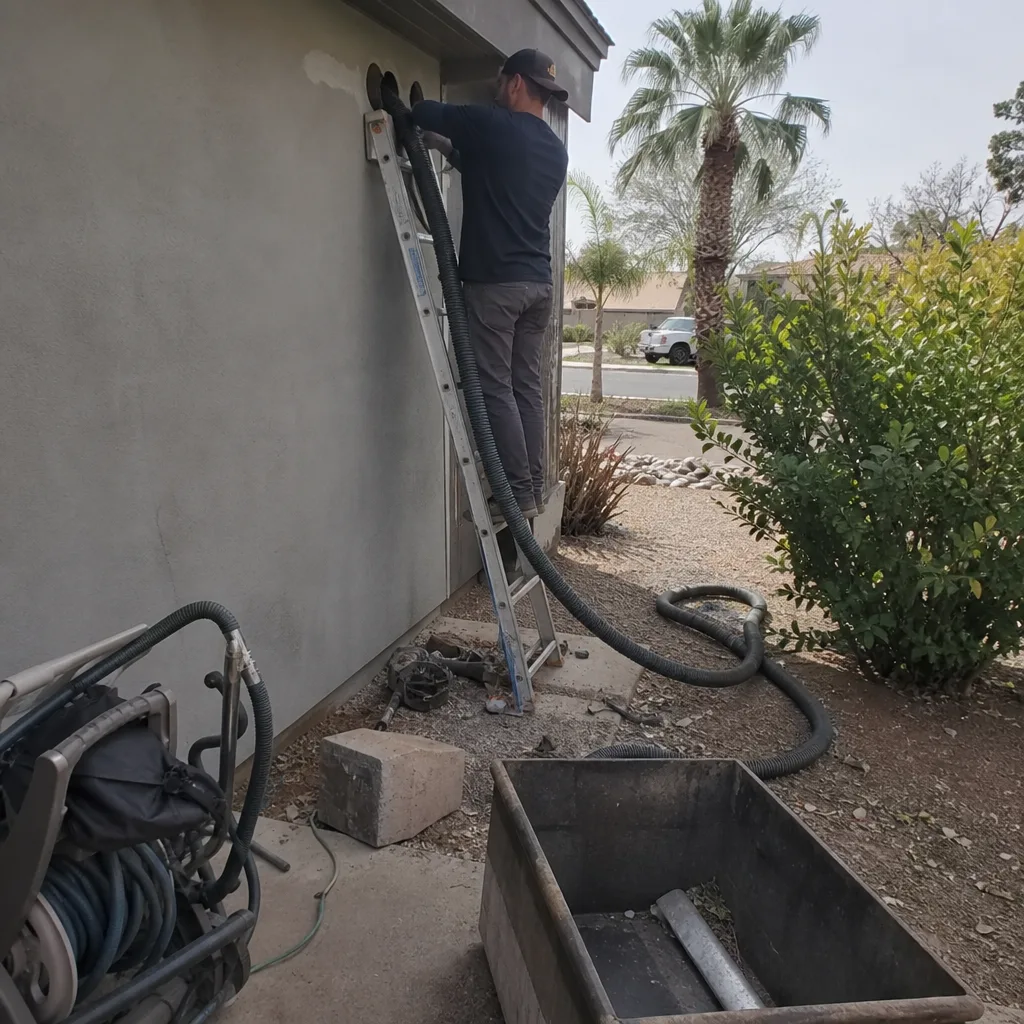 Before
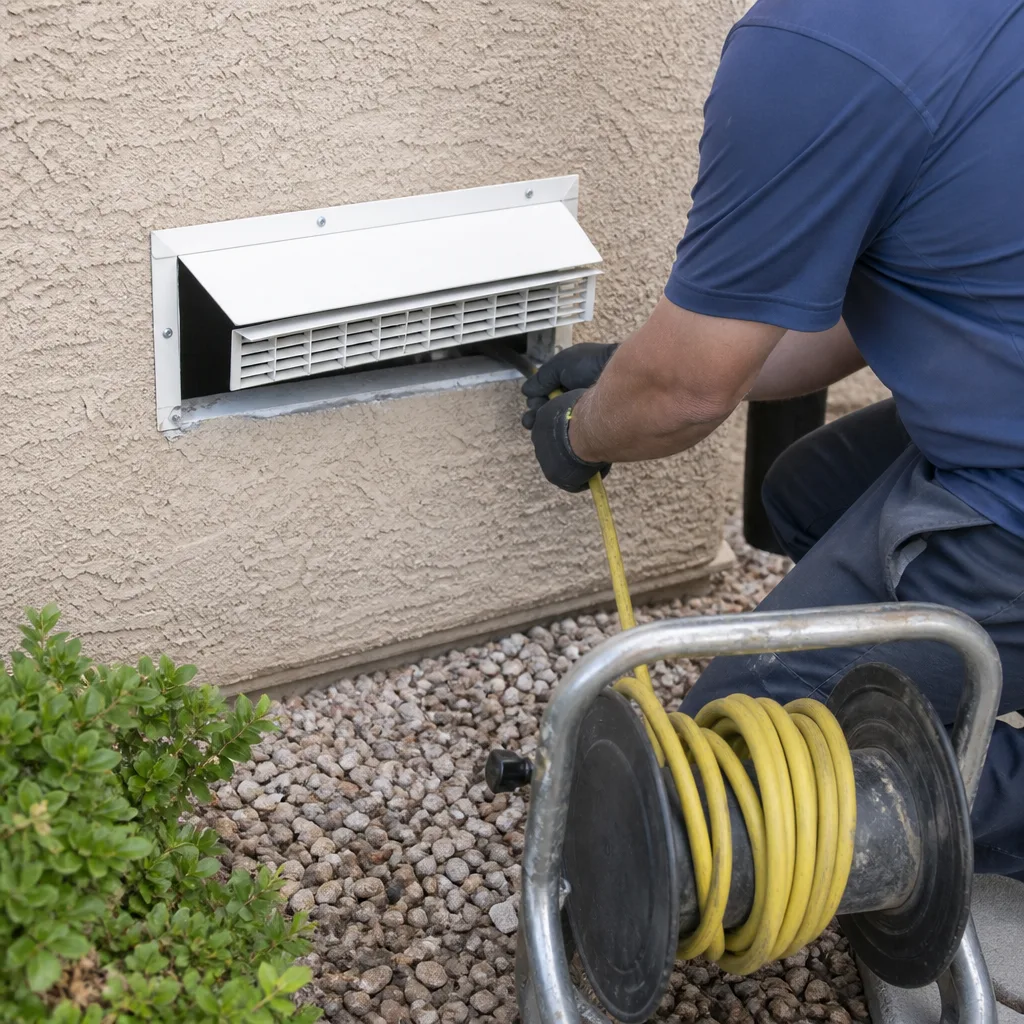 After
After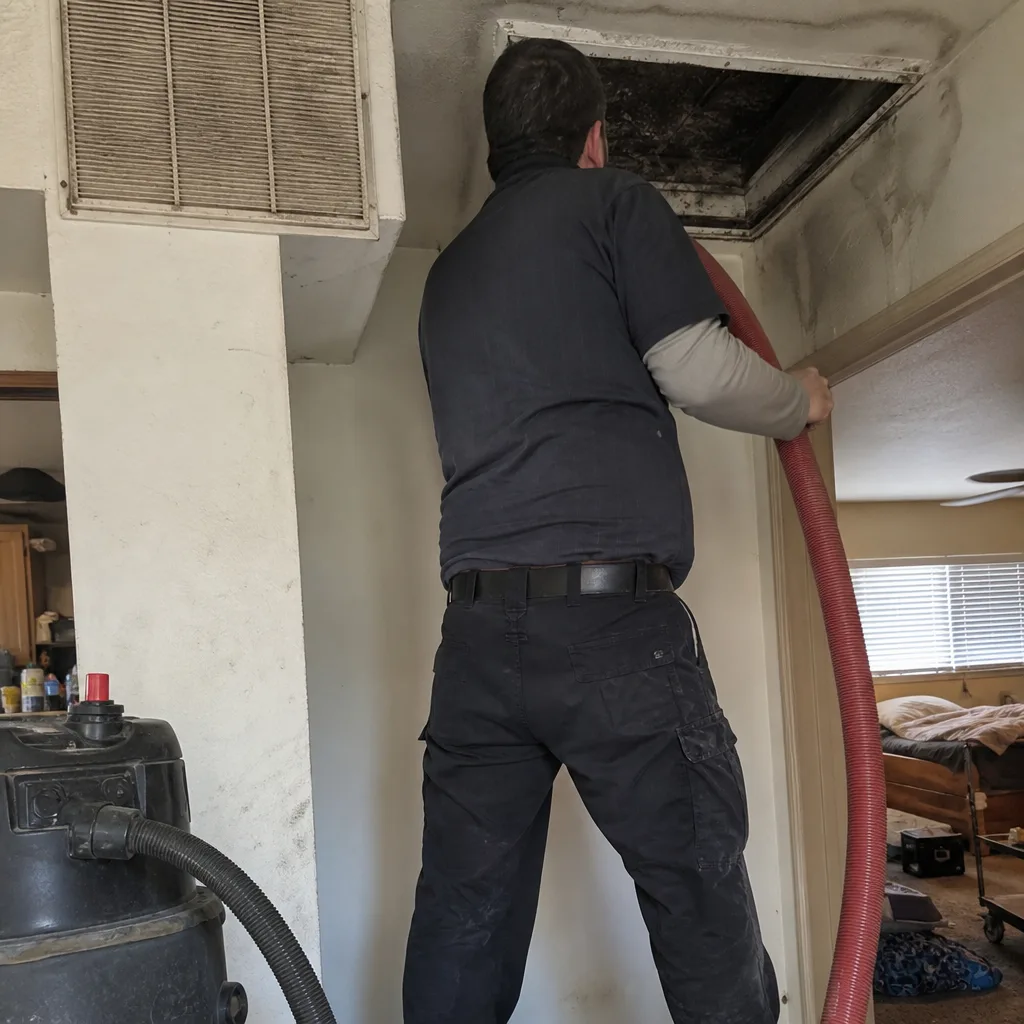 Before
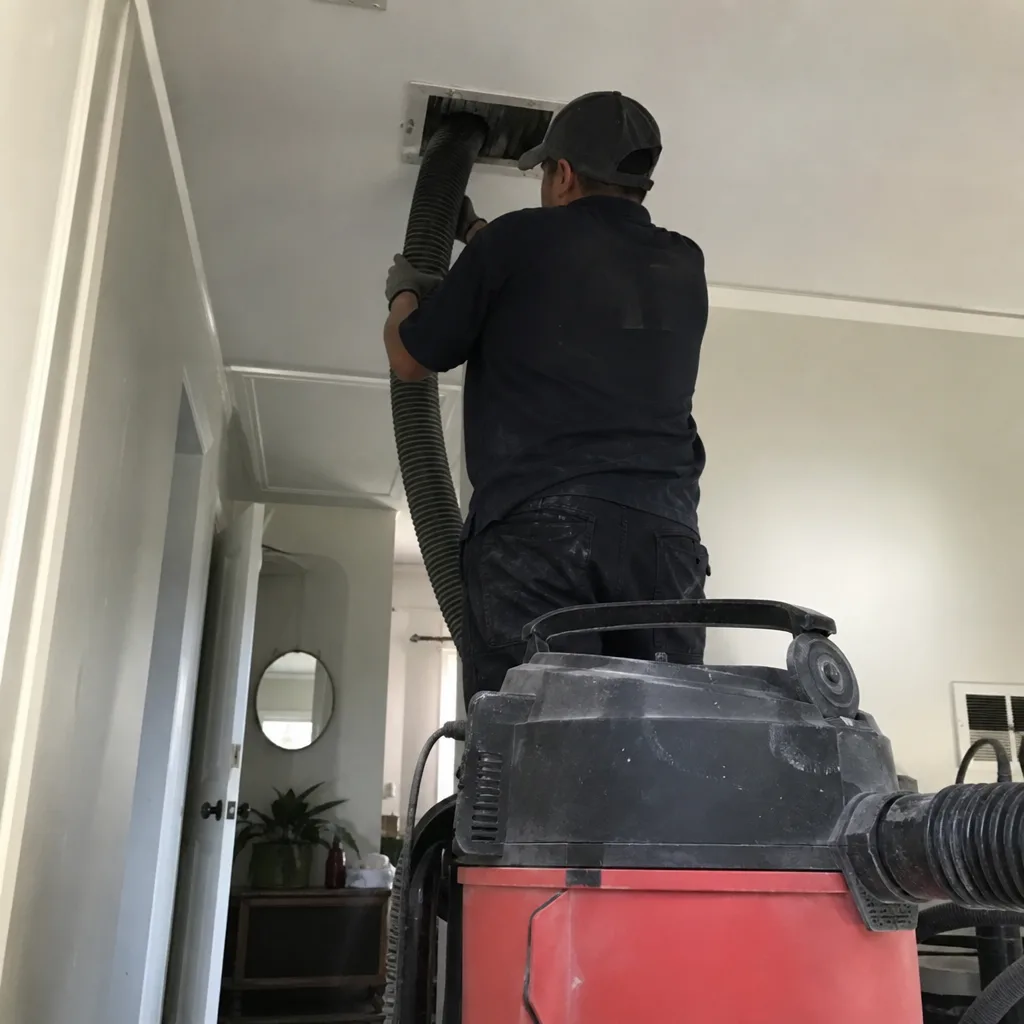 After
After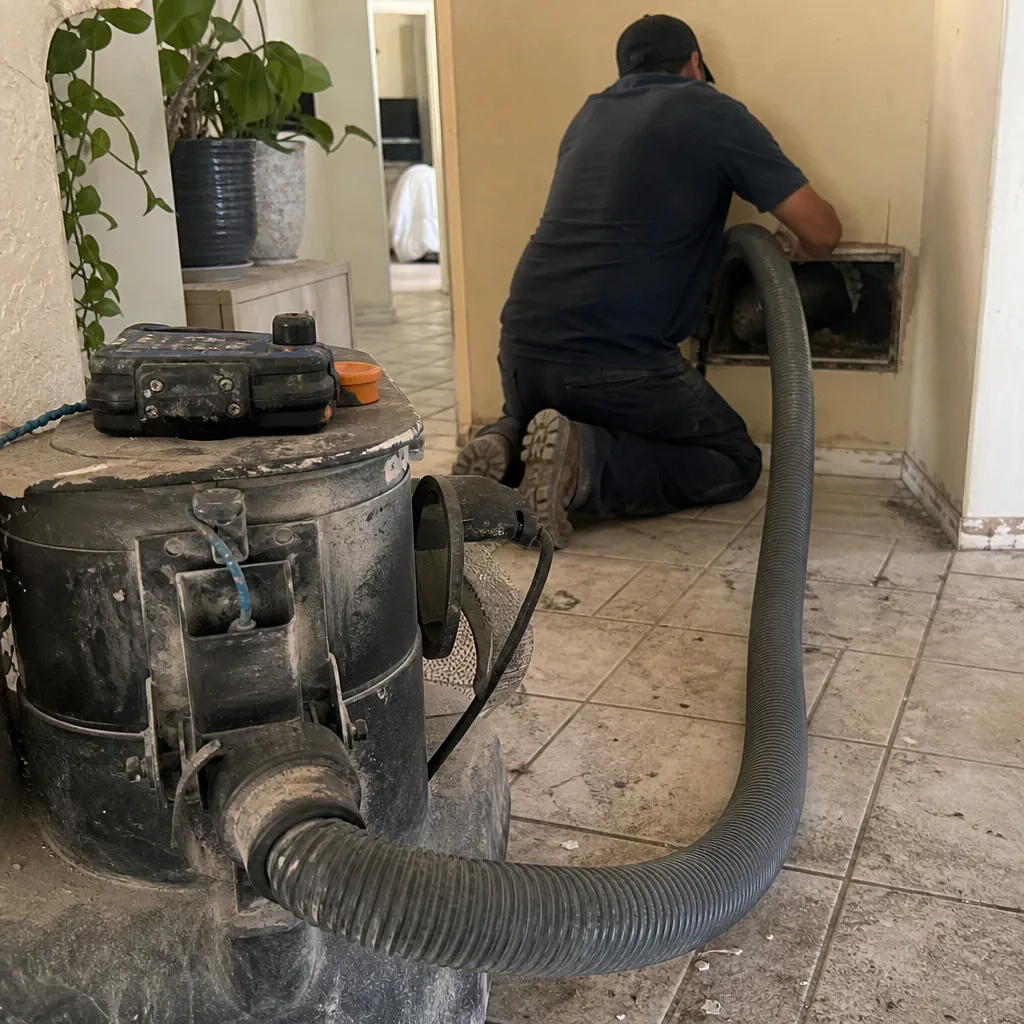 Before
 After
AfterSupply Duct Cleaning in Phoenix, AZ
Supply duct cleaning targets the specific duct runs that carry conditioned air from your HVAC system outward to every room in the house. In Phoenix homes, these are almost always the first ducts to accumulate debris – and the last ones most homeowners think to check. A clogged or coated supply duct doesn’t just move less air; it changes the temperature balance across rooms, drives up energy use, and pushes whatever has built up inside the duct straight into the living space every time the system kicks on. That’s why our Air Duct Cleaning services focus on thorough supply run restoration, not just surface debris removal.
If you’ve noticed uneven cooling, a room that never quite reaches the set temperature, or visible dust settling near registers within hours of cleaning, supply duct cleaning is where to start. CleanRun Air Duct Cleaning Phoenix has documented the inside of supply ducts in more than 52,000 Phoenix-area homes since 2013, every one photographed before and after so the work is visible and verifiable. Call (480) 500-6377 for a written price before any work starts – that’s not a policy; it’s how we operate under Haven Standard Clause 1 on every job.
This page sits under our full Air Duct Cleaning in Phoenix service, which covers every component of your duct system. Supply ducts are one part of that system, and sometimes they’re the only part that needs attention – which is exactly why we quote each scope separately and in writing.
When You Need Supply Duct Cleaning
Phoenix’s climate creates a specific set of conditions inside supply ducts that most other markets don’t see at the same scale. The combination of fine Sonoran Desert dust, extended HVAC run times (eight to ten months of active cooling in most households), and the temperature differential between conditioned air and an unconditioned attic creates ideal conditions for debris to settle and stick inside supply runs. Here’s what tends to signal that supply duct cleaning is overdue:
- Rooms that cool unevenly across the house. When a supply duct serving a bedroom or bonus room is partially obstructed, airflow drops and that room runs warmer than the thermostat reading. In Phoenix homes with long duct runs to back bedrooms – common in the larger floor plans built in Ahwatukee and Chandler suburbs north of the Loop 202 – a partial blockage at a single elbow can create a 6-to-8 degree temperature difference room to room.
- Visible dust or debris settling near registers within 24-48 hours of cleaning. If you’re wiping registers weekly and still seeing buildup, the debris is originating inside the supply run itself, not from the living space. The camera typically shows the source within the first three feet of duct past the register boot.
- A musty or stale odor when the system starts up. Phoenix attics commonly reach 150-160°F in July and August. When insulation dust, construction debris, or moisture intrusion from a previous monsoon season is sitting inside a supply duct that passes through that attic space, the heat bakes it into a faint but persistent odor that surfaces every time conditioned air moves through.
- Allergy or respiratory symptoms that worsen indoors. Supply ducts deliver air directly into occupied rooms. A debris load in a supply run – particularly fine particulate from drywall dust, fiberglass insulation, or desert dust that entered during construction or an HVAC changeout – distributes that material throughout the living space with every cycle.
- An HVAC system more than 5 years old with no documented duct cleaning on record. Phoenix systems run hard. A system installed between 2015 and 2020 in a typical 2,000-square-foot home has likely cycled through enough cubic feet of air to accumulate meaningful debris at bends, transitions, and register boots – especially if the return side has been pulling from an attic space with any insulation disturbance.
- Recent remodel, addition, or HVAC replacement work. Construction activity – even careful, well-contained work – introduces drywall dust and debris into supply runs that were not sealed during the project. This is the single most common scenario we document in Phoenix’s active renovation neighborhoods like Arcadia, Melrose, and the central corridor properties built between 1955 and 1975.
Our Supply Duct Cleaning Process
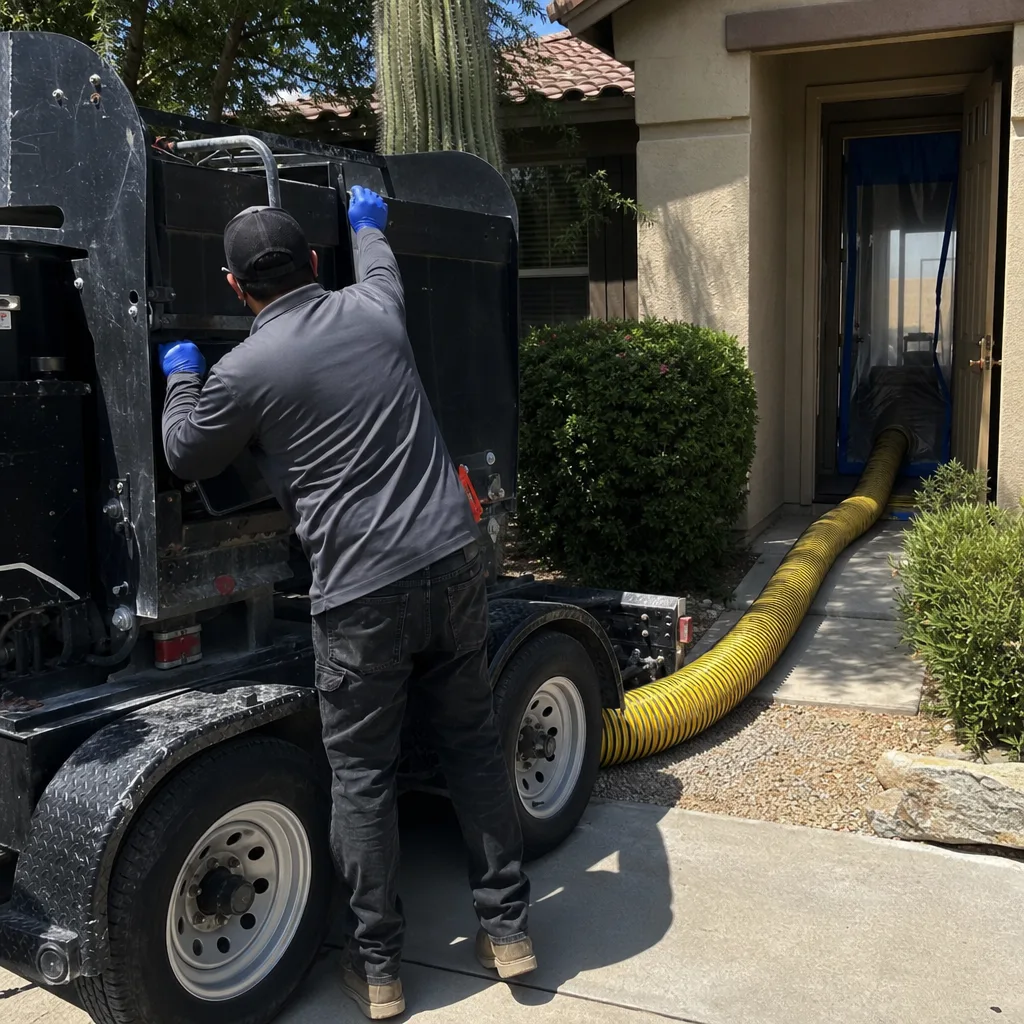
Every step below happens on every job, in this order. Nothing is skipped to cut time, and the photo record confirms each stage – not as a marketing claim, but as a deliverable the customer receives when the crew leaves.
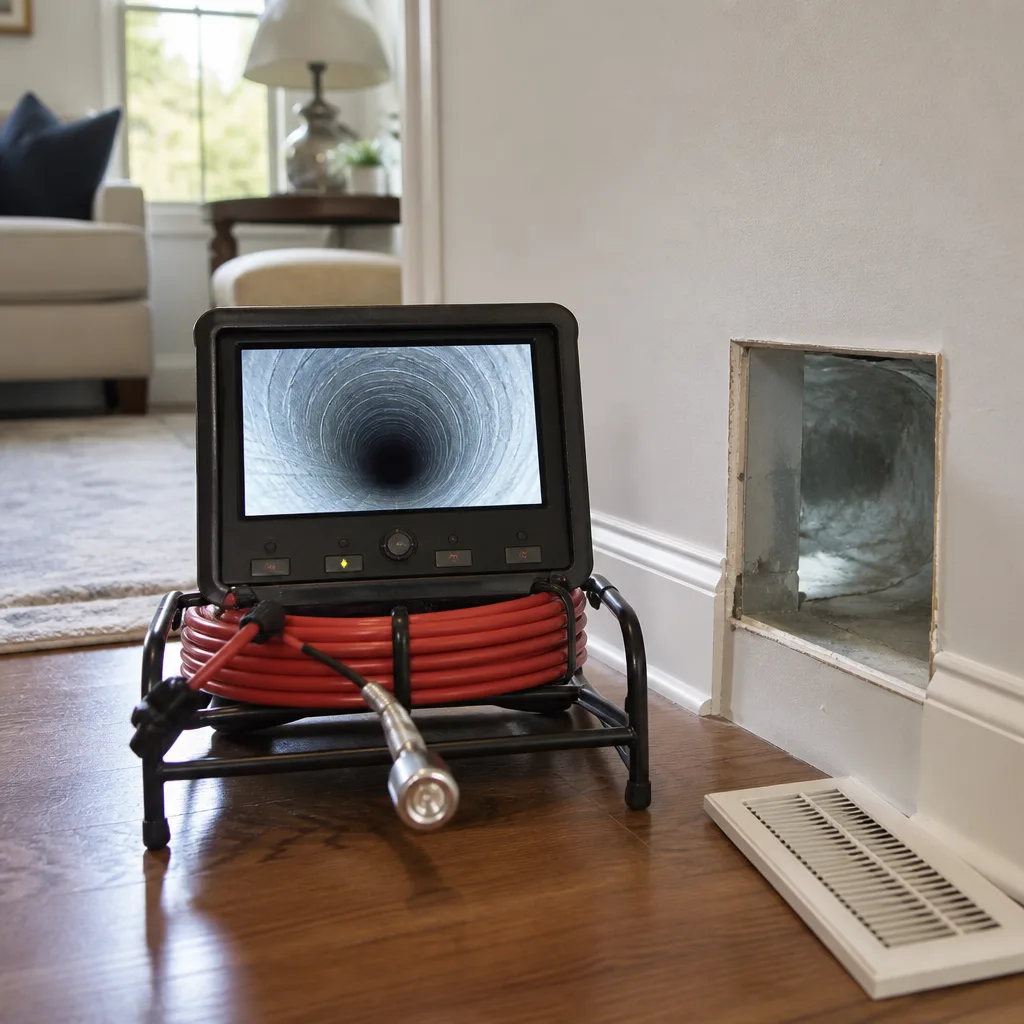
- Pre-job inspection and photographic baseline. Before any equipment enters the duct system, every accessible supply run is photographed at the register boot and at the first interior section. This is the “before” record – the starting point against which the completed work is measured. We document what was there, not what we say was there. The camera goes in first, every time.
- Written scope and price, confirmed before work begins. Based on the inspection, a written scope is delivered on-site – number of supply runs to be cleaned, equipment to be used, and a fixed price. Haven Standard Clause 1 means no “we’ll know more once we open it up” conversations. The number on paper before the first panel comes off is the number on the invoice.
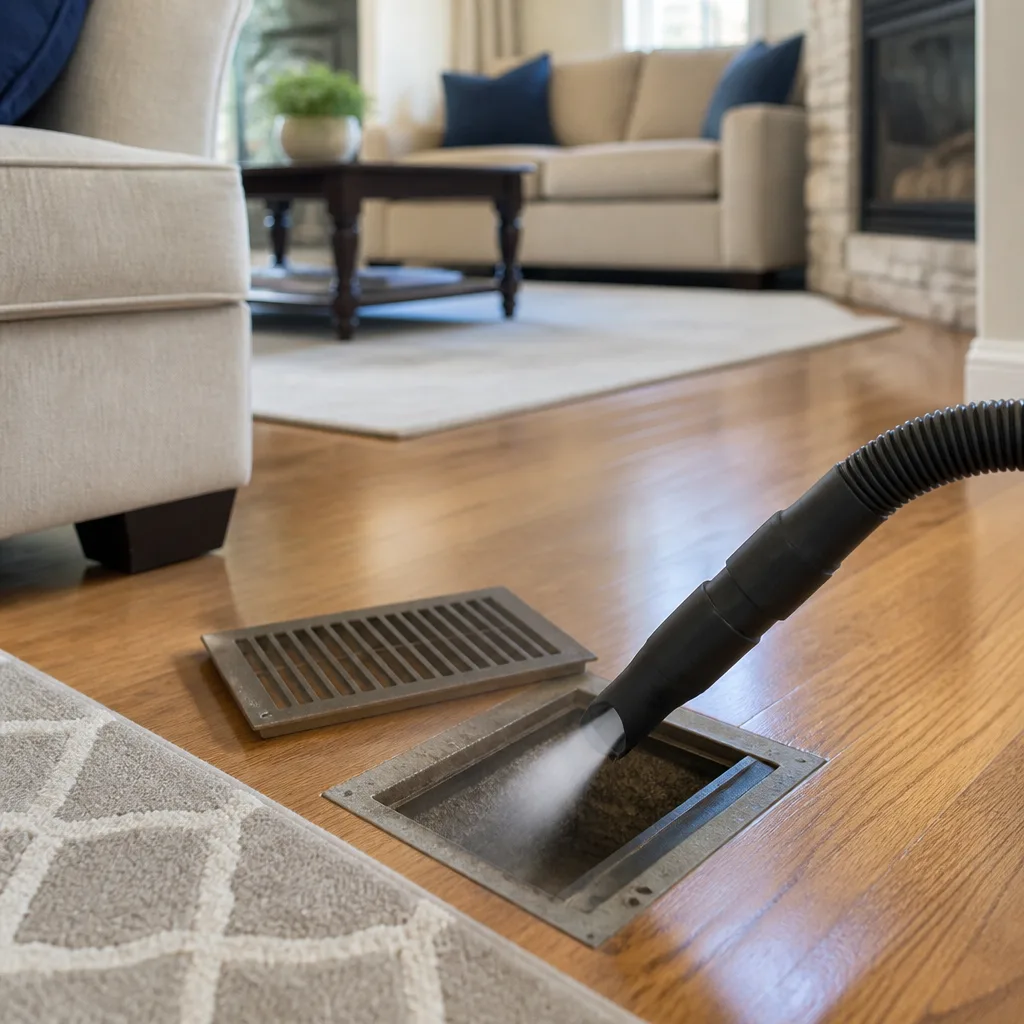
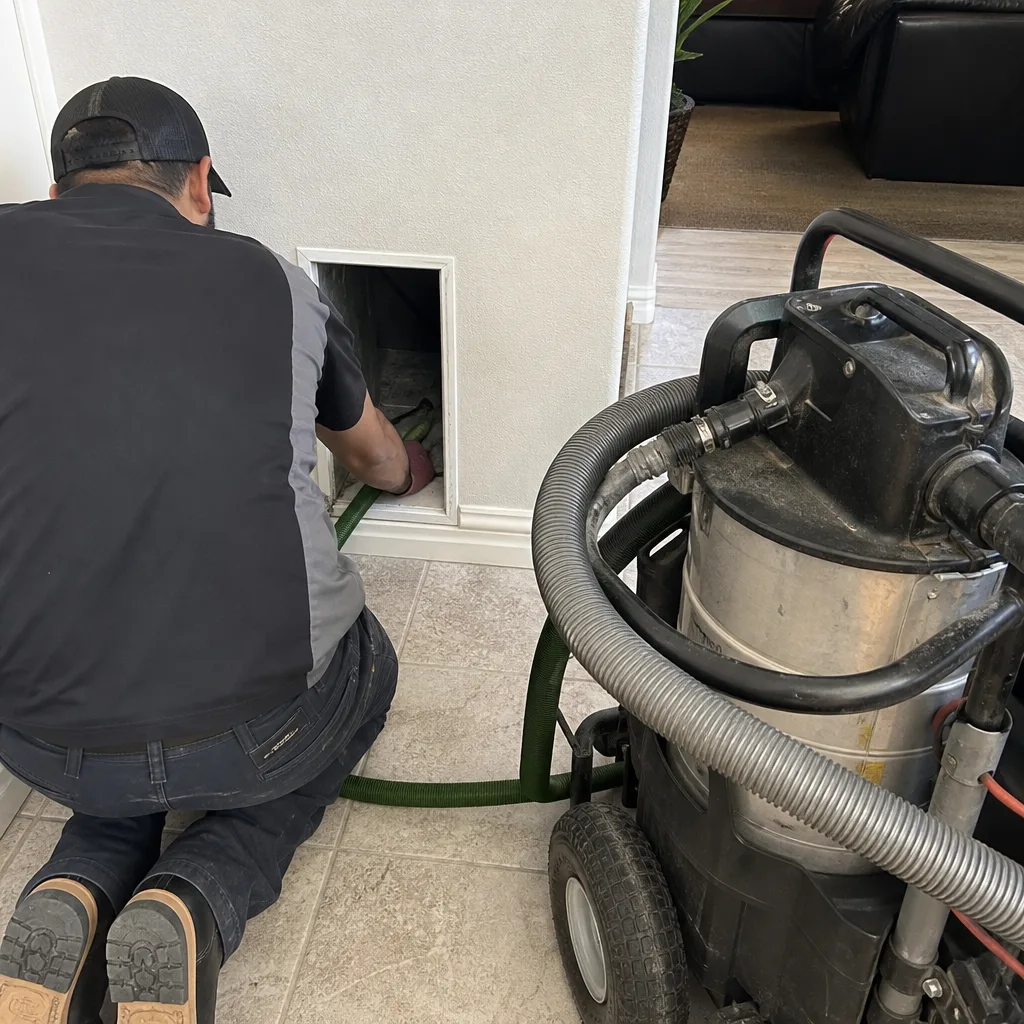
- System isolation and negative-pressure setup. Negative pressure means the duct system is placed under vacuum before agitation begins, so dislodged debris is pulled toward the collection point rather than pushed into the living space. We use Nikro negative-pressure extraction equipment for this stage – professional-grade units sized for residential supply systems. Register boots are sealed individually as each run is worked, maintaining system-wide negative pressure throughout the job.
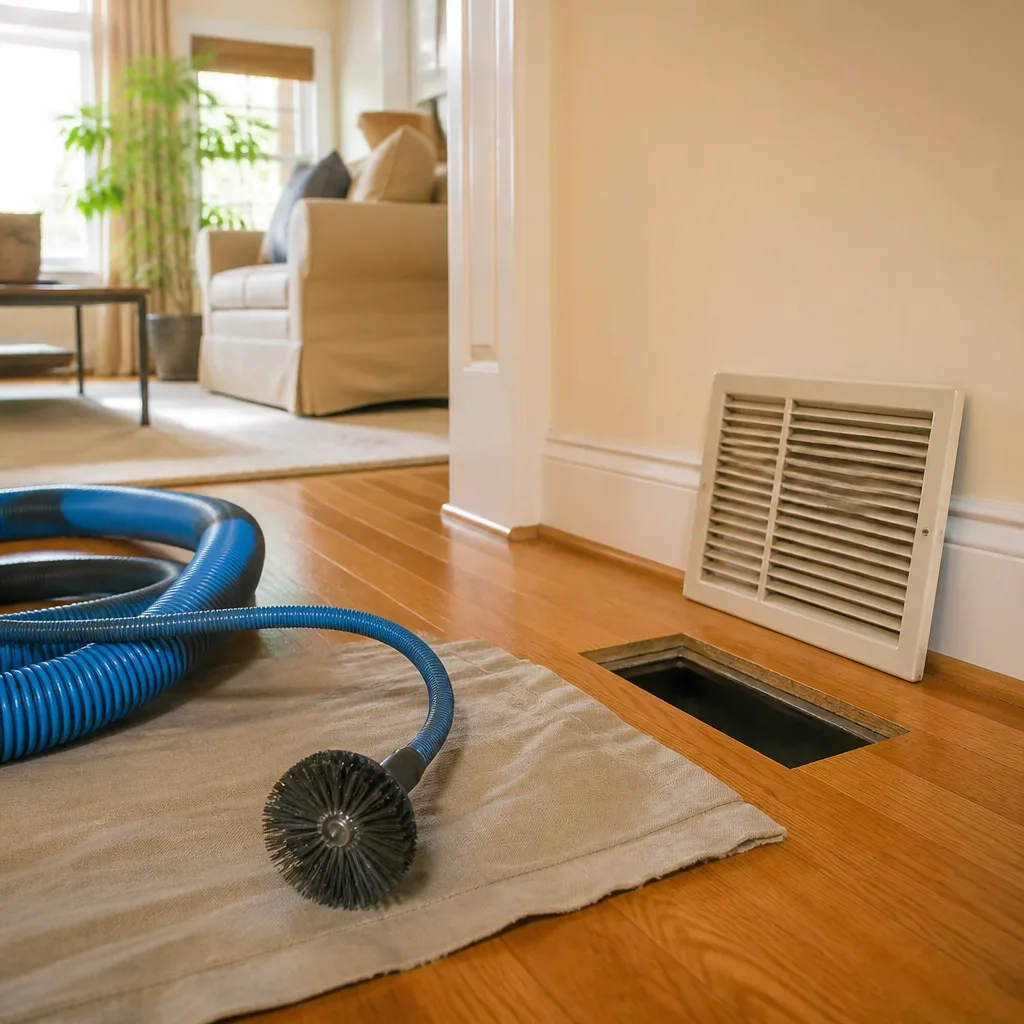
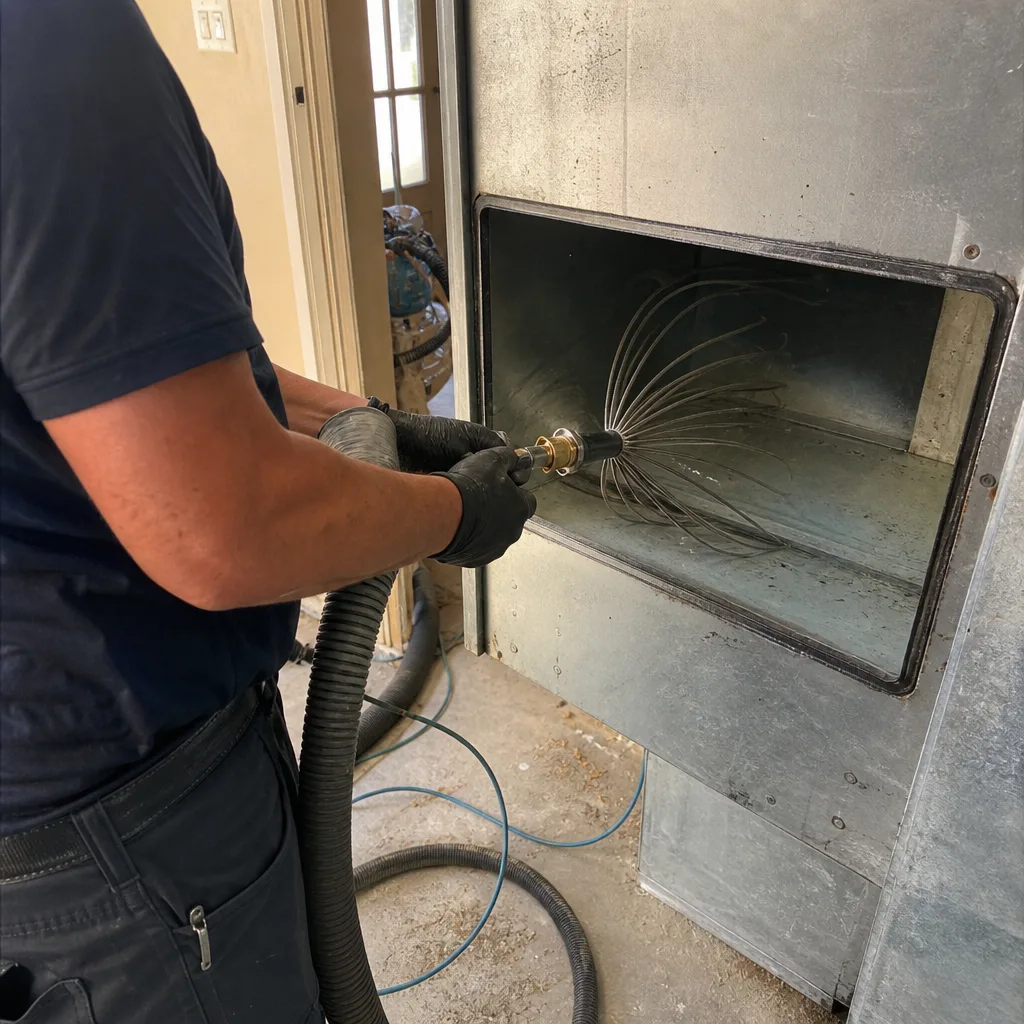
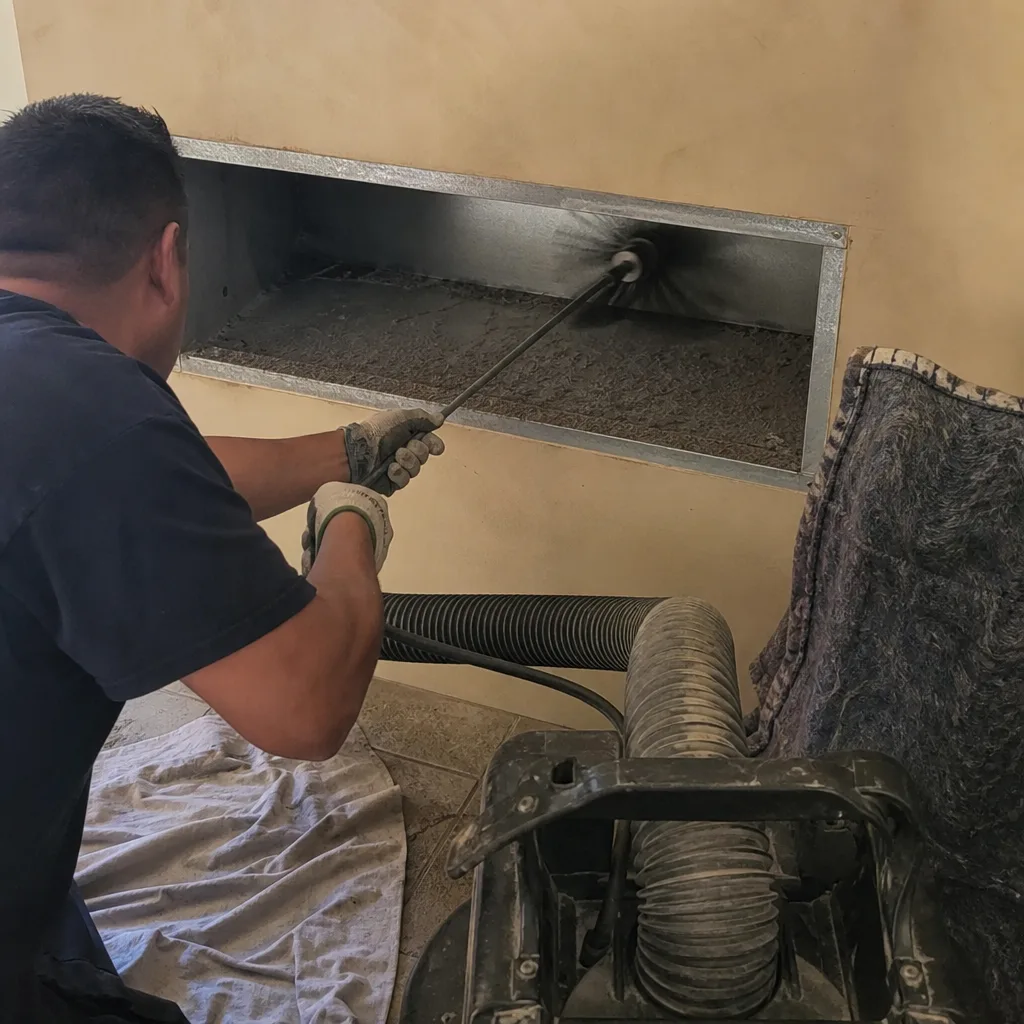
- Mechanical agitation of each supply run. Each duct run is worked with rotary brush equipment – a spinning brush that breaks debris loose from the duct wall and drives it toward the negative-pressure collection point. For rigid sheet-metal supply runs common in Phoenix homes built before 1990, and for the flexible duct (flexduct) used in the vast majority of homes built after 2000, different brush profiles are used to avoid liner damage. This is where actual debris removal happens; the vacuum noise you may have heard from other companies without mechanical agitation is not duct cleaning.
- Post-cleaning camera inspection and photo record. After each run is cleaned, the camera goes back in. The post-cleaning photo is taken from the same angle as the pre-cleaning photo, so the comparison is direct and unambiguous. This photo record is compiled and delivered to the customer – digital format, every run documented, included as part of the standard job with no additional charge.
- Register and boot wipe-down, final system check. Every register cover is cleaned and reinstalled. The system is run for a full cycle while the technician confirms airflow at each supply register with a flow meter, noting any run that may warrant further attention. If a supply run shows airflow below expected range after cleaning – which sometimes points to a duct breach or disconnected section rather than debris – that finding goes into the job record with a recommended next step and a separate written price, not an on-the-spot upsell conversation.
BeforeAfterSupply Duct Cleaning Pricing in Phoenix
Supply duct cleaning in Phoenix typically runs between $175 and $420 for a standard single-story home, and $280 to $600 for a two-story home or a property with an extended duct layout. For full details, see How Much Does Air Duct Cleaning Cost? (2026 Price Guide) - Phoenix, AZ. Those ranges reflect real jobs in this market – not a promotional number designed to get a truck in the driveway.
The written price delivered on every CleanRun job breaks down by the factors that actually drive the number in How Much Does Air Duct Cleaning Cost in Phoenix, AZ? (2026 Price Guide):
- Number of supply runs. A 1,500-square-foot Phoenix home typically has 8 to 12 supply runs. A 2,800-square-foot home – common in Scottsdale and the East Valley – may have 18 to 24. Each run is quoted and priced individually in the written scope.
- Duct type and condition. Rigid sheet-metal duct takes less time per run than heavily corrugated flexduct with multiple bends. A supply run with a 90-degree elbow at the plenum transition, which is standard in homes built across Phoenix’s sprawling developments in the 1990s, takes longer to agitate completely than a straight run.
- Debris load documented at inspection. A supply system with light dust accumulation – typical in a 5-to-7-year-old home with regular filter changes – takes less time than one showing a compacted debris layer at every register boot. The camera documents the load before pricing, so the number reflects actual conditions, not an estimate based on home age alone.
- Attic access requirements. Some Phoenix homes, particularly older ranch-style construction in Central Phoenix and Sunnyslope, route supply trunks through attic spaces that require repositioning of insulation batts to access duct connections. When that’s the case, it’s noted in the written scope with a separate line item.
- Combined scope discounts. When supply duct cleaning is performed alongside return duct cleaning or dryer vent cleaning during the same visit, the combined scope is priced at a lower per-run rate than separate visits. The written quote shows the combined number and the breakdown.
There is no “$79 special” in our pricing structure. That number, common in Phoenix HVAC service advertising, generally reflects a shop-vac with a hose and no camera documentation – not the negative-pressure, mechanically-agitated, photographically-documented process described above. If you have a written estimate from another company, bring it. CleanRun’s Free Second Opinion puts our own written number next to theirs, in writing, with no obligation to book.
Call (480) 500-6377 to get your written price – a live person answers every call.
FAQs – Supply Duct Cleaning
What’s the difference between supply duct cleaning and return duct cleaning?
Supply ducts carry conditioned air from the air handler outward to each room; return ducts pull room air back to the system to be cooled or heated again. They’re separate duct systems, though they share the same air handler. Supply ducts tend to accumulate finer debris – particulate that makes it past the filter and gets deposited as air slows at bends and register boots. Return ducts, which operate under negative pressure and draw from the living space, more often accumulate larger debris, hair, and surface dust pulled in at return grilles. Both benefit from cleaning, but the contamination profiles are different and so is the cleaning approach. A full scope quote from CleanRun prices each system separately so you can make an informed decision about one or both. Call (480) 500-6377 for a written price on either or both.
How long does supply duct cleaning take for a typical Phoenix home?
For a single-story Phoenix home with 10 to 14 supply runs, the full process – pre-job Video Inspection, negative-pressure setup, mechanical agitation of each run, post-cleaning camera inspection, and register reinstallation – typically takes 2.5 to 4 hours. Two-story homes, or homes with longer duct runs typical of the larger floor plans common in Peoria and Gilbert, generally run 4 to 6 hours. We don’t pad time and we don’t rush a run that needs a second pass. The job record time-stamps each stage, so you can see exactly how long each step took.
How often should supply ducts be cleaned in Phoenix?
Every 3 to 5 years is the standard recommendation for Phoenix homes under normal occupancy, but several local factors can shorten that interval. Homes with pets, heavy monsoon season dust infiltration, a recent renovation, or an HVAC changeout in the past two years typically show meaningful debris accumulation in 2 to 3 years. Phoenix’s extended HVAC run season – systems in the Valley commonly run 10 months of the year – means more total airflow volume through supply runs annually than most U.S. markets. The camera inspection at the start of every CleanRun job documents actual conditions; the cleaning recommendation comes from what the camera shows, not a default calendar interval.
Can supply duct cleaning improve airflow to a specific room that’s always warm?
It can, and it frequently does – but it’s not the only possible cause of uneven room temperatures, so we document airflow before and after. If a supply run serving a warm room shows a compacted debris load at an elbow or at the register boot, cleaning that run restores the designed airflow volume and typically resolves the temperature imbalance. If the post-cleaning airflow measurement at that register is still below expected range, the more likely cause is a duct breach, disconnected section, or undersized supply run – findings we document with the camera and quote separately in writing before any additional work. Either way, the answer comes from the camera and the flow meter, not from a guess. Call (480) 500-6377 if a specific room has been the problem and we’ll document what’s actually happening inside that supply run.
Why Phoenix Homeowners Choose CleanRun for Supply Duct Cleaning
Tomas Reyes built CleanRun on a straightforward premise: the work should be visible, the price should be written down before it starts, and the guarantee should mean something after the truck leaves. Those aren’t marketing statements; they’re operating procedures formalized under the H.A.V.E.N. Standard and applied to every job since 2013.
The 365-Day Done Right Promise means that if a supply run we cleaned shows documented debris within a year of the job – on a camera inspection, in writing – we make it right. Not subject to manager approval, not qualified by fine print. Written, on every invoice.
We use professional-grade extraction equipment including Nikro negative-pressure units and Abatement Technologies air handling equipment – tools sized and rated for residential duct cleaning work, not adapted from other trades. Customers can look up both brands independently before agreeing to a price; that’s exactly the point.
Technicians are background-checked, uniformed, and identified by name before arrival. The pre- and post-cleaning photo record is compiled and delivered to every customer as a standard deliverable – not an upgrade, not an add-on. You see the inside of your supply ducts before the job and after it. That’s what accountability looks like on paper.
If you’ve received a written estimate from another Phoenix duct cleaning company, bring it. CleanRun’s Free Second Opinion puts our written number next to theirs at no charge. You’ll have two documented prices and the information to make a clear comparison.
This service is part of our full home service offering for Phoenix-area homeowners who want documented results, not just a visit.
Schedule Your Supply Duct Cleaning in Phoenix
If you’re ready to see what’s actually inside your supply ducts – before a single panel comes off – call (480) 500-6377. A live person answers every call. You’ll get a written price, a scheduled time, and a technician identified by name before arrival. The photo record comes with the job. The 365-Day Done Right Promise is on every invoice. That’s the CleanRun standard, applied to every supply duct cleaning job in Phoenix.
Written by Tomas Reyes, Owner at CleanRun Air Duct Cleaning Phoenix, serving Phoenix.